
As a researcher in the field of energy storage, I have witnessed the rapid growth of sodium-ion batteries as a promising alternative to lithium-ion batteries, driven by the need for low-cost and sustainable energy solutions. The abundance of sodium resources and the rising costs associated with lithium have reignited interest in sodium-ion battery technology. In this article, I will comprehensively review the progress in developing lignin-derived hard carbon materials for sodium-ion battery anodes, emphasizing key strategies for performance enhancement. The sodium-ion battery represents a critical innovation for grid-scale storage and electric vehicles, and leveraging biomass like lignin can further reduce environmental impact.
The working principle of a sodium-ion battery is akin to a “rocking-chair” mechanism, where sodium ions (Na⁺) shuttle between the cathode and anode during charge and discharge cycles. During charging, Na⁺ deintercalates from the cathode, travels through the electrolyte, and intercalates into the anode, while electrons flow through an external circuit. The reverse occurs during discharge. This process can be described by the following electrochemical reaction for a general anode material:
$$ \text{Anode: } C + x\text{Na}^+ + x\text{e}^- \leftrightarrow \text{Na}_x\text{C} $$
where C represents the carbonaceous anode material. The efficiency of this process hinges on the anode’s ability to reversibly store Na⁺ with minimal structural changes. The sodium-ion battery’s performance is heavily influenced by the anode material’s properties, such as conductivity, porosity, and interlayer spacing.
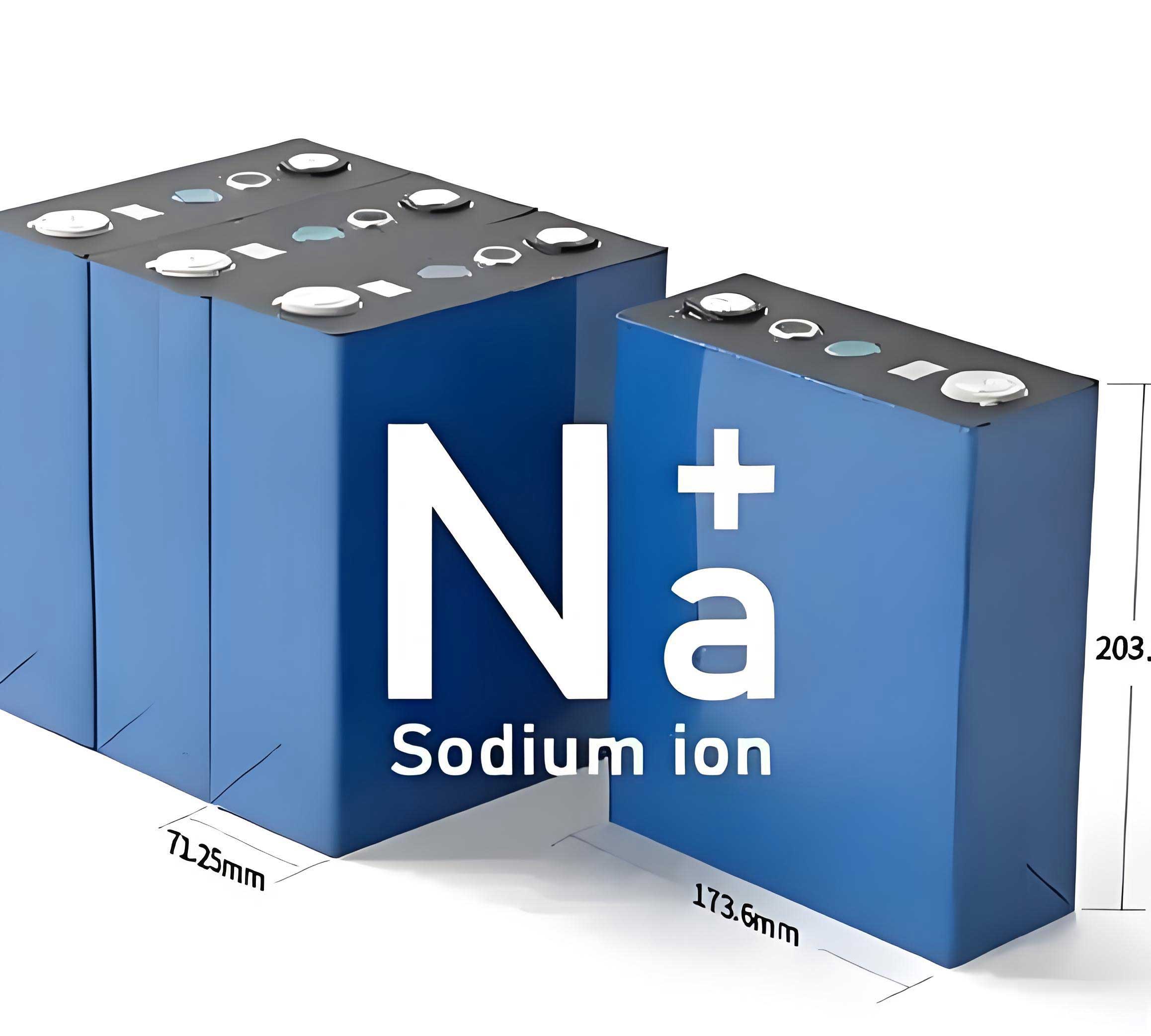
Understanding the sodium storage mechanisms in carbon-based anodes is essential for designing high-performance materials. Several models have been proposed to explain Na⁺ storage in hard carbon, which I summarize below along with key equations. The energy barrier for Na⁺ intercalation depends on the interlayer spacing (d₀₀₂) of the carbon material. For graphite with d₀₀₂ = 0.335 nm, the energy cost for Na⁺ intercalation is approximately 0.12 eV, which is too high for practical use at room temperature. However, for hard carbon with expanded d₀₀₂ > 0.37 nm, the energy barrier drops significantly, as shown by:
$$ \Delta E_{\text{Na}^+} = f(d_{002}) \approx \frac{k}{d_{002}^2} $$
where k is a constant related to van der Waals forces and ion-carbon interactions. This allows Na⁺ to intercalate more easily, enhancing the capacity of the sodium-ion battery. The four primary storage mechanisms are:
- Intercalation-Filling: Na⁺ first intercalates between graphene layers at high voltages, then fills nanopores at low voltages.
- Adsorption-Intercalation: Na⁺ adsorbs on defect sites in the slope region and intercalates in the plateau region.
- Adsorption-Filling: Na⁺ adsorbs on surfaces and fills nanopores without interlayer intercalation.
- Adsorption-Intercalation-Filling: A three-stage model combining adsorption, intercalation, and pore filling.
To quantify these mechanisms, the capacity contribution from slope and plateau regions can be expressed as:
$$ C_{\text{total}} = C_{\text{slope}} + C_{\text{plateau}} $$
where Cₛₗₒₚₑ is associated with adsorption on defects and Cₚₗₐₜₑₐᵤ with pore filling or intercalation. Research indicates that for lignin-derived hard carbon, the adsorption-filling mechanism often dominates, especially when the material has abundant closed pores and defects.
| Mechanism | Description | Key Features | Typical Capacity Contribution |
|---|---|---|---|
| Intercalation-Filling | Na⁺ inserts into layers then pores | Requires d₀₀₂ > 0.37 nm | High plateau capacity |
| Adsorption-Intercalation | Na⁺ adsorbs on defects then intercalates | Defect-dependent slope region | Balanced slope and plateau |
| Adsorption-Filling | Na⁺ adsorbs and fills pores only | No layer expansion observed | Slope capacity dominates |
| Adsorption-Intercalation-Filling | Three-stage process | Combines multiple steps | High total capacity |
The choice of anode material is crucial for sodium-ion battery performance. Carbon materials, particularly hard carbon, are favored due to their stability, low cost, and tunable properties. Compared to graphite used in lithium-ion batteries, hard carbon has a disordered structure with larger d₀₀₂, which facilitates Na⁺ storage. Lignin, a natural polymer abundant in plant biomass, serves as an excellent precursor for hard carbon because of its aromatic structure and high carbon content. Its conversion into carbon materials involves pyrolysis, which I will discuss in detail.
Lignin-based hard carbon synthesis typically involves thermal treatment under inert atmospheres. The pyrolysis process can be divided into stages: dehydration (30–200°C), active pyrolysis (200–450°C), and passive pyrolysis (>450°C). During these stages, lignin undergoes chemical transformations, losing volatile components and forming a carbonaceous matrix. The final properties depend on parameters like temperature and heating rate. For instance, the interlayer spacing d₀₀₂ can be calculated from X-ray diffraction (XRD) using Bragg’s law:
$$ d_{002} = \frac{\lambda}{2 \sin \theta} $$
where λ is the X-ray wavelength and θ is the diffraction angle. Higher pyrolysis temperatures often reduce d₀₀₂ but increase graphitization, affecting Na⁺ storage. I have found that optimizing the temperature is key to achieving high performance in sodium-ion battery anodes.
| Temperature (°C) | d₀₀₂ (nm) | Specific Surface Area (m²/g) | Reversible Capacity (mAh/g) | Initial Coulombic Efficiency (%) |
|---|---|---|---|---|
| 1000 | 0.380 | Low | ~250 | ~60 |
| 1200 | 0.375 | Moderate | ~280 | ~65 |
| 1400 | 0.370 | High | ~300 | ~70 |
| 1600 | 0.365 | Very High | ~320 | ~75 |
Beyond simple pyrolysis, advanced strategies like template methods and chemical activation are employed to enhance the porosity and surface area of lignin-derived carbon. Template methods use sacrificial materials to create ordered pores, while chemical activation with agents like KOH or K₂CO₃ etches the carbon matrix, generating micropores and mesopores. The specific surface area (Sᵦₑₜ) is critical for Na⁺ adsorption, and it can be related to capacity through the equation:
$$ C_{\text{ads}} = k_a \cdot S_{\text{BET}} $$
where kₐ is a constant representing adsorption capacity per unit area. For sodium-ion battery anodes, a balance between high surface area and low irreversible capacity is essential to maintain high initial Coulombic efficiency.
Heteroatom doping is a powerful technique to modify the electronic structure and surface chemistry of carbon materials. By introducing elements like oxygen, nitrogen, phosphorus, or sulfur, we can create additional active sites for Na⁺ storage and improve conductivity. The doping process often involves mixing lignin with dopant precursors before pyrolysis. For example, nitrogen doping can be achieved using urea or melamine, leading to the formation of pyridinic-N, pyrrolic-N, and graphitic-N species. The effect of doping on capacity can be modeled as:
$$ C_{\text{doped}} = C_{\text{undoped}} + \Delta C_{\text{heteroatom}} $$
where ΔCₕₑₜₑᵣₒₐₜₒₘ is the extra capacity from heteroatom-induced defects and pseudocapacitance. I have observed that dual doping, such as N-P co-doping, often yields synergistic effects, further boosting the performance of sodium-ion battery anodes.
| Doping Type | Dopant Source | Key Benefits | Typical Capacity Increase (mAh/g) | Mechanism |
|---|---|---|---|---|
| Oxygen | Lignin itself or O₂ treatment | Enhances wettability and defect sites | 20–40 | Adsorption on C=O groups |
| Nitrogen | Urea, melamine | Improves conductivity and creates active sites | 30–50 | Pseudocapacitance from N species |
| Phosphorus | Phytic acid | Expands interlayer spacing and adds defects | 25–45 | P-C bond modulation |
| N-P Co-doping | Urea + phytic acid | Synergistic effect for high capacity | 50–80 | Combined defect and electronic effects |
In addition to bulk carbon materials, nanostructured lignin-derived carbons, such as carbon fibers, nanosheets, and microspheres, have gained attention for sodium-ion battery applications. These nanostructures offer short ion diffusion paths and high surface-to-volume ratios. For instance, carbon fibers can be produced via electrospinning of lignin solutions, followed by carbonization. The capacity of such materials often follows a diffusion-limited model, described by:
$$ C = C_0 \cdot \left(1 – e^{-k_d t}\right) $$
where C₀ is the maximum capacity, k_d is the diffusion rate constant, and t is time. Nanosheets, with their thin morphology, facilitate rapid Na⁺ intercalation, while microspheres provide dense packing for high volumetric energy density. I have explored these morphologies and found that they significantly enhance rate capability and cycle life in sodium-ion batteries.
To summarize the performance of various lignin-derived anodes, I compiled data from recent studies into a comparative table. This highlights the importance of material design for advancing sodium-ion battery technology.
| Material Type | Synthesis Method | d₀₀₂ (nm) | Reversible Capacity (mAh/g) | Initial Coulombic Efficiency (%) | Cycle Stability (Capacity Retention after 100 cycles) |
|---|---|---|---|---|---|
| Pyrolyzed Hard Carbon | Direct pyrolysis at 1300°C | 0.403 | 314 | 74.8 | ~90% |
| Template-Based Carbon | Block copolymer template | 0.390 | 290 | 70.0 | ~85% |
| Chemically Activated Carbon | KOH activation | 0.380 | 431 | 65.0 | ~83% |
| N-Doped Carbon | Urea treatment | 0.392 | 320 | 78.0 | ~92% |
| Carbon Nanospheres | Spray drying | 0.396 | 340 | 88.3 | ~95% |
| Carbon Nanofibers | Electrospinning | 0.385 | 310 | 89.0 | ~90% |
The future of lignin-based sodium-ion battery anodes lies in addressing current challenges, such as low initial Coulombic efficiency and capacity fading. From my perspective, several research directions are promising. First, understanding the precise relationship between lignin structure and carbon microstructure is crucial. Lignin’s complexity, with varying ratios of H, G, and S units, affects the final hard carbon properties. We can model this using statistical approaches, such as:
$$ P(\text{structure}) = f(\text{H:G:S ratio}, \text{pyrolysis conditions}) $$
where P represents the probability of forming certain carbon configurations. Second, advanced characterization techniques, like in situ XRD and atomic force microscopy, should be employed to elucidate sodium storage mechanisms in real-time. This will guide the design of materials with optimized d₀₀₂ and pore size distribution for sodium-ion batteries.
Third, developing composite materials that combine lignin-derived carbon with other components, such as metal oxides or conductive polymers, could enhance capacity and stability. For example, the capacity of a composite might be expressed as:
$$ C_{\text{composite}} = \phi C_{\text{carbon}} + (1 – \phi) C_{\text{additive}} $$
where φ is the volume fraction of carbon. Finally, scaling up production methods while maintaining consistency is key for commercialization. The sodium-ion battery market demands cost-effective and sustainable anodes, and lignin, as a waste product from pulping industries, fits perfectly into this paradigm.
In conclusion, lignin-derived hard carbon anodes offer a viable path toward high-performance sodium-ion batteries. Through strategies like pyrolysis optimization, heteroatom doping, and nanostructuring, we can achieve materials with high capacity, excellent rate capability, and long cycle life. The sodium-ion battery represents a transformative technology for energy storage, and leveraging biomass resources like lignin aligns with global sustainability goals. As research progresses, I anticipate further breakthroughs that will solidify the role of sodium-ion batteries in our energy landscape.
To quantify the economic and environmental benefits, consider that the cost of sodium-ion battery production can be reduced by up to 30% compared to lithium-ion batteries, largely due to cheaper raw materials. The use of lignin not only lowers costs but also valorizes agricultural and industrial waste. In terms of performance metrics, the energy density of sodium-ion batteries with lignin-based anodes can approach 150 Wh/kg, making them competitive for stationary storage applications. Continued innovation in material science will undoubtedly push these boundaries further, driving the adoption of sodium-ion batteries worldwide.