
In the pursuit of sustainable energy storage solutions, sodium-ion batteries have emerged as a promising alternative to their lithium-ion counterparts, primarily due to the abundant and low-cost nature of sodium resources, coupled with their potential for enhanced safety. My research is driven by the critical need to understand the mechanical abuse tolerance of these batteries, particularly under crushing loads simulating scenarios like electric vehicle collisions. This article delves into a comprehensive experimental investigation of the flat-plate radial compression safety characteristics of 18650-type sodium-ion batteries, with the goal of mapping their failure mechanisms, identifying thermal runaway triggers, and assessing the feasibility of secondary use for damaged cells.
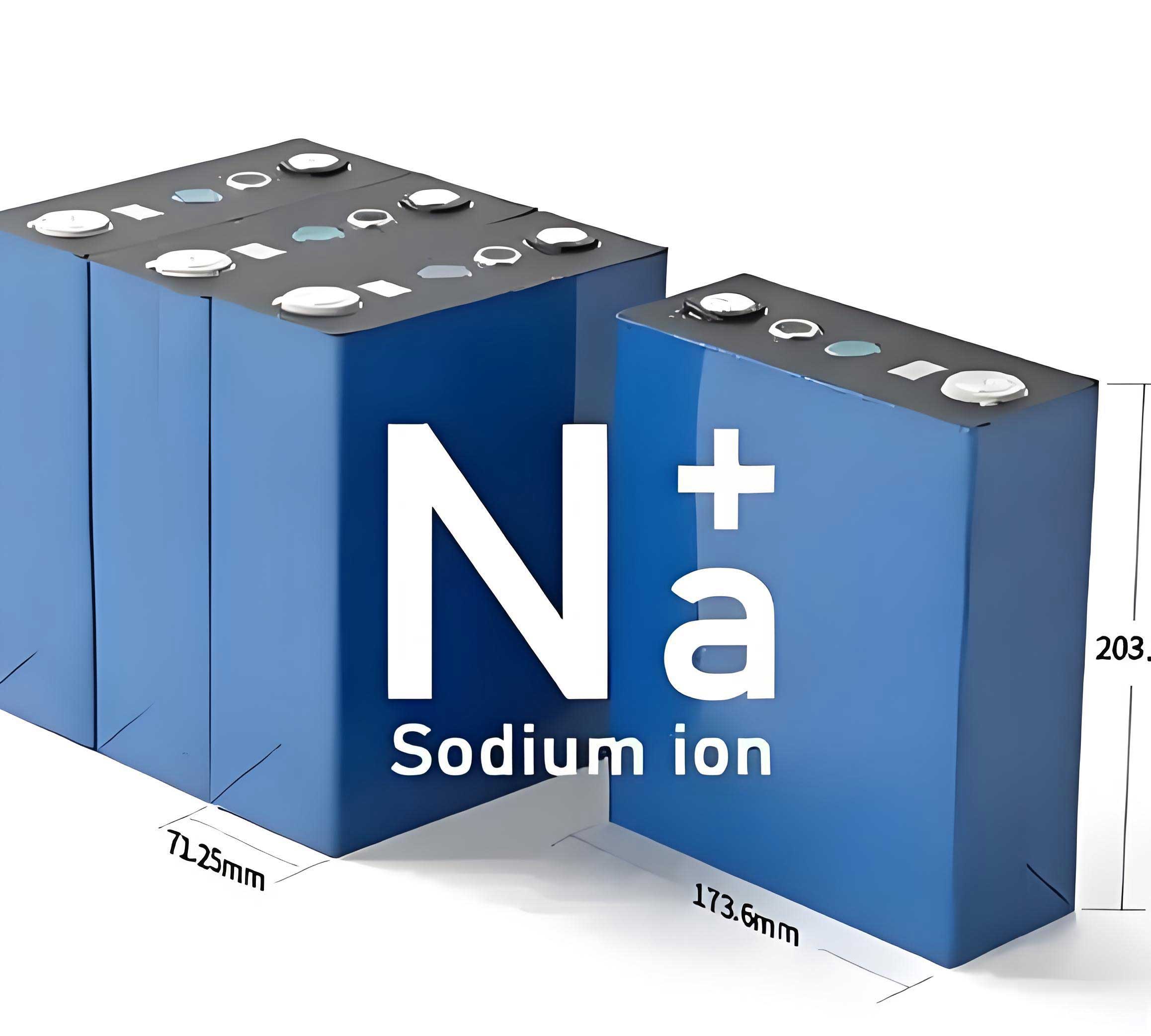
The experimental methodology was centered on a controlled flat-plate radial compression setup. The test samples were commercial 18650 cylindrical sodium-ion batteries featuring a layered oxide cathode (NaNi1/3Fe1/3Mn1/3O2) and a hard carbon anode. Cells were preconditioned to specific States of Charge (SOC) using a standard constant-current constant-voltage protocol. The compression tests were performed using a universal testing machine equipped with insulated, high-temperature resistant flat platens. Two primary test protocols were executed: continuous compression to failure at various speeds and SOC levels, and compression to fixed displacements followed by electrochemical performance evaluation. During testing, I meticulously recorded the force-displacement response, cell voltage, and surface temperature using synchronized high-precision instruments. The force, voltage, and temperature data were crucial for identifying the onset of internal short circuits and thermal runaway events.
A key finding was the identification of the SOC threshold for thermal runaway under quasi-static compression. Tests were conducted on sodium-ion battery samples at 60%, 70%, 80%, and 90% SOC at a constant speed of 15 mm/min. The results are summarized in the table below:
| SOC (%) | Peak Force (kN) | Peak Temperature (°C) | Thermal Runaway | Observations |
|---|---|---|---|---|
| 60 | ~29.5 | <60 | No | Minor electrolyte leakage. |
| 70 | ~31.0 | <60 | No | Minor electrolyte leakage. |
| 80 | ~32.5 | >160 | Yes | Vent with flame, smoke, structural breach. |
| 90 | ~34.0 | >180 | Yes | Vent with flame, smoke, structural breach. |
The data clearly indicates that thermal runaway in this sodium-ion battery configuration occurs at or above 80% SOC. The increase in peak force with SOC can be attributed to the expansion of the hard carbon anode upon sodium intercalation, which increases the internal rigidity of the jelly roll. The critical event is the internal short circuit caused by separator rupture and electrode contact, which, at high SOC, provides sufficient energy density to ignite exothermic side reactions leading to thermal runaway. The relationship between the stored electrochemical energy (E) and the risk of thermal runaway (TR) can be conceptually framed as:
$$ P(TR | \text{Compression}) \propto E_{SOC} = C \cdot V_{OC}(SOC) \cdot SOC $$
where $C$ is the cell capacity, $V_{OC}$ is the open-circuit voltage, and $SOC$ is the state of charge. Higher SOC leads to greater $E_{SOC}$, increasing the probability and severity of thermal runaway upon a severe internal short circuit induced by mechanical abuse.
Subsequently, I investigated the influence of compression speed on the safety of 80% SOC sodium-ion batteries. Speeds ranging from 9 mm/min to 20 mm/min were tested. The results, summarized in the following table, reveal a critical speed threshold for thermal runaway.
| Compression Speed (mm/min) | Internal Short Circuit Displacement (mm) | Peak Force (kN) | Peak Temperature (°C) | Thermal Runaway |
|---|---|---|---|---|
| 9 | 9.16 | 30.8 | 52 | No |
| 10 | 8.96 | 31.5 | 55 | No |
| 12 | 8.95 | 32.0 | 58 | No |
| 14 | 9.16 | 32.8 | 59 | No |
| 15 | 9.35 | 34.5 | ~180 | Yes |
| 20 | 9.45 | 35.8 | ~200 | Yes |
The critical speed for thermal runaway of this sodium-ion battery lies between 14 and 15 mm/min. Notably, at speeds at or below 14 mm/min, while an internal short circuit (indicated by voltage drop) occurs, the generated heat dissipates faster than it accumulates, preventing thermal runaway. At 15 mm/min and above, the strain rate is sufficiently high to cause more catastrophic, large-area internal shorting. The heat generation rate $\dot{Q}_{gen}$ from the short circuit likely surpasses the cell’s heat dissipation rate $\dot{Q}_{diss}$, creating the necessary condition for thermal escalation:
$$ \dot{Q}_{gen} = I_{sc}^2 \cdot R_{short} + \dot{Q}_{chem} > \dot{Q}_{diss} = h A (T_{cell} – T_{\infty}) $$
Here, $I_{sc}$ is the short-circuit current, $R_{short}$ is the internal short resistance, $\dot{Q}_{chem}$ is the rate of heat from chemical reactions, $h$ is the heat transfer coefficient, $A$ is surface area, and $T$ denotes temperature. Furthermore, the failure displacement (point of internal short) shows a complex relationship with speed, but the peak force consistently increases with speed due to the strain-rate sensitivity of the battery components (case, electrodes). It is important to highlight that compared to typical lithium-ion batteries, this sodium-ion battery exhibited a higher critical compression speed for thermal runaway and lower peak temperatures during the event, suggesting a potentially milder failure mode.
Analyzing the force-displacement curve for a thermal runaway event (80% SOC, 15 mm/min) allows for a detailed breakdown of the sodium-ion battery’s failure process into four distinct stages, as illustrated below:
| Stage | Displacement Range (mm) | Avg. Force Ramp Rate (kN/s) | Governing Mechanism |
|---|---|---|---|
| I: Initial Contact | 0 – ~2.10 | 0.36 | Elastic deformation of the steel casing. The jelly roll is not engaged. |
| II: Jelly Roll Engagement | ~2.10 – ~5.35 | 0.28 | Casing yields plastically. Jelly roll makes contact and begins to be compacted, leading to axial expansion. |
| III: Densification & Short Onset | ~5.35 – ~9.35 | 1.31 | Casing and densely packed jelly roll bear load jointly. Internal pressure rises sharply. Local separator failure initiates micro-shorts. Peak force is reached at the end of this stage, coinciding with major internal short circuit (voltage drop). |
| IV: Structural Failure & Thermal Runaway | > ~9.35 | Sharp drop, then plateau | Catastrophic jelly roll collapse leads to large-area shorting. Rapid joule heating and exothermic reactions cause thermal runaway, force drop due to material consumption, and eventual venting with flame. |
The transition through these stages is fundamental to understanding the mechanical integrity of the sodium-ion battery. The displacement thresholds (dI→II, dII→III) are primarily determined by the physical dimensions and internal clearances of the cell. The critical failure displacement dfail (end of Stage III) can be modeled as a function of the initial radius (R), casing thickness (t), and the stack porosity (φ) of the jelly roll:
$$ d_{fail} \approx 2R – 2t – (1-\phi) \cdot H_{roll} $$
where $H_{roll}$ is the initial wound electrode height. This model highlights that the safety buffer before short circuit is a direct result of the sodium-ion battery’s mechanical design.
Beyond catastrophic failure, I explored the secondary use potential of sodium-ion batteries subjected to sub-critical compression damage. Cells at 0% SOC were compressed to fixed displacements of 1, 3, 5, and 6 mm and then subjected to standard charge-discharge cycles. The performance metrics are summarized below:
| Compression Depth (mm) | Constant-Current Charge Time (min) | Total Charge Capacity (mAh) | Discharge Capacity (mAh) | Capacity Retention vs. Undamaged Cell |
|---|---|---|---|---|
| 0 (Reference) | 117 | ~1700 | 1742 | 100% |
| 1 | 115 | ~1720 | 1701 | 97.6% |
| 3 | 112 | ~1735 | 1655 | 95.0% |
| 5 | 109 | ~1750 | 1588 | 91.2% |
| 6 | 91 | 1997 | 1080 | 62.0% |
The data reveals a clear trend: as compression depth increases, the constant-current charge time decreases, and the discharge capacity fades. The anomalously high charge capacity at 6 mm compression, coupled with a severe drop in discharge capacity and a current rebound during constant-voltage charging, indicates significant internal damage. This damage creates micro-short paths that lead to simultaneous charging and self-discharge (“leakage”), reducing Coulombic efficiency and effective capacity. The secondary use limit can be defined by a critical compression depth $d_{crit}$ beyond which the capacity retention falls below a safe threshold, typically 80%:
$$ \text{Retention}(d) = \frac{C_{dis}(d)}{C_{dis}(0)} \times 100\% $$
$$ \text{Secondary Use Viable if: } d < d_{crit} \text{ where } \text{Retention}(d_{crit}) = 80\% $$
For this specific sodium-ion battery, $d_{crit}$ lies between 5 and 6 mm. Beyond this depth, the structural damage is too severe for reliable secondary application.
In conclusion, this systematic investigation into the flat-plate radial compression of 18650 sodium-ion batteries provides critical insights for their safety design and risk assessment. The sodium-ion battery demonstrates a defined thermal runaway boundary at high SOC (≥80%) and a critical compression speed between 14-15 mm/min. Its failure proceeds through a predictable four-stage mechanical process. Furthermore, a safety limit for the secondary use of mechanically damaged cells has been empirically established. These findings contribute valuable data for developing safer battery packs, robust battery management systems, and informed safety standards for the emerging sodium-ion battery technology, particularly in automotive applications where mechanical integrity is paramount. Future work should focus on modeling the coupled mechanical-electrical-thermal response to predict failure under a wider range of dynamic loading conditions.