
The relentless growth of the new energy sector has created an insatiable demand for efficient and economical energy storage. For decades, lithium-ion batteries (LIBs) have dominated this landscape, powering everything from electric vehicles to portable electronics. However, the geopolitical and economic constraints associated with limited and unevenly distributed lithium resources are driving up costs and threatening the sustainable, large-scale deployment of LIBs. This pressing challenge has catalyzed the search for viable alternatives. Sodium-ion batteries (SIBs) have emerged as a prime candidate, primarily due to the abundant, widespread, and low-cost nature of sodium reserves. Their working principle, similar to that of LIBs, allows for knowledge and manufacturing process transfer. Yet, the practical application of sodium-ion battery technology is hampered by a critical bottleneck: the development of suitable anode materials.
The larger ionic radius of Na+ (0.102 nm) compared to Li+ (0.076 nm) leads to sluggish reaction kinetics and severe structural degradation in many host materials during repeated sodiation/desodiation cycles. My research focuses on overcoming this fundamental challenge. Among various potential anode candidates, two-dimensional transition metal dichalcogenides (TMDs) are particularly attractive due to their tunable layered structures and high theoretical capacities. Rhenium disulfide (ReS2) stands out within this family. Its intrinsically large interlayer spacing (≈0.61 nm) and weak van der Waals interlayer coupling are theoretically favorable for the rapid intercalation and diffusion of Na+ ions. However, like many TMDs, the practical implementation of ReS2 in sodium-ion battery systems is severely limited by its poor intrinsic electronic conductivity and the substantial volumetric expansion it undergoes upon Na+ insertion, which leads to particle pulverization, loss of electrical contact, and rapid capacity fade.
To address these intertwined issues, I pursued a holistic electrode design philosophy that moves beyond simple material compositing. The conventional electrode manufacturing process—involving the mixing of active material, conductive carbon, and polymer binder, followed by slurry casting onto a metal foil current collector (copper for anodes)—introduces multiple inefficiencies. The insulating binder increases interfacial resistance, while the dense, planar metal foil offers limited active surface area and poor electrolyte permeability. Furthermore, the weak adhesion between the coated layer and the foil often fails under mechanical stress from volume changes. Therefore, my goal was to create an integrated, binder-free, self-supported electrode where the current collector, conductive framework, and active material work in intimate synergy.
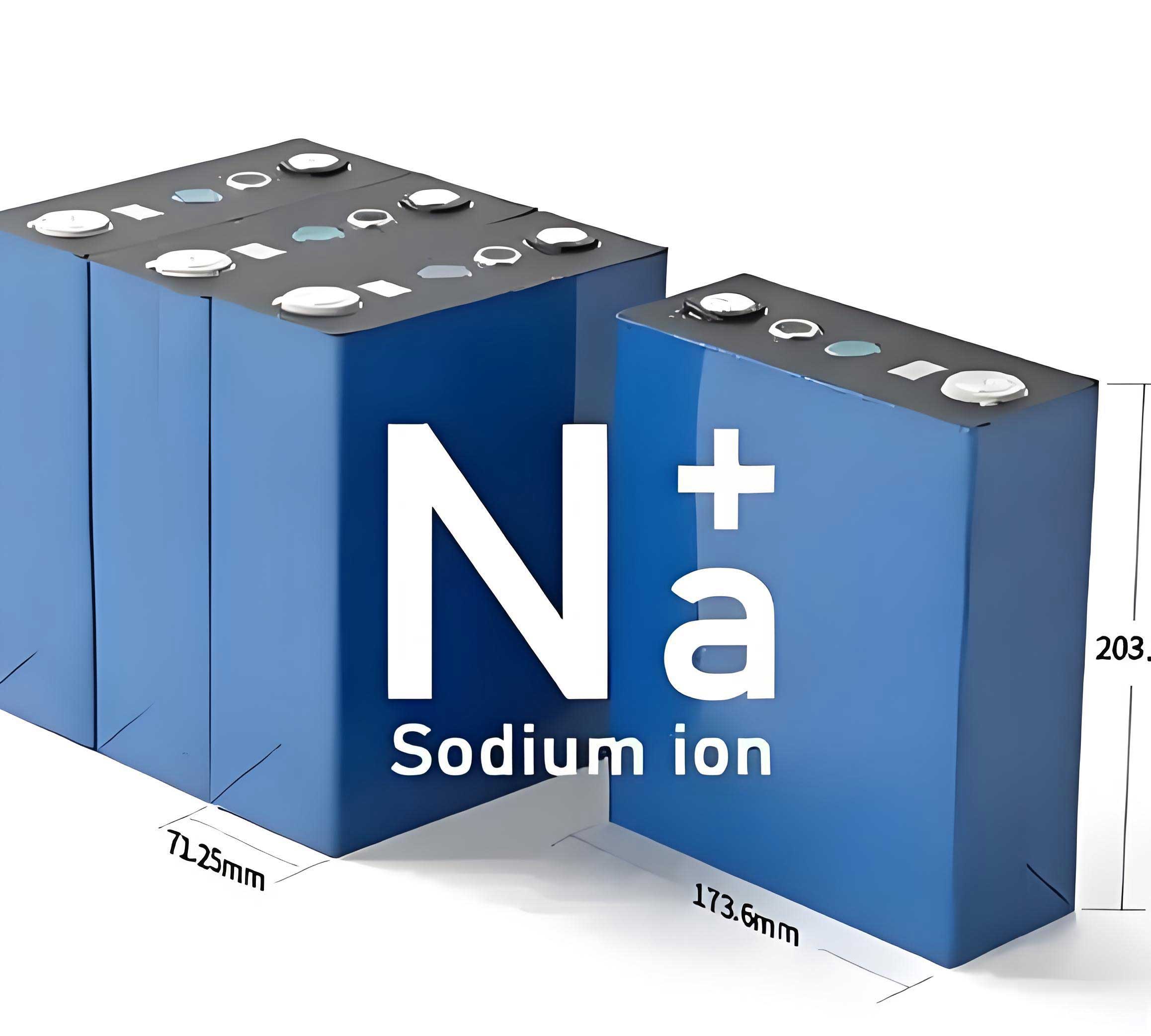
In this work, I designed and fabricated a low-cost carbon microtube (CMT) fiber cloth to replace expensive commercial carbon cloth and traditional metal foils. On this flexible, conductive scaffold, I in-situ grew ReS2 nanospheres via a hydrothermal self-assembly process, subsequently coated with a conformal carbon layer derived from glucose carbonization. This resulting composite, designated as CMT@ReS2@C, embodies a strategic architecture aimed at solving the core problems plaguing ReS2 anodes for sodium-ion battery applications.
Material Design and Synthesis Rationale
The synthesis pathway is designed for simplicity and scalability. The CMT substrate is prepared by the direct carbonization of common cotton fabric in an inert atmosphere. This process transforms the cellulose fibers into a mechanically robust, electrically conductive web of interconnected carbon microtubes, preserving the woven textile’s macroporous structure. Prior to ReS2 growth, the CMT is pre-treated with nitric acid to introduce oxygen-containing functional groups on its surface, which serve as nucleation sites for the subsequent hydrothermal reaction.
The active material is integrated through a one-pot hydrothermal reaction. In this step, ammonium perrhenate and thiourea act as the Re and S sources, respectively. Ethylenediamine not only provides a basic environment but also acts as a structure-directing agent. Crucially, glucose is added as a soluble carbon precursor. During the hydrothermal process, ReS2 nuclei form and grow on the functionalized CMT surface, assembling into nanospheres. Simultaneously, the glucose molecules undergo polymerization and partial carbonization, forming a nascent carbon network that intertwines with the growing ReS2. A final annealing step at 600°C under inert gas completes the crystallization of ReS2 and fully carbonizes the glucose-derived coating, resulting in a ReS2@C core-shell structure firmly anchored on the CMT fiber. This integrated fabrication process can be summarized by the conceptual equation for the electrode’s architecture:
$$ \text{CMT}_{\text{(substrate)}} + \text{ReO}_4^- + \text{CS(NH}_2)_2 + \text{C}_6\text{H}_{12}\text{O}_6 \xrightarrow[\text{Carbonization}]{\text{Hydrothermal}} \text{CMT}@[\text{ReS}_2@\text{C}]_{\text{(composite)}} $$
The advantages of this design are multi-faceted and synergistic:
- 3D Conductive Network: The CMT cloth itself forms a continuous, three-dimensional electron highway, enabling rapid charge collection and delivery throughout the entire electrode volume, effectively compensating for the low conductivity of ReS2.
- Hierarchical Porosity: The macropores between woven fibers and the meso/micropores within the carbon coating facilitate deep and rapid electrolyte penetration, ensuring full access of Na+ ions to the active material and shortening diffusion paths.
- Constrained Volume Expansion: The ReS2 nanospheres are spatially confined by the dual carbon matrix—the rigid CMT fiber and the flexible carbon coating. This confinement buffers the mechanical stress from volume changes, maintains structural integrity, and preserves electrical connectivity during cycling.
- Binder-Free & Current Collector-Free: Eliminating non-active components (binder, separate metal foil) increases the overall energy density of the electrode and removes parasitic resistances.
Structural and Morphological Characteristics
Characterization confirms the successful realization of the designed structure. The CMT substrate retains its woven textile morphology post-carbonization, consisting of interlaced, hollow tubular fibers several micrometers in diameter. After the hydrothermal and carbonization process, the surface of these fibers is uniformly decorated with densely packed nanospheres. Higher magnification reveals that these nanospheres, with diameters ranging from 50 to 150 nm, are composed of ultrathin ReS2 nanosheets assembled in a flower-like manner, all encapsulated by a thin, amorphous carbon layer. Cross-sectional analysis further confirms that the active composite layer is firmly bonded to the CMT fiber surface. Elemental mapping demonstrates a homogeneous distribution of Re, S, and C across the fiber surface, corroborating the uniform growth of the ReS2@C composite.
X-ray diffraction patterns of the composite show characteristic peaks corresponding to the (220), (003), and (221) planes of hexagonal ReS2, confirming its crystalline nature. A broad peak around 22° is attributed to the (002) plane of graphitic carbon from the CMT and the carbon coating. Raman spectroscopy provides further evidence. The spectrum displays two prominent bands at approximately 144 cm-1 and 202 cm-1, which are assigned to the in-plane (Eg) and out-of-plane (Ag) vibrational modes of ReS2, respectively. The presence of carbon is affirmed by the D band (~1346 cm-1, disorder-induced) and G band (~1585 cm-1, graphitic) with an ID/IG intensity ratio of about 0.92, indicating a partially graphitized carbon structure with sufficient defect sites that are beneficial for ion adsorption and kinetics enhancement.
Electrochemical Performance in Sodium-Ion Battery Systems
The electrochemical performance of the CMT@ReS2@C composite as a sodium-ion battery anode was systematically evaluated in half-cells against sodium metal. Cyclic voltammetry (CV) during the initial cycles reveals the complex sodium storage mechanism. In the first cathodic scan, two reduction peaks are observed at approximately 1.05 V and 0.27 V (vs. Na+/Na). These correspond to the intercalation of Na+ into the ReS2 interlayers to form NaxReS2, followed by a conversion reaction where NaxReS2 transforms into metallic Re nanoparticles embedded in a Na2S matrix. The formation of a solid-electrolyte interphase (SEI) also contributes to the irreversible capacity in this scan. The anodic scan shows oxidation peaks near 0.25 V and 1.94 V, corresponding to the reversible conversion back to ReS2 and the subsequent deintercalation of Na+. The good overlap of CV curves from the second cycle onward indicates highly reversible redox reactions and stable electrode kinetics.
Galvanostatic charge-discharge profiles are consistent with the CV analysis, showing distinct plateaus corresponding to these phase transitions. The initial discharge and charge capacities are 259 and 204 mAh g-1, respectively, yielding a respectable initial Coulombic efficiency (ICE) of 78.8% for a conversion-type material. The capacity loss is primarily attributed to inevitable SEI formation. Subsequent cycles show excellent reproducibility of the voltage profiles, signaling robust structural stability.
The true merit of this integrated design is revealed in rate capability and long-term cycling tests. For comparison, control electrodes were prepared: bare CMT cloth and a conventional slurry-cast carbon nanotube (CNT) electrode on copper foil.
| Current Density (A g-1) | CMT@ReS2@C Discharge Capacity (mAh g-1) | Bare CMT Capacity (mAh g-1) | CNT on Cu Foil Capacity (mAh g-1) |
|---|---|---|---|
| 0.1 | 191 | 99 | 67 |
| 0.2 | 151 | 89 | 55 |
| 0.5 | 127 | 73 | 38 |
| 1.0 | 109 | 58 | 28 |
| 2.0 | 87 | 39 | 23 |
| Return to 0.1 | ~185 | ~95 | ~65 |
The data in Table 1 unequivocally demonstrates the superior rate performance of the CMT@ReS2@C composite. It significantly outperforms both the bare conductive scaffold (CMT) and the traditional CNT electrode at all current densities. Notably, when the current density is returned to 0.1 A g-1 after high-rate testing, the capacity nearly recovers to its initial value, proving the electrode’s exceptional resilience and kinetic stability. The performance can be partially quantified by considering the apparent sodium-ion diffusion coefficient (DNa+), which is a key parameter governing rate capability. Using data from Galvanostatic Intermittent Titration Technique (GITT), DNa+ can be estimated using the following formula:
$$ D_{Na^+} = \frac{4}{\pi \tau} \left( \frac{m_B V_m}{M_B S} \right)^2 \left( \frac{\Delta E_s}{\Delta E_\tau} \right)^2 $$
where \(\tau\) is the current pulse duration, \(m_B\) is the mass of active material, \(M_B\) is its molar mass, \(V_m\) is the molar volume, \(S\) is the electrode/electrolyte contact area, \(\Delta E_s\) is the steady-state voltage change, and \(\Delta E_\tau\) is the voltage change during the constant current pulse. The CMT@ReS2@C composite consistently exhibits DNa+ values one to two orders of magnitude higher than those of a control ReS2@C powder sample without the 3D CMT backbone, especially in the low-voltage conversion reaction region. This quantitatively confirms the critical role of the 3D conductive network in enhancing ionic transport kinetics.
Long-term cycling stability, a critical metric for practical sodium-ion battery applications, was evaluated at both moderate and high current densities. The results are summarized below.
| Anode Material | Initial Capacity (mAh g-1) | Capacity after 500 cycles (mAh g-1) | Capacity Retention | Average Decay per Cycle |
|---|---|---|---|---|
| CMT@ReS2@C | 141 (at cycle 4)* | 94 | 66.7% | 0.081% |
| Bare CMT | ~60 | 57 | ~95% | ~0.01% |
| CNT on Cu Foil | ~45 | 34 | ~75.6% | ~0.055% |
*Capacity after 3 activation cycles at 0.1 A g-1.
At a high current density of 1.0 A g-1, the CMT@ReS2@C anode delivers an impressive cycling performance. After an initial activation and stabilization period, it maintains a highly stable cycling profile. Over 500 consecutive charge-discharge cycles, it retains a reversible capacity of 94 mAh g-1 with an average Coulombic efficiency exceeding 99.5%. The capacity decay rate is a remarkably low 0.081% per cycle. In contrast, while the bare CMT shows excellent capacity retention due to its stable carbon structure, its absolute capacity is very low because it lacks the high-capacity ReS2 active material. The conventional CNT electrode suffers from both lower capacity and inferior cycling stability compared to our integrated composite. This performance highlights the success of the strategy: the CMT backbone provides mechanical and conductive stability, while the carbon-coated ReS2 provides high capacity; together they achieve a balance of performance and longevity that is unattainable by either component alone or by traditional electrode manufacturing methods.
Discussion on the Synergistic Mechanisms
The outstanding electrochemical data can be rationalized by the multi-scale synergistic effects engineered into the CMT@ReS2@C electrode. First, the electronic conductivity of the entire electrode is drastically improved. The effective electronic conductivity (\(\sigma_{\text{eff}}\)) of a composite porous electrode can be modeled as a function of the conductivity of its components and their volume fractions. By using the CMT as an integral current collector, we maximize the volume fraction of the highly conductive phase (carbon) and ensure its percolation throughout the electrode, directly addressing the primary drawback of ReS2.
Second, the hierarchical pore structure reduces the tortuosity for ion transport. The macro-pores between CMT fibers act as electrolyte reservoirs, while the meso-pores within the carbon coating facilitate rapid ion access to the ReS2 surface. This reduces the effective diffusion polarization, which is described by equations related to the concentration overpotential (\(\eta_{\text{diff}}\)):
$$ \eta_{\text{diff}} = \frac{RT}{F} \ln \left( \frac{c_s}{c_b} \right) $$
where \(R\) is the gas constant, \(T\) is temperature, \(F\) is Faraday’s constant, \(c_s\) is the ion concentration at the electrode surface, and \(c_b\) is the bulk concentration. A structure that ensures easy electrolyte access helps maintain \(c_s\) close to \(c_b\), minimizing \(\eta_{\text{diff}}\), especially at high rates.
Third, and most critically, the dual carbon confinement effectively mitigates the volume expansion stress. During sodiation, the ReS2 nanospheres expand. The surrounding carbon coating acts as a flexible, yet constraining buffer layer, preventing the nanospheres from disintegrating. The rigid CMT fiber underneath provides a strong mechanical support that anchors the entire active composite layer, preventing delamination. This combined effect maintains the structural integrity of both the active material and the electrode’s architecture over hundreds of cycles. This mechanical stability is reflected in the exceptionally low cycle-to-cycle capacity decay rate observed in the sodium-ion battery testing.
Finally, the elimination of inert components (binder, metal foil) not only simplifies fabrication but also enhances the overall energy density at the electrode level. The gravimetric capacity reported is based on the total mass of the active composite (ReS2@C), but the areal capacity of the freestanding electrode is competitive because a significant portion of the electrode mass is the functional, conductive CMT scaffold, not dead weight.
Conclusion and Perspective
In summary, I have successfully designed and fabricated a novel, low-cost, self-supported anode for sodium-ion batteries by in-situ growth of carbon-coated ReS2 nanospheres on a carbon microtube fiber cloth. This CMT@ReS2@C composite embodies a strategic material architecture that concurrently addresses the key challenges of conductivity, ion transport kinetics, and volume change inherent to conversion-type anode materials like ReS2. The integrated 3D conductive network ensures fast electron transfer, the hierarchical porosity enables efficient electrolyte infiltration, and the dual carbon confinement provides exceptional mechanical stability against repetitive sodiation/desodiation stresses.
The electrochemical results are compelling: the composite anode exhibits significantly enhanced rate capability and outstanding long-term cycling stability, maintaining 94 mAh g-1 after 500 cycles at 1 A g-1 with a minimal decay rate of 0.081% per cycle. This performance surpasses that of its individual components and conventional electrode configurations, validating the effectiveness of the synergistic design.
This work provides a promising and scalable blueprint for developing high-performance, binder-free electrodes for sodium-ion battery technology. The use of a low-cost carbonized textile as a substrate opens avenues for flexible and wearable energy storage devices. Future work may focus on optimizing the mass loading of the active material, exploring other active materials compatible with this platform, and assembling full sodium-ion battery cells with appropriate cathode materials to evaluate practical energy and power density. By moving beyond traditional electrode manufacturing paradigms, such integrated designs are crucial for unlocking the full potential of next-generation, cost-effective energy storage systems.