
The relentless advancement of portable electronics, electric vehicles, and large-scale grid storage solutions is fundamentally intertwined with the progress of lithium-ion battery technology. At the heart of every high-performance lithium-ion battery lies the cathode material, a component whose quality and purity are paramount in determining the cell’s energy density, cycle life, and safety profile. The synthesis of these cathode materials, such as lithium cobalt oxide (LCO), lithium manganese oxide (LMO), and nickel-manganese-cobalt (NMC) oxides, often involves high-temperature solid-state calcination processes. During these processes, the precursor powders are typically contained within ceramic vessels known as saggers to prevent contamination and to facilitate handling. The selection of sagger material is therefore a critical, yet often underappreciated, aspect of lithium-ion battery manufacturing.
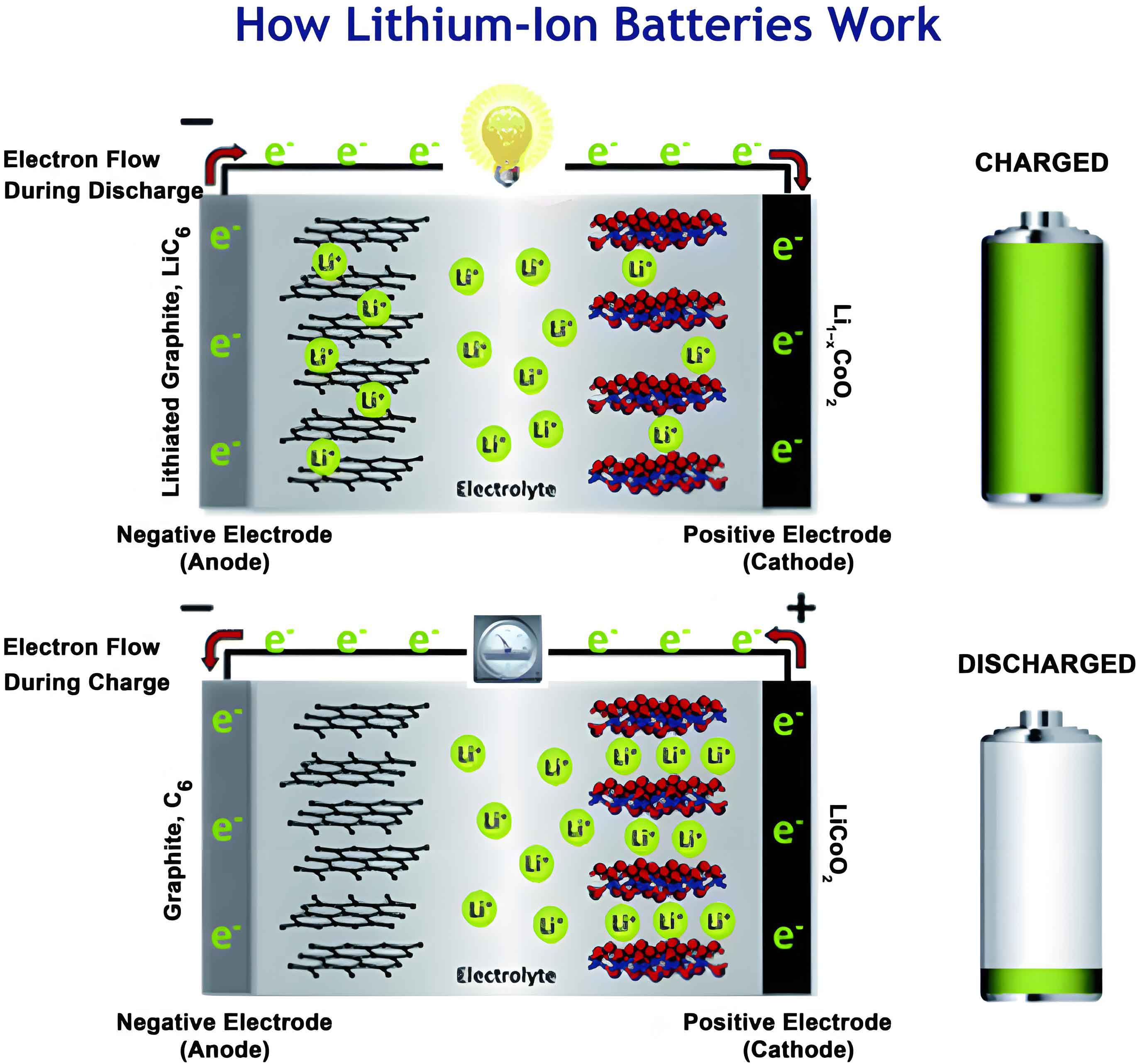
Traditional sagger materials, including cordierite and mullite, have been widely used. However, their service life in the aggressive environment of lithium-ion battery cathode synthesis is severely limited. The fundamental issue is the highly corrosive nature of the lithium-containing precursors and the intermediate phases formed at high temperatures. Lithium oxide (Li2O), a common reactive species, is a powerful flux that readily infiltrates porous ceramic structures, reacting with the sagger’s constituent phases. This leads to two major problems: 1) the degradation and eventual mechanical failure of the sagger itself, reducing its usable lifespan and increasing production costs, and 2) the contamination of the cathode material with impurities leached from the sagger (e.g., silicon, magnesium), which can dramatically impair the electrochemical performance of the final lithium-ion battery.
In search of a more robust solution, attention has turned to calcium hexaluminate, CaAl12O19 (commonly abbreviated as CA6). This refractory compound possesses a magnetoplumbite-type crystal structure, imparting exceptional chemical stability in alkaline environments, high melting point (>1850°C), and good mechanical strength at elevated temperatures. These intrinsic properties make it a promising candidate material for saggers used in lithium-ion battery cathode production. However, a significant challenge impedes its direct application: CA6 exhibits a strong anisotropic grain growth habit during sintering, leading to the formation of plate-like or lath-like microstructures. These interlocking plates create a microstructure with high intrinsic porosity, which, while sometimes beneficial for thermal shock resistance, provides easy pathways for corrosive lithium species to penetrate and attack the material. Consequently, the key to unlocking the potential of CA6 as a durable sagger lies in modifying its sintering behavior to achieve a denser, more equiaxed, and less permeable microstructure without compromising its inherent chemical stability.
This article presents a comprehensive investigation from a first-person research perspective into the modification of CA6 sagger material via rare-earth oxide doping, specifically using lanthanum oxide (La2O3). I will delve into the mechanisms through which La3+ ions influence the crystal chemistry and sintering dynamics of CA6. The discussion will be supported by systematic data on the evolution of physical, mechanical, and microstructural properties. Furthermore, a detailed analysis of the interaction between the modified CA6 and a model lithium-ion battery cathode material, LiMn2O4, will be presented to elucidate the corrosion mechanisms and quantify the improvement in service performance. The ultimate goal is to establish a materials design framework for developing long-life saggers that can enhance the efficiency and purity of lithium-ion battery manufacturing.
Fundamentals of CA6 and the Doping Strategy
The crystal structure of CA6 belongs to the magnetoplumbite family (space group P63/mmc). It can be conceptualized as a layered structure consisting of spinel blocks separated by mirror planes containing the larger Ca2+ ions. The structural formula is often written as CaO·6Al2O3. The anisotropic growth, leading to plate-like morphology, is attributed to the differential surface energies of the crystal faces. The basal planes (perpendicular to the c-axis) have lower surface energy compared to the prismatic planes, leading to preferential growth along the a- and b-axes. This results in the characteristic high-aspect-ratio grains that hinder densification by creating large, irregular pores at grain intersections.
The principle behind using La2O3 as a dopant is based on defect engineering. The ionic radius of La3+ (≈1.16 Å for 8-coordination) is significantly larger than that of Al3+ (≈0.54 Å for 6-coordination) and even Ca2+ (≈1.12 Å for 8-coordination). This size mismatch makes direct substitution for either cation energetically unfavorable in the close-packed lattices of the spinel block or the Ca layer under standard sintering conditions. Instead, the prevailing mechanism is believed to be the incorporation of La3+ as an interstitial defect, particularly within the more open mirror planes of the structure. To maintain charge neutrality, this incorporation is compensated by the creation of oxygen vacancies (VO••). The defect reaction can be described using Kröger-Vink notation. When La2O3 is incorporated into the CA6 lattice, it can be represented as:
$$ \text{La}_2\text{O}_3 \xrightarrow{\text{CA6}} 2\text{La}_\text{i}^{\bullet\bullet\bullet} + 3\text{O}_\text{O}^\text{x} + \text{V}_\text{O}^{\bullet\bullet} $$
Here, $\text{La}_\text{i}^{\bullet\bullet\bullet}$ represents a triply charged interstitial lanthanum ion, $\text{O}_\text{O}^\text{x}$ is a neutral oxygen on its lattice site, and $\text{V}_\text{O}^{\bullet\bullet}$ is a doubly charged oxygen vacancy. The introduction of these point defects—large interstitial cations and oxygen vacancies—has profound effects on diffusion kinetics. Enhanced diffusion, particularly along the c-axis direction, can promote grain growth in that direction, counteracting the natural anisotropy and encouraging a more equiaxed grain morphology. Furthermore, oxygen vacancies can enhance the sintering rate by facilitating mass transport. The subsequent sections present the experimental findings that validate this theoretical framework.
Experimental Methodology and Property Evolution
The research was conducted using high-purity alumina (Al2O3) and calcium carbonate (CaCO3) as primary raw materials, mixed in the stoichiometric ratio to yield CA6. Lanthanum oxide (La2O3) was added as the dopant in varying amounts. The mixtures were calcined, milled, pressed into specimens, and finally sintered at 1600°C. A separate set of experiments involved corrosion testing by exposing the sintered CA6 specimens to a mixture of Li2CO3 and MnO2 (precursors for LiMn2O4) at 800°C for multiple cycles to simulate sagger service conditions.
The effect of La2O3 addition on the densification behavior is quantitatively summarized in Table 1. A clear trend of increasing bulk density and decreasing apparent porosity with increasing dopant concentration is observed. The undoped CA6 is highly porous, a direct consequence of its plate-like microstructure. The addition of just 1.0 wt.% La2O3 leads to a noticeable improvement. The optimal densification in this study was achieved with 4.0 wt.% La2O3, yielding a material with a density exceeding 3.1 g/cm³ and porosity around 12%. This represents a dramatic microstructural improvement critical for corrosion resistance in lithium-ion battery applications.
| Specimen Designation | La2O3 Content (wt.%) | Bulk Density (g/cm³) | Apparent Porosity (%) | Cold Crushing Strength (MPa) | Elastic Modulus (GPa) |
|---|---|---|---|---|---|
| S0 | 0.0 | 2.63 | 25.6 | ~280 | ~38.5 |
| S1 | 1.0 | 2.85 | 19.3 | 460 | 45.1 |
| S2 | 2.0 | 2.98 | 15.7 | 525 | 49.8 |
| S3 | 3.0 | 3.07 | 13.4 | 510 | 53.6 |
| S4 | 4.0 | 3.14 | 12.0 | 495 | 56.3 |
The mechanical properties followed a related but distinct trend. The cold crushing strength increased sharply with initial doping, reaching a maximum at 2.0 wt.% La2O3. This peak correlates with optimal grain bonding and defect configuration at intermediate doping levels. While the strength slightly decreased at 4.0 wt.% doping, it remained significantly higher than that of the undoped material. In contrast, the elastic modulus, a measure of the material’s stiffness, increased monotonically with La2O3 content. This continuous rise is directly linked to the increasing densification and reduction of porosity, as pores act as compliance features that lower the overall modulus. The high modulus of the 4.0 wt.% doped sample indicates a very rigid, well-sintered ceramic network, which is desirable for dimensional stability under load in a lithium-ion battery cathode furnace.
Phase Composition and Microstructural Analysis
X-ray diffraction analysis revealed the phase evolution. The undoped sample contained CA6 as the primary phase, along with detectable amounts of calcium dialuminate (CaAl4O7 or CA2), indicating incomplete reaction. Upon the addition of 1.0 wt.% La2O3, the CA2 phase disappeared, and the diffraction peaks for CA6 shifted slightly to lower angles. This peak shift is clear evidence of lattice expansion due to the incorporation of the large La3+ ions, forming a solid solution and confirming the proposed defect mechanism. At the highest doping level (4.0 wt.%), secondary peaks corresponding to unreacted La2O3 and a minor reappearance of CA2 were detected, indicating that the solid solubility limit of La2O3 in CA6 under these conditions had been exceeded. However, the excess La2O3 likely acted as a sintering aid at grain boundaries, further promoting densification.
The most compelling evidence for the doping mechanism comes from microstructural examination. The undoped CA6 exhibited the classic, highly porous matrix of interlocking plate-like crystals. With the addition of La2O3, a remarkable transformation occurred. The grains progressively lost their elongated plate-like habit and developed into more equiaxed, hexagonal prismatic shapes. This microstructural evolution is a direct visual confirmation of the modified growth kinetics. The interstitial La3+ and associated oxygen vacancies enhanced diffusion along the c-axis, allowing grains to thicken in that direction and approach an equilibrium shape. This change is the root cause of the improved packing and reduced porosity quantified in Table 1.
Energy-dispersive X-ray spectroscopy (EDS) analysis provided further proof of La incorporation into the CA6 structure. Point analysis on grains within doped samples confirmed the presence of La. Furthermore, a trend of decreasing Al content within the CA6 grains with increasing nominal La2O3 addition was observed. This can be rationalized by the defect chemistry. The incorporation mechanism does not require a one-to-one substitution but leads to a dilution of the Al signal as the La-containing defect complex integrates into the lattice. The data is summarized in Table 2.
| Specimen | O (at.%) | Al (at.%) | Ca (at.%) | La (at.%) | Approx. Formula |
|---|---|---|---|---|---|
| S0 | 47.80 | 46.07 | 6.12 | 0.00 | CaAl12O19 |
| S1 | 49.32 | 44.52 | 5.43 | 0.73 | Ca0.97La0.03Al11.6O19+δ |
| S4 | 49.52 | 41.33 | 6.50 | 2.66 | Ca1.06La0.11Al10.8O19+δ |
The approximate formulas in the last column, derived from normalizing to 19+δ oxygen atoms, illustrate the non-stoichiometry induced by doping. The increase in La and the subtle variation in Ca and Al content support the interstitial model over simple substitution.
Corrosion Resistance Against Lithium-Ion Battery Cathode Material
The ultimate test for the modified CA6 is its performance in a simulated lithium-ion battery cathode synthesis environment. The corrosion test involved exposing the sintered CA6 substrates to LiMn2O4 precursor materials. The primary corrosive agent is lithium, which can infiltrate as Li+ ions (often accompanied by O2- or from Li2O). The infiltration depth and reaction severity determine the sagger’s lifetime. The corrosion process involves several chemical reactions. First, the formation of the cathode material itself:
$$ 2\text{Li}_2\text{CO}_3 + 8\text{MnO}_2 \xrightarrow{800^\circ\text{C}} 4\text{LiMn}_2\text{O}_4 + 2\text{CO}_2 \uparrow + \text{O}_2 \uparrow $$
Subsequently, the corrosive lithium species attack the CA6 sagger. Lithium oxide, which can form from decomposition or side reactions, reacts directly with CA6:
$$ \text{CaAl}_{12}\text{O}_{19} + 4\text{Li}_2\text{O} \rightarrow 8\text{LiAlO}_2 + \text{CaAl}_4\text{O}_7 $$
Alternatively, lithium carbonate itself can be the reacting species:
$$ \text{CaAl}_{12}\text{O}_{19} + 4\text{Li}_2\text{CO}_3 \rightarrow 8\text{LiAlO}_2 + \text{CaAl}_4\text{O}_7 + 4\text{CO}_2 \uparrow $$
The products, lithium aluminate (LiAlO2) and calcium dialuminate (CA2), have different molar volumes and crystal structures compared to CA6. This transformation at the reaction front induces mechanical stress, leading to cracking and spallation, which accelerates the corrosion process. Furthermore, the spinel LiMn2O4 can release Li2O under certain conditions, feeding the corrosion cycle:
$$ \text{LiMn}_2\text{O}_4 + 0.07\text{O}_2 \rightarrow \text{Li}_{0.72}\text{Mn}_2\text{O}_4 + 0.14\text{Li}_2\text{O} $$
The effectiveness of La2O3 doping in mitigating this attack is striking. Post-corrosion XRD analysis of the sample surfaces showed that the intensities of the corrosive reaction product phases (LiAlO2, CA2, and a lithium-deficient spinel Li0.72Mn2O4) were markedly lower for the doped samples compared to the undoped one. The sample with 4.0 wt.% La2O3 showed the weakest peaks for these phases, indicating the least amount of chemical reaction.
Cross-sectional analysis provided a visual and quantitative measure of the corrosion resistance. The corroded zone typically consisted of two layers: a thin, fully reacted outer layer and a thicker penetration layer where Li+ had diffused in ahead of the reaction front. The total thickness of this affected zone is a direct indicator of corrosion severity. Measurements from these analyses are consolidated in Table 3.
| Specimen | La2O3 (wt.%) | Avg. Corrosion Zone Thickness (µm) | Dominant Phases in Corroded Layer (XRD) | Relative Corrosion Resistance |
|---|---|---|---|---|
| S0 | 0.0 | ~1200 | Strong LiAlO2, CA2, Li0.72Mn2O4 | Poor |
| S1 | 1.0 | ~750 | Moderate LiAlO2, CA2 | Improved |
| S2 | 2.0 | ~450 | Weak LiAlO2, CA2 | Good |
| S4 | 4.0 | ~250 | Very Weak LiAlO2 | Excellent |
The mechanism for improved resistance is directly linked to the microstructural modifications achieved through doping. The high porosity of undoped CA6 acts as a capillary network, allowing rapid infiltration of lithium-containing vapors or melts deep into the material, vastly increasing the reactive surface area. In contrast, the dense, equiaxed microstructure of the La2O3-doped CA6 presents a formidable barrier. The primary transport pathway shifts from rapid pore-channel diffusion to much slower grain boundary or lattice diffusion. This drastically reduces the rate at which Li+ can penetrate to unreacted CA6, effectively containing the corrosion to a shallow surface layer. The modified grain boundaries in the doped material may also exhibit different chemistry that is less susceptible to wetting or reaction by lithium compounds.
Conclusion and Outlook for Lithium-Ion Battery Manufacturing
This investigation demonstrates that La2O3 doping is a highly effective strategy for engineering the microstructure and properties of calcium hexaluminate (CA6) for use as sagger material in lithium-ion battery cathode synthesis. The key findings are:
- The incorporation of La3+ ions into the CA6 lattice occurs primarily via an interstitial defect mechanism, compensated by the formation of oxygen vacancies. This defect complex alters the intrinsic crystal growth kinetics.
- The modified growth kinetics suppress the natural anisotropic, plate-like habit of CA6, promoting the development of a dense, equiaxed, hexagonal prismatic microstructure. This results in a significant increase in bulk density (e.g., from 2.63 to 3.14 g/cm³) and a corresponding decrease in apparent porosity (from 25.6% to 12.0%) with 4.0 wt.% La2O3 addition.
- The refined microstructure confers superior resistance to corrosion by lithium-containing species. The dense matrix acts as a formidable barrier to Li+ infiltration, reducing the depth and severity of the corrosive attack from model lithium-ion battery cathode materials like LiMn2O4.
The implications for the lithium-ion battery industry are substantial. Implementing such modified CA6 saggers can lead to: 1) Extended sagger service life, reducing material consumption and operational downtime; 2) Higher purity of cathode active materials by minimizing cross-contamination from the sagger vessel; and 3) Potentially more consistent and efficient high-temperature processing. Future research directions should focus on optimizing the doping level to balance cost and performance, investigating the effects of other rare-earth or transition metal oxides, and evaluating the long-term thermal cycling performance under industrial conditions. Furthermore, understanding the interaction with other cathode chemistries, such as high-nickel NMC or lithium iron phosphate (LFP), is crucial. The principles of defect engineering and microstructural control elucidated here provide a robust framework for developing next-generation refractory solutions that support the sustainable growth of the global lithium-ion battery ecosystem.