
In recent years, the widespread adoption of lithium-ion batteries in electric bicycles, energy storage systems, and portable electronics has led to a significant increase in fire incidents. As a fire investigator, I have observed that these fires pose unique challenges due to the complex electrochemistry and thermal behavior of lithium-ion batteries. The primary challenge lies in distinguishing whether a fire was initiated by an internal failure of the lithium-ion battery or if the battery was merely a victim of an external fire. This distinction is critical for accurate fire cause determination, liability assessment, and developing preventive measures. Through experimental research and field investigations, I aim to elucidate the key factors in lithium-ion battery fire investigation, providing a technical foundation for investigators.
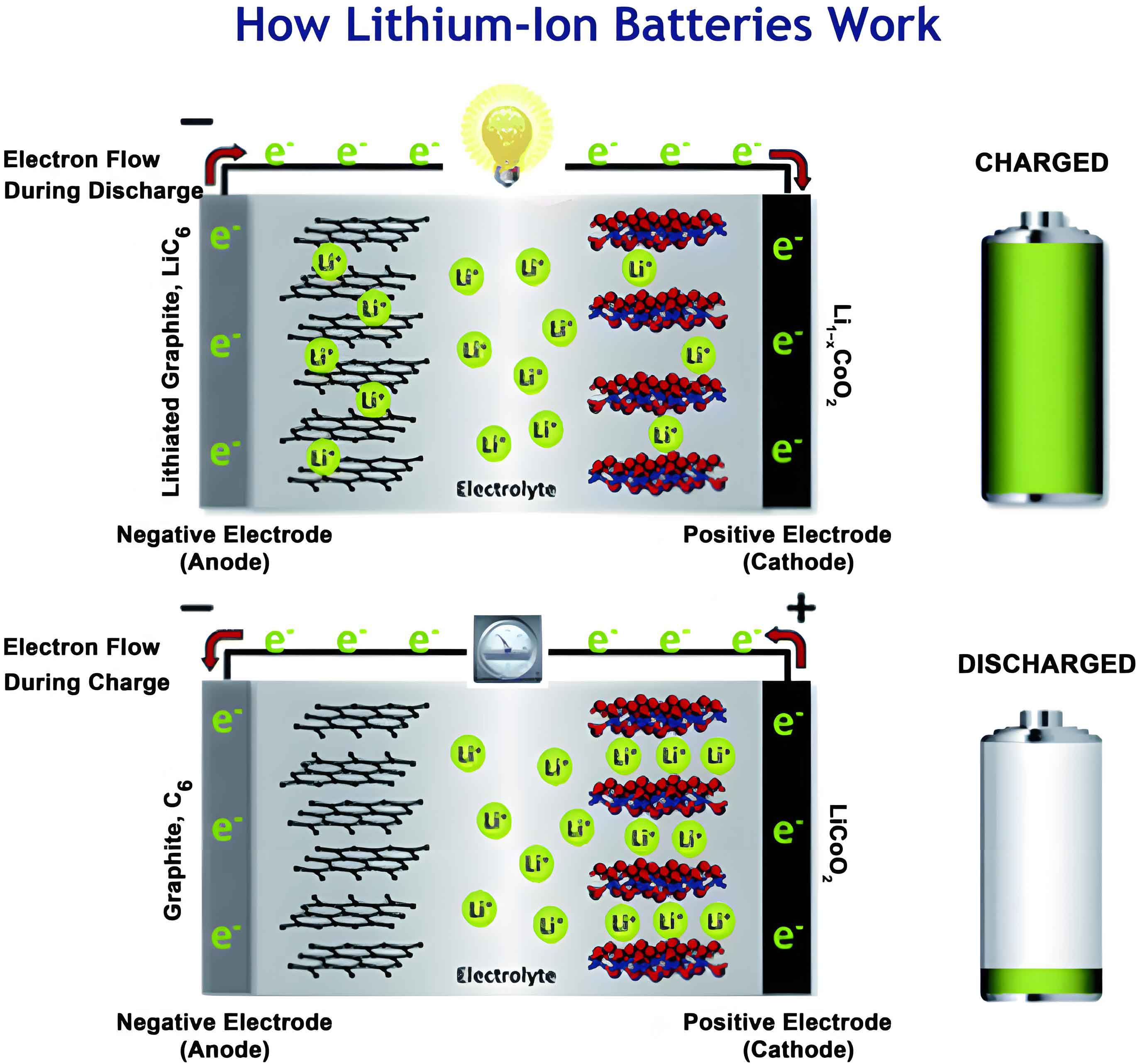
The fundamental mechanism behind lithium-ion battery fires is thermal runaway. A lithium-ion battery is an electrochemical device where, during normal operation, lithium ions shuttle between the cathode and anode. However, under abusive conditions, a series of exothermic side reactions can occur. These side reactions, if they generate heat faster than it can be dissipated, can lead to a self-sustaining, uncontrolled increase in temperature—thermal runaway. The heat generation rate during thermal runaway can be modeled using an energy balance equation. The total heat generation ($Q_{total}$) within a lithium-ion battery cell can be expressed as the sum of heat from electrochemical reactions, side reactions, and Joule heating:
$$Q_{total} = \sum_i Q_{reaction,i} + I^2 R_{internal} + Q_{side}$$
where $Q_{reaction,i}$ represents heat from normal charge/discharge reactions, $I$ is the current, $R_{internal}$ is the internal resistance, and $Q_{side}$ is the heat from abusive side reactions (e.g., SEI decomposition, electrolyte decomposition, cathode material decomposition). When $Q_{total}$ exceeds the heat dissipation capacity, the temperature rises exponentially, leading to thermal runaway. The triggering factors for these side reactions are broadly categorized into internal faults (e.g., manufacturing defects, internal short circuits, overcharging) and external insults (e.g., external heating, mechanical damage).
To understand the distinct signatures of internally-initiated versus externally-triggered lithium-ion battery fires, we conducted controlled experiments. The first set of experiments focused on internal failure, specifically overcharging of a lithium-ion battery pack. Overcharging forces excess lithium into the anode, leading to lithium plating and subsequent side reactions. We subjected a ternary lithium-ion battery module (NMC chemistry) to constant-current charging without an upper voltage limit. The process was monitored using thermocouples, gas sensors, and high-speed cameras. The experimental progression is summarized in the table below, highlighting the key phenomena and their timing relative to the initiation of overcharge.
| Time Phase (Relative to Overcharge Start) | Observed Phenomenon | Temperature Range | Implied Stage of Lithium-ion Battery Failure |
|---|---|---|---|
| 0 – t1 minutes | Normal charging, slight temperature rise. | 25°C – 60°C | Initial overcharge, SEI layer destabilization. |
| t1 – t2 minutes | Emission of white smoke (electrolyte vapor). | 60°C – 120°C | Electrolyte decomposition begins, gas generation. |
| t2 – t3 minutes | Increased smoke, audible popping sounds (venting). | 120°C – 180°C | Vent opening, release of flammable gas mixture. |
| At t3 minutes | Sudden jet of sparks, ignition, violent deflagration. | Peak > 800°C | Ignition of vented gases, thermal runaway initiation. |
| t3 – t4 minutes | Sustained fire, sequential thermal propagation to adjacent cells. | 600°C – 1000°C | Thermal runaway propagation, directional heat transfer. |
The key observation from this internally-initiated event is its suddenness. The transition from smoke emission to a full-scale fire is abrupt, often within seconds. The fire behavior is characterized by intense,喷射状 flames due to the pressurized ejection of burning gases and particles from the failing lithium-ion battery cells. The heat release rate during this phase is extremely high. The thermal propagation between cells can be described by a simplified model considering heat transfer. The condition for propagation to an adjacent cell is when the heat flux received ($q_{received}$) exceeds the critical heat flux needed to initiate thermal runaway in that cell ($q_{critical}$):
$$q_{received} = \sigma \epsilon (T_{source}^4 – T_{target}^4) + h(T_{source} – T_{target}) > q_{critical}$$
where $\sigma$ is the Stefan-Boltzmann constant, $\epsilon$ is emissivity, $T$ is temperature, and $h$ is the convective heat transfer coefficient.
The second experiment simulated an external fire impinging on a lithium-ion battery pack. A ternary lithium-ion battery module was placed above a square burner containing burning gasoline. The external flame provided a constant heat flux to the battery casing. The progression, detailed in Table 2, shows a markedly different timeline and phenomenology compared to the internal failure case.
| Time Phase (Relative to External Fire Start) | Observed Phenomenon | Battery Surface Temperature | Implied Stage of Lithium-ion Battery Response |
|---|---|---|---|
| 0 – ta minutes | Battery casing heats up, no immediate reaction from lithium-ion battery. | 25°C – 150°C | Heat absorption by casing and module structure. |
| ta – tb minutes | Casing may deform/melt, smoke from burning plastic components. | 150°C – 250°C | External fire damages battery pack integrity. |
| At tb minutes (tb > t3 from Table 1) | First cell undergoes thermal runaway after significant delay. | Internal cell temp ~180°C+ | External heat finally triggers internal side reactions. |
| tb – tc minutes | Violent thermal runaway of the first cell, potentially triggering others. | Peak > 800°C | Delayed but intense thermal runaway, often superimposed on existing fire. |
The critical distinction is the delayed response. An externally heated lithium-ion battery does not fail immediately; it requires sustained heating to raise the internal cell components to the threshold temperatures for side reactions. This delay can be several minutes, depending on the heat flux, battery design, and state of charge. The fire development lacks the sudden “cold start” explosion characteristic of an internal fault. Instead, the lithium-ion battery’s failure appears as an escalation within an already ongoing fire.
Based on these experimental findings, the investigation of fires involving lithium-ion batteries must focus on capturing the initial characteristics of the event. The investigation framework rests on three pillars: witness interviews, video analysis, and physical evidence examination. Each pillar targets specific signatures of lithium-ion battery thermal runaway.
Witness Interview Protocol: When interviewing witnesses, I structure questions to probe for sensory cues unique to early-stage lithium-ion battery failure. The following table outlines the key sensory signatures and corresponding investigative questions.
| Sensory Modality | Characteristic Signature of Lithium-ion Battery Thermal Runaway | Sample Investigative Questions |
|---|---|---|
| Olfactory (Smell) | Sharp, acrid, or solvent-like smell (decomposing electrolyte). Metallic or chemical odor. Less prominent “burning plastic” smell initially. | “What was the very first smell you noticed? Was it sweet, acidic, or like chemicals?” “Did you smell anything like burning electronics before seeing flames?” |
| Auditory (Sound) | Loud “pop” or “bang” (venting event). Hissing or sizzling. A series of popping sounds like firecrackers (cell-to-cell propagation). | “Did you hear any loud pops or bangs before the fire spread?” “Were the sounds a single event or multiple events in succession?” |
| Visual (Sight) | White/grey smoke emerging before open flame. Intense, directional jet of flame (often blue/orange). Sparks or arcing. Sudden flash or illumination. | “Did you see smoke first, or flames first?” “Describe the very first flames—were they a steady burn or a sudden jet or flash?” “Did you see any sparks shooting out?” |
Corroborating multiple witness accounts against this framework helps establish whether the reported sequence aligns with the prototype of an internally-initiated lithium-ion battery fire.
Video Analysis Methodology: Video evidence is invaluable. When direct footage of the origin exists, the visual signatures are clear: sequential venting, smoke emission, ignition, and喷射状 flames confirm a lithium-ion battery origin. However, direct footage is often unavailable. In such cases, I analyze peripheral videos for indirect indicators. Reflections on windows, polished surfaces, or vehicles can capture the intense, brief flash of a lithium-ion battery thermal runaway event. Sudden illumination changes in a room, or shadows moving rapidly due to a flash, are telltale signs. The timing of these light events relative to smoke alarms or other fixed events can help reconstruct the sequence. Advanced techniques like photogrammetry or light intensity analysis can sometimes be applied to estimate the fire’s power and growth rate, which for a lithium-ion battery is exceptionally fast. The heat release rate ($\dot{Q}$) of a lithium-ion battery fire can be related to the luminous intensity in a video pixel ($I_{pixel}$) through a calibrated relationship, though this is complex and scene-dependent:
$$ \dot{Q} \propto I_{pixel} \cdot d^2 $$
where $d$ is the distance from the fire to the camera. Rapid changes in $I_{pixel}$ can indicate the explosive onset typical of a lithium-ion battery failure.
Physical Evidence Examination at the Scene: The systematic examination of the fire scene is paramount. Once the area of origin is determined, any lithium-ion battery残骸 within it becomes a prime artifact. My approach is meticulous:
- Macro-Documentation: Photograph and map the precise location of every piece of lithium-ion battery残骸 before movement. This includes individual cells, battery pack casings, BMS components, and chargers. Creating a detailed plan view map is essential.
- Stratigraphy Analysis: Lithium-ion battery thermal runaway involves the ejection of high-temperature particles and molten material. These can land on surrounding combustibles and start secondary fires, creating multiple seats of fire. I carefully excavate the debris layer by layer.残骸 found at the lowest layers, especially beneath collapsed structural elements or other fire debris, likely belonged to the earliest stage of the fire. The presence of severely damaged lithium-ion battery cells (e.g., cells with missing tops, ejected internals) at the lowest point strongly suggests they were the source.
- Artifact Collection and Classification: All lithium-ion battery残骸 are collected. For scenes with multiple devices (e.g., several e-bikes), I segregate cells by type, size, and chemistry (if identifiable) to reassemble each original pack. The condition of the battery casing is telling: an intact casing that failed from within may show bulging or rupture at weak points (vents), while an externally ignited pack may show melting and burning from the outside in.
- Pattern Analysis: I look for specific patterns. Directional spatter patterns of molten metal (from current collectors) can indicate the direction of ejection from a failing cell. Arc mapping on conductors can help determine if an electrical fault was a cause or a consequence. The soot deposition patterns on surfaces near the lithium-ion battery残骸 can indicate the direction and intensity of initial flame jets.
A significant challenge in lithium-ion battery fire investigation is the current limitation of technical forensic analysis. While we can often determine that a specific lithium-ion battery underwent thermal runaway, pinpointing the exact root cause (e.g., microscopic internal short, specific manufacturing defect) from post-fire残骸 is exceedingly difficult with standard tools. Advanced techniques like scanning electron microscopy (SEM), energy-dispersive X-ray spectroscopy (EDS), and computed tomography (CT) scans are sometimes used in research but are not routinely available for field investigations. This underscores the importance of the convergence of evidence from interviews, video, and physical examination to build a credible cause hypothesis.
To synthesize the investigative decision process, I have developed a comparative matrix that contrasts the indicators for internally-initiated versus externally-involved lithium-ion battery fires. This matrix serves as a field guide during the initial assessment.
| Investigation Aspect | Indicators of Internally-Initiated Lithium-ion Battery Fire | Indicators of Externally-Involved Lithium-ion Battery (Battery Ignited by External Fire) |
|---|---|---|
| Initial Witness Reports | Sudden event: “It just exploded.” Reports of popping/banging before widespread fire. Acrid chemical smell noted first. | Gradual buildup: “The fire started over there and spread to the bike.” Smell of other burning materials (wood, fabric) first. Lithium-ion battery sounds occur later in the sequence. |
| Video Analysis (if available) | Rapid flash/illumination followed instantly by喷射状 flame and intense burning. Event duration from smoke to full fire is very short (seconds). | Established fire in the area gradually envelops the lithium-ion battery object. Lithium-ion battery failure appears as a secondary explosion or flare-up within the existing fire. |
| Scene Physical Evidence | Most severely damaged lithium-ion battery残骸 at the lowest point in the debris. Casing ruptured outward. Spatter patterns radiate from battery location. Adjacent items show heat damage primarily from the battery’s location. | Lithium-ion battery残骸 found within a general area of fire damage. Casing may show melting/charring on exterior surfaces facing the external fire source. Damage to battery is consistent with exposure to an external heat flux. |
| Electrical Evidence | Charger or wiring可能 show signs of fault (e.g., arcing) but as a possible trigger or consequence. BMS may show failure signatures. | Electrical faults to the lithium-ion battery are likely a result of fire damage, not a cause. No pre-fire electrical anomaly indicators. |
| Fire Spread Patterns | Potential for multiple, seemingly separate ignition points due to ejected material. Main fire spread originates from the battery’s location. | Fire spread patterns clearly lead to the lithium-ion battery from another origin. Battery involvement is downstream in the fire progression. |
Prevention strategies directly follow from understanding these failure modes. For internally-initiated fires, emphasis must be on battery quality, proper charging systems with reliable Battery Management Systems (BMS), and user education against modification or use of non-compliant chargers. The BMS must prevent overcharge, over-discharge, and monitor cell balance. The voltage limits for a lithium-ion battery are critical; exceeding the upper cut-off voltage ($V_{max}$) dramatically increases risk. The relationship between overcharge capacity and heat generation can be approximated, though it is non-linear:
$$ Q_{overcharge} \approx \int_{V_{nom}}^{V_{abuse}} I_{charge} \cdot \eta_{ex} \cdot dt $$
where $V_{nom}$ is the nominal voltage, $V_{abuse}$ is the abusive voltage, $I_{charge}$ is the charge current, and $\eta_{ex}$ is the exothermic efficiency factor, which increases dangerously during overcharge. For externally-involved fires, compartmentalization and separation of lithium-ion battery storage from potential ignition sources are key. Fire suppression systems in storage areas should be designed to cool lithium-ion battery packs rapidly, as standard suppressants may not prevent thermal runaway propagation once initiated.
Looking forward, the field of lithium-ion battery fire investigation requires continued research. More robust forensic techniques to identify the specific cell defect from残骸 are needed. Standardized test methods to replicate real-world failure scenarios will improve the database of signatures. Furthermore, the integration of data from onboard battery monitoring systems (telemetry) could provide a digital record of cell voltages and temperatures in the moments before a fire, revolutionizing cause determination. As energy densities increase and new chemistries (like solid-state lithium-ion batteries) emerge, the fire dynamics and investigation techniques will need to evolve accordingly.
In conclusion, investigating fires involving lithium-ion batteries demands a specialized approach centered on the unique phenomenology of thermal runaway. By combining experimental insights into the distinct sequences of internal versus external triggering with a rigorous, multi-method investigative protocol—encompassing targeted witness interviews, meticulous video analysis, and stratified physical evidence examination—investigators can more reliably determine the role of the lithium-ion battery in a fire. This clarity is essential not only for post-incident accountability but also for informing the design of safer lithium-ion battery systems and effective fire prevention strategies, ultimately enhancing public safety in an increasingly electrified world.