
The relentless pursuit of efficient energy storage solutions has positioned the lithium-ion battery as a cornerstone technology for portable electronics, electric vehicles, and grid-scale storage. Its success hinges on the continuous evolution of electrode materials that offer higher energy density, longer lifespan, and improved safety. Among the various components, the anode material is a critical frontier for innovation, as conventional graphite is approaching its theoretical capacity limit. This has spurred intense research into alternative materials capable of accommodating more lithium ions. Transition metal carbonates (TMCs), such as CoCO3 and MnCO3, have emerged as promising candidates due to their high theoretical capacities derived from combined conversion and alloying mechanisms. Particularly, binary systems like Zn1-xCoxCO3 present a compelling opportunity by potentially synergizing the high capacity of Zn-based compounds with the favorable electrochemical kinetics of Co-based compounds. However, their practical deployment in lithium-ion battery applications is severely hampered by intrinsic issues like drastic volume expansion during lithiation/delithiation and poor electronic conductivity, leading to rapid capacity fading and structural disintegration.
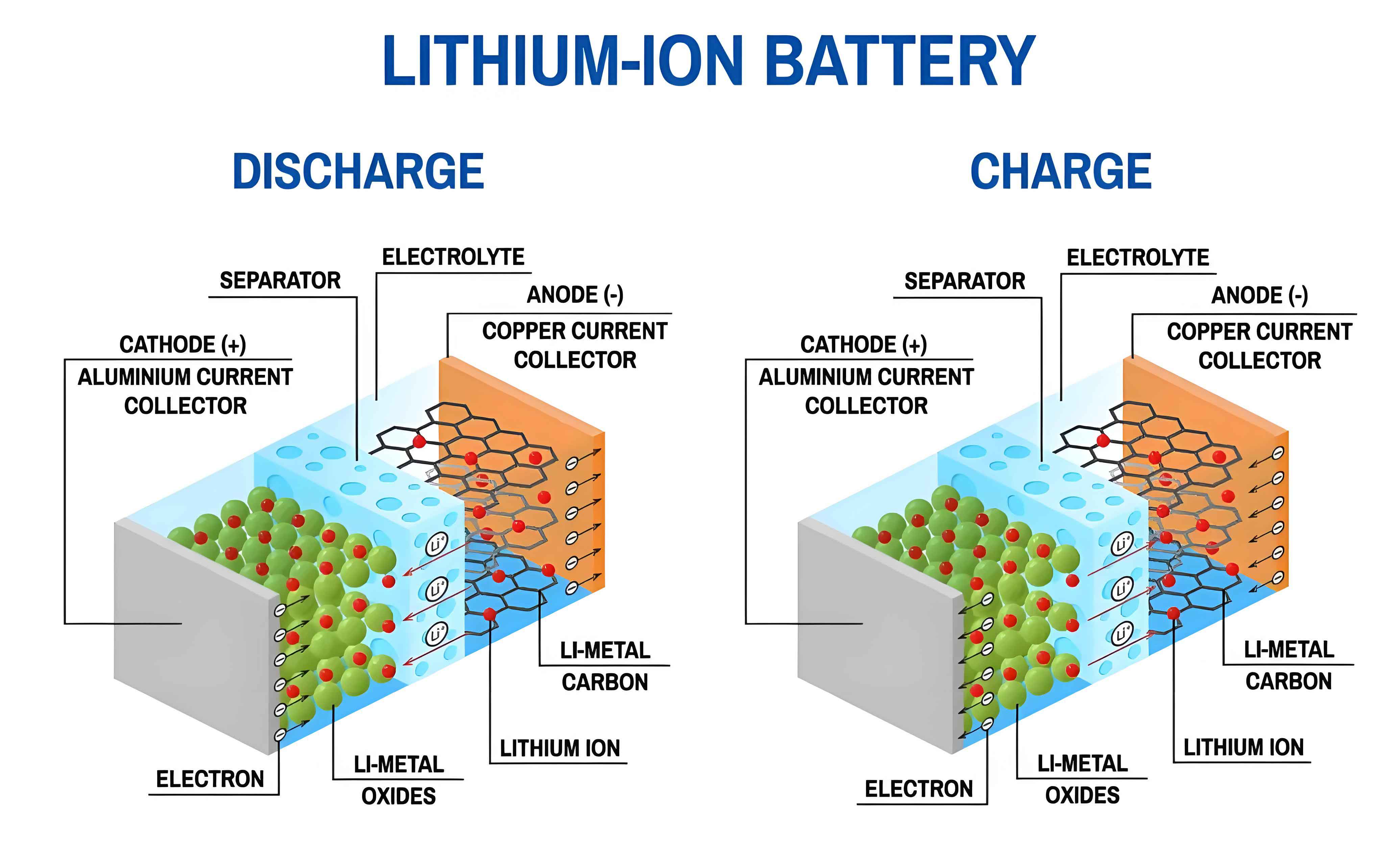
The performance of an electrode material in a lithium-ion battery is intrinsically linked to its synthesis pathway, which dictates critical parameters such as crystallinity, morphology, particle size, and porosity. Traditional methods for synthesizing TMCs, including simple precipitation, hydrothermal, and solvothermal routes, often struggle with precise control over these parameters. A common pitfall is the inhomogeneous mixing of metal precursors at the atomic or nanoscale, which can lead to phase segregation, non-uniform morphology, and large particle sizes with limited internal porosity. These morphological shortcomings exacerbate the mechanical stress from volume changes and limit electrolyte penetration, ultimately degrading the lithium-ion battery cycle life. Therefore, developing a synthetic strategy that ensures homogeneous precursor integration and enables the construction of robust, hierarchical architectures is paramount for unlocking the full potential of Zn-Co binary carbonates.
In this comprehensive study, I present a novel, two-step synthesis strategy combining high-energy ball milling with a subsequent solvothermal treatment to achieve superior control over the phase and morphology of Zn-Co binary carbonates. This integrated approach is designed to overcome the limitations of conventional methods. The initial ball milling step subjects the solid and liquid precursors to intense mechanical forces, inducing mechanochemical activation. This process not only refines particle sizes but also promotes an intimate, near-atomic-level mixing of Zn and Co species, creating a highly reactive and homogeneous precursor mixture. This optimized precursor is then subjected to a solvothermal reaction, where temperature and pressure provide the driving force for controlled crystal growth and self-assembly. The hypothesis is that this sequential method will yield a hierarchical microstructure—microspheres composed of tightly interconnected nanoparticles or nanoplates. Such a structure is anticipated to offer multiple advantages for a lithium-ion battery anode: the nanoscale building blocks shorten lithium-ion diffusion paths, the internal porosity accommodates volume expansion, and the micro-scale secondary particles enhance structural integrity and tap density. I will systematically compare the materials synthesized via this ball milling-assisted solvothermal route (B-ZCCO) with those from a standard solvothermal method (S-ZCCO), correlating their structural and chemical properties with their electrochemical performance, particularly focusing on cycling stability within a lithium-ion battery configuration.
1. Synthetic Methodology and Mechanistic Principles
The synthesis was designed with a clear comparative framework. The control sample, labeled S-ZCCO, was prepared using a standard solvothermal technique. Stoichiometric amounts of zinc chloride (ZnCl2), cobalt chloride (CoCl2), and ammonium bicarbonate (NH4HCO3) were dissolved in ethylene glycol (EG) under magnetic stirring. The homogeneous solution was then transferred to a Teflon-lined autoclave and reacted at 180°C for 20 hours. The product was collected, washed, and dried.
The optimized sample, B-ZCCO, incorporated a crucial preprocessing step. Identical molar amounts of precursors were placed in an EG solvent directly inside a zirconia milling jar. High-energy ball milling was conducted at 400 rpm for 4 hours using zirconia balls. This slurry, now constituting a mechanochemically activated precursor, was then used as the feed for the identical solvothermal reaction (180°C, 20h). The post-treatment (washing, drying) was kept consistent for both samples.
The core chemical reaction governing carbonate formation in both methods can be represented as:
$$ \text{Zn}^{2+} + \text{Co}^{2+} + 2\text{HCO}_3^- \xrightarrow{\Delta, \text{EG}} \text{Zn}_{1-x}\text{Co}_x\text{CO}_3(s) + \text{CO}_2(g) + \text{H}_2\text{O} $$
However, the reaction pathways and intermediate states differ fundamentally.
1.1 The Role of Ball Milling: Mechanochemical Activation
The ball milling step is not merely a mixing process; it is a low-temperature mechanochemical synthesis platform. The intense collisions between grinding balls and the precursor mixture generate localized hotspots, high pressure, and shear forces. This energy input drives several simultaneous processes:
- Particle Size Reduction and Amorphization: The crystalline precursors (e.g., chloride salts) are fractured and undergo repeated deformation, reducing their size to the nanoscale and often inducing a partially amorphous state, which increases their surface energy and reactivity.
- Intimate Mixing: The mechanical action forces the Zn and Co precursor particles into close, repeated contact, achieving a mixing homogeneity far superior to simple stirring in solution. This minimizes diffusion distances for subsequent solid-state or solution-state reactions.
- Chemical Activation: The mechanical energy can directly break chemical bonds and induce reactions. It likely facilitates the initial formation of a complex or a mixed metal intermediate before the solvothermal step, ensuring a more uniform distribution of metal ions in the final product.
The state of the precursor after milling can be conceptually described as a highly reactive, nanoscale, and homogenized mixture primed for uniform nucleation.
1.2 Controlled Crystallization via Solvothermal Treatment
The solvothermal environment provides the necessary conditions for dissolution, re-crystallization, and Ostwald ripening. Ethylene glycol acts as a coordinating solvent, moderating the reaction rate and influencing crystal habit. For the S-ZCCO sample, nucleation occurs from a molecularly mixed solution, but local concentration fluctuations can lead to slight compositional inhomogeneity. For B-ZCCO, the pre-activated precursor offers numerous, uniformly distributed nucleation sites. The subsequent crystal growth is therefore more synchronous and leads to the self-assembly of nanounits into a higher-order structure. The overall process can be summarized in the following comparative table:
| Process Stage | Standard Solvothermal (S-ZCCO) | Ball Milling-Assisted Solvothermal (B-ZCCO) |
|---|---|---|
| Precursor State | Molecular/ionic solution with potential local gradients. | Mechanochemically activated, nanoscale, intimately mixed solid/liquid slurry. |
| Nucleation | Nucleation occurs stochastically from solution; rate influenced by solution supersaturation. | Numerous, uniform nucleation sites provided by activated precursor particles; more simultaneous nucleation. |
| Growth & Assembly | Crystals grow from nuclei; final morphology depends on solvent interaction and reaction kinetics. Limited driving force for hierarchical assembly. | Nanocrystals grow from activated sites and spontaneously aggregate/self-assemble into microspheres to minimize surface energy, creating hierarchical structures. |
| Key Outcome | Often results in solid microspheres or irregular aggregates. | Promotes formation of hierarchical microspheres composed of primary nanoparticles/nanoplates. |
2. Structural and Morphological Characterization
Comprehensive characterization was conducted to elucidate the differences imparted by the synthesis route. The findings confirm the pivotal role of ball milling in tailoring the material’s architecture.
2.1 Crystalline Phase and Composition
X-ray diffraction (XRD) analysis confirmed the successful synthesis of the binary carbonate phase for both samples. All diffraction peaks were indexed to a mixture of the rhombohedral calcite structure of ZnCO3 (JCPDS No. 08-0449) and CoCO3 (JCPDS No. 11-0692), with no detectable impurity phases such as oxides or hydroxides. This indicates that the solvothermal conditions favor the formation of the pure carbonate phase. A critical observation was the significant enhancement in the crystallinity of the B-ZCCO sample, as evidenced by the sharper and more intense diffraction peaks. The average crystallite size (D) was estimated using the Scherrer equation applied to the (104) peak:
$$ D = \frac{K \lambda}{\beta \cos\theta} $$
where \(K\) is the shape factor (~0.9), \(\lambda\) is the X-ray wavelength (1.5406 Å), \(\beta\) is the full width at half maximum (FWHM) in radians, and \(\theta\) is the Bragg angle. The calculated crystallite size for B-ZCCO was smaller than that for S-ZCCO, suggesting that the ball milling process promoted the formation of a larger number of nuclei, leading to finer primary crystallites within the hierarchical structure.
2.2 Morphology and Microstructure
Scanning electron microscopy (SEM) revealed striking morphological differences. The S-ZCCO sample consisted of relatively solid microspheres with a diameter range of 1-4 μm. The surfaces of these spheres were rough but appeared dense without visible substructure at higher magnification. In stark contrast, the B-ZCCO sample exhibited well-defined, uniform microspheres with a narrower size distribution of 2-3 μm. Crucially, high-magnification imaging unveiled that these microspheres were not solid but were hierarchical assemblies of numerous, much smaller primary particles (sub-1 μm). These primary particles, likely the nanocrystallites indicated by XRD, were tightly packed but created a porous network throughout the microsphere. This “sphere-of-particles” or “urchin-like” morphology is a direct consequence of the synthesis strategy: the ball-milled precursor facilitated massive homogeneous nucleation, and the subsequent solvothermal growth allowed these nanocrystals to aggregate in a controlled manner, minimizing the system’s total surface energy.
2.3 Surface Chemistry and Elemental State
X-ray photoelectron spectroscopy (XPS) was performed on the B-ZCCO sample to probe its surface composition and the oxidation states of its constituents. The high-resolution spectra provided definitive evidence:
- Zn 2p: The doublet at binding energies of 1022.28 eV (2p3/2) and 1045.38 eV (2p1/2) with a spin-orbit splitting of 23.1 eV is characteristic of Zn2+.
- Co 2p: The peaks at 781.87 eV (2p3/2) and 797.98 eV (2p1/2) along with their associated satellite features confirmed the presence of Co2+.
- O 1s: The spectrum was deconvoluted into two components: the major peak at ~531.2 eV corresponding to lattice oxygen in carbonate (O=C-O), and a smaller peak at ~532.8 eV attributed to surface-adsorbed oxygen species or hydroxyl groups.
- C 1s: The spectrum showed the expected peak for carbonate carbon (~289.0 eV) alongside adventitious carbon peaks.
This analysis confirms that the surface chemistry is consistent with a mixed Zn-Co carbonate, and no significant surface oxidation occurred during synthesis. The homogeneous mixing suggested by the synthesis method is corroborated by the uniform detection of both metals on the surface.
3. Electrochemical Performance in Lithium-Ion Battery Configuration
The synthesized materials were evaluated as anodes in half-cell lithium-ion battery configurations versus Li/Li+. The electrochemical tests were designed to assess key performance metrics: reversible capacity, initial coulombic efficiency, rate capability, and most importantly, long-term cycling stability.
3.1 Reaction Mechanism and Initial Charge/Discharge
The electrochemical reaction mechanism for transition metal carbonates in a lithium-ion battery involves a combination of conversion and alloying reactions (for Zn). For ZnCoCO3, the overall process can be conceptually described as follows:
First Discharge (Lithiation):
$$ \text{ZnCoCO}_3 + 4\text{Li}^+ + 4e^- \rightarrow \text{Zn} + \text{Co} + \text{Li}_2\text{CO}_3 $$
This is the conversion reaction, where the carbonate is reduced to its metallic constituents embedded in a Li2CO3 matrix. Subsequently, zinc can further alloy with lithium:
$$ \text{Zn} + x\text{Li}^+ + xe^- \leftrightarrow \text{Li}_x\text{Zn} \quad (\text{where } x \leq 1) $$
Therefore, the total theoretical capacity is the sum of the conversion capacity and the alloying capacity. The initial discharge profiles for both S-ZCCO and B-ZCCO showed capacities exceeding the simple conversion reaction theoretical value, which is attributed to this extra alloying capacity and, significantly, the irreversible formation of a Solid Electrolyte Interphase (SEI) layer on the large electrode surface area.
First Charge (Delithiation):
$$ \text{Zn} + \text{Co} + \text{Li}_2\text{CO}_3 \rightarrow \text{ZnO} + \text{CoO} + 2\text{Li}^+ + 2e^- + \text{CO}_2 \quad (\text{Irreversible in practice}) $$
In reality, the re-formation of the original carbonate is highly thermodynamically unfavorable. Instead, the metals are oxidized to their respective oxides (or partially oxidized species), and Li2CO3 decomposes. This irreversibility contributes to the initial capacity loss. The first-cycle coulombic efficiency (CE) for B-ZCCO was slightly higher (70.4%) than for S-ZCCO (69.4%), suggesting a marginally more stable SEI or slightly better reaction reversibility from the outset.
3.2 Cyclic Stability and Performance Analysis
The long-term galvanostatic charge-discharge cycling at a constant current density provided the most compelling evidence for the superiority of the B-ZCCO material. The hierarchical structure demonstrated a profound impact on performance.
After 70 cycles, the B-ZCCO electrode retained a high reversible discharge capacity of 876 mAh g-1. In contrast, the S-ZCCO electrode suffered from severe capacity degradation, plummeting to 515 mAh g-1 after the same number of cycles. This performance disparity is directly linked to the material’s ability to withstand mechanical stress. The volume change associated with the conversion and alloying reactions in a lithium-ion battery anode is substantial, often exceeding 200%. The dense microspheres of S-ZCCO have limited internal void space to buffer this expansion, leading to particle cracking, electrical contact loss, and continuous SEI reformation—a process that consumes both active lithium and electrolyte. Conversely, the porous, hierarchical microspheres of B-ZCCO provide internal “free space” to accommodate volume changes. Furthermore, the nanoscale primary particles shorten the diffusion path for both lithium ions and electrons, enhancing reaction kinetics and reducing polarization.
| Performance Parameter | S-ZCCO | B-ZCCO | Implication |
|---|---|---|---|
| 1st Discharge Capacity | 1490 mAh g-1 | 1530 mAh g-1 | Both materials exhibit high initial activity and SEI formation. |
| 1st Coulombic Efficiency | 69.4% | 70.4% | B-ZCCO shows slightly less initial irreversible loss. |
| Capacity at Cycle 5 | ~515 mAh g-1 | ~876 mAh g-1 | B-ZCCO stabilizes at a much higher capacity level after activation. |
| Capacity Retention after 70 cycles | ~34.6% (from 5th cycle) | >95% (from 5th cycle) | Dramatically superior cycling stability for B-ZCCO. |
| Proposed Failure Mode | Particle pulverization, contact loss. | Stable hierarchical structure buffers stress. | Morphology is key to longevity in a lithium-ion battery. |
3.3 Quantitative Analysis of Capacity Fading
The capacity fading in such conversion/alloying anodes can be modeled to understand the degradation kinetics. A common empirical model relates the retained capacity (Qn) to the cycle number (n):
$$ Q_n = Q_0 – k \cdot n^{1/2} $$
where \(Q_0\) is the extrapolated capacity at cycle 0 (after initial activation), and \(k\) is the fading rate constant. Plotting Qn vs. \(n^{1/2}\) for both electrodes would yield a significantly smaller slope (k) for B-ZCCO compared to S-ZCCO, quantitatively proving its slower degradation rate. This slower fading is a direct result of the robust hierarchical architecture mitigating mechanical degradation, which is a common failure mode in high-capacity lithium-ion battery anodes.
4. Discussion: Structure-Property Relationships and Broader Implications
The results unequivocally establish a strong correlation between the synthesis-induced microstructure and the electrochemical performance in a lithium-ion battery. The ball milling-assisted solvothermal method is not a simple additive process; it creates a synergistic effect that fundamentally alters the material’s genesis.
The Hierarchical Advantage: The B-ZCCO morphology is a quintessential example of a beneficial hierarchical structure for energy storage. It successfully bridges the gap between the advantages of nano and micro materials. The nanoscale primary particles provide the high surface area and short diffusion lengths necessary for high capacity and good rate performance. The micro-scale spherical secondary assembly ensures good structural stability, prevents nanoparticle aggregation, and facilitates easier electrode processing (e.g., higher tap density than loose nanoparticles). The internal porosity is the most critical feature, acting as a built-in buffer zone against pulverization.
Universality of the Approach: While demonstrated for Zn-Co carbonate, this synthetic strategy—mechanochemical precursor activation followed by controlled solution-phase crystallization—is highly versatile. It can be readily adapted to other binary or ternary transition metal carbonates, phosphates, or even oxides for lithium-ion battery applications. The key is utilizing ball milling to achieve atomic-level homogeneity in the precursor, which then templates the growth of a uniform, complex microstructure.
Impact on Lithium-Ion Battery Development: This work contributes to the ongoing effort to develop next-generation anode materials that can surpass graphite. By offering a method to tame the inherent volume instability of high-capacity conversion materials, it brings them a step closer to practical application. A lithium-ion battery employing such an optimized anode could potentially offer significantly higher energy density without sacrificing cycle life, a critical trade-off that currently limits many advanced materials.
5. Conclusion and Future Perspectives
In conclusion, I have successfully developed and demonstrated a ball milling-assisted solvothermal method for the controllable synthesis of Zn-Co binary carbonate hierarchical microspheres. This method leverages mechanochemical forces to create a homogenized, activated precursor, which upon solvothermal treatment self-assembles into a structure where nanoscale primary particles constitute porous microspheres. When evaluated as an anode material for lithium-ion batteries, this hierarchically structured B-ZCCO exhibits dramatically enhanced cycling stability compared to its solid microsphere counterpart (S-ZCCO) synthesized via a conventional route. The porous architecture effectively accommodates volume changes, maintains structural integrity, and ensures stable electrical contact throughout prolonged cycling, thereby addressing a fundamental challenge for conversion-based anode materials.
This research opens several promising avenues for future work. Firstly, the synthesis parameters (milling time/speed, solvent composition, solvothermal temperature/time) can be systematically optimized to fine-tune the porosity, primary particle size, and overall morphology for even better performance. Secondly, the approach should be extended to other metal carbonate systems (e.g., Mn-Co, Fe-Co) to validate its universality. Thirdly, compositing these carbonates with conductive matrices like graphene or carbon nanotubes during the ball milling step could further boost electronic conductivity and enhance rate capability. Finally, moving from half-cell to full-cell lithium-ion battery testing against commercial cathodes is an essential next step to evaluate the practical viability and energy density of this technology. This work underscores the profound impact that innovative synthesis strategies can have on material properties, paving the way for more durable and high-performance energy storage devices.