
In the rapidly evolving field of energy storage, lithium-ion batteries have become a cornerstone technology due to their high energy density, long cycle life, and versatility in applications ranging from electric vehicles to grid storage. Among the various cathode materials used in these batteries, lithium iron phosphate (LiFePO4) stands out for its safety, stability, and environmental friendliness. The performance of LiFePO4 is heavily influenced by the quality of its precursors, with ferrous phosphate octahydrate (Fe3(PO4)2·8H2O) being a critical intermediate. This compound serves as a key precursor in the synthesis of LiFePO4, and its chemical composition, including major elements like iron and phosphorus, trace impurities, and the oxidation state of iron (Fe2+/Fe3+ ratio), directly impacts the electrochemical properties of the final cathode material. As such, developing robust analytical methods to characterize ferrous phosphate is essential for quality control and optimization in lithium-ion battery manufacturing. In this article, I will present a comprehensive multi-method approach that integrates instrumental and traditional techniques to ensure accurate analysis, supporting the advancement of high-performance lithium-ion battery systems.
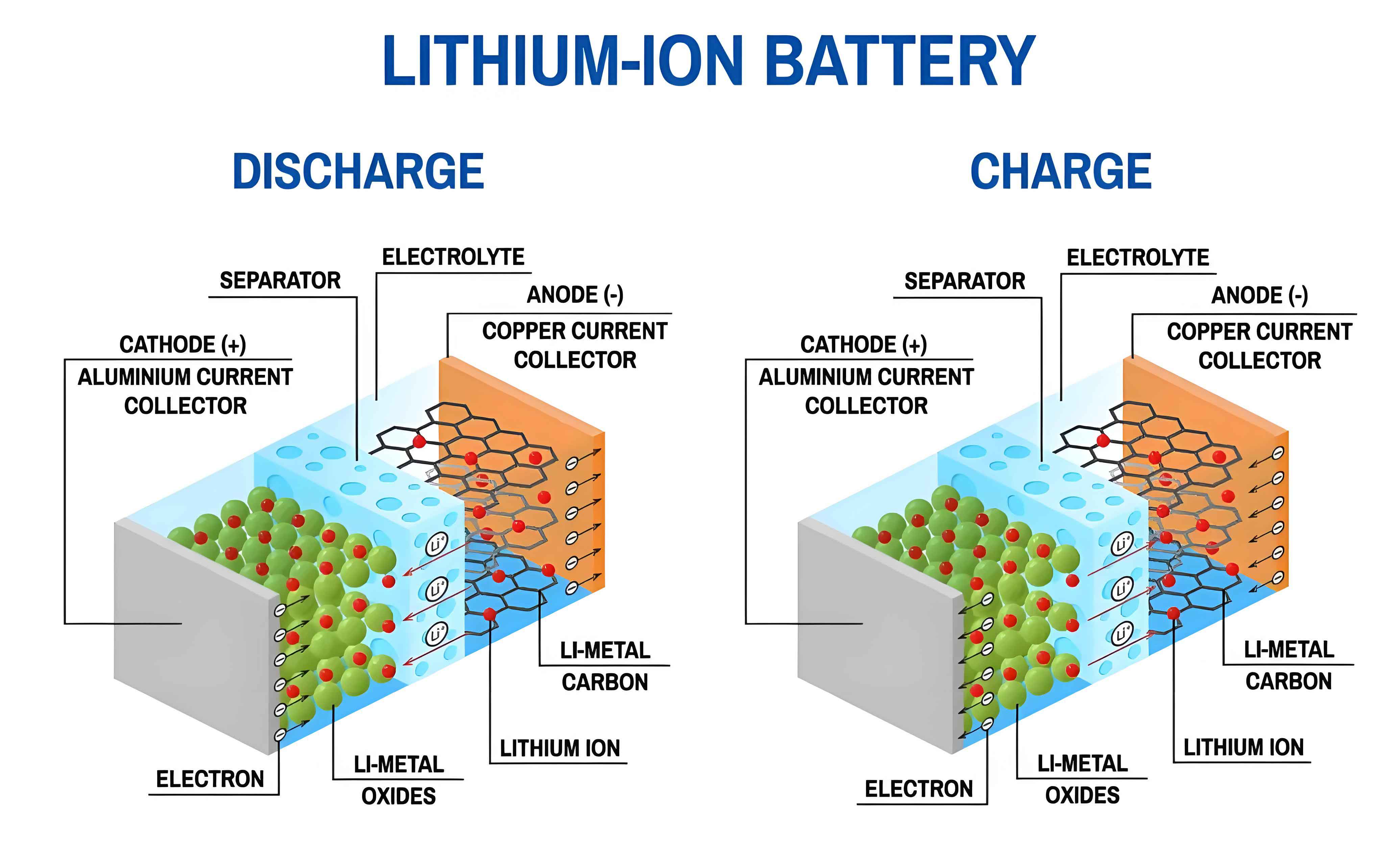
The significance of ferrous phosphate in lithium-ion battery production cannot be overstated. During synthesis, factors such as oxidation of Fe2+ to Fe3+ or the presence of impurities like sodium, calcium, and magnesium can lead to defects in the crystal structure of LiFePO4, resulting in reduced capacity, poor rate capability, and shortened cycle life. For instance, even minor deviations from the ideal stoichiometric ratio of Fe/P = 1.5:1 can compromise ionic conductivity and structural integrity. Therefore, precise analytical methods are required to monitor these parameters. Traditional approaches often rely on single techniques, but in industrial settings, a combined methodology offers greater reliability and efficiency. Here, I describe a protocol that uses inductively coupled plasma optical emission spectrometry (ICP-OES) for simultaneous determination of major and trace elements, coupled with redox titration for iron speciation analysis. This integrated strategy addresses challenges related to sample complexity and the susceptibility of Fe2+ to oxidation, providing a foundation for quality assurance in lithium-ion battery precursor materials.
To begin, the materials and methods employed in this analysis are detailed. All reagents used were of analytical grade, including hydrochloric acid (HCl, 1.19 g/cm³), sulfuric acid (H2SO4, 98%), phosphoric acid (H3PO4, 85%), potassium dichromate (K2Cr2O7, primary standard), sodium indigo disulfonate, titanium trichloride (TiCl3), stannous chloride (SnCl2), and diphenylamine sulfonate. Ultra-pure water was used throughout to minimize contamination. The instruments included a TSF-10A moisture analyzer, an ICP-OES system (Thermo Fisher iCAP PRO X with autosampler), an electronic balance (Mettler Toledo ME204E, precision 0.1 mg), and standard glassware such as burettes, volumetric flasks, and PTFE beakers. The ICP-OES was operated under optimized conditions: RF power of 1150 W, auxiliary gas flow of 0.45 L/min, nebulizer flow of 0.8 L/min, radial view, integration time of 5 s, and rinse time of 20 s. These settings ensured high sensitivity and minimal interference for element detection.
For sample preparation, approximately 1.000 g of ferrous phosphate powder was weighed and dissolved in 15 mL of (1+1) HCl at 230°C on a heating plate until complete dissolution. The solution was then filtered and diluted to 100 mL in a volumetric flask with ultra-pure water, with a blank prepared similarly. This dissolution method was chosen after comparative tests with nitric acid, which showed slight turbidity due to potential hydrolysis of Fe3+. The HCl approach yielded clear solutions, confirmed by XRD analysis of residues, making it suitable for subsequent analysis. The analytical lines for ICP-OES were selected based on sensitivity and lack of spectral overlap, as summarized in Table 1. Key lines included Fe at 259.940 nm, P at 231.618 nm, and impurity elements such as Na at 589.592 nm and Ca at 393.366 nm. Calibration curves were constructed using mixed standard solutions with concentrations ranging from 0 to 0.0007% for trace elements, ensuring linearity across the expected ranges. This setup is critical for accurate quantification in lithium-ion battery materials, where even ppm-level impurities can affect performance.
| Element | Wavelength (nm) | Element | Wavelength (nm) | Element | Wavelength (nm) |
|---|---|---|---|---|---|
| Fe | 259.940 | P | 231.618 | Na | 589.592 |
| Pb | 220.353 | Ca | 393.366 | Mg | 279.553 |
| Mn | 257.610 | Ni | 231.604 | Al | 396.152 |
| Cu | 324.754 |
In addition to ICP-OES, redox titration was employed for iron speciation analysis. The total iron content and Fe3+ levels were determined using potassium dichromate titration combined with SnCl2 reduction. Standard solutions were prepared: 0.05 mol/L K2Cr2O7 by dissolving 2.4516 g of dried primary standard, CuSO4-indigo indicator, TiCl3 solution (diluted with HCl and zinc granules), sulfur-phosphoric acid mixture (15%), diphenylamine sulfonate indicator (0.5%), and SnCl2 solution. For total iron analysis, 20 mL of the sample solution was treated with HCl, boiled, and titrated with K2Cr2O7 after reduction with SnCl2 and TiCl3. The reaction is based on the oxidation of Fe2+ by dichromate in acidic medium, represented by the equation:
$$6Fe^{2+} + Cr_2O_7^{2-} + 14H^+ \rightarrow 6Fe^{3+} + 2Cr^{3+} + 7H_2O$$
For Fe3+ determination, another aliquot was directly titrated with K2Cr2O7 after acidification, without reduction. The calculations for iron content are given by:
$$Fe\% = \frac{c \cdot v_1 \cdot 55.85}{m \times \frac{20}{100} \times 1000} \times 100\%$$
$$Fe^{2+}\% = \frac{c \cdot v_2 \cdot 55.85}{m \times \frac{20}{100} \times 1000} \times 100\%$$
$$W_{Fe^{3+}} = W_{Fe} – W_{Fe^{2+}}$$
where \(c\) is the concentration of K2Cr2O7 (mol/L), \(v_1\) and \(v_2\) are titration volumes (mL), and \(m\) is the sample mass (g). This method allows for precise assessment of oxidation states, which is vital for evaluating the suitability of ferrous phosphate in lithium-ion battery applications, as Fe3+ impurities can hinder electrochemical performance.
The results from the ICP-OES analysis for major and trace elements are presented in Table 2, based on six replicate measurements. The average content of Fe was 33.655% with a relative standard deviation (RSD) of 0.15%, and P was 12.50% with an RSD of 0.70%. These values align closely with the theoretical composition of Fe3(PO4)2·8H2O, where the Fe/P molar ratio is approximately 1.5:1. The calculated ratio from the data is 1.49:1, indicating high purity. Impurity elements were detected at trace levels, with Na at 0.00343%, Ca at 0.00237%, Mg at 0.00168%, Mn at 0.005%, Ni at 0.000407%, Pb at 0.000607%, and Al and Cu below 0.0001%. The RSDs for impurities were all below 4.5%, demonstrating excellent repeatability. This level of precision is crucial for lithium-ion battery manufacturing, where contaminants can introduce defects in the cathode structure, leading to reduced efficiency and lifespan.
| Element | Measurement 1 (%) | Measurement 2 (%) | Measurement 3 (%) | Measurement 4 (%) | Measurement 5 (%) | Measurement 6 (%) | Average (%) | RSD (%) |
|---|---|---|---|---|---|---|---|---|
| Fe | 33.69 | 33.58 | 33.67 | 33.72 | 33.62 | 33.65 | 33.655 | 0.15 |
| P | 12.49 | 12.38 | 12.5 | 12.44 | 12.56 | 12.63 | 12.50 | 0.70 |
| Na | 0.0035 | 0.0032 | 0.0036 | 0.0034 | 0.0035 | 0.0034 | 0.00343 | 3.98 |
| Pb | 0.00063 | 0.0006 | 0.00058 | 0.00062 | 0.0006 | 0.00061 | 0.000607 | 2.89 |
| Ca | 0.0024 | 0.0025 | 0.0024 | 0.0022 | 0.0024 | 0.0023 | 0.00237 | 4.36 |
| Mg | 0.0017 | 0.0016 | 0.0017 | 0.0017 | 0.0018 | 0.0016 | 0.00168 | 4.47 |
| Mn | 0.0052 | 0.0050 | 0.0047 | 0.0052 | 0.0049 | 0.005 | 0.005 | 3.79 |
| Ni | 0.0004 | 0.0004 | 0.00042 | 0.00038 | 0.00043 | 0.00041 | 0.000407 | 4.31 |
The iron speciation analysis, as shown in Table 3, revealed a total iron content of 33.55%, with Fe2+ at 30.14% and Fe3+ at 3.41%. The RSDs were less than 1.0%, indicating high reproducibility. The Fe2+/Fe3+ ratio was approximately 8.8:1, meaning that about 10.2% of the total iron was in the oxidized Fe3+ state. This oxidation likely occurred during sample synthesis or storage, highlighting the need for controlled environments, such as inert gas protection, to minimize Fe2+ oxidation in lithium-ion battery precursor production. The presence of Fe3+ can affect the stoichiometry of LiFePO4, potentially leading to cation vacancies or phase impurities that degrade battery performance. Thus, monitoring the oxidation state is essential for optimizing synthesis protocols and ensuring material consistency.
| Oxidation State | Measurement 1 (%) | Measurement 2 (%) | Measurement 3 (%) | Average (%) | RSD (%) |
|---|---|---|---|---|---|
| Total Fe | 33.52 | 33.49 | 33.64 | 33.55 | 0.24 |
| Fe2+ | 30.11 | 30.1 | 30.2 | 30.14 | 0.18 |
| Fe3+ | 3.41 | 3.39 | 3.44 | 3.41 | 0.74 |
Further discussion on the methodology highlights the advantages of combining ICP-OES with titration. ICP-OES offers high sensitivity, with detection limits on the order of 10-6 for most elements, and a broad linear range, allowing simultaneous analysis of major and trace components. This is particularly beneficial for lithium-ion battery materials, where impurity control is stringent. The use of multiple analytical lines minimizes spectral interferences, as evidenced by the clean baselines in the emission spectra. For example, the P line at 231.618 nm was free from overlap with Al at 396.152 nm, ensuring accurate phosphorus quantification. Additionally, the sample dissolution step was optimized; HCl provided complete digestion without residue, whereas HNO3 led to partial hydrolysis. This optimization is critical for reproducible results in industrial quality control for lithium-ion battery precursors.
The titration method for iron speciation, while traditional, remains robust for quantifying Fe2+ and Fe3+. The reaction stoichiometry is well-defined, and the use of indicators like diphenylamine sulfonate provides clear endpoints. However, potential sources of error include air oxidation during titration or incomplete reduction. To mitigate these, the titration was performed under controlled conditions, with rapid boiling to expel oxygen and the use of SnCl2 and TiCl3 as reducing agents. The calculated Fe3+ content provides insight into the extent of oxidation, which can guide process adjustments in lithium-ion battery material synthesis. For instance, if Fe3+ levels exceed acceptable thresholds, manufacturers can implement additional reduction steps or improve storage conditions.
To expand on the applications, the analytical data can be used to correlate material properties with battery performance. For example, the impurity profile in Table 2 shows that alkali and alkaline earth metals like Na, Ca, and Mg are present at low levels. These elements can act as dopants in LiFePO4, potentially enhancing ionic conductivity if controlled properly, but excessive amounts may lead to lattice distortions. Similarly, transition metals like Mn and Ni could influence electronic conductivity. By integrating these analytical results with electrochemical testing, researchers can establish composition-performance relationships, accelerating the development of advanced lithium-ion batteries. Moreover, the method’s reproducibility, with RSDs below 1.5% for major elements and 4.5% for impurities, meets the precision requirements for large-scale production.
In terms of future directions, this multi-method approach could be enhanced by incorporating additional techniques such as X-ray diffraction (XRD) for crystallographic analysis or scanning electron microscopy (SEM) for morphological assessment. For instance, XRD could confirm the phase purity of ferrous phosphate and detect any amorphous or secondary phases that might affect lithium-ion battery performance. Similarly, SEM could reveal particle size distribution and morphology, which influence packing density and electrode kinetics. Combining these with the chemical analysis described here would provide a holistic characterization suite. Furthermore, automation of the titration process or the use of flow injection analysis could improve throughput for high-volume lithium-ion battery manufacturing.
The economic and environmental implications are also noteworthy. Accurate analysis of precursors like ferrous phosphate reduces waste by ensuring only high-quality materials proceed to synthesis, thereby improving yield and sustainability in lithium-ion battery production. As the demand for energy storage grows, especially for electric vehicles and renewable integration, reliable analytical methods become increasingly vital. This protocol supports the circular economy by enabling precise recycling of battery materials, where characterization of recovered precursors is essential for reuse.
In conclusion, the integrated analytical method combining ICP-OES and redox titration offers a comprehensive solution for characterizing ferrous phosphate octahydrate, a key precursor for lithium iron phosphate cathodes in lithium-ion batteries. The method provides accurate determination of major elements (Fe and P), trace impurities, and iron oxidation states, with high repeatability and sensitivity. The results indicate that the sample meets purity standards, though some oxidation of Fe2+ was observed, underscoring the need for controlled handling. This approach facilitates quality control in lithium-ion battery manufacturing, enabling the production of high-performance, safe, and long-lasting energy storage devices. By continuing to refine such analytical protocols, we can contribute to the advancement of lithium-ion battery technology, supporting global transitions to clean energy and sustainable transportation.
To summarize the key equations and relationships, the stoichiometry of ferrous phosphate can be expressed as:
$$Fe_3(PO_4)_2 \cdot 8H_2O \rightarrow 3Fe^{2+} + 2PO_4^{3-} + 8H_2O$$
and the ideal Fe/P molar ratio is:
$$\frac{n_{Fe}}{n_P} = \frac{3}{2} = 1.5$$
In practice, deviations from this ratio, as measured by ICP-OES, can indicate impurities or non-stoichiometry. The oxidation state analysis further refines this, with the Fe2+ fraction critical for electrochemical activity in lithium-ion batteries. The overall methodology thus serves as a cornerstone for ensuring the reliability and efficiency of lithium-ion battery systems, driving innovation in energy storage solutions.