
In the pursuit of advanced energy storage solutions, lithium-ion batteries have emerged as a cornerstone technology due to their high energy density and long cycle life. However, the ever-growing demand for enhanced performance, particularly in applications such as electric vehicles and portable electronics, drives the need for innovative electrode materials. Among various candidates, silicon-based anodes stand out for their exceptional theoretical capacity, which significantly surpasses that of conventional graphite anodes used in lithium-ion batteries. Nevertheless, the practical implementation of silicon anodes in lithium-ion batteries is hampered by intrinsic limitations, including substantial volume expansion during lithiation and delithiation processes, poor electrical conductivity, and rapid capacity fading. These challenges necessitate the development of novel nanostructures that can mitigate these issues while leveraging silicon’s high lithium storage capability.
In this work, we address these challenges by designing a composite material comprising silicon nanosheets (SiNSs) encapsulated within a crosslinked carbon nanotube (CNT) matrix. This design aims to enhance the structural stability and electrical conductivity of silicon-based anodes for lithium-ion batteries. The integration of CNTs not only provides a conductive network to facilitate electron transport but also accommodates the volume changes associated with silicon, thereby improving the cycling performance of lithium-ion batteries. Our approach involves a template-assisted synthesis using vermiculite, followed by nickel-catalyzed chemical vapor deposition (CVD) to grow CNTs directly on the silicon nanosheets. This method ensures intimate contact between the silicon and carbon components, which is crucial for efficient electrochemical reactions in lithium-ion batteries.
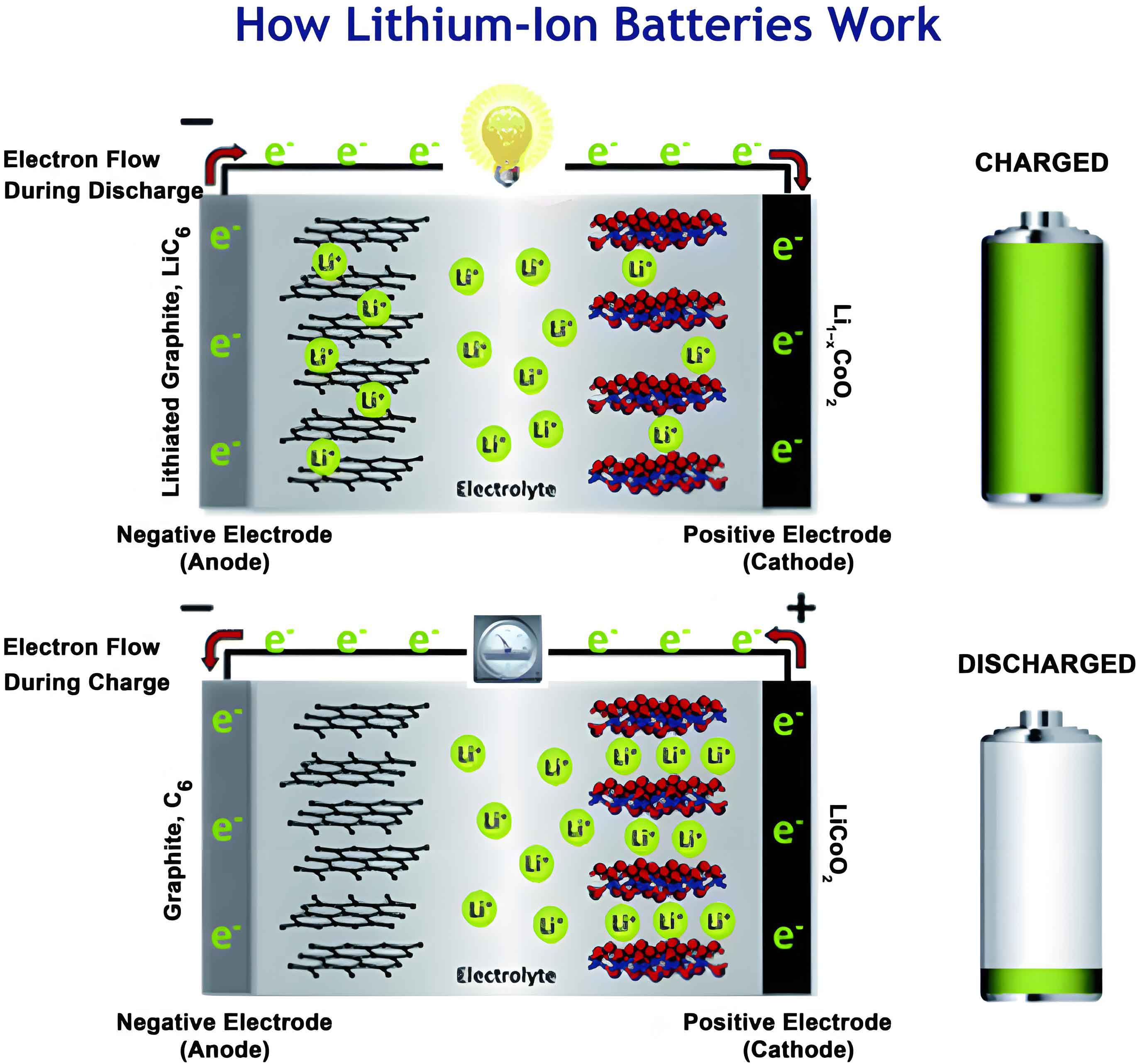
The synthesis process begins with the thermal expansion of vermiculite at high temperatures to create a layered template. This expanded vermiculite serves as a scaffold for the subsequent aluminothermic reduction, where aluminum powder reacts with silicon oxides in the presence of a molten salt medium (AlCl3/NaCl) at a relatively low temperature of 300°C. The reaction can be summarized by the following equation, which highlights the reduction process essential for silicon extraction in lithium-ion battery anode materials:
$$ \text{SiO}_2 + 2\text{Al} \rightarrow \text{Si} + \text{Al}_2\text{O}_3 $$
After the reduction, acid washing removes impurities and residual oxides, yielding pure silicon nanosheets. To further enhance the properties for lithium-ion battery applications, we introduced a carbon nanotube network via CVD. Nickel nitrate is first impregnated onto the SiNSs, and under a hydrogen-argon atmosphere at 700°C, nickel nanoparticles are formed and catalyze the growth of CNTs from an acetonitrile precursor. The overall reaction for CNT growth can be represented as:
$$ \text{CH}_3\text{CN} \xrightarrow{\text{Ni catalyst, 700°C}} \text{C (CNT)} + \text{H}_2 + \text{other byproducts} $$
This process results in a composite where SiNSs are uniformly embedded within a three-dimensional CNT matrix, which is expected to improve the electrochemical performance of lithium-ion batteries. The materials were characterized using various techniques to confirm their structure and composition, as detailed below.
The morphological evolution was examined through scanning electron microscopy (SEM) and transmission electron microscopy (TEM). The initial vermiculite exhibited a layered structure, which upon expansion, showed separated nanosheets with thicknesses below 50 nm. After aluminothermic reduction, the SiNSs retained this sheet-like morphology but with surface roughness due to the presence of silicon nanoparticles. The incorporation of CNTs led to a dense network covering the SiNSs, as observed in high-resolution images. This structural integration is critical for maintaining electrode integrity during cycling in lithium-ion batteries. To quantify the structural parameters, we performed nitrogen adsorption-desorption analysis, and the results are summarized in Table 1, which highlights the surface area and pore characteristics relevant for lithium-ion battery anodes.
| Material | Specific Surface Area (m²/g) | Average Pore Diameter (nm) | Pore Volume (cm³/g) |
|---|---|---|---|
| SiNSs | 102.5 | 9.6 | 0.45 |
| SiNSs/CNT | 48.6 | 11.6 | 0.38 |
The reduction in surface area for the composite indicates effective encapsulation by CNTs, while the increased pore diameter may facilitate electrolyte infiltration in lithium-ion batteries. X-ray diffraction (XRD) patterns confirmed the crystalline nature of silicon, with peaks corresponding to the (111), (220), (311), (400), and (331) planes of cubic silicon. For the SiNSs/CNT composite, an additional peak at approximately 26.6° was observed, attributed to the (003) plane of graphitic carbon from CNTs. Raman spectroscopy further validated the presence of both silicon and carbon phases, with characteristic peaks for Si-Si vibrations and D/G bands of carbon. The carbon content in the composite was determined to be 26.24 wt% through carbon-sulfur analysis, which is beneficial for enhancing conductivity in lithium-ion battery anodes.
To evaluate the electrochemical performance, we assembled half-cells using the synthesized materials as anodes against lithium metal. The cells were tested within a voltage range of 0.01-1.0 V, typical for silicon-based anodes in lithium-ion batteries. The initial charge-discharge profiles revealed that the SiNSs/CNT composite exhibited a high initial discharge capacity of 3413.7 mAh/g at a current density of 100 mA/g, with an initial coulombic efficiency (ICE) of 72.7%. In comparison, bare SiNSs showed lower capacity (2529.6 mAh/g) and ICE (68.5%), underscoring the role of CNTs in improving reversibility. The differential capacity (dQ/dV) plots indicated that the composite had reduced side reactions, as evidenced by a weaker peak associated with solid electrolyte interphase (SEI) formation. This suggests that the CNT matrix stabilizes the electrode-electrolyte interface, a key factor for long-term cycling in lithium-ion batteries.
The cycling stability was assessed at various current densities to mimic real-world operating conditions for lithium-ion batteries. As shown in Table 2, the SiNSs/CNT composite demonstrated superior rate capability, maintaining high reversible capacities even at elevated currents. This performance is attributed to the enhanced lithium-ion diffusion and electron transport provided by the CNT network.
| Current Density (mA/g) | Reversible Capacity (mAh/g) | Capacity Retention (%) |
|---|---|---|
| 100 | 2480.3 | 100.0 |
| 500 | 2343.4 | 94.5 |
| 1000 | 2106.4 | 84.9 |
| 2000 | 1819.1 | 73.3 |
| 3000 | 1629.6 | 65.7 |
| 4000 | 1502.1 | 60.5 |
| 5000 | 1409.6 | 56.8 |
Notably, at a high current density of 5000 mA/g, the composite retained a capacity of 879.8 mAh/g after 300 cycles, highlighting its robustness for high-power lithium-ion batteries. To understand the kinetics, we employed galvanostatic intermittent titration technique (GITT) to calculate the lithium-ion diffusion coefficient (DLi+). The diffusion coefficient is derived from the voltage response during current pulses, using the following equation:
$$ D_{\text{Li}^+} = \frac{4}{\pi \tau} \left( \frac{m_B V_M}{M_B S} \right)^2 \left( \frac{\Delta E_s}{\Delta E_\tau} \right)^2 $$
where \( \tau \) is the pulse time, \( m_B \) and \( M_B \) are the mass and molar mass of the active material, \( V_M \) is the molar volume, \( S \) is the electrode area, and \( \Delta E_s \) and \( \Delta E_\tau \) are voltage changes during relaxation and polarization, respectively. For the SiNSs/CNT composite, DLi+ was calculated to be \( 6.2 \times 10^{-13} \, \text{cm}^2/\text{s} \), which is an order of magnitude higher than that of bare SiNSs (\( 4.5 \times 10^{-14} \, \text{cm}^2/\text{s} \)). This enhancement facilitates faster reaction kinetics, crucial for the performance of lithium-ion batteries under dynamic loads.
Electrochemical impedance spectroscopy (EIS) was conducted to analyze the interfacial resistance. The Nyquist plots consisted of a semicircle in the high-frequency region, representing the SEI and charge-transfer resistance, and a linear segment in the low-frequency region, associated with lithium-ion diffusion. The equivalent circuit model fitted the data, yielding resistance values summarized in Table 3. The lower charge-transfer resistance for the composite confirms improved electrical connectivity, which is vital for efficient operation in lithium-ion batteries.
| Material | RSEI (Ω) | Rct (Ω) | Notes |
|---|---|---|---|
| SiNSs (before cycling) | 18.5 | 85.2 | Higher interfacial resistance |
| SiNSs/CNT (before cycling) | 12.9 | 62.9 | Reduced due to CNT network |
| SiNSs (after 50 cycles) | 15.3 | 35.1 | Activation reduces resistance |
| SiNSs/CNT (after 50 cycles) | 10.8 | 22.9 | Stable SEI and fast kinetics |
The morphological stability post-cycling was examined using SEM. While bare SiNSs showed cracks and fragmentation after 50 cycles, the SiNSs/CNT composite maintained its structural integrity, with the CNT matrix effectively buffering volume changes. This observation aligns with the superior cycling performance, emphasizing the importance of mechanical support in lithium-ion battery anodes. Furthermore, the composite’s performance was compared with other silicon-based nanosheet anodes reported in the literature, as summarized in Table 4. Our SiNSs/CNT composite demonstrates competitive metrics in terms of initial capacity, rate capability, and cycle life, positioning it as a promising candidate for next-generation lithium-ion batteries.
| Material System | Initial Capacity (mAh/g) | Current Density (mA/g) | Cycle Life (cycles) | Final Capacity (mAh/g) |
|---|---|---|---|---|
| SiNSs/CNT (this work) | 3413.7 | 100-5000 | 300 | 879.8 at 5000 mA/g |
| Silicon Nanosheets with Carbon Coating | ~2800 | 200 | 100 | ~1500 |
| Porous Silicon Nanosheets | ~3200 | 500 | 200 | ~1200 |
| Silicon-Graphene Composites | ~2500 | 1000 | 500 | ~800 |
To demonstrate practical applicability, we assembled full-cells using the SiNSs/CNT composite as the anode and commercial lithium iron phosphate (LiFePO4) as the cathode. Prior to assembly, the anode was prelithiated to compensate for initial capacity loss, a common strategy for silicon-based anodes in lithium-ion batteries. The full-cell operated within a voltage window of 2.5-4.25 V, with a negative-to-positive capacity ratio of 1.1:1 to prevent lithium plating. The initial charge capacity was 139.8 mAh/g (based on cathode mass), with an ICE of 87.4%. After 150 cycles at 170 mA/g, the cell retained a capacity of 82.1 mAh/g, indicating good stability for lithium-ion battery systems. This performance underscores the potential of SiNSs/CNT composites in real-world lithium-ion batteries, where energy density and longevity are paramount.
The enhanced performance can be attributed to several factors rooted in material design. First, the two-dimensional structure of silicon nanosheets provides a large surface area for lithium-ion interaction, facilitating high capacity. Second, the crosslinked CNT matrix establishes a conductive percolation network that reduces internal resistance and promotes uniform current distribution. This is particularly important for lithium-ion batteries operating at high rates. Third, the CNTs act as a mechanical buffer, absorbing stresses from silicon expansion and preventing pulverization. The synergistic effect between silicon and carbon can be described using a simple model for composite conductivity:
$$ \sigma_{\text{composite}} = \phi_{\text{Si}} \sigma_{\text{Si}} + \phi_{\text{CNT}} \sigma_{\text{CNT}} + \Gamma(\phi_{\text{Si}}, \phi_{\text{CNT}}) $$
where \( \sigma \) denotes conductivity, \( \phi \) is the volume fraction, and \( \Gamma \) represents interfacial effects. Given the high conductivity of CNTs (\( \sigma_{\text{CNT}} \approx 10^4 \, \text{S/cm} \)) compared to silicon (\( \sigma_{\text{Si}} \approx 10^{-3} \, \text{S/cm} \)), even a modest CNT content significantly boosts overall conductivity, essential for lithium-ion battery anodes. Additionally, the porous structure of the composite enhances electrolyte access, enabling rapid ion transport. The lithium-ion diffusion within the electrode can be modeled using Fick’s laws, with the diffusion coefficient derived earlier confirming faster kinetics.
In terms of scalability, the synthesis method employed here is relatively low-cost and environmentally benign, as it utilizes abundant vermiculite and avoids high-temperature processes above 700°C. This aligns with the industrial need for economical manufacturing of lithium-ion battery components. Future work could focus on optimizing the CNT growth parameters to further increase carbon content or exploring hybrid composites with other conductive materials like graphene. Moreover, integrating such anodes with advanced electrolytes or cathode materials may unlock even higher energy densities for lithium-ion batteries.
In conclusion, we have successfully developed a silicon nanosheet and carbon nanotube composite that addresses key challenges in silicon-based anodes for lithium-ion batteries. The crosslinked CNT matrix enhances electrical conductivity, structural stability, and lithium-ion diffusion, leading to superior electrochemical performance. The composite exhibits high initial capacity, excellent rate capability, and long cycle life, even at extreme current densities. Full-cell tests confirm its practicality, highlighting the potential for integration into commercial lithium-ion batteries. This work provides a viable pathway for designing high-energy-density anodes, contributing to the advancement of lithium-ion battery technology. As research progresses, such innovative materials could play a pivotal role in meeting the growing energy storage demands, making lithium-ion batteries more efficient and reliable for diverse applications.