
The advancement of intelligent and automated systems within the mining industry has created a critical demand for reliable, high-performance power sources. In this context, lithium-ion batteries have progressively supplanted traditional lead-acid batteries, becoming the cornerstone for powering mobile equipment, communication networks, and safety monitoring systems in underground mines. This transition is driven by the superior attributes of lithium-ion battery technology, including high energy density, extended cycle life, and lower maintenance requirements, which are essential for operation in harsh environments characterized by dust, humidity, and potentially explosive atmospheres. The reliable performance of mining equipment, from haulage vehicles to emergency refuge systems, is fundamentally tied to the health and available energy of its lithium-ion battery packs.
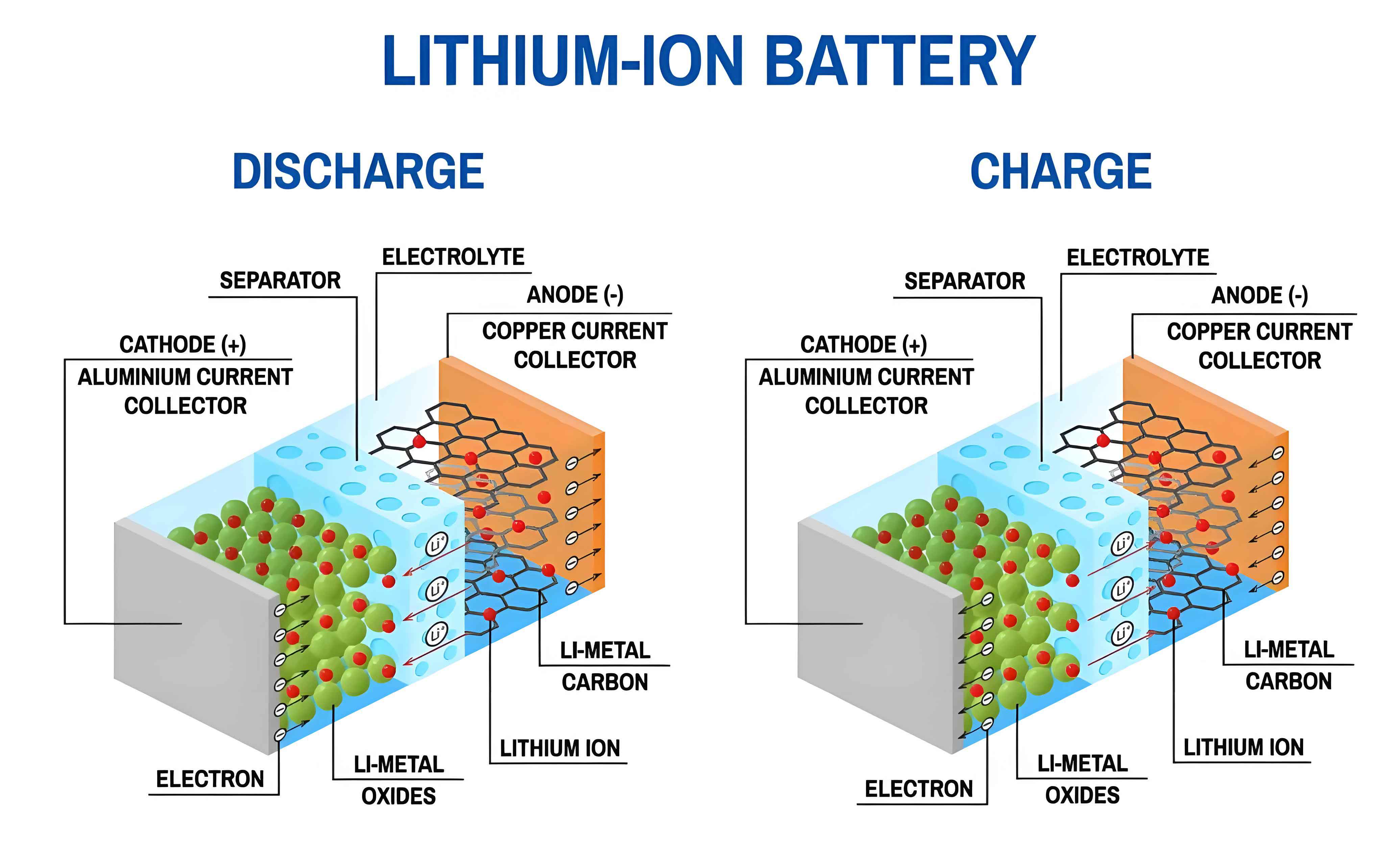
However, the deployment of lithium-ion battery systems in mining applications introduces significant challenges related to stability and safety under extreme operational conditions. Fluctuating ambient temperatures, high discharge rates demanded by heavy equipment, and the intrinsic complexity of electrochemical states can accelerate degradation, reduce efficiency, and in worst-case scenarios, lead to thermal runaway. To mitigate these risks, an effective Battery Management System (BMS) is indispensable. A core function of any BMS is the accurate, real-time estimation of the State of Charge (SOC), which represents the remaining usable capacity of the lithium-ion battery. Unlike voltage or current, SOC is an internal state that cannot be measured directly and must be inferred from measurable parameters.
Traditional SOC estimation methods, such as open-circuit voltage (OCV) lookup or coulomb counting, often prove inadequate for the dynamic and multi-factor reality of mining operations. Their accuracy is easily compromised by temperature variations, aging effects, and the highly variable load profiles typical of mining machinery. Consequently, model-based estimation algorithms have gained prominence. Among these, equivalent circuit models (ECMs) combined with state observers like the Kalman Filter offer a promising balance between accuracy and computational feasibility. Yet, a common limitation persists: most models and their parameters are identified under specific, static laboratory conditions (e.g., a single temperature and discharge rate) and fail to adapt when these factors change during real-world operation. This gap leads to accumulating errors and unreliable SOC readings, ultimately jeopardizing operational safety and equipment utilization.
This work addresses this critical gap by proposing a novel, integrated framework for SOC estimation in mining lithium-ion batteries that explicitly accounts for the simultaneous influence of multiple operational factors. The proposed methodology synergistically combines a physics-informed model, a data-driven learning component, and a robust state estimator. First, an enhanced first-order RC equivalent circuit model is developed, whose parameters are defined as functions of SOC, temperature (T), and discharge rate (C-rate). Second, a Recurrent Neural Network (RNN) is employed to learn the complex, nonlinear mappings from these multiple factors (SOC, T, C) to the corresponding OCV and model parameters, effectively creating a high-fidelity, adaptive model. Finally, an Adaptive Unscented Kalman Filter (AUKF) is implemented to perform real-time SOC estimation, leveraging the RNN’s adaptive parameters and incorporating noise covariance matching to enhance robustness against model uncertainties and measurement noise. The performance of this RNN-AUKF fusion method is rigorously validated under complex dynamic load profiles, demonstrating significant improvements in accuracy and reliability compared to conventional fixed-parameter models, thereby contributing to the safer and more efficient deployment of lithium-ion battery technology in the demanding mining sector.
1. Enhanced Equivalent Circuit Model Under Multi-Factor Influence
The foundation of any model-based SOC estimation strategy is an accurate yet computationally efficient representation of the lithium-ion battery’s dynamic behavior. The first-order RC equivalent circuit model is widely adopted due to its effective balance between simplicity and performance. The classic model comprises an open-circuit voltage (OCV) source in series with an ohmic resistor (R0) and a single parallel RC network (R1//C1). The RC network captures the polarization dynamics of the lithium-ion battery. However, this standard model assumes its parameters (OCV, R0, R1, C1) are primarily functions of SOC alone, an assumption that breaks down under the varying temperature and load conditions of a mining environment.
To overcome this limitation, we propose an enhanced first-order RC model where every key parameter is explicitly defined as a function of the three dominant operational factors: State of Charge (SOC), ambient Temperature (T), and applied C-rate (C). This reflects the physical reality that the internal resistance, polarization time constant, and equilibrium voltage of a lithium-ion battery are all influenced by these variables. The structure of the enhanced model is shown in the provided figure, and its governing electrical equations are given by:
$$
\begin{aligned}
\frac{dU_{p(SOC,T,C)}(t)}{dt} &= -\frac{U_{p(SOC,T,C)}}{R_{1(SOC,T,C)} C_{1(SOC,T,C)}} + \frac{I_L(t)}{C_{1(SOC,T,C)}} \\
U_L(t) &= OCV_{(SOC,T,C)} – I_L(t)R_{0(SOC,T,C)} – U_{p(SOC,T,C)}(t)
\end{aligned}
$$
where \(I_L(t)\) is the load current (positive for discharge), \(U_L(t)\) is the terminal voltage, and \(U_{p(SOC,T,C)}(t)\) is the voltage across the RC polarization network. The subscript \((SOC,T,C)\) denotes the functional dependency of each parameter on these three factors.
1.1 Multi-Factor Parameter Identification via Enhanced HPPC Testing
Identifying the parameters of this multi-dimensional model requires a comprehensive experimental dataset. We conducted extensive tests on a commercial 228 Ah lithium iron phosphate (LFP) lithium-ion battery designed for mining applications. An enhanced Hybrid Pulse Power Characterization (HPPC) test protocol was executed. Unlike standard HPPC tests performed at a single rate and temperature, our protocol systematically varied the conditions:
- Temperatures: 0°C, 10°C, 25°C, 45°C, and 60°C.
- Discharge C-rates: 0.5C, 1C, and 2C pulses integrated within a single test sequence.
- SOC Levels: Pulses were applied at multiple SOC points from full charge to near depletion.
This multi-pulse HPPC approach generates the necessary data to observe how \(OCV\), \(R_0\), \(R_1\), and \(C_1\) vary across the complete operational space of the lithium-ion battery.
The parameter extraction process from the voltage response to a current pulse is standard. The ohmic resistance \(R_0\) is calculated from the instantaneous voltage jump at the pulse edges:
$$
R_{0(SOC,T,C)} = \frac{|U_1 – U_2| + |U_4 – U_3|}{2|I|}
$$
where \(U_1\) and \(U_2\) are the voltages immediately before and after the discharge pulse begins, and \(U_3\) and \(U_4\) are the voltages before and after the pulse ends. The polarization parameters \(R_1\) and \(C_1\) are obtained by fitting the voltage recovery curve during the subsequent relaxation period to the model’s zero-input response:
$$
U_L(t) = OCV_{(SOC,T,C)} – U_{p(SOC,T,C)}(0) e^{-t/\tau_{(SOC,T,C)}}, \quad \tau_{(SOC,T,C)} = R_{1(SOC,T,C)} C_{1(SOC,T,C)}
$$
A nonlinear least squares fitting algorithm is used for this purpose.
1.2 Parameter Identification Results and Analysis
The identified parameters reveal strong, nonlinear dependencies on all three factors. To concisely present this multidimensional data, we summarize key trends in the following tables, which aggregate data across different C-rates and temperatures to show the variation of each parameter with SOC and the other primary factor.
| Parameter | Trend with Increasing Temperature (T) | Trend with Decreasing SOC |
|---|---|---|
| Ohmic Resistance, \(R_0\) | Decreases significantly. Higher temperature improves ion mobility, reducing internal resistance in the lithium-ion battery. | Generally increases, especially at low SOC, as available active material diminishes. |
| Polarization Resistance, \(R_1\) | Decreases. Electrochemical reaction kinetics are faster at elevated temperature. | Exhibits a complex, nonlinear profile, often showing a peak in the mid-SOC range. |
| Polarization Capacitance, \(C_1\) | Increases. The lithium-ion battery’s ability to store charge in the double layer is enhanced. | Variation is less pronounced than for resistors but follows a characteristic curve. |
| Open-Circuit Voltage, \(OCV\) | Minor decrease for a given SOC (thermodynamic effect). The OCV-SOC curve shape remains similar. | Defines the characteristic flat curve for LFP chemistry, with steep regions at high and low SOC. |
| Parameter | Trend with Increasing C-rate (C) | Primary Physical Cause |
|---|---|---|
| Ohmic Resistance, \(R_0\) | Shows slight increase due to ohmic heating and concentration effects during high-current pulses. | IR drop and instantaneous kinetic limitations. |
| Polarization Resistance, \(R_1\) | Generally increases. The system deviates further from equilibrium under high load. | Enhanced concentration polarization and charge transfer limitations. |
| Polarization Capacitance, \(C_1\) | May exhibit complex behavior; often effective capacitance appears to decrease. | Limitations in diffusion processes affecting the apparent double-layer charging. |
The data clearly indicates that assuming fixed parameters for the lithium-ion battery model is insufficient. An estimation algorithm that can dynamically update parameters based on real-time operating conditions (T, C, SOC) is essential for accuracy. This forms the motivation for integrating a data-driven learning component into our framework.
2. The Fusion Methodology: RNN for Adaptive Modeling and AUKF for Robust Estimation
The core innovation of this work lies in the fusion of a data-driven Recurrent Neural Network (RNN) with a model-based Adaptive Unscented Kalman Filter (AUKF). The RNN’s role is to serve as a high-dimensional, adaptive interpolator that provides accurate model parameters (\(OCV, R_0, R_1, C_1\)) in real-time based on the present estimated SOC, measured temperature, and known load current (C-rate). The AUKF then uses this dynamically updated model to perform optimal filtering and deliver the final SOC estimate.
2.1 RNN-Based Multi-Factor Parameter Regression
Mapping the multi-dimensional input space \((SOC, T, C)\) to the four model parameters is a complex, nonlinear regression problem. We employ a Long Short-Term Memory (LSTM) network, a specialized type of RNN, for this task. While the primary relationship is not strictly temporal, the LSTM’s gated architecture is exceptionally effective at learning complex, non-linear mappings and managing the interactions between input features. The network is trained offline using the extensive dataset generated from the enhanced HPPC tests.
Network Structure and Training:
- Input Layer: Three neurons for the normalized values of SOC, Temperature (T), and C-rate (C).
- Hidden Layers: Two LSTM layers, enabling the network to capture intricate dependencies between the factors.
- Output Layer: Four neurons corresponding to the parameters \(OCV\), \(R_0\), \(R_1\), and \(C_1\).
- Training: The dataset is structured as sequences, though the key learning is the static nonlinear function. The mean squared error (MSE) between the predicted and identified parameters is minimized using the Adam optimizer.
Once trained, the RNN acts as a highly accurate replacement for traditional multi-dimensional lookup tables, providing a smooth, continuous, and computationally efficient parameter update:
$$
[OCV, R_0, R_1, C_1]^T = \text{RNN}_{\theta}(SOC, T, C)
$$
where \(\theta\) represents the trained network weights. This allows the equivalent circuit model of the lithium-ion battery to adapt instantaneously to changing operational conditions.
2.2 Adaptive Unscented Kalman Filter (AUKF) for SOC Estimation
With an adaptive model provided by the RNN, we require a robust state estimator. The Unscented Kalman Filter (UKF) is chosen over the Extended Kalman Filter (EKF) due to its superior performance for nonlinear systems without the need to compute Jacobian matrices. However, standard UKF performance can degrade if the assumed process and measurement noise statistics (\(Q\) and \(R\)) are incorrect or change over time. In a mining lithium-ion battery application, noise characteristics can vary. Therefore, we implement an adaptive variant (AUKF) that estimates these noise covariances online.
The state-space model for the lithium-ion battery is defined with the state vector \(x_k = [SOC_k, U_{p,k}]^T\):
$$
\begin{aligned}
x_{k+1} &= f(x_k, I_k) + w_k = \begin{bmatrix}
SOC_k – \frac{\eta \Delta t}{C_n} I_k \\
e^{-\frac{\Delta t}{\tau_k}} U_{p,k} + (1-e^{-\frac{\Delta t}{\tau_k}}) R_{1,k} I_k
\end{bmatrix} + w_k \\
y_k &= U_{L,k} = h(x_k, I_k) + v_k = OCV_k(SOC_k) – I_k R_{0,k} – U_{p,k} + v_k
\end{aligned}
$$
where \(C_n\) is the nominal capacity, \(\eta\) is coulombic efficiency, \(\Delta t\) is the sampling time, \(\tau_k = R_{1,k}C_{1,k}\), and \(w_k\) and \(v_k\) are process and measurement noise, respectively. Crucially, \(OCV_k, R_{0,k}, R_{1,k}, C_{1,k}\) are provided at each step \(k\) by the RNN based on the prior SOC estimate, measured \(T_k\), and calculated \(C_k\)-rate from \(I_k\).
The standard UKF steps (sigma point generation, prediction, update) are employed. The adaptive enhancement lies in the real-time estimation of the noise covariances \(Q_k\) and \(R_k\) using the innovation sequence \(e_k = y_k – \hat{y}_{k|k-1}\). The sample covariance of the innovation over a sliding window of size \(M\) is computed:
$$
H_k = \frac{1}{M} \sum_{i=k-M+1}^{k} e_i e_i^T
$$
This innovation covariance is then used to adapt the measurement noise covariance \(R_k\) and, indirectly, the process noise covariance \(Q_k\):
$$
\begin{aligned}
R_k &= H_k – C_k P_{k|k-1}^- C_k^T \\
K_k &= P_{xy,k} (P_{yy,k})^{-1} \\
Q_k &= K_k H_k K_k^T
\end{aligned}
$$
where \(C_k\) is the linearized measurement matrix (which can be approximated) and \(K_k\) is the Kalman gain. This adaptive mechanism allows the AUKF to adjust to changing noise levels in the lithium-ion battery measurement and system dynamics, improving filter consistency and estimation robustness.
2.3 Integrated RNN-AUKF Fusion Algorithm
The complete SOC estimation algorithm operates in a closed loop:
- Initialization: Set initial state estimate \(\hat{x}_0\) and covariance \(P_0\).
- At each time step k:
- Measure terminal voltage \(U_{L,k}\), current \(I_k\), and temperature \(T_k\). Calculate instantaneous C-rate.
- Input the previous SOC estimate (\(\hat{SOC}_{k-1}\)), \(T_k\), and C-rate into the trained RNN.
- The RNN outputs the updated model parameters: \(OCV_k, R_{0,k}, R_{1,k}, C_{1,k}\).
- Execute the AUKF prediction and update steps using the dynamically parameterized state-space model \(f(\cdot)\) and \(h(\cdot)\).
- The AUKF outputs the new, optimal state estimate \(\hat{x}_k = [\hat{SOC}_k, \hat{U}_{p,k}]^T\).
This fusion ensures the filter always uses a model that is tailored to the current operating condition of the lithium-ion battery, while the AUKF optimally compensates for uncertainties and noise.
3. Experimental Validation and Results Analysis
The proposed RNN-AUKF fusion method was validated using two standard but highly dynamic load profiles: the Dynamic Stress Test (DST) and the Beijing Bus Dynamic Stress Test (BBDST). These profiles, characterized by rapid current fluctuations, are excellent for testing the robustness and tracking ability of SOC estimation algorithms. The performance was compared against the standard UKF using a conventional model with parameters identified only at a single nominal condition (e.g., 25°C, 1C).
3.1 Performance under DST Profile
The DST profile was run at different ambient temperatures. The conventional model, using parameters fixed at 25°C/1C, showed significant SOC estimation drift when the actual temperature deviated. In contrast, the RNN-AUKF method, with its adaptive parameters, maintained high accuracy. The key performance metrics are summarized below:
| Test Condition (Actual) | Estimation Method | Max Absolute Error | Root Mean Square Error (RMSE) |
|---|---|---|---|
| 10°C, 1C | Conventional UKF (25°C model) | 3.57% | 1.99% |
| Proposed RNN-AUKF | 0.31% | 0.062% | |
| 45°C, 1C | Conventional UKF (25°C model) | 5.52% | 2.83% |
| Proposed RNN-AUKF | 0.48% | 0.074% | |
| 60°C, 0.5C | Conventional UKF (25°C model) | 4.76% | 1.95% |
| Proposed RNN-AUKF | 0.26% | 0.062% |
The results are clear. The conventional method’s error exceeds 3.5% under temperature mismatch, which is unacceptable for precise energy management. Our method keeps the error consistently below 0.5%, demonstrating its ability to compensate for thermal effects in the lithium-ion battery.
3.2 Performance under BBDST Profile
The BBDST profile is even more aggressive, simulating the stop-and-go pattern of an electric bus, which is analogous to the cyclic loading of a mining vehicle. The test was conducted at a constant 25°C, but the C-rate varies wildly throughout the cycle. The conventional model, identified with 1C pulses, struggles during high-rate segments. The adaptive model of the RNN-AUKF, however, smoothly transitions parameters with the C-rate.
| Estimation Method | Max Absolute Error | RMSE | Remarks |
|---|---|---|---|
| Conventional UKF (1C model) | 4.85% | 1.52% | Errors spike during high-current discharge phases. |
| Proposed RNN-AUKF | 0.80% | 0.25% | Stable and accurate performance throughout the entire dynamic cycle. |
The RNN-AUKF fusion method reduces the RMSE by nearly 85% compared to the conventional approach under this complex dynamic load. This underscores the critical importance of adapting the lithium-ion battery model parameters not just to temperature, but also to the real-time discharge rate.
3.3 Analysis of Robustness and Convergence
A further test was conducted to evaluate the algorithm’s robustness against initial state uncertainty. The filter was initialized with an SOC error of 20% (i.e., true SOC=80%, initial estimate=60%). The results showed that the AUKF, powered by the accurate adaptive model from the RNN, converged to within a 2% error band in less than 5 minutes of operation under a dynamic load, demonstrating strong observability and convergence characteristics. The adaptive noise tuning also helped maintain stable filter operation without divergence, which is a common risk for standard KF-based estimators in nonlinear systems like a lithium-ion battery when model mismatch is present.
4. Conclusion
Accurate and reliable State of Charge estimation is a fundamental requirement for the safe and efficient deployment of lithium-ion battery technology in demanding mining applications. This work has successfully developed and validated a novel fusion framework that significantly advances SOC estimation performance under multiple, simultaneous influencing factors. The key contributions are threefold:
- Enhanced Multi-Factor Model: We formulated an improved first-order RC equivalent circuit model where parameters \((OCV, R_0, R_1, C_1)\) are explicit functions of SOC, Temperature, and C-rate, accurately reflecting the physics of the lithium-ion battery under variable operating conditions.
- RNN-Based Adaptive Parameterization: A Recurrent Neural Network was effectively trained to learn the complex, nonlinear mappings from the multi-factor input space to the model parameters. This provides a smooth, efficient, and real-time adaptive capability, eliminating the need for fixed-parameter models that are prone to error under changing conditions.
- Robust AUKF State Estimation: An Adaptive Unscented Kalman Filter was integrated to perform the state estimation. By incorporating online noise covariance matching, the AUKF enhances the robustness and consistency of the SOC estimate, compensating for residual uncertainties not captured by the adaptive model.
Experimental validation under rigorous DST and BBDST profiles demonstrated that the proposed RNN-AUKF fusion method dramatically outperforms conventional fixed-parameter model approaches. It maintained SOC estimation errors below 1% across varying temperatures and highly dynamic loads, a level of accuracy that is critical for preventing over-charge/discharge, optimizing energy use, and ensuring the long-term safety of lithium-ion battery systems in mines.
This methodology provides a powerful and practical solution for next-generation Battery Management Systems in the mining sector. Future work will focus on extending the framework to include State of Health (SOH) estimation and validating the algorithm across the full lifespan of a lithium-ion battery, further solidifying its role in enabling the reliable and intelligent electrification of mining equipment.