
The global pursuit of carbon neutrality has profoundly accelerated the transformation of energy systems, placing electrochemical energy storage at the forefront of technological innovation. Among various technologies, the lithium-ion battery remains the dominant solution for portable electronics, electric vehicles, and grid-scale storage due to its high energy density and established manufacturing base. However, escalating demands for greater range, faster charging, enhanced safety, and lower cost necessitate continuous breakthroughs in material science and cell engineering. Within the complex architecture of a lithium-ion battery, the binder, though a minor component by mass, plays a disproportionately critical role in determining electrode integrity, cycle life, and overall performance.
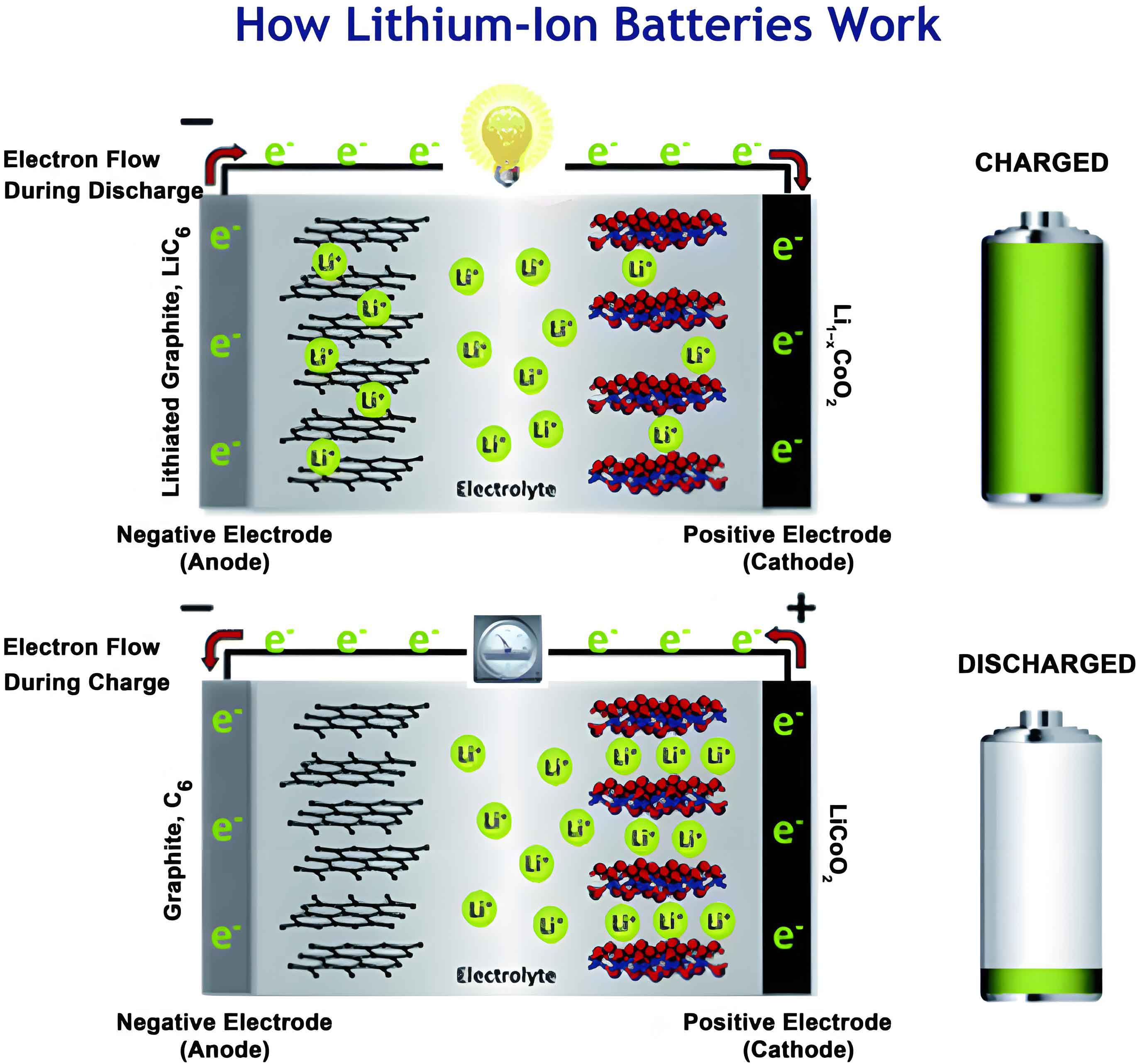
Traditional binders like polyvinylidene fluoride (PVDF) are facing scrutiny due to their reliance on toxic, flammable organic solvents like N-methyl-2-pyrrolidone (NMP), raising environmental and safety concerns. More critically, their weak van der Waals interactions with active materials are inadequate to withstand the severe mechanical stresses induced by next-generation electrode materials, such as silicon anodes and sulfur cathodes, which undergo significant volume changes during cycling. This has spurred intense research into aqueous, eco-friendly binders. Among them, polyacrylic acid (PAA)-based binders have emerged as a leading candidate. Their molecular backbone is decorated with a high density of carboxyl (–COOH) groups, enabling robust adhesion to active materials through covalent bonding, hydrogen bonding, and electrostatic interactions. The production of PAA is relatively green and cost-effective, and its structure can be precisely tailored. However, the inherent rigidity and brittleness of neat PAA hinder its ability to accommodate large volume expansions effectively. This review systematically elucidates the binding mechanisms of PAA, comprehensively analyzes state-of-the-art modification strategies—including copolymerization, cross-linking, compositing, and pre-lithiation—and evaluates their application efficacy across diverse electrode systems for lithium-ion batteries. Finally, we prospect future development directions toward intelligent, multifunctional, and sustainable binder systems.
1. Structural Characteristics and Binding Mechanisms of PAA
Polyacrylic acid is a water-soluble polymer synthesized via the radical polymerization of acrylic acid monomers. Its repeating unit features a pendant carboxylic acid group, which is the source of its functionality. The solubility, rheology, and adhesion of PAA are highly dependent on solution pH and molecular weight (Mw). In acidic media, the carboxyl groups are protonated (–COOH), leading to reduced solubility and increased chain coiling. Under alkaline conditions, deprotonation to carboxylate anions (–COO–) enhances solubility due to electrostatic repulsion between chains. The molecular weight significantly impacts performance; higher Mw generally improves adhesion and cohesive strength by promoting chain entanglement but can detrimentally increase slurry viscosity, complicating electrode processing. An optimal Mw range of 24–150 kDa has been identified for balancing processability and electrochemical performance in silicon-based anodes for lithium-ion batteries.
The superior performance of PAA-based binders in lithium-ion batteries stems from multiple synergistic binding mechanisms with electrode components.
1.1 Covalent Bonding
This mechanism involves the formation of direct chemical bonds (e.g., ester or amide linkages) between the carboxyl groups of PAA and functional groups (e.g., –OH) on the active material surface. Covalent bonds are characterized by high bond energy, typically ranging from 250 to 400 kJ/mol for C–O and C–N bonds, creating a rigid and robust network. This network provides exceptional mechanical integrity to withstand the immense stress from volume changes in materials like silicon, preventing pulverization and capacity fade. The reaction can be represented as:
$$\text{PAA-COOH} + \text{HO-Si} \rightarrow \text{PAA-COO-Si} + \text{H}_2\text{O}$$
This in-situ formation of a covalent cage structure has been shown to effectively encapsulate silicon particles, maintaining electrical connectivity even after particle fracture.
1.2 Hydrogen Bonding
Hydrogen bonding is a pivotal, reversible secondary interaction. The carboxyl groups of PAA can form extensive hydrogen bond networks with polar groups on active materials (e.g., –OH on SiOx), other binder molecules, or conductive additives. The energy of a single hydrogen bond is modest (10–40 kJ/mol), but the collective effect of numerous bonds creates a dynamic and resilient network. This network can dissipate mechanical energy, adapt to volume changes, and even exhibit self-healing behavior. The interaction can be schematized as:
$$\text{PAA-C=O}\cdots\text{HO-Si} \quad \text{and} \quad \text{PAA-O-H}\cdots\text{O=C-PAA}$$
1.3 Electrostatic Interaction
In aqueous slurries, the carboxyl groups of PAA can dissociate into negatively charged carboxylate anions (–COO–). These anions can electrostatically adsorb onto positively charged surfaces of certain active materials or ceramic coatings. This interaction not only enhances adhesion but also can act as a dispersant, stabilizing the electrode slurry. The force follows Coulomb’s law:
$$F = k_e \frac{q_1 q_2}{r^2}$$
where $F$ is the electrostatic force, $k_e$ is Coulomb’s constant, $q_1$ and $q_2$ are the charges, and $r$ is the distance between them.
1.4 Mechanical Interlocking
This is a physical mechanism where the PAA polymer chains penetrate and anchor within the microscopic pores, cracks, and rough surfaces of active material particles. Upon drying, the polymer solidifies, creating a three-dimensional network that physically locks the particles together. The effectiveness of interlocking depends on the rheological properties of the PAA solution, the surface morphology of the particles, and the drying process.
1.5 Assisting Solid Electrolyte Interphase (SEI) Formation
PAA plays an active role in electrochemistry beyond mere adhesion. Its functional groups can influence the decomposition kinetics of electrolyte salts (e.g., LiFSI) and solvents, promoting the formation of a more uniform, stable, and ionically conductive SEI layer on anode surfaces like silicon. A stable SEI is crucial for preventing continuous electrolyte decomposition, mitigating excessive volume expansion, and improving the initial coulombic efficiency (ICE) of lithium-ion batteries.
The table below summarizes these key mechanisms and their impact on electrode performance for lithium-ion batteries.
| Binding Mechanism | Chemical/Physical Basis | Key Advantage for Lithium-ion Battery Electrodes | Typical Bond Energy/Strength |
|---|---|---|---|
| Covalent Bonding | Formation of ester/amide linkages | Provides maximum mechanical strength and long-term stability; ideal for high-stress materials. | 250 – 400 kJ/mol |
| Hydrogen Bonding | Dipole-dipole interaction between H and O/N/F | Creates dynamic, self-healable networks; excellent for stress dissipation and volume accommodation. | 10 – 40 kJ/mol (per bond) |
| Electstatic Interaction | Attraction between opposite charges | Enhances slurry stability and adhesion to charged surfaces; useful for ceramic coatings. | Governed by Coulomb’s Law |
| Mechanical Interlocking | Physical entanglement in surface roughness | Improves overall electrode cohesion and integrity independent of chemical affinity. | Depends on polymer viscoelasticity |
| SEI Modulation | Chemical interaction with electrolyte components | Promotes stable, LiF-rich SEI formation; improves ICE and long-term cyclability. | N/A |
2. Modification Strategies for PAA-based Binders
While neat PAA offers good adhesion, its rigid backbone and high glass transition temperature limit its elasticity and toughness, which are essential for next-generation lithium-ion battery electrodes. Various modification strategies have been developed to tailor its properties, as summarized in the comprehensive table below.
| Modification Strategy | Sub-category / Example | Molecular Design / Key Feature | Primary Function in Lithium-ion Battery Electrode | Typical Performance Enhancement |
|---|---|---|---|---|
| Copolymerization | With ionic monomers (e.g., LiAMPS) | Introduces sulfonate (–SO3–Li+) groups into the chain. | Enhances Li+ ionic conductivity within the electrode. | Improved rate capability and lower polarization. |
| With elastomeric monomers (e.g., BA, AN) | Incorporates soft segments like poly(butyl acrylate) or polyacrylonitrile. | Increases binder flexibility and elasticity to buffer volume strain. | Superior cycling stability for high-expansion anodes. | |
| With polysaccharides (e.g., Gum Arabic) | Grafts PAA chains onto natural polymer backbones. | Combines strong adhesion of PAA with resilience of biopolymer. | Better mechanical integrity and capacity retention. | |
| With silane monomers (e.g., VTEO) | Introduces alkoxysilane groups that can condense with Si–OH. | Forms strong covalent Si–O–Si bonds with silicon surface. | Exceptional adhesion and cycling performance for Si anodes. | |
| With fluorinated monomers (e.g., HFA) | Incorporates fluorine-containing segments. | Promotes formation of stable, LiF-rich SEI; improves electrolyte wettability. | Higher ICE and improved long-term cycle life. | |
| Cross-linking & Grafting | Esterification with polyols (e.g., CMC, SA, Sorbitol) | Forms covalent ester bonds between –COOH of PAA and –OH of cross-linker. | Creates a robust 3D network with high mechanical strength. | Significantly suppresses electrode swelling and cracking. |
| Amidation with amines (e.g., PEI, Lysine, Dopamine) | Forms covalent amide bonds between –COOH of PAA and –NH2 of cross-linker. | Builds a strong, often elastic network; dopamine adds mussel-inspired adhesion. | Enhanced adhesion to current collector and cycle stability. | |
| Dynamic cross-linking (e.g., with TA, Borate) | Utilizes reversible bonds (H-bonds, boronic ester bonds). | Confers self-healing ability and excellent stress relaxation. | Remarkable recovery of capacity after mechanical damage. | |
| Metal-ion coordination (e.g., Fe3+-catechol) | Uses metal ions to coordinate with functional groups on polymer chains. | Provides toughness, self-healing, and electrical conductivity. | Improved mechanical robustness and electrochemical stability. | |
| Compositing | With other polymers (e.g., SBR, PEO, PANI) | Physical blending to form interpenetrating or hydrogen-bonded networks. | SBR adds elasticity; PEO improves ion transport; PANI adds electronic conductivity. | Synergistic effects leading to balanced properties. |
| With conductive agents (e.g., CNT, Graphene) | Integrates conductive nanomaterials into the binder matrix. | Creates a built-in conductive network, reducing need for extra conductive carbon. | Higher active material loading, better rate performance. | |
| With inorganic compounds (e.g., ACC, Borax) | Forms organic-inorganic hybrid networks. | Dramatically increases modulus and toughness (mineral hydrogel concept). | Outstanding mechanical strength to host micron-sized Si particles. | |
| Pre-lithiation | Neutralization with LiOH | Converts –COOH groups to –COOLi groups before electrode fabrication. | Provides an internal lithium source to compensate for active Li loss during SEI formation. | Increased ICE, stabilized voltage profile, enhanced cycle life. |
2.1 Copolymerization
This strategy involves polymerizing acrylic acid with one or more co-monomers to create a polymer chain with tailored properties. Controlled radical polymerization techniques allow for precise architectural control.
• Enhancing Ionic Conductivity: Copolymerizing AA with monomers containing lithium sulfonate groups (e.g., 2-acrylamido-2-methyl-1-propanesulfonic acid lithium salt, LiAMPS) introduces fixed anion groups and mobile Li+ ions. This creates percolation paths for lithium-ion transport within the electrode, described by a modified Arrhenius equation for ionic conductivity ($\sigma$):
$$\sigma = A \exp\left(-\frac{E_a}{k_B T}\right)$$
where $A$ is a pre-exponential factor, $E_a$ is the activation energy for ion hopping, $k_B$ is Boltzmann’s constant, and $T$ is temperature. The sulfonate groups lower $E_a$, enhancing $\sigma$.
• Improving Elasticity: Incorporating monomers like butyl acrylate (BA) introduces soft, rubbery segments into the PAA chain, increasing its ability to stretch and recover. The overall elastic modulus of the binder can be approximated by a composite rule for block copolymers.
• Mimicking Natural Polymers: Grafting PAA onto polysaccharides like Gum Arabic combines the strong adhesion of synthetic PAA with the toughness and sustainability of natural polymers.
2.2 Cross-linking and Grafting
Cross-linking transforms linear PAA chains into a three-dimensional network, dramatically improving mechanical strength, cohesion, and solvent resistance. Grafting involves attaching functional side chains to the PAA backbone.
• Covalent Cross-linking: Reaction with diols (e.g., from CMC) or diamines (e.g., polyethylenimine, PEI) forms ester or amide linkages, respectively. The cross-link density ($\nu$) is crucial and related to the shear modulus ($G$) by the theory of rubber elasticity:
$$G = \nu RT$$
where $R$ is the gas constant and $T$ is the absolute temperature. Optimal $\nu$ ensures strength without excessive brittleness.
• Dynamic Cross-linking: Incorporating units that form reversible bonds (e.g., hydrogen bonds in tannic acid complexes, boronic ester bonds) creates a “smart” binder. These bonds can break under stress to dissipate energy and reform afterward, enabling self-healing. The healing efficiency ($\eta$) can be quantified as:
$$\eta = \frac{P_{\text{healed}}}{P_{\text{virgin}}} \times 100\%$$
where $P$ represents a mechanical property like tensile strength or fracture toughness.
2.3 Compositing
This is a physically straightforward method of blending PAA with other functional materials. The properties of the composite often surpass those of the individual components due to synergistic effects.
• Polymer Blends: Blending PAA with a latex like styrene-butadiene rubber (SBR) yields a binder with the adhesion of PAA and the elasticity of SBR. With conductive polymers like polyaniline (PANI), it creates a binder with intrinsic electronic conductivity, reducing interfacial resistance in the lithium-ion battery electrode.
• Organic-Inorganic Hybrids: Mixing PAA with materials like amorphous calcium carbonate (ACC) or borax leads to the formation of hybrid networks with exceptional mechanical properties (e.g., modulus > 10 GPa), ideal for constraining bulk silicon particles.
2.4 Pre-lithiation
Treating PAA with a lithium base (e.g., LiOH) converts its –COOH groups to –COOLi before electrode fabrication. This serves two main purposes in lithium-ion batteries: 1) It provides a supplemental lithium source to offset irreversible lithium consumption during the first cycle, directly increasing ICE. 2) The lithium ions associated with the polymer chain can improve local ionic conductivity. The degree of neutralization (x in LixPAA) is critical, with an optimal range (e.g., x ≈ 0.75) identified for best performance.
3. Application of PAA-based Binders in Diverse Electrode Systems
3.1 Silicon-based Anodes
Silicon anodes, with a theoretical capacity of ~4200 mAh g-1, are plagued by >300% volume expansion. PAA-based binders are pivotal in addressing this. Cross-linked or composite PAA binders create a mechanical “cage” that confines Si particles, buffers stress, and maintains electrical contact during cycling. The improved adhesion also promotes a more stable SEI. Modified PAA binders have enabled Si electrodes to achieve high areal capacities (>3 mAh cm-2) with significantly extended cycle life, a critical step toward commercialization for high-energy-density lithium-ion batteries.
3.2 Sulfur Cathodes
The sulfur cathode offers a high theoretical capacity of 1675 mAh g-1 but suffers from the polysulfide shuttle effect and large volume change (~80%). PAA-based binders help through chemical and mechanical means. The polar carboxyl groups can chemically anchor polysulfides, suppressing their dissolution and shuttle. Furthermore, robust PAA networks (e.g., cross-linked with HMM or blended with PANI) provide structural integrity to accommodate volume changes in high-sulfur-loading cathodes, leading to improved cycling stability for lithium-sulfur batteries, a promising variant of lithium-metal-based batteries.
3.3 High-Voltage and Nickel-rich Layered Oxide Cathodes
Cathodes like LiNi0.8Co0.1Mn0.1O2 (NCM811) and high-voltage spinels are prone to surface degradation and transition metal dissolution at high states of charge. PAA binders offer advantages in aqueous processing by chelating free Li+ ions, stabilizing slurry pH, and reducing corrosion of the aluminum current collector. More importantly, during cycling, PAA can react with surface residual lithium compounds (e.g., Li2CO3) to form a protective lithium acrylate layer, mitigating parasitic reactions and improving structural stability, which is crucial for the longevity of high-energy lithium-ion batteries.
3.4 Lithium Iron Phosphate (LFP) Cathodes
While LFP is inherently stable, achieving high-rate performance and long cycle life in thick electrodes requires optimized electrode architecture. PAA and its composites (e.g., with PVA) provide stronger adhesion than PVDF, leading to better particle-to-particle and particle-to-current-collector contact. This reduces interfacial resistance and improves lithium-ion transport kinetics, resulting in excellent rate capability and cycling stability even at high C-rates, making LFP batteries more competitive for applications requiring fast charging.
3.5 Other Emerging Systems
The utility of PAA binders extends beyond conventional lithium-ion batteries. In aqueous zinc-ion batteries (ZIBs), PAA is used as a binder for cathodes like V2O5·nH2O. Its hydrophilic carboxyl groups improve electrolyte wettability and facilitate Zn2+ diffusion, while its strong adhesion helps inhibit cathode dissolution, contributing to superior cycling performance for this alternative grid-scale storage technology.
4. Conclusion and Future Perspectives
Polyacrylic acid-based binders have evolved from simple aqueous adhesives into sophisticated, multifunctional polymeric components that are central to advancing lithium-ion battery technology. Through strategic molecular design—copolymerization, cross-linking, compositing, and pre-lithiation—researchers have successfully tailored PAA to meet the stringent demands of next-generation electrode materials, particularly those undergoing large volume changes. The future development of binders for lithium-ion batteries will likely focus on the following frontiers:
1. Intelligent Self-Healing Binders: Further development of dynamic covalent chemistry (e.g., Diels-Alder, disulfide exchange) and robust non-covalent interactions (e.g., quadruple hydrogen bonding, host-guest interactions) will create binders that autonomously repair cracks formed during cycling, dramatically extending electrode lifespan.
2. Binders with High Mixed Ionic-Electronic Conductivity (MIEC): Designing single-binder systems that provide efficient pathways for both Li+ ions and electrons could eliminate or minimize the need for conductive additives, increasing energy density and simplifying electrode design for lithium-ion batteries. This involves precise integration of ion-conducting groups (sulfonate, ether chains) and electronically conductive moieties (conjugated polymers, graphene fragments).
3. Multifunctional Integration: Future binders will be engineered to perform multiple roles simultaneously: adhesion, stress buffering, ion conduction, polysulfide anchoring, HF scavenging, and flame retardancy. This “all-in-one” design philosophy will optimize electrode performance and safety holistically.
4. Green and Sustainable Sourcing: The drive for circular economy will intensify research into bio-derived acrylic acid monomers and the use of abundant, modified biopolymers (lignin, chitosan) as backbone or cross-linkers for PAA, reducing the carbon footprint of lithium-ion battery manufacturing.
5. AI and Data-Driven Discovery: Machine learning and high-throughput computational screening will accelerate the discovery of novel monomer combinations and polymer architectures with optimized properties for specific lithium-ion battery applications, moving beyond trial-and-error approaches.
In conclusion, the continued innovation in PAA-based binder technology is not merely an incremental improvement but a fundamental enabler for high-energy-density, long-life, and safe lithium-ion batteries. By addressing interfacial, mechanical, and transport challenges at the material level, advanced binders will play a critical role in powering the future of electric mobility and renewable energy storage.