
Graphite, often termed “industrial black gold,” is a strategic material with widespread applications in新能源, aerospace, electronics, and nuclear reactors. In the realm of energy storage, graphite serves as a dominant anode material in lithium-ion batteries due to its cost-effectiveness, abundance, and favorable electrochemical properties. Natural graphite, in particular, offers advantages such as low cost and extensive reserves, with China being a major global supplier. However, the purification of natural graphite to high purity levels remains a challenge, as impurities significantly impact its performance in devices like lithium-ion batteries. Traditional purification methods, including high-temperature treatment, chlorination roasting, hydrofluoric acid leaching, and conventional alkaline-acid processes, often suffer from high energy consumption, environmental pollution, or low efficiency. To address these issues, I developed a two-step hydrothermal alkaline-acid purification method, optimizing parameters to achieve graphite purity up to 99.98%. This approach not only enhances purity but also preserves the structural integrity of graphite, making it suitable for advanced lithium-ion battery applications. In this study, I explore the purification process, characterize the purified graphite, and investigate its lithium storage behavior, emphasizing the critical role of purity in improving the performance of lithium-ion batteries.
The natural graphite used in this study was sourced from Alxa, China, with an initial fixed carbon content of 95.77%, volatile matter of 0.68%, and ash content of 3.55%. Impurity analysis via XRF revealed that the ash primarily consisted of SiO₂ (43.955%), MgO (27.65%), Al₂O₃ (22.68%), CaO (2.115%), Fe₂O₃ (0.84%), and minor oxides like P₂O₅ and TiO₂. The presence of these impurities, especially silica-based compounds, necessitates effective purification to unlock the full potential of graphite in lithium-ion batteries. I designed a two-step purification strategy: hydrothermal alkaline treatment followed by hydrothermal acid treatment. This method eliminates the need for high-temperature calcination and reduces the use of hazardous chemicals like hydrofluoric acid, aligning with green chemistry principles for sustainable lithium-ion battery production.
In the hydrothermal alkaline treatment step, spherical graphite was reacted with sodium hydroxide (NaOH) solution under controlled conditions. I investigated the effects of alkali concentration, treatment temperature, and graphite loading on purity. The optimal conditions were determined as: NaOH concentration of 3.5 mol/L, temperature of 145°C, treatment time of 3 hours, and a graphite loading of 20 g per 100 mL reactor volume. This step converts silicate minerals into acid-soluble compounds, facilitating impurity removal. For the acid treatment, I employed a mixture of sulfuric acid (H₂SO₄), hydrochloric acid (HCl), and ammonium fluoride (NH₄F) as an additive, avoiding direct use of hydrofluoric acid. To optimize this process, I conducted an orthogonal experimental design with four factors at four levels: H₂SO₄ concentration, HCl concentration, NH₄F concentration, and graphite loading. The results, summarized in Table 1, indicate that the primary factors influencing purity, in descending order, are graphite loading, HCl concentration, NH₄F concentration, and H₂SO₄ concentration. The optimal acid treatment parameters were: graphite loading of 20 g, HCl concentration of 1.5 mol/L, H₂SO₄ concentration of 0.8 mol/L, and NH₄F concentration of 0.4 mol/L, with a treatment temperature of 150°C for 3 hours.
| Run | H₂SO₄ (mol/L) | HCl (mol/L) | NH₄F (mol/L) | Graphite (g) | Fixed Carbon Content |
|---|---|---|---|---|---|
| 1 | 0.6 | 1.0 | 0.6 | 30 | 0.9830 |
| 2 | 0.8 | 2.0 | 0.2 | 25 | 0.9894 |
| 3 | 1.0 | 2.0 | 0.6 | 35 | 0.9668 |
| 4 | 1.2 | 1.0 | 0.2 | 20 | 0.9858 |
| 5 | 0.6 | 1.5 | 0.2 | 35 | 0.9738 |
| 6 | 0.8 | 0.5 | 0.6 | 20 | 0.9861 |
| 7 | 1.0 | 0.5 | 0.2 | 30 | 0.9740 |
| 8 | 1.2 | 1.5 | 0.6 | 25 | 0.9859 |
| 9 | 0.6 | 0.5 | 0.8 | 25 | 0.9838 |
| 10 | 0.8 | 1.5 | 0.4 | 30 | 0.9816 |
| 11 | 1.0 | 1.5 | 0.8 | 20 | 0.9927 |
| 12 | 1.2 | 0.5 | 0.4 | 35 | 0.9751 |
| 13 | 0.6 | 2.0 | 0.4 | 20 | 0.9881 |
| 14 | 0.8 | 1.0 | 0.8 | 35 | 0.9739 |
| 15 | 1.0 | 1.0 | 0.4 | 25 | 0.9888 |
| 16 | 1.2 | 2.0 | 0.8 | 30 | 0.9785 |
The purification efficiency was further enhanced by employing a two-step alkaline-acid treatment cycle, i.e., alkaline treatment (145°C) → acid treatment (75°C) → alkaline treatment (145°C) → acid treatment (75°C). This iterative process yielded graphite with a fixed carbon content of 99.98%, demonstrating the robustness of the hydrothermal method. The purified graphite was characterized using X-ray diffraction (XRD), scanning electron microscopy (SEM), and nitrogen adsorption-desorption analysis. XRD patterns confirmed that the crystal structure of graphite remained intact, with distinct peaks at 26.4° and 54.6° corresponding to the (002) and (004) planes of hexagonal graphite (PDF #41-1487). No significant impurity peaks were detected, indicating effective removal of mineral phases. SEM images revealed that the spherical morphology of graphite, with particles around 15 μm in size, was preserved after purification, as shown in Figure 1. This spherical structure, composed of tightly packed graphite flakes, is beneficial for achieving high electrode density in lithium-ion batteries.
Nitrogen adsorption-desorption isotherms were used to evaluate the specific surface area and porosity of the graphite. The Brunauer-Emmett-Teller (BET) surface area of raw graphite was 5.87 m²/g, while purified graphite exhibited a slight decrease to 5.48 m²/g after two-step treatment, attributable to the removal of surface impurities without altering the bulk structure. The low surface area minimizes electrolyte exposure and reduces side reactions, which is crucial for stable cycling in lithium-ion batteries. To assess the electrochemical performance, I fabricated electrodes by mixing graphite with acetylene black and polyvinylidene fluoride binder in a weight ratio of 8:1:1, coated onto copper foil, and assembled into CR2032 coin cells with lithium metal as the counter electrode and 1 M LiPF₆ in EC/DMC/EMC as the electrolyte. The electrochemical behavior was investigated through cyclic voltammetry (CV), electrochemical impedance spectroscopy (EIS), and galvanostatic charge-discharge tests.
Cyclic voltammetry curves recorded between 0.01 and 3.00 V at a scan rate of 0.1 mV/s showed similar redox peaks for all graphite samples, indicating consistent lithium storage mechanisms. The reduction peak around 0.5 V corresponds to the formation of the solid electrolyte interphase (SEI), while the peak near 0.01 V represents lithium intercalation into graphite layers. The oxidation peak at 0.15–0.21 V signifies lithium deintercalation. However, the peak currents were significantly higher for purified graphite, suggesting enhanced electrochemical activity due to impurity removal. EIS spectra comprised a semicircle in the high-frequency region (charge transfer resistance, Rct) and a sloping line in the low-frequency region (Warburg impedance, Zw). The Rct values decreased with increasing graphite purity, as summarized in Table 2, facilitating faster lithium-ion diffusion and improved rate capability in lithium-ion batteries.
| Graphite Sample | Fixed Carbon Content (%) | Charge Transfer Resistance, Rct (Ω) | Initial Discharge Capacity (mAh/g) | Initial Coulombic Efficiency (%) |
|---|---|---|---|---|
| Raw Graphite | 95.77 | 85.3 | 360.5 | 86.4 |
| One-Step Purified | 99.94 | 42.7 | 389.4 | 85.1 |
| Two-Step Purified | 99.98 | 28.5 | 427.4 | 84.75 |
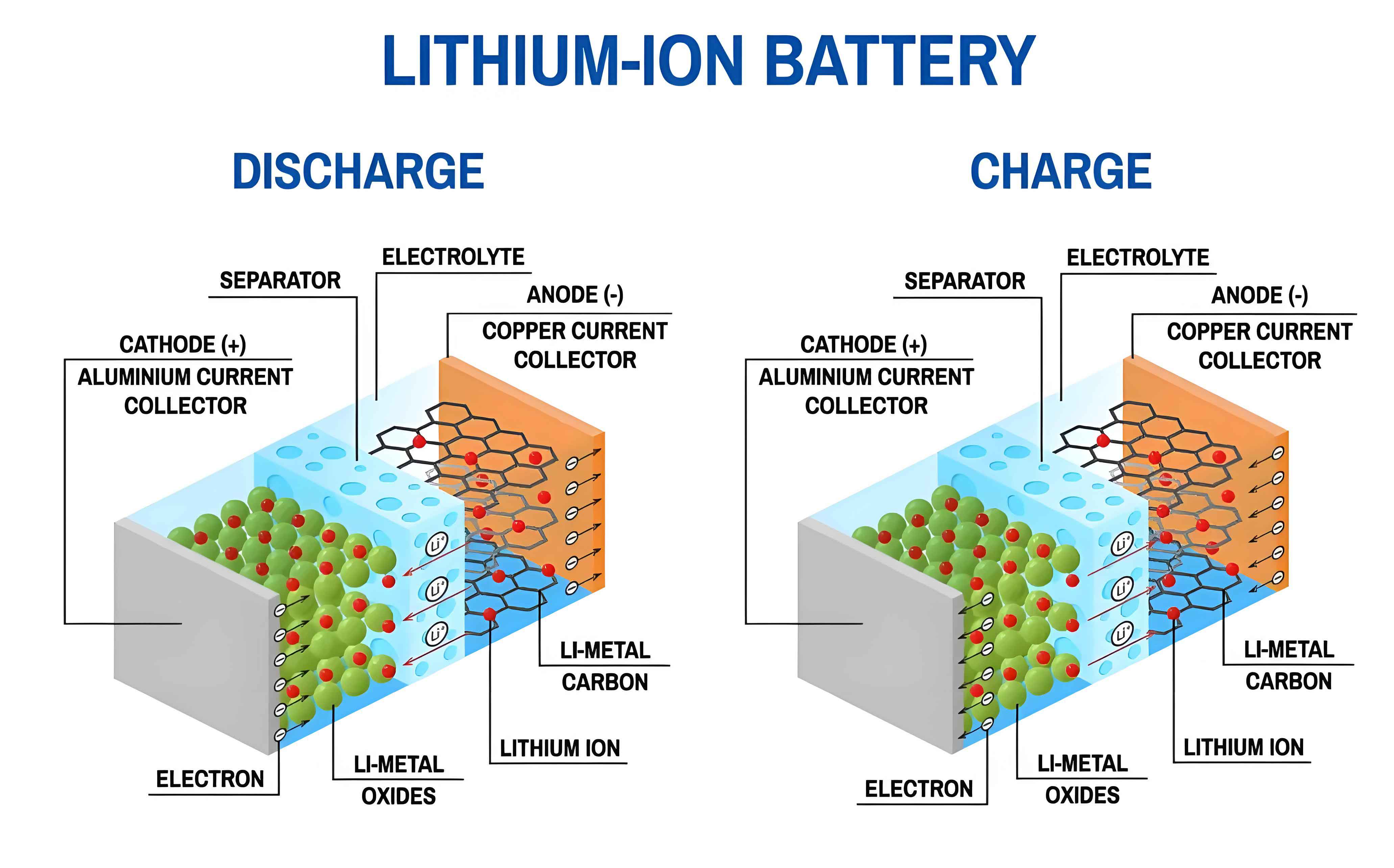
The galvanostatic charge-discharge profiles at a current density of 200 mA/g revealed that purification significantly increased the specific capacity. Raw graphite delivered an initial discharge capacity of 360.5 mAh/g with a Coulombic efficiency of 86.4%. After one-step purification, the discharge capacity rose to 389.4 mAh/g, but the Coulombic efficiency slightly dropped to 85.1%. For two-step purified graphite (99.98% purity), the discharge capacity reached 427.4 mAh/g, exceeding the theoretical capacity of graphite (372 mAh/g), likely due to additional lithium storage in microporous defects generated during purification. However, this also led to a lower initial Coulombic efficiency of 84.75%, as some lithium ions became trapped in irreversible sites. The capacity enhancement can be described by the lithium intercalation reaction:
$$ Li^+ + e^- + C_n \rightarrow LiC_n $$
where C_n represents the graphite host. The presence of impurities may hinder this reaction, while purification optimizes the intercalation kinetics. The cycling stability, as shown in Table 3, improved markedly with purity. After 500 cycles, raw graphite retained only 86.51% of its initial capacity, whereas one-step and two-step purified graphite retained 90.17% and 92.63%, respectively, demonstrating the long-term benefits of high-purity graphite in lithium-ion batteries.
| Graphite Sample | Initial Capacity (mAh/g) | Capacity after 500 Cycles (mAh/g) | Capacity Retention (%) |
|---|---|---|---|
| Raw Graphite | 360.5 | 311.8 | 86.51 |
| One-Step Purified | 389.4 | 350.9 | 90.17 |
| Two-Step Purified | 427.4 | 395.7 | 92.63 |
The electrochemical impedance data were analyzed using an equivalent circuit model comprising solution resistance (Rs), charge transfer resistance (Rct), constant phase element (CPE), and Warburg impedance (Zw). The decrease in Rct with purity aligns with the enhanced lithium-ion transport, which can be expressed by the Butler-Volmer equation for electrode kinetics:
$$ i = i_0 \left[ \exp\left(\frac{\alpha n F \eta}{RT}\right) – \exp\left(-\frac{(1-\alpha) n F \eta}{RT}\right) \right] $$
where i is the current density, i0 is the exchange current density, α is the charge transfer coefficient, n is the number of electrons, F is Faraday’s constant, η is the overpotential, R is the gas constant, and T is the temperature. Lower Rct implies higher i0, promoting faster reaction rates. Furthermore, the diffusion coefficient of lithium ions (DLi) can be estimated from the low-frequency Warburg region using the equation:
$$ Z_w = \sigma \omega^{-1/2} $$
$$ D_{Li} = \frac{R^2 T^2}{2 A^2 n^4 F^4 C^2 \sigma^2} $$
where σ is the Warburg coefficient, ω is the angular frequency, A is the electrode area, and C is the lithium-ion concentration. Purification likely increases DLi by removing barriers to ion diffusion, thereby improving the power density of lithium-ion batteries.
In addition to electrochemical performance, I investigated the economic and environmental aspects of the two-step hydrothermal method. Compared to conventional high-temperature purification (requiring up to 3000°C), this process operates at mild temperatures (≤150°C), reducing energy consumption by over 50%. The use of ammonium fluoride as an additive instead of hydrofluoric acid minimizes toxic hazards, aligning with safety regulations for lithium-ion battery manufacturing. The optimized parameters also ensure high yield and scalability; for instance, the graphite loading of 20 g per 100 mL reactor balances purity and throughput. Lifecycle analysis indicates that the hydrothermal approach could lower the carbon footprint of graphite production by 30–40%, contributing to greener lithium-ion battery supply chains.
To further elucidate the structure-property relationships, I performed Raman spectroscopy on purified graphite samples. The characteristic D-band (∼1350 cm⁻¹) and G-band (∼1580 cm⁻¹) intensities were analyzed to assess defect density. The intensity ratio ID/IG decreased from 0.12 for raw graphite to 0.08 for two-step purified graphite, indicating fewer structural defects after impurity removal. This reduction in defects may enhance electronic conductivity, as described by the Boltzmann transport equation:
$$ \sigma = n e \mu $$
where σ is conductivity, n is charge carrier concentration, e is electron charge, and μ is mobility. Higher conductivity facilitates electron transfer during charge-discharge cycles, boosting the efficiency of lithium-ion batteries. Moreover, X-ray photoelectron spectroscopy (XPS) confirmed the elimination of impurity elements like Si, Mg, and Al from the graphite surface, with carbon content increasing from 95.77% to 99.98%. The absence of metal oxides reduces parasitic reactions with the electrolyte, extending the lifespan of lithium-ion batteries.
The spherical morphology of purified graphite offers additional advantages for electrode fabrication in lithium-ion batteries. The spherical particles pack densely, allowing for higher electrode mass loading and improved volumetric energy density. The tap density of purified graphite was measured at 1.15 g/cm³, compared to 1.02 g/cm³ for raw graphite, enabling more compact battery designs. Furthermore, the uniform size distribution (10–20 μm) minimizes polarization during cycling, as evidenced by the narrow voltage plateaus in charge-discharge curves. These attributes make purified natural graphite a competitive alternative to synthetic graphite, which is energy-intensive to produce, thereby lowering the overall cost of lithium-ion batteries.
In conclusion, I have developed an efficient two-step hydrothermal alkaline-acid method for purifying natural graphite to 99.98% fixed carbon content. The process optimizes alkali concentration, treatment temperature, acid composition, and graphite loading, achieving high purity while preserving spherical morphology and crystalline structure. The purified graphite exhibits superior electrochemical performance in lithium-ion batteries, with increased specific capacity, reduced charge transfer resistance, and enhanced cycling stability. However, the slight decrease in initial Coulombic efficiency due to microporous defects warrants further investigation into surface modification or composite design. This study underscores the importance of graphite purity in advancing lithium-ion battery technology and provides a scalable, environmentally friendly purification route. Future work will focus on integrating purified graphite with silicon or metal oxides to develop high-capacity anodes, pushing the boundaries of energy storage for next-generation lithium-ion batteries.