
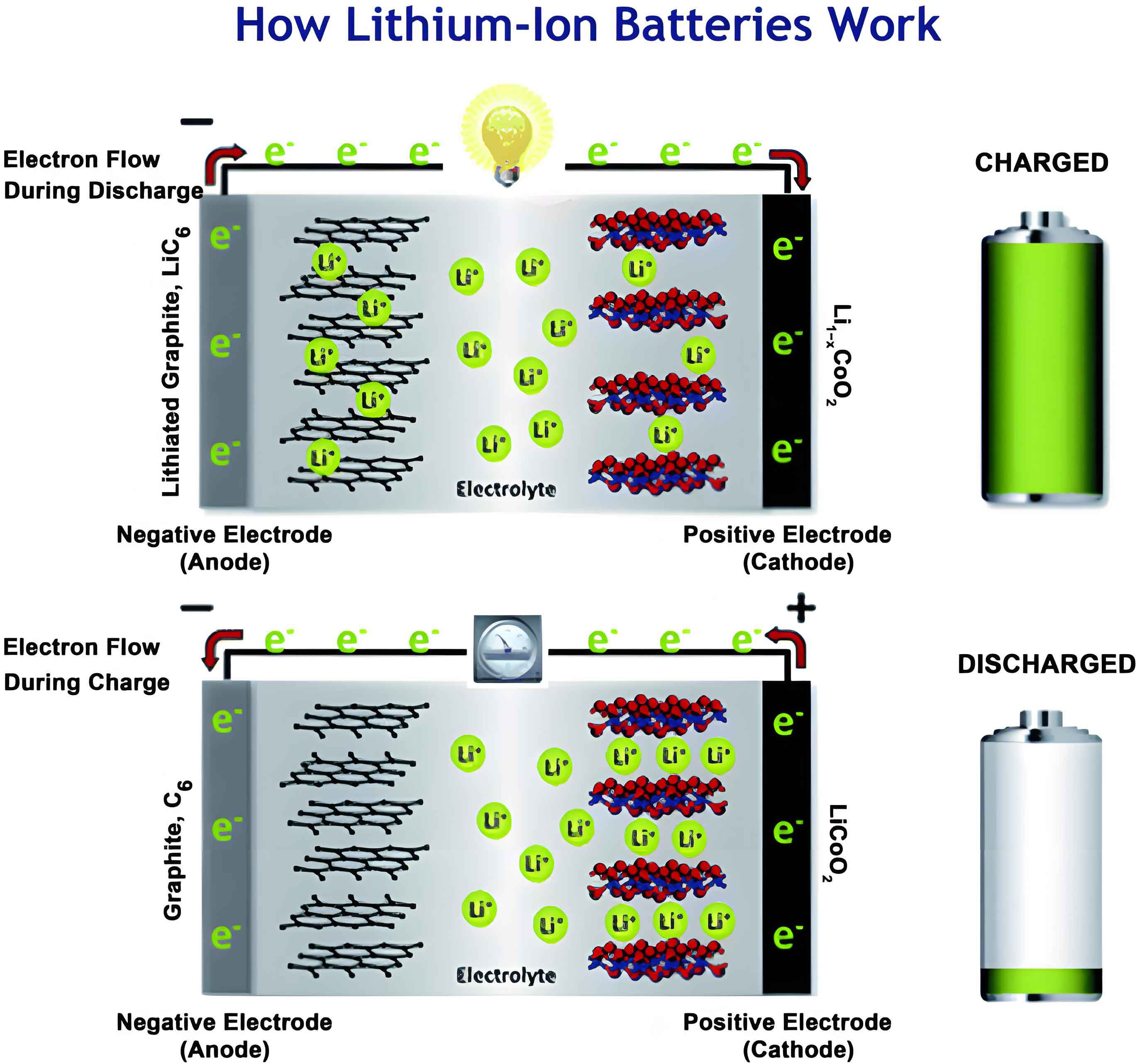
The relentless global pursuit of sustainable energy solutions has firmly established the lithium-ion battery as a cornerstone technology. Its dominance in electric vehicles, grid-scale energy storage, and portable electronics is attributed to its superior energy density, long cycle life, and declining cost. The performance of a lithium-ion battery is intrinsically linked to the quality of its cathode materials. Among them, high-nickel layered oxides (LiNixCoyMnzO2, NCM) represent the frontier for achieving higher energy densities. The synthesis of these ternary cathode materials involves a critical high-temperature solid-state reaction, typically between a co-precipitated transition metal hydroxide precursor and a lithium source (e.g., Li2CO3 or LiOH·H2O), at temperatures ranging from 750°C to 900°C under an oxygen atmosphere.
In this pivotal calcination process, the sagger—a refractory container—plays a role far more significant than a mere passive vessel. It is a critical component of the furnace furniture that directly influences production yield, cost, and ultimately, the purity and electrochemical performance of the cathode powder. The sagger must withstand severe and often conflicting operational demands: excellent thermal shock resistance to survive rapid heating and cooling cycles, and formidable chemical resistance against corrosive lithium-rich vapors and molten phases that form during the calcination of lithium-ion battery precursors. Failure to meet these requirements leads to premature sagger degradation, contamination of the valuable cathode active material, increased downtime for replacement, and higher production costs. Therefore, the development of advanced, durable sagger materials is a crucial materials science challenge directly supporting the scaling and cost-reduction goals of the lithium-ion battery industry.
Refractory saggers are broadly classified into oxide and non-oxide systems. While non-oxides like silicon carbide (SiC) offer good thermal conductivity and thermal shock resistance, they are prone to oxidation at high temperatures in air, forming silica scales that can interact with the cathode materials. Oxide-based saggers, particularly composite systems, have emerged as the dominant choice due to their better thermodynamic stability in oxidizing atmospheres and their tunable properties. The quest is not for a single perfect material, but for an optimized composite where different phases work synergistically. Among these, the cordierite (2MgO·2Al2O3·5SiO2)-mullite (3Al2O3·2SiO2) system has garnered significant attention as a benchmark. Mullite provides high mechanical strength and refractoriness but suffers from a relatively high thermal expansion coefficient (TEC ≈ 5.5 × 10⁻⁶ /K), making it vulnerable to thermal stress. Cordierite, in contrast, possesses an exceptionally low TEC (≈ 1.5 × 10⁻⁶ /K), granting outstanding thermal shock resistance, but it has lower mechanical strength and a lower softening point. By intelligently combining these phases, one can engineer a material that balances the robust, load-bearing capacity of mullite with the crack-defying resilience of cordierite, making it suitable for the thermal cycling inherent in lithium-ion battery cathode production.
In this article, we systematically review the recent research progress in oxide sagger technology for NCM cathode synthesis. From a first-person perspective as researchers in the field, we analyze the optimization strategies for the cordierite-mullite composite system, delve into the complex degradation mechanisms under lithium attack, and explore advanced protective solutions. We will summarize key findings using comparative tables and employ fundamental material science equations to elucidate underlying principles. The goal is to provide a consolidated reference and forward-looking perspective on the development of high-performance, long-life, and cost-effective sagger solutions essential for the next generation of lithium-ion battery manufacturing.
Performance Optimization of Oxide Sagger Systems
The performance of a composite sagger is not merely the sum of its parts; it is a complex function of the raw material selection, particle architecture (grading), bonding mechanisms, and processing conditions. Optimizing these factors is essential to tailor properties like strength, porosity, thermal shock resistance, and crucially, corrosion resistance.
1. Optimization of Aggregate, Matrix Composition, and Particle Grading
The skeletal structure of a sagger is built by the aggregate—coarse, refractory grains that determine the bulk properties. The matrix, composed of finer powders, fills the interstices, promotes sintering, and often dictates the high-temperature chemical behavior. The ratio and nature of these components are primary levers for property control.
Research consistently shows that an optimal cordierite-to-mullite ratio exists. For instance, studies indicate that incorporating 20-30 wt.% of cordierite (either as pre-synthesized grains or as a phase formed in-situ from raw materials like talc, kaolin, and alumina) into a mullite-based body significantly enhances thermal shock resistance. However, exceeding this optimal range can compromise the high-temperature strength and creep resistance due to the increased glassy phase content from cordierite. The particle size distribution of these aggregates is equally critical. A well-designed multimodal packing, often following the Andreassen or similar models, minimizes porosity and enhances density. A typical optimized grading might involve: coarse aggregate (1-3 mm) for framework, medium aggregate (0.2-1 mm) for filling, and fine matrix (<0.2 mm) for bonding and sintering. One effective formulation reported combines ~30 wt.% cordierite (1-3 mm), ~30 wt.% mullite (<1 mm), and ~40 wt.% fine matrix, yielding a cold crushing strength of ~43 MPa and a thermal shock strength retention of over 85% after three cycles (1100°C ⇄ room temperature water quench).
To further enhance specific properties, strategic additives are introduced into the matrix. Magnesium aluminate spinel (MgAl2O4) is a prominent example. Its high melting point, good chemical inertness, and favorable thermal expansion match with corundum make it a valuable addition. Incorporating 6 wt.% spinel fine powder into a mullite-based matrix was found to lower apparent porosity, improve corrosion resistance against lithium compounds, and maintain good thermal shock stability for firing temperatures below 1000°C. The spinel phase acts as a more stable barrier against lithium penetration compared to silica-rich phases. Another beneficial additive is spodumene (LiAlSi2O6). Adding small amounts (e.g., 4 wt.%) of spodumene powder can act as a sintering aid, forming low-temperature liquid phases that promote densification and improve mechanical strength at the firing temperature, without severely degrading the high-temperature performance. The key findings on composition effects are summarized in Table 1.
| Component | Typical Role/Form | Optimum Content (Reported) | Primary Effect on Properties |
|---|---|---|---|
| Pre-synthesized Cordierite | Aggregate (Coarse/Fine) | 20-30 wt.% | Maximizes thermal shock resistance by lowering bulk CTE. Excess reduces refractoriness. |
| Mullite Aggregate | Main Skeletal Framework | 30-50 wt.% | Provides high-temperature strength, creep resistance, and structural stability. |
| Magnesium Aluminate Spinel (MgAl2O4) | Fine Matrix Additive | ~6 wt.% | Enhances corrosion resistance against Li, reduces porosity, improves hot strength. |
| Spodumene (LiAlSi2O6) | Sintering Aid / Matrix Modifier | ~4 wt.% | Promotes densification via liquid phase sintering, increases room- and hot-temperature strength. |
| Recycled Sagger Fines | Partial Replacement for Virgin Matrix | ≤ 8 wt.% | Reduces cost and waste. Slight decrease in density/strength, acceptable for certain grades. |
2. The Role of Binders and Forming Processes
The choice of binder is crucial for imparting sufficient green strength for handling and shaping, and it can influence the final microstructure. Traditional organic binders like lignosulfonates (paper pulp waste liquid) or phenolic resins burn out during firing, leaving controlled porosity. Inorganic binders, such as phosphates or colloidal sols, can become integral parts of the ceramic matrix. For example, using 6 wt.% lignosulfonate provides excellent adhesion between aggregate and matrix, resulting in good mechanical properties post-firing. More advanced approaches employ colloidal binders like mullite sol. Adding 5 wt.% mullite sol creates a gel network that strengthens the green body and, upon heating, crystallizes into nano-sized mullite that reinforces the grain boundaries, leading to a denser and stronger final product with a thermal shock strength retention near 80%.
Forming processes also dictate microstructure. While conventional pressing is common, methods like hot-press injection molding using wax-based binders allow for the production of complex-shaped saggers with high dimensional accuracy and potentially lower cost when using lower-grade raw materials like M60 mullite.
3. Towards Economical and Sustainable Sagger Solutions
The economic and environmental impact of sagger production is gaining attention. Two promising strategies are the use of alternative low-cost raw materials and the recycling of spent saggers. Research has successfully demonstrated the use of industrial by-products like kyanite tailings mixed with α-Al2O3 to synthesize mullite-zirconia composites, offering good corrosion resistance at a lower cost. Similarly, a novel andalusite-corundum-KAlSi2O6 composite has shown superior corrosion resistance compared to traditional mullite, as the in-situ formed KAlSi2O6 phase encapsulates the andalusite grains, providing a protective barrier.
Recycling spent sagger material itself is a direct route to circularity. Studies show that finely milled spent sagger powder can replace up to 8 wt.% of virgin matrix materials (like alumina or spinel powder) without causing a severe deterioration in properties. The reintroduced fines, being pre-reacted and sintered, alter the sintering dynamics, often leading to a slightly more porous but still serviceable structure for less demanding applications, thereby reducing raw material consumption and waste.
Corrosion Mechanisms and Protective Coating Technologies
Understanding how saggers fail is key to improving them. The primary failure mode in lithium-ion battery cathode firing is chemical corrosion by lithium species, exacerbated by thermal cycling.
1. The Corrosion Mechanism of Oxide Saggers
During the calcination of NCM precursors, volatile lithium compounds (e.g., Li2O) are generated. These aggressive fluxes penetrate the porous sagger structure and react with its constituent phases. Silica (SiO2)-rich phases like cordierite and the glassy silicate matrix are particularly vulnerable. The basic lithium oxide reacts with acidic silica, forming low-melting point lithium silicate glasses. This reaction can be simplified as:
$$ \text{Li}_2\text{O} (vapor) + \text{SiO}_2 (in \; cordierite/mullite/glass) \rightarrow x\text{Li}_2\text{O} \cdot y\text{SiO}_2 (liquid \; glass) $$
This liquid phase further accelerates corrosion by dissolving other oxide components (Al2O3, MgO), leading to the progressive decomposition of the refractory microstructure. Mullite itself can decompose under severe lithium attack into transitional aluminates and silicates. The corrosion process often follows a parabolic rate law, where the depth of the corroded layer (x) is related to time (t) by:
$$ x^2 = k_p \cdot t $$
where \( k_p \) is the parabolic rate constant, dependent on temperature, lithium partial pressure, and material properties like porosity and phase composition.
A cross-section of a corroded sagger typically reveals a distinct three-layer structure: (1) a loose, fully reacted outer layer often rich in lithium aluminates (e.g., LiAlO2, LiAl5O8) and embedded cathode material; (2) a dense intermediate transition zone where reaction products have sealed some porosity, temporarily slowing further ingress; and (3) the unaffected sagger substrate. Phases like spinel (MgAl2O4) and corundum (α-Al2O3) generally show better resistance because they lack reactive silica and have higher stability in basic environments.
2. Advancements in Protective Coatings and Surface Modification
Applying a engineered barrier coating on the sagger’s inner surface is the most direct strategy to decouple the structural bulk material from the corrosive environment. The coating must be adherent, crack-resistant under thermal cycling, and chemically inert.
- Material Selection: Alumina (Al2O3) is a prime coating material due to its high stability against lithium oxides, forming a protective layer of lithium aluminate (LiAlO2) that can retard further diffusion. Zirconia (ZrO2) coatings also show promise due to their low reactivity and high melting point. More recently, calcium hexaluminate (CaO·6Al2O3, CA6) has been investigated. Coatings or matrices rich in CA6 demonstrate excellent corrosion resistance because CA6 has a layered crystal structure that impedes ionic diffusion and reacts minimally with lithium vapors.
- Application Techniques:
- Impregnation: Soaking the porous sagger in a colloidal sol (e.g., alumina sol). The sol fills the surface pores and, upon heating, gels and crystallizes, blocking penetration pathways. This method is simple but may not provide a thick, continuous layer.
- Plasma Spraying: This technique can deposit dense, well-adhered coatings of materials like alumina. Plasma-sprayed Al2O3 coatings have survived over 50 firing cycles (950°C, 12 h) without spallation, showing only a thin reaction layer on the very surface.
- Slurry Coating/Dip-Coating: Applying a suspension of fine coating powder (e.g., Al2O3, mullite) in a liquid carrier. This can create thicker layers and is amenable to creating functionally graded or composite coatings. For example, a slurry-coated mullite-alumina layer can be designed to have a lower CTE than an alumina substrate, creating beneficial compressive surface stresses upon cooling that enhance bending strength and thermal shock resistance, a concept known as pre-stress strengthening. The induced stress (\(\sigma_s\)) can be approximated by:
$$ \sigma_s = E \cdot \Delta \alpha \cdot \Delta T / (1 – \nu) $$
where \(E\) is Young’s modulus, \(\Delta \alpha\) is the CTE mismatch, \(\Delta T\) is the temperature change from processing, and \(\nu\) is Poisson’s ratio.
A comparison of common coating strategies is provided in Table 2.
| Coating Method | Typical Materials | Advantages | Limitations / Challenges |
|---|---|---|---|
| Sol Impregnation | Al2O3 sol, SiO2 sol | Simple, penetrates surface pores, good for sealing. | Coating thickness limited, may not withstand severe mechanical abrasion. |
| Plasma Spraying | Al2O3, ZrO2 | Dense, thick, and adherent coatings; high deposition rate. | High equipment cost; line-of-sight process; requires careful control to avoid cracks. |
| Slurry Dip-Coating | Al2O3, Mullite, CA6, composites | Versatile in composition, can create graded layers, relatively low cost. | Requires careful drying to avoid cracks; coating thickness and uniformity need control. |
| In-situ Reaction Coating | Formation of CA6, Mullite from precursors | Excellent adhesion (integral part of surface), can be cost-effective. | Processing conditions (time, temperature) must be tightly controlled to form desired phase. |
Summary and Future Perspectives
The development of oxide saggers for lithium-ion battery cathode production has evolved from simple material substitution to sophisticated microstructural engineering and surface science. The cordierite-mullite composite remains a workhorse due to its tunable balance of thermal and mechanical properties. Key advancements have been made in optimizing particle packing, incorporating functional additives like spinel, and understanding the lithium-induced corrosion mechanisms that lead to the characteristic layered degradation.
Looking forward, we identify several critical research and development trajectories essential for next-generation sagger technology:
- Lightweight and High-Strength Composites: Future saggers must be lighter to reduce thermal mass and energy consumption during furnace cycling. This drives research into designing controlled, hierarchical porosity within strong composite matrices (e.g., porous mullite-cordierite reinforced with nano-phases or fibers) and exploring novel ultra-low CTE phases beyond cordierite.
- Advanced, Multi-Functional Coatings: The frontier lies in nano-engineered and multi-layered coatings. Concepts include:
- Nano-composite coatings (e.g., Al2O3-Graphene Oxide) for improved toughness and crack resistance.
- Intelligent gradient coatings with a CTE that transitions from the substrate to a highly inert surface layer (e.g., CA6), minimizing interfacial stress.
- Self-healing coatings where certain additives can flow or react to seal microcracks formed during service.
- Low-Energy and Near-Net-Shape Manufacturing: Reducing the carbon footprint of sagger production is imperative. This involves:
- Developing advanced binder systems (e.g., geopolymer-inspired, or specific colloidal gels) that enable high green strength for machining, allowing for “green machining” of complex shapes followed by lower-temperature firing cycles.
- Perfecting reaction sintering routes that form the desired composite phases (mullite, cordierite, spinel) directly from cheap natural minerals or industrial wastes at lower temperatures, avoiding the energy-intensive pre-synthesis of some compounds.
- Digitalization and Predictive Lifespan Modeling: Integrating sensor data from firing furnaces with material degradation models can enable predictive maintenance schedules for sagger replacement, minimizing unplanned downtime. Developing accurate models that couple thermal stress analysis with lithium diffusion-reaction kinetics will be crucial for virtual design and testing of new sagger materials and coatings.
In conclusion, the humble sagger is a critical enabler for the quality and cost of high-performance lithium-ion battery cathodes. Its continued evolution from an artisanal refractory product to a precision-engineered, high-technology component mirrors the sophistication of the battery industry itself. By addressing the challenges of corrosion, thermal stress, and sustainable manufacturing through the integrated strategies discussed, we can develop sagger solutions that support the relentless drive for better, cheaper, and greener lithium-ion batteries.