
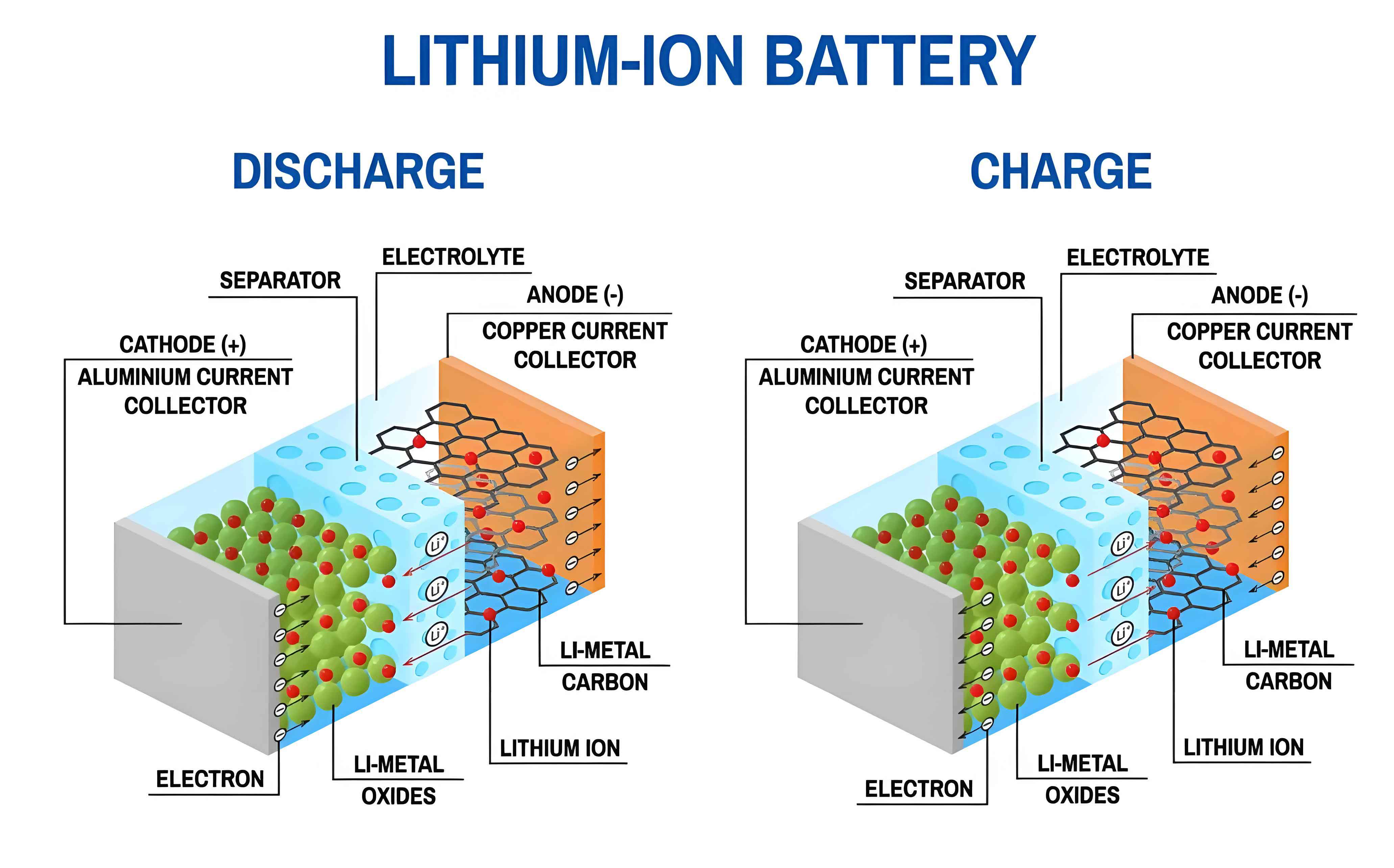
The global energy transition is accelerating at an unprecedented pace, fueling explosive growth in the new energy industry. As the core energy storage device, the lithium-ion battery has achieved large-scale application in electric vehicles, smart grids, and energy storage power stations due to its advantages of high energy density and long cycle life. However, with the continuous expansion of application scenarios, the safety issues of lithium-ion batteries have become increasingly prominent, with the phenomenon of thermal runaway being particularly critical. In recent years, a series of standards for thermal runaway detection of lithium-ion batteries have been promulgated. Nevertheless, facing the continuous upgrade of battery materials and the rapid innovation of system integration technologies, existing standards still suffer from insufficient standardization in key technical areas such as early warning mechanisms and multi-parameter coupled detection for thermal runaway. Therefore, research on thermal runaway detection standards for lithium-ion batteries holds significant practical importance for ensuring safety and fostering healthy industry development.
1 Causes and Hazards of Thermal Runaway in Lithium-Ion Batteries
Thermal runaway in a lithium-ion battery refers to a chain exothermic reaction triggered when the internal heat generation rate exceeds the battery’s own heat dissipation capacity during charging/discharging or under abusive conditions. This process typically begins with continuous internal heat accumulation leading to an exponential temperature rise, which then induces material failure phenomena such as electrolyte decomposition and separator meltdown. This is accompanied by the generation and ejection of large amounts of flammable gas, ultimately potentially causing severe safety incidents like fire or explosion.
Thermal runaway of a lithium-ion battery is a complex process involving multiple factors such as electrical, thermal, and mechanical stresses. Its root causes can be broadly categorized into three types:
| Abuse Category | Specific Examples | Primary Consequence |
|---|---|---|
| Mechanical Abuse | Nail penetration, crush, external impact. | Internal short circuit, separator breach. |
| Electrical Abuse | Overcharge, over-discharge, external short circuit. | Electrode decomposition, joule heating, lithium plating. |
| Thermal Abuse | Exposure to high ambient temperature, thermal management system failure. | Accelerated side reactions, separator shrinkage. |
Furthermore, the internal state of the lithium-ion battery itself is a significant factor in initiating thermal runaway. For instance, as the battery ages, structural collapse of electrode materials during lithiation/delithiation can occur, leading to Solid Electrolyte Interphase (SEI) instability and triggering more parasitic reactions. Lithium dendrites formed due to lithium plating on the anode can also become initiators for thermal runaway.
The fundamental thermodynamic process can be described by a simplified heat balance equation:
$$ \rho C_p \frac{\partial T}{\partial t} = \nabla \cdot (k \nabla T) + \dot{q}_{gen} $$
where $\rho$ is density, $C_p$ is heat capacity, $T$ is temperature, $t$ is time, $k$ is thermal conductivity, and $\dot{q}_{gen}$ is the volumetric heat generation rate. Thermal runaway occurs when $\dot{q}_{gen}$ surpasses the heat dissipation term $\nabla \cdot (k \nabla T)$ for a sustained period.
The hazards posed by thermal runaway in lithium-ion batteries are severe. The resulting fires and explosions can cause significant personal injury and property damage. During thermal runaway, toxic and harmful substances are released, polluting soil, water sources, and air. Moreover, a single cell’s thermal runaway can trigger a cascading failure within a battery module or pack, leading to the complete failure of the energy storage system and severely impacting the stability of power supply.
2 Current Standards for Thermal Runaway Detection in Lithium-Ion Batteries
A relatively comprehensive standard system for thermal runaway detection of lithium-ion batteries has been established globally. These standards provide crucial technical support and normative guidance for the safety management of lithium-ion batteries.
International Standards: The International Electrotechnical Commission (IEC) standard IEC 62619 specifies detailed methods for thermal runaway propagation testing. Underwriters Laboratories (UL) in the United States has developed UL 9540A:2019, which applies to batteries in all energy storage systems without specific restrictions on application scenarios. UL 1973:2022 outlines corresponding thermal runaway test requirements for batteries used in stationary equipment and auxiliary power sources.
Chinese National Standards: China has also placed high importance on formulating thermal runaway detection standards, issuing national standards such as Safety technical specification for lithium-ion batteries for electric bicycles (GB 43854—2024) and Lithium-ion battery for electrical energy storage (GB/T 36276—2023). These clearly define thermal runaway test methods for different battery types. GB 43854—2024 details safety specifications specifically for lithium-ion batteries in electric bicycles, while GB/T 36276—2023 focuses on large-scale energy storage applications, imposing strict requirements on the thermal safety performance of battery systems.
From the perspective of the thermal runaway trigger mechanism, current standards primarily adopt methods that are practical and can effectively induce severe thermal runaway. A comparison of key standards reveals significant differences in test preparation, trigger methods, and objectives, as summarized below:
| Item | IEC 62619:2022 | UL 9540A:2019 | GB 43854—2024 | GB/T 36276—2023 |
|---|---|---|---|---|
| Test Preparation | Fully charge per mfr. spec. | ≥2 full cycles, then fully charge. | Charge per mfr. method or standard. | Discharge/Charge per mfr. power spec. |
| Trigger Method | Heating, Overcharge, Nail Pen. | Mech./Elec./Thermal abuse. | Heating or Overcharge. | Heating + Overcharge. |
| Primary Objective | Assess cell-to-cell propagation risk. | Evaluate fire characteristics for ESS. | Pass/Fail test for e-bike battery safety. | Pass/Fail test for stationary storage safety. |
International standards generally employ diversified trigger methods. Chinese standards tend to focus on practical application scenarios. For example, GB/T 36276—2023’s strategy of heating combined with overcharge aligns more closely with the actual operating conditions of power storage systems.
3 Problems with Existing Thermal Runaway Detection Standards
Although the current standard system for thermal runaway detection has established a basic framework for safety evaluation, several problems persist in practical application.
3.1 Inadequate Effectiveness of Detection Methods
From the perspective of detection method effectiveness, existing trigger methods such as overcharge, nail penetration, and heating can simulate some extreme conditions but still differ from real-world application scenarios. Taking electric vehicle power batteries as an example, their actual operating environment involves multi-physics field coupling, including dynamic temperature changes, mechanical vibration, and humidity fluctuations. Existing laboratory test conditions struggle to fully replicate such complex operational states, potentially leading to an underestimation or mischaracterization of thermal runaway risks for the lithium-ion battery in the field.
3.2 Significant Disparities Between Standards
As illustrated in the table above, standards exhibit significant differences in technical indicators, trigger methods, and testing means. This disparity not only increases compliance costs for manufacturers operating in global markets but also hinders the横向可比性 (horizontal comparability) of test data across different certification bodies and regions, creating market barriers and confusion.
3.3 Incomprehensive Evaluation Indicators
Existing detection standards primarily focus on assessing the short-term safety performance of fresh lithium-ion batteries. Insufficient attention is paid to issues like performance degradation and material aging during long-term use. After numerous charge-discharge cycles, the internal chemistry and structure of a lithium-ion battery change, which can significantly affect its thermal stability and safety. The Arrhenius equation models how reaction rates accelerate with temperature:
$$ k = A e^{-E_a/(RT)} $$
where $k$ is the rate constant, $A$ is the pre-exponential factor, $E_a$ is the activation energy, $R$ is the gas constant, and $T$ is temperature. Aging can lower $E_a$ for key exothermic side reactions, making the battery more prone to thermal runaway at lower temperatures.
Furthermore, from a technical research perspective, the complex mechanism of thermal runaway presents fundamental challenges to standardization. The process involves multi-field coupling (electrical-thermal-chemical) with highly non-linear reaction kinetics, making accurate prediction and early warning exceptionally difficult. Moreover, thermal runaway occurs extremely rapidly, causing significant damage in a short time, which complicates the acquisition of critical data from the moment of initiation and the preceding phase. However, current standards’ evaluation indicators predominantly focus on the conditions that induce thermal runaway in a lithium-ion battery, with relatively insufficient research on early warning indicators. This greatly limits the effectiveness of preventive measures.
3.4 Lagging Standards and Limitations in Scope
With the rapid iteration of new battery materials like solid-state and lithium-sulfur batteries, the update speed of the existing detection standard system struggles to match the pace of technological progress. This leads to a standards gap during the R&D and initial industrialization phases of related technologies, potentially allowing safety hazards to emerge. Additionally, the application scenarios for lithium-ion batteries are becoming increasingly diverse, covering consumer electronics, electric vehicles, and large-scale energy storage. Safety requirements differ across these scenarios. However, most current detection standards are generic, making it difficult to meet the personalized safety detection needs of different applications for the lithium-ion battery.
4 Optimization Strategies for Thermal Runaway Detection Standards
To address these challenges and enhance the safety evaluation of lithium-ion batteries, the following optimization strategies for thermal runaway detection standards are proposed.
4.1 Enhancing Innovation and Optimization of Detection Methods
Standard-setting bodies need to promote innovation in thermal runaway detection technology from three key aspects. First, deepen fundamental research into the thermal runaway mechanism of the lithium-ion battery. Focus on breakthroughs in real-time monitoring technologies based on internal parameters such as pressure change and gas composition evolution. Leveraging their high sensitivity to thermal runaway precursors can enable超前预警 (advance warning) during the latent phase, buying crucial time for risk mitigation.
Second,完善 (improve) multi-factor coupled testing methods. By constructing a multi-physics field coupled test and evaluation system that simulates the协同作用 (synergistic effects) of mechanical, electrical, and thermal factors under realistic operating conditions, we can more accurately reproduce the failure process of a lithium-ion battery in complex environments. This enhances the authenticity and reliability of thermal runaway risk assessment.
Third, expand the application boundaries of non-destructive testing (NDT) technologies. Focusing on emerging NDT techniques like infrared thermography and ultrasonic guided waves, we can build multi-dimensional online monitoring systems. Relying on multi-modal data fusion, these systems can achieve dual enhancement in the spatiotemporal resolution of visual monitoring and fault diagnosis for the lithium-ion battery.
4.2 Constructing a Comprehensive and Unified Evaluation Index System
Future standard development should prioritize constructing a unified evaluation index system covering the entire chain from battery materials to system integration. Specifically, in addition to conventional indicators like temperature and voltage, new evaluation metrics such as internal pressure, gas composition, and deformation should be introduced. The inclusion of these parameters will render the evaluation system more立体化 (three-dimensional) and comprehensive, thereby improving the accuracy of thermal runaway risk assessment for the lithium-ion battery.
Simultaneously, early warning indicators for thermal runaway—such as the rate of change of internal resistance and self-discharge rate—should be incorporated into the evaluation index system. This facilitates the early detection of potential thermal runaway risks and enables the implementation of effective preventive measures. A multi-parameter evaluation framework can be conceptually represented as a function:
$$ S_{TR} = f(T, V, \frac{dR}{dt}, P_{int}, [Gas], \epsilon, …) $$
where $S_{TR}$ represents the thermal runaway risk score, dependent on temperature $T$, voltage $V$, internal resistance change rate $\frac{dR}{dt}$, internal pressure $P_{int}$, gas concentration $[Gas]$, strain $\epsilon$, and other parameters.
4.3 Continuously Expanding and Segmenting the Scope of Standards
With the rapid development of new battery technologies like solid-state and lithium-sulfur batteries, corresponding detection standards need gradual refinement. Based on the material characteristics and failure mechanisms of these new batteries, standard-setting bodies should formulate appropriate detection methods and evaluation indicators, providing guidance for their R&D, production, and use.
Furthermore, standards should be made more granular for different application fields of the lithium-ion battery. For example:
- Electric Vehicles: Focus on battery performance and safety under dynamic driving conditions, emphasizing评估 (evaluation) of fast-charging失控阈值 (runaway thresholds) and mechanical abuse tolerance.
- Large-Scale Energy Storage: Prioritize cycle life, cost-effectiveness, and grid compatibility. Safety standards must account for prolonged operation and large system integration.
- Consumer Electronics: Concentrate on safety protection requirements within compact spaces, such as optimizing nail penetration test standards and shortening overcharge protection response times.
Moreover, with the impending wave of battery retirement, there is an urgent need to establish standards for the safety assessment of retired lithium-ion batteries. This will standardize the recycling and disposal process, ensuring environmental safety and protecting workers, thereby promoting the sustainable development of the battery industry.
5 Conclusion
In summary, based on a review of global thermal runaway detection standards, this article has identified key problems within the existing framework for the lithium-ion battery, including issues with detection methods, evaluation indicators, and scope of application. To enhance the safety of lithium-ion battery applications, it is imperative for standard-setting bodies to strengthen the innovation and optimization of detection methods, construct a comprehensive and unified evaluation index system, and continuously expand and segment the applicability of standards. Furthermore, close collaboration with industry organizations is essential to comprehensively raise safety awareness across the sector. These efforts will lay a solid foundation for the safe and sustainable development of the new energy industry, ensuring that the lithium-ion battery continues to be a reliable pillar of the global energy transition.