
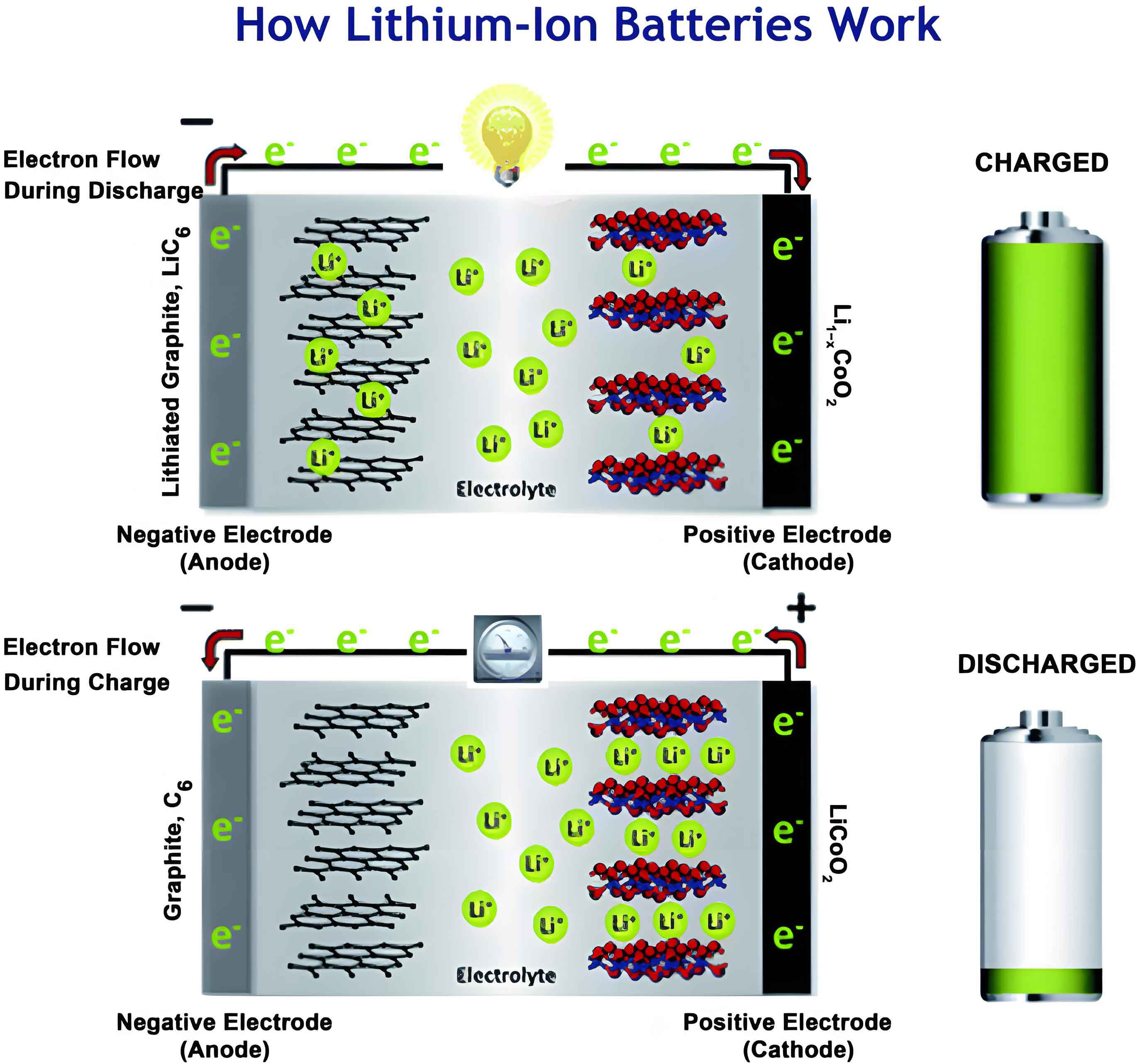
The escalating global demand for energy, coupled with the environmental and security challenges posed by the extensive use of fossil fuels, has intensified the pursuit of efficient and renewable energy storage solutions. Among these, the lithium-ion battery (LIB) stands out due to its high energy density, long cycle life, and relatively low self-discharge rate, powering everything from portable electronics to electric vehicles. A conventional lithium-ion battery comprises four key components: a cathode (e.g., LiCoO2, LiFePO4), an anode (typically graphite), a liquid electrolyte (a lithium salt dissolved in organic carbonates), and a polyolefin-based separator. However, the reliance on non-renewable, petrochemical-derived materials and flammable, toxic electrolytes raises concerns regarding sustainability and safety. Consequently, the development of next-generation, eco-friendly lithium-ion batteries has become a critical research frontier.
In this context, cellulose, the most abundant natural polymer on Earth, emerges as a transformative candidate. Its linear chain of β(1→4) linked D-glucose units endows it with excellent mechanical properties, biodegradability, and a rich surface chemistry due to numerous hydroxyl groups. These characteristics make cellulose and its derivatives—such as nanofibrillated cellulose (CNF), bacterial cellulose (BC), carboxymethyl cellulose (CMC), and cellulose acetate—highly attractive for designing sustainable components for the lithium-ion battery. This review consolidates the significant progress in utilizing cellulose-based materials across the key domains of the lithium-ion battery: separators, electrode materials (including binders), and polymer electrolytes. We analyze their functional advantages, address existing challenges, and outline future trajectories for realizing high-performance, green lithium-ion batteries.
1. Cellulose-Based Separators for Enhanced Lithium-Ion Battery Safety and Performance
The separator is a critical, albeit passive, component in a lithium-ion battery. Its primary functions are to prevent physical contact between the cathode and anode (avoiding short circuits) while facilitating the unhindered transport of lithium ions. Commercial separators, predominantly made from polyethylene (PE) or polypropylene (PP) via dry or wet processes, suffer from inherent limitations: poor wettability by polar liquid electrolytes, low thermal stability (leading to severe shrinkage above 120°C), and modest porosity (40-60%). These drawbacks can trigger internal short circuits, thermal runaway, and ultimately compromise the safety and longevity of the lithium-ion battery.
Cellulose offers a compelling alternative. Its inherent hydrophilicity, derived from surface hydroxyl groups, ensures excellent electrolyte wettability and uptake, which is crucial for maintaining high ionic conductivity. Furthermore, cellulose materials exhibit superior thermal dimensional stability and are derived from renewable resources. The performance of a cellulose-based separator is deeply influenced by its manufacturing process, which dictates its microstructure, porosity, and mechanical integrity.
| Preparation Method | Technical Principle | Advantages | Disadvantages |
|---|---|---|---|
| Coating | Modification of a cellulose substrate surface with functional layers (e.g., ceramics, polymers). | Enhances specific properties (thermal resistance, flame retardancy); scalable. | Potential for coating delamination; increases thickness and internal resistance. |
| Phase Separation | Inducing solid-liquid or liquid-liquid separation in a polymer solution to form a porous membrane. | Allows precise control over pore size and porosity; suitable for large-scale production. | Often requires organic solvents; may lead to increased interfacial resistance over cycles. |
| Electrospinning | Using a high-voltage electric field to draw polymer solutions into nano/micro fibers. | Produces membranes with high surface area, high porosity, and small, uniform pores. | Generally results in poor mechanical strength; low production efficiency. |
| Wet-Laiding/Paper-making | Forming a web from a fiber suspension via filtration and drying. | Mature, scalable technology; enables use of diverse fibrous materials. | Can result in less uniform pore structure and thickness compared to synthetic membranes. |
| Solvent Casting | Pouring a polymer solution into a mold and evaporating the solvent. | Simple process; good for laboratory-scale development and composite films. | Difficult to achieve highly porous, uniform structures; involves solvent evaporation. |
The porosity ($\Pi$) and electrolyte uptake ($U$) are two key parameters determining separator efficacy. They can be estimated as:
$$
\Pi = \left(1 – \frac{\rho_m}{\rho_b}\right) \times 100\%
$$
where $\rho_m$ is the apparent density of the separator and $\rho_b$ is the bulk density of the base material, and
$$
U = \frac{W_s – W_d}{W_d} \times 100\%
$$
where $W_s$ and $W_d$ are the weights of the swollen and dry separator, respectively. Cellulose-based separators often achieve $U > 200\%$, far exceeding that of commercial polyolefin separators (~85%), directly enhancing ion transport kinetics in the lithium-ion battery.
Recent advances focus on multifunctional separators. For instance, integrating flame-retardant moieties (e.g., phosphorus-based compounds) directly into the cellulose backbone or creating composite structures with materials like alginate and silica can yield separators with exceptional thermal stability, high electrolyte affinity, and intrinsic flame resistance. The synergistic combination of nanocellulose’s reinforcing network with other biopolymers can also create mechanically robust, nanoporous architectures that suppress lithium dendrite growth, a major safety hazard in lithium-ion batteries.
2. Cellulose in Lithium-Ion Battery Electrodes and Binders
Cellulose contributes to both the active and inactive components of lithium-ion battery electrodes, offering pathways to improve sustainability and performance.
2.1. Carbon Precursors for Anodes
Graphite is the dominant anode material in commercial lithium-ion batteries due to its low working potential and good cyclability. However, the graphitization process is energy-intensive. Cellulosic biomass serves as an excellent low-cost, renewable precursor for porous carbon anodes. The pyrolysis of cellulose under controlled conditions, often with activating agents like ZnCl2 or KOH, yields carbon materials with high surface area and a tailored pore architecture (micro-, meso-, and macropores). This porous structure facilitates electrolyte penetration and Li+ diffusion, which can enhance rate capability. The specific capacity of such porous carbons can surpass that of conventional graphite (372 mAh g-1) due to additional charge storage mechanisms at surfaces and defects. The relationship between specific capacity ($C$), surface area ($S_A$), and pore volume ($V_p$) can be conceptually framed, though it is complex:
$$
C \propto f(S_A, V_p, \text{defect density})
$$
Furthermore, the fibrous nature of cellulose can be templated to create carbon networks that host high-capacity anode materials like silicon (Si) or tin oxide (SnO2). These materials suffer from massive volume expansion (>300%) during lithiation, leading to rapid capacity fade. A cellulose-derived carbon matrix can buffer this expansion, maintain electrical contact, and improve the cycling stability of the lithium-ion battery anode.
2.2. Binders: The Unsung Hero of Electrode Integrity
Binders are crucial inactive components that hold active material particles and conductive additives together and adhere them to the current collector. The traditional polyvinylidene fluoride (PVDF) binder requires toxic, expensive N-methyl-2-pyrrolidone (NMP) as a solvent. Water-soluble cellulose derivatives, primarily carboxymethyl cellulose (CMC), have emerged as superior, sustainable alternatives, especially for challenging electrodes like silicon-based anodes.
CMC’s effectiveness stems from its multiple functional mechanisms. The carboxylate groups can form strong hydrogen bonds and possibly covalent linkages with the native oxide layer on silicon particles. This robust adhesion helps maintain electrode integrity during the drastic volume changes of silicon. Moreover, CMC can contribute to forming a more stable Solid Electrolyte Interphase (SEI), reducing continuous electrolyte decomposition. The performance gain from using CMC over PVDF for a silicon anode in a lithium-ion battery is often dramatic, significantly extending cycle life.
Research is advancing towards multifunctional binders. Crosslinking CMC with other polymers (e.g., polyacrylic acid) or integrating conductive agents (e.g., humic substances) can further enhance mechanical cohesion, elasticity, and even electronic conductivity within the electrode. These developments are vital for realizing the high-energy-density promise of next-generation lithium-ion battery anodes.
| Cellulose Material | Key Characteristics | Application in Lithium-Ion Battery | Primary Advantage |
|---|---|---|---|
| Nanofibrillated Cellulose (CNF) | High aspect ratio, high strength, formable network. | Separator substrate, binder additive, reinforcement in composite electrolytes. | Enhances mechanical strength and thermal stability. |
| Bacterial Cellulose (BC) | High purity, nano-fibrillar 3D network, high water retention. | Base for highly porous separators and gel polymer electrolytes. | Creates nanostructured porous matrices with excellent electrolyte uptake. |
| Carboxymethyl Cellulose (CMC) | Water-soluble, anionic polyelectrolyte, good adhesion. | Primary binder for anodes (especially Si, graphite) and some cathodes. | Superior binding strength for volume-changing materials; eco-friendly processing. |
| Microcrystalline Cellulose (MCC) | Highly crystalline, chemically inert particles. | Filler/reinforcement in polymer electrolytes; precursor for porous carbon. | Improves dimensional stability and reduces polymer crystallinity. |
| Cellulose Acetate | Thermoplastic, good film-forming ability. | Polymer matrix for separators and gel polymer electrolytes. | Good solubility for processing; tunable properties. |
3. Towards Safer Lithium-Ion Batteries: Cellulose-Based Polymer Electrolytes
The conventional liquid electrolyte in a lithium-ion battery—a lithium salt (e.g., LiPF6) in volatile organic carbonates—poses significant safety risks due to flammability and leakage. Replacing it with solid or quasi-solid polymer electrolytes is a fundamental strategy for developing safer, potentially higher-energy-density lithium-ion batteries. Cellulose is gaining prominence as a key component in such systems.
3.1. Gel Polymer Electrolytes (GPEs)
GPEs consist of a polymer matrix swollen with a liquid electrolyte, combining the high ionic conductivity of liquids with the improved mechanical integrity and leak-proof nature of solids. Cellulose-based materials are ideal hosts. For example, bacterial cellulose or electrospun cellulose acetate mats can be infused with electrolyte solutions. Their nano-fibrillar networks act as robust scaffolds that retain large amounts of liquid electrolyte while providing mechanical strength to resist lithium dendrite penetration. The ionic conductivity ($\sigma$) of a GPE is a critical parameter and typically follows an Arrhenius-type relationship, though with Vogel-Tamman-Fulcher behavior in polymers:
$$
\sigma = A \exp\left(-\frac{E_a}{k_B T}\right)
$$
where $E_a$ is the activation energy for ion conduction, $k_B$ is the Boltzmann constant, and $T$ is temperature. The high wettability and porosity of cellulose matrices help achieve $\sigma$ values on the order of 10-3 S cm-1 at room temperature, which is suitable for practical lithium-ion battery operation.
3.2. Solid Polymer Electrolytes (SPEs) and Composite Electrolytes
SPEs, comprising only a polymer and a lithium salt, represent the ultimate in safety but often suffer from low ionic conductivity at room temperature. Here, cellulose derivatives play a different role. Adding nanoscale cellulose (CNF or NCC) to classic SPE matrices like poly(ethylene oxide) (PEO) can simultaneously solve multiple problems. First, the rigid cellulose nanocrystals can suppress the crystallization of PEO, as amorphous domains are more conducive to ion transport. Second, they significantly enhance the mechanical modulus of the film, improving its ability to hinder dendrite growth. Third, the surface groups on cellulose can interact with lithium salt anions, promoting salt dissociation and increasing the lithium-ion transference number ($t_{Li^+}$), a key metric for battery performance.
The effective ionic conductivity in such a composite SPE can be influenced by the formation of percolation pathways along the cellulose-polymer interface. The transference number can be estimated via DC polarization methods:
$$
t_{Li^+} = \frac{I_s (\Delta V – I_0 R_0)}{I_0 (\Delta V – I_s R_s)}
$$
where $I_0$ and $I_s$ are the initial and steady-state currents, and $R_0$ and $R_s$ are the initial and steady-state resistances, respectively. Cellulose-containing composite SPEs have demonstrated enhanced $t_{Li^+}$ and broader electrochemical stability windows, making them promising for next-generation lithium-ion batteries.
4. Conclusion and Future Perspectives
The integration of cellulose and its derivatives into lithium-ion battery components presents a compelling pathway toward more sustainable, safe, and high-performing energy storage. From separators with exceptional wettability and thermal stability to bio-derived carbon anodes and high-performance aqueous binders, and further to robust matrices for advanced polymer electrolytes, cellulose demonstrates remarkable versatility. It addresses critical challenges such as electrolyte flammability, electrode degradation, and the environmental footprint of battery manufacturing.
However, the transition from laboratory innovation to widespread commercial adoption in lithium-ion batteries faces several hurdles:
- Performance Trade-offs: While cellulose separators excel in wettability, their mechanical strength and thickness often lag behind ultra-thin polyolefin films. Future work must optimize nanocellulose processing and composite design to achieve a balance of high porosity, thinness, and puncture resistance suitable for high-energy-density lithium-ion battery cells.
- Cost and Scalability: The production of high-quality nanocellulose, while becoming more efficient, still adds cost. Scaling up the manufacturing of uniform, defect-free cellulose-based separators or electrode films using paper-making or roll-to-roll coating techniques is essential for economic viability.
- Electrolyte Compatibility and Interfacial Engineering: For solid-state lithium-ion batteries, the rigid interface between a cellulose-reinforced solid electrolyte and the electrode remains a source of high impedance. Research must focus on engineering softer interfaces, perhaps using gel-like cellulose layers or hybrid designs, to ensure stable long-term cycling.
- Multifunctional Integration: The future lies in designing cellulose-based components that serve multiple roles. For example, a separator with inherent flame-retardant properties and the ability to anchor polysulfides for lithium-sulfur batteries, or a binder that also provides conductive pathways for electrons. Leveraging the rich chemistry of cellulose for targeted functionalization will be key.
In conclusion, as the demand for greener and safer energy storage intensifies, cellulose is poised to play an increasingly central role in the evolution of the lithium-ion battery. By bridging the gap between renewable resources and advanced electrochemistry, cellulose-based materials offer a tangible route to powering our future sustainably.