
The global energy transition is accelerating at an unprecedented pace, positioning the lithium-ion battery as the cornerstone technology for electrified transportation and grid-scale energy storage. The relentless pursuit of higher energy density and enhanced safety, however, has exposed the limitations of traditional battery components, particularly the current collectors. Conventional metal foils—copper for the anode and aluminum for the cathode—are approaching their physical and performance limits. As thickness is reduced to save weight and volume, issues such as reduced mechanical strength, increased risk of internal short circuits, and limited improvement in energy density become significant bottlenecks.
This challenge has catalyzed the development of a transformative alternative: the Metal-Plastic Composite Current Collector (MPCC). Typically structured in a “metal-polymer-metal” sandwich configuration, the MPCC replaces the bulk of the metal with an ultra-thin, lightweight polymer substrate. This fundamental shift in architecture offers a multi-faceted solution. The significant reduction in mass directly enhances the gravimetric energy density of the lithium-ion battery. The polymer core, being an electrical insulator, can act as a “fuse” by melting or shrinking under thermal abuse conditions, effectively preventing large-scale current flow and inhibiting thermal runaway propagation—a critical safety enhancement. Furthermore, the flexible polymer substrate can better accommodate volume changes in electrode materials during cycling, potentially improving longevity. These compelling advantages have propelled composite current collectors to the forefront of next-generation lithium-ion battery research and industrial scaling.
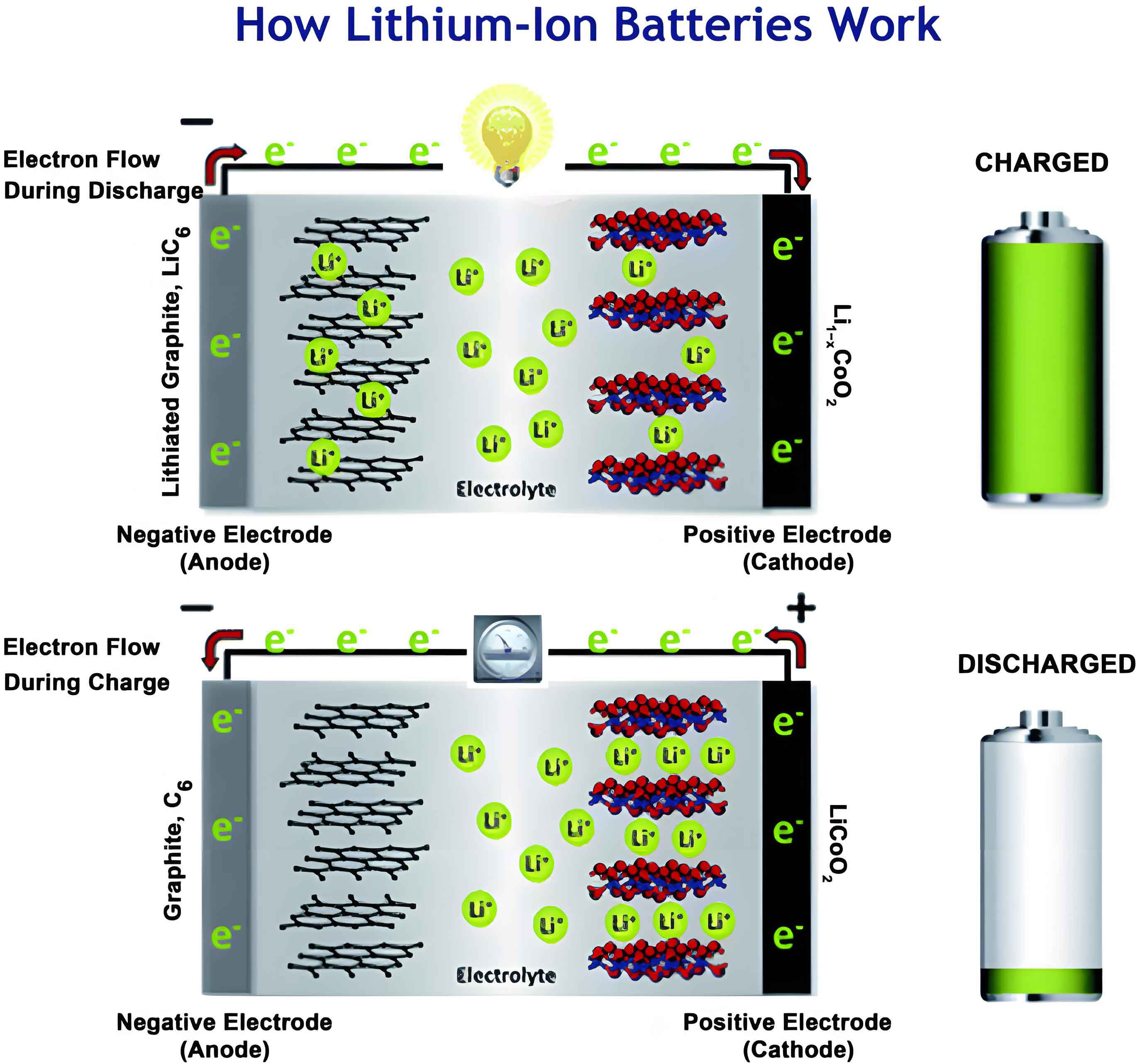
Industrialization is already underway, with pioneering companies leading the charge. Entities like Chongqing JMEI have achieved the simultaneous mass production of both composite aluminum foil (for cathodes) and composite copper foil (for anodes), with their products integrated into electric vehicle models from leading manufacturers. This commercial validation has triggered a wave of investment and capacity expansion across the supply chain. Market projections indicate a rapid penetration rate for composite copper foil, translating into a multi-billion-square-meter demand and a substantial market value within the next few years, underscoring its pivotal role in the future lithium-ion battery ecosystem.
Fundamentals of Composite Current Collector Fabrication
The fabrication of composite current collectors diverges significantly from traditional metal foil rolling and is tailored to the specific chemical and electrical requirements of the lithium-ion battery’s cathode and anode environments.
Composite Aluminum Foil for the Cathode
In a lithium-ion battery, the cathode operates at a high potential where aluminum is stable due to its ability to form a passivating oxide layer. Copper, in contrast, would rapidly oxidize and degrade. Therefore, composite aluminum foil is the material of choice for the positive electrode. The most prevalent manufacturing technique is physical vapor deposition (PVD), specifically vacuum thermal evaporation. The process begins with a meticulously cleaned polymer substrate. It is then placed in a high-vacuum chamber (typically at pressures around $$10^{-5}$$ Pa or lower). A high-purity aluminum source is heated, often by an electron beam, to its evaporation point. The aluminum vapor travels through the vacuum and condenses onto the cooler surface of the polymer film, forming a thin, continuous, and highly conductive metallic layer. The quality of this layer—its uniformity, adhesion, and conductivity—is critically dependent on process parameters like vacuum level, substrate temperature ($T_s$), and evaporation rate ($\dot{m}_{Al}$). The relationship can be conceptually summarized as film quality being a function $f(P, T_s, \dot{m}_{Al})$, where optimal ranges must be maintained to prevent defects and ensure performance.
Composite Copper Foil for the Anode
The anode of a lithium-ion battery operates at a low potential where copper remains electrochemically inert, while aluminum would form unstable and corrosive lithium-aluminum alloys. Hence, composite copper foil is essential for the negative electrode. Its production is more complex due to the insulating nature of the polymer core, which prevents the direct application of efficient, high-speed electroplating. Three primary technical routes have emerged, as summarized in Table 1.
| Route | Process Steps | Advantages | Disadvantages |
|---|---|---|---|
| Single-Process | Relies solely on one technique (e.g., magnetron sputtering) to deposit the entire copper layer. | High product uniformity; fewer process transfers. | Very low deposition rate; high energy cost; expensive for thick layers. |
| Dual-Process (Industry Mainstream) | 1. Base Metallization (Sputtering/Chemical plating) → 2. Electroplating Thickening. | Balances good adhesion from step 1 with the speed and low cost of step 2. | Requires two different process environments; optimization of interface between layers is crucial. |
| Triple-Process | 1. Sputtering/Chemical plating → 2. Vacuum Evaporation → 3. Electroplating. | Vacuum step can accelerate metallization, potentially increasing overall speed. | Highest process complexity and capital investment (CAPEX); more challenging process control. |
The dual-process method currently dominates industry practice. It typically involves first creating a thin, adherent “seed” layer of copper on the polymer via magnetron sputtering. This seed layer, though thin, provides the necessary electrical conductivity to then employ conventional aqueous electroplating, which rapidly builds up the copper to the desired final thickness (e.g., 1-2 μm). This hybrid approach effectively marries the precision of vacuum techniques with the scalability of wet chemistry, making it the most viable path for high-volume manufacturing of composite copper foil for lithium-ion batteries.
Polypropylene as the Enabling Substrate: Intrinsic Advantages and Engineered Solutions
The choice of polymer substrate is a decisive factor in the performance, cost, and manufacturability of the composite current collector. While materials like Polyethylene Terephthalate (PET) and Polyimide (PI) have been explored, Polypropylene (PP) has emerged as a particularly promising candidate, especially for the demanding anode environment in a lithium-ion battery. Its advantages and the strategies to overcome its inherent challenges form the core of modern development efforts.
PP’s primary advantage lies in its exceptional chemical stability, which stems from its saturated hydrocarbon backbone consisting entirely of carbon-carbon (C-C) and carbon-hydrogen (C-H) bonds. The bond dissociation energy for a typical C-C bond is approximately $$347 \text{ kJ/mol}$$, contributing to high stability. Crucially, unlike PET which contains hydrolysable ester linkages ($-COO-$), PP lacks polar functional groups that are susceptible to attack by the reactive species in lithium-ion battery electrolytes. This gives PP superior resistance to acid/base corrosion and swelling, a critical property for long-term cycling stability. Furthermore, PP offers excellent flexibility, very low moisture absorption, and the lowest raw material cost among engineering plastics, supported by a mature global supply chain.
However, the very same non-polar, chemically inert nature of PP that grants it stability also presents a formidable challenge: poor adhesion to deposited metal layers. The low surface energy of PP, often below 30 mN/m, results in weak physical (van der Waals) interactions with metals. Achieving strong, durable metal-polymer interfacial bonding is the single most significant technical hurdle for PP-based composite current collectors in lithium-ion batteries. The research and development efforts have therefore concentrated on strategically modifying PP to enhance this interface without compromising its core benefits.
Advanced Surface Modification Strategies
Surface modification aims to alter the outermost molecular structure of PP to increase its surface energy and introduce chemical groups that can form stronger bonds with metal atoms. Recent innovations go beyond simple corona or plasma treatment, which often provide temporary and unstable activation.
- Molecular Grafting: Techniques involve covalently bonding polar molecules onto the PP chain. For instance, grafting with compounds containing hydroxyl (-OH) or carboxylic acid (-COOH) groups can dramatically increase surface polarity. One sophisticated approach grafts molecules like 4-terpineol, whose conjugated $\pi$-system can also engage in electronic interactions with the metal layer, creating a more robust interface. The grafting ratio ($G_r$), defined as the mass of grafted species per unit mass of polymer, is a key parameter: $$G_r = \frac{m_{\text{graft}}}{m_{\text{PP}}} \times 100\%$$. Optimizing $G_r$ between 0.1% and 5% is often targeted to achieve a balance between enhanced adhesion and preservation of bulk properties.
- Functional Gradient Coating: This involves applying a multi-layer coating system onto the PP film. A common design includes a flexible “primer” layer (e.g., composed of nano-spheres) to absorb mechanical stress and mitigate micro-crack propagation, followed by a “functional” top layer containing cross-linkable resins (e.g., epoxy acrylates) and adhesion promoters. This architecture can increase the peel strength of the metal layer by a factor of three or more compared to unmodified PP, while also providing excellent electrolyte compatibility.
- Bulk Modification via Blending: Modifiers can be incorporated directly into the PP resin before film formation. A prevalent method is blending PP with a small percentage of maleic anhydride-grafted PP (PP-g-MA). The anhydride groups in PP-g-MA provide polar sites for metal adhesion, while its compatible PP backbone ensures good dispersion within the matrix. This creates a modified surface inherently as the film is formed, offering more consistent and durable performance than post-treatment alone.
Innovations in Film Fabrication and Architecture
The performance of the PP substrate itself is paramount. Advanced film fabrication focuses on enhancing mechanical strength, thermal stability, and creating micro- or nano-structures to aid mechanical interlocking with the metal.
- Multi-Layer Co-extrusion: This is a powerful technique to create films with tailored properties in different layers. A typical structure for a composite current collector substrate might be a three-layer “A-B-A” film:
- Core Layer (B): Made from high-crystallinity, high-molecular-weight homopolymer PP to provide maximum tensile strength ($\sigma_t$) and modulus, crucial for handling thin films in roll-to-roll processes. The strength can be conceptually related to crystallinity ($X_c$) and molecular entanglements.
- Skin Layers (A): Composed of modified PP (e.g., PP-g-MA or a copolymer) to provide the high surface energy and chemical functionality needed for metal adhesion. This design decouples the requirements of bulk strength and surface activity.
- Micro-Patterning: Creating controlled surface topography on the PP film, such as uniformly distributed micro-protrusions or pits, introduces mechanical interlocking. The adhesion force from this mechanism can supplement chemical bonding. If the protrusions have an average radius $r$ and density $\rho$, the potential increase in effective contact area and mechanical keying can be significant. The enhancement factor ($\eta$) can be modeled as a function of the pattern geometry.
- Biaxial Orientation (BOPP): Stretching the PP film in both machine and transverse directions aligns the polymer chains, increasing crystallinity and dramatically improving mechanical properties like tensile strength and puncture resistance. This process is essential for producing the ultra-thin (3-6 μm), yet robust, films required for high-energy-density lithium-ion batteries. The relationship between draw ratio ($\lambda$) and final film strength is a key area of process optimization.
Engineering the Composite Copper Foil Interface
The final manufacturing step—depositing a high-quality, adherent copper layer on the modified PP—requires precise engineering. The dual-process method is standard, with specific adaptations for PP.
- Surface Activation & Adhesion Layer Deposition: Prior to metallization, the PP film undergoes activation, often via atmospheric plasma or vacuum plasma treatment. This step cleans the surface and can generate radicals for further reaction. The first deposited layer in the vacuum chamber is critical. Instead of copper, a thin “adhesion layer” of a more reactive metal is often used. Titanium (Ti) is an excellent choice. When sputtered onto the activated PP surface, Ti atoms can form strong chemical bonds (e.g., Ti-O-C or direct coordination) with surface groups. The thickness of this layer ($d_{Ti}$) is typically nano-scale (5-20 nm), just enough to form a continuous, bonded interface without adding significant weight or resistance. The adhesion energy ($W_a$) of this interface is fundamentally higher than that of Cu-on-PP.
- Seed Layer and Electroplating: A thin copper seed layer is then deposited atop the adhesion layer via sputtering. This bilayer (e.g., Ti/Cu) now provides a conductive, well-adhered foundation. The film is then transferred to an electroplating bath where the copper is built up to its final thickness. The electroplating process must be controlled to ensure uniform deposition and good crystal structure to maintain low electrical resistance, a vital parameter for the current collector in a lithium-ion battery. The final sheet resistance ($R_s$) can be approximated by: $$R_s = \frac{\rho_{Cu}}{d_{Cu}}$$ where $\rho_{Cu}$ is the resistivity of the plated copper and $d_{Cu}$ is its thickness. Achieving low $R_s$ with minimal $d_{Cu}$ is the goal.
The resulting composite structure offers transformative benefits for the lithium-ion battery: a drastic reduction in mass (up to 60% lighter than solid copper foil), inherent safety from the insulating polymer layer, and improved cycling performance due to better accommodation of anode material expansion.
Conclusion and Future Perspectives
The development of polypropylene-based composite current collectors represents a significant material science advancement for the lithium-ion battery industry. By leveraging PP’s intrinsic chemical stability, low cost, and excellent processability, and ingeniously overcoming its adhesion limitations through surface engineering, multilayer design, and optimized metallization processes, researchers have unlocked a path toward safer, higher-energy-density batteries. The transition from laboratory innovation to initial commercial deployment marks a critical validation of this technology’s potential.
Looking forward, several key research frontiers will dictate the pace of widespread adoption in lithium-ion batteries:
- Fundamental Interface Science: Deeper understanding of the chemical bonding, charge transfer, and failure mechanisms at the metal-modified PP interface is needed. Advanced characterization techniques and computational modeling can guide the design of next-generation adhesion promoters and surface architectures.
- High-Speed, Low-Cost Manufacturing: Scaling production to meet terawatt-hour demand requires further optimization of roll-to-roll processes for surface modification, vacuum deposition, and electroplating. Increasing deposition rates while maintaining layer quality and uniformity is a paramount engineering challenge.
- Integration with Next-Generation Chemistries: As lithium-ion batteries evolve towards silicon-rich anodes, lithium metal anodes, or solid-state electrolytes, the requirements for the current collector may change. PP-based composites must be evaluated and potentially adapted for compatibility with these new systems, where volume change, interfacial reactivity, and mechanical stress profiles are different.
- Holistic Sustainability Analysis: While offering weight savings, the full life-cycle environmental impact of composite current collectors—including polymer production, metallization energy, and end-of-life recyclability—should be comprehensively assessed and optimized.
In conclusion, the polypropylene-based composite current collector is more than an incremental improvement; it is a platform technology that addresses the intertwined challenges of energy density and safety in lithium-ion batteries. Its continued refinement and integration promise to be a cornerstone in the development of the advanced energy storage systems required for a sustainable electrified future.