
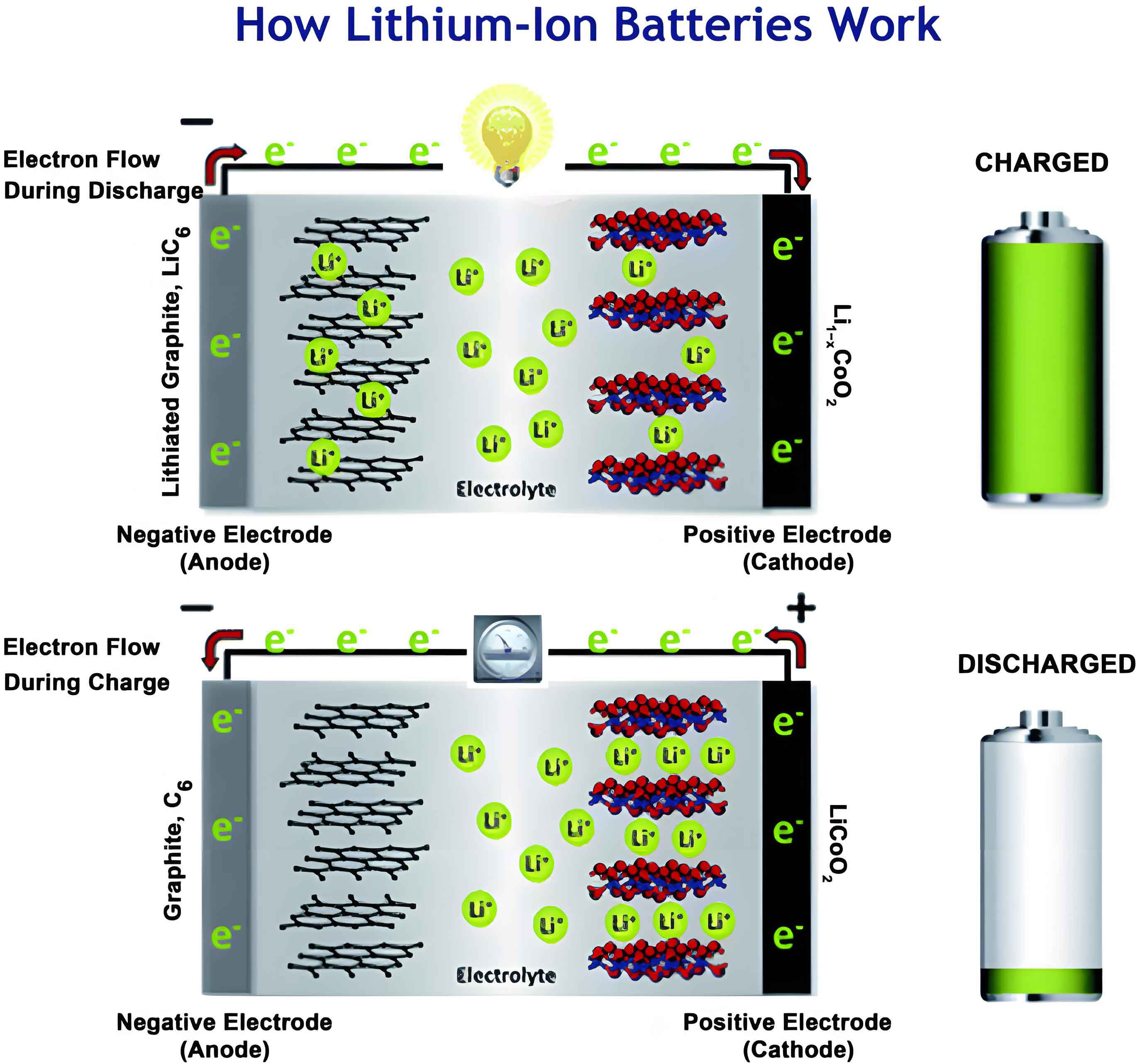
The rapid advancement and widespread deployment of electrochemical energy storage systems have positioned the lithium-ion battery as a cornerstone technology, prized for its high efficiency, reliability, and scalability. However, the inherent safety risks associated with thermal runaway under extreme conditions—triggered by mechanical, electrical, or thermal abuse—remain a critical challenge for large-scale applications. Mitigating these risks requires a multi-faceted approach, including advanced thermal management and fire suppression systems. Crucially, enhancing the intrinsic safety of battery materials, particularly the flammable electrolyte and thermally unstable separator, offers a fundamental solution to prevent thermal runaway at its source. In conventional lithium-ion batteries, the high flammability of carbonate-based electrolytes and the significant thermal shrinkage of polyolefin separators are primary internal factors contributing to safety hazards. This study proposes and evaluates a novel battery system designed for enhanced safety under high-temperature abuse conditions, focusing on the synergistic use of a flame-retardant triethyl phosphate (TEP)-based electrolyte and a highly thermostable glass fiber (GF) separator. Through a series of comparative experiments, including electrolyte self-extinguishing tests, separator thermal shrinkage analysis, and high-temperature spontaneous combustion tests on pouch cells, this work demonstrates the significant safety advantages of the proposed system over conventional commercial counterparts. The findings provide robust experimental validation for designing next-generation, high-safety lithium-ion batteries.
1. Introduction and Background
The safety of lithium-ion batteries is paramount, especially as their energy density and application scale continue to grow. Traditional battery components, while optimized for electrochemical performance, often exhibit vulnerabilities under stress. The organic liquid electrolyte, typically composed of linear and cyclic carbonates with lithium salts, is highly flammable and can decompose exothermically, providing fuel for thermal runaway. Similarly, commercial polyolefin separators, such as polyethylene (PE) and polypropylene (PP), begin to melt and shrink at temperatures between 120°C and 160°C, leading to internal short circuits and accelerating thermal runaway.
Addressing these weaknesses involves strategic modifications to the electrolyte and separator. The incorporation of flame-retardant additives into the electrolyte is a well-researched path. Among various candidates, organophosphate compounds like triethyl phosphate (TEP) have shown promise due to their good flame-retarding efficiency and compatibility with electrode materials. TEP acts primarily in the gas phase, releasing phosphorus-containing radicals that scavenge high-energy H· and OH· radicals responsible for sustaining combustion. Concurrently, the thermal stability of the separator can be drastically improved by using inorganic or ceramic-based materials. Glass fiber separators, composed of a non-woven mat of micro glass fibers, offer exceptional thermal stability (withstanding temperatures exceeding 500°C), high porosity, and good electrolyte wettability. Their use can effectively prevent short circuits caused by separator collapse during localized heating.
Previous studies have independently explored TEP-based electrolytes or GF separators. For instance, research has shown that TEP can be formulated with film-forming additives like vinylene carbonate (VC) to maintain reasonable cycle life while imparting non-flammability. Other works have characterized the superior thermal and mechanical properties of GF separators compared to polyolefin films. However, a comprehensive safety evaluation of a complete lithium-ion battery system integrating both a tailored TEP-based electrolyte and a commercial GF separator, particularly under realistic abuse conditions simulating thermal runaway in a pouch cell format, is less reported. This study bridges that gap. We systematically investigate the electrochemical viability and, more importantly, the safety performance of this integrated system. By comparing it directly with a standard commercial lithium-ion battery (carbonate electrolyte with polyolefin separator) across multiple experimental tiers—from component-level tests to full-cell combustion tests—we quantify the safety improvements. The results underscore the critical role of material-level safety engineering in developing safer energy storage solutions based on lithium-ion battery technology.
2. Experimental Methodology
2.1. Materials and Cell Assembly
Two distinct battery systems were prepared for comparative analysis. The experimental, high-safety system utilized a TEP-based electrolyte and a GF separator. The electrolyte was formulated as 1.0 mol/L lithium bis(trifluoromethanesulfonyl)imide (LiTFSI) salt dissolved in TEP solvent, with the addition of 2 wt% vinylene carbonate (VC) and 1 wt% flavone (FLA) as film-forming and stabilizing additives. The separator was a commercial glass fiber membrane (Whatman GF/A, 260 µm thick). The control, or conventional system, employed a standard commercial electrolyte (1.0 mol/L LiPF6 in a 1:1 weight ratio mixture of ethylene carbonate (EC) and ethyl methyl carbonate (EMC)) and a commercial polyolefin separator (Celgard 2500, 25 µm thick). All solvents and additives had a purity ≥99.5%. Electrolyte preparation was conducted in an argon-filled glovebox with water and oxygen levels below 0.01 ppm. For both systems, the electrode materials were identical: LiNi0.8Co0.1Mn0.1O2 (NCM811) as the cathode and graphite as the anode, with an N/P ratio of 1.1. The physicochemical properties of key electrolyte components are listed in Table 1.
| Solvent / Additive | Chemical Structure | Melting Point (°C) | Boiling Point (°C) | Flash Point (°C) |
|---|---|---|---|---|
| Ethylene Carbonate (EC) | Cyclic carbonate | 36.4 | 248.0 | 112.0 |
| Ethyl Methyl Carbonate (EMC) | Linear carbonate | -14.5 | 107.0 | 23.0 |
| Vinylene Carbonate (VC) | Vinylene cyclic carbonate | 19-22 | 162 | 163 |
| Triethyl Phosphate (TEP) | Organophosphate ester | -56 | 215 | 117 |
| Flavone (FLA) | Aromatic ketone | 94-97 | 185 | 171.1 |
Table 1: Physicochemical properties of key electrolyte components.
Pouch cells with a nominal capacity of 0.5 Ah were fabricated for the high-temperature combustion tests. The design parameters are summarized in Table 2. The cell assembly process included electrode coating and calendaring, stacking, tab welding, vacuum sealing, electrolyte filling, formation, and degassing. All cells were tested at 100% state of charge (SOC).
| Parameter | Cathode | Anode |
|---|---|---|
| Active Material | NCM811 | Graphite |
| Specific Capacity (mAh/g) | 180 | 355.6 |
| Coating Density (mg/cm²) | 16.25 | 7.50 |
| Electrode Density (g/cm³) | 2.90 | 1.30 |
| Electrode Size (mm) | 56 × 43 | 58 × 45 |
| N/P Ratio | 1.1 | |
| Electrolyte Mass (g) | 4.0 | |
| Number of Stacks | 7 | 8 |
Table 2: Key design parameters for the fabricated pouch cells.
2.2. Electrochemical Performance Test
Prior to safety evaluation, the electrochemical performance of the TEP-based system was verified using CR2032 coin cells (NCM811 vs. Li metal) at 25°C. Cells were cycled at a 1C rate (based on the theoretical capacity of NCM811) between 2.8 V and 4.3 V using a battery test system. The capacity retention after 100 cycles was compared against the commercial electrolyte system.
2.3. Safety Evaluation Tests
2.3.1. Electrolyte Self-Extinguishing Time (SET) Test
The flammability of the electrolytes was quantitatively assessed using the self-extinguishing time test. A non-combustible glass fiber wool ball (5 mm diameter) was used to absorb 0.2 g of the test electrolyte. The ball was ignited, and the time from ignition to self-extinguishment was recorded. The SET, representing the burning time per unit mass, was calculated using Equation 1. This test was repeated ten times for each electrolyte formulation to ensure statistical reliability. Different concentrations of VC (0-10 wt%) in the TEP-based electrolyte were tested to evaluate the influence of this common carbonate additive on flammability.
$$ \text{SET} = \frac{T}{m} $$
where \(T\) is the burning time (s) and \(m\) is the mass of electrolyte (g).
2.3.2. Separator Thermal Shrinkage Test
The thermal stability of the separators was evaluated by measuring their area shrinkage after exposure to high temperatures. Circular separator samples (19 mm diameter) were placed in a vacuum oven at set temperatures (25, 50, 75, 100, 125, 150, 175, and 200°C) for 30 minutes. After cooling to room temperature, the area of the samples was measured using image analysis software (ImageJ). The thermal shrinkage ratio \(C\) was calculated according to Equation 2. Each test was performed in triplicate.
$$ C = \left(1 – \frac{S}{S_0}\right) \times 100\% $$
where \(S_0\) and \(S\) are the initial and final areas of the separator, respectively.
2.3.3. Pouch Cell High-Temperature Spontaneous Combustion Test
A custom-built experimental system was employed to simulate extreme thermal abuse and observe the subsequent thermal runaway and combustion behavior of full pouch cells. The system consisted of a sealed heating chamber lined with ceramic heaters capable of reaching 800°C, a temperature control unit, a sample feeding mechanism to suspend the cell in the center of the chamber, a data acquisition system (three K-type thermocouples and voltage probes), and a high-speed camera for visual recording. Pouch cells at 100% SOC were subjected to three different ambient temperatures: 350°C, 400°C, and 450°C. Key parameters such as time to swelling, voltage drop (indicating internal short circuit), ignition time, combustion duration, and maximum surface temperature were recorded and compared between the two battery systems.
3. Results and Discussion
3.1. Electrochemical Performance Validation
The cycling performance of the TEP-based electrolyte system with the GF separator is shown in comparison to the commercial system. The commercial cell exhibited an initial discharge capacity of 141.13 mAh/g and retained 86.81% of its capacity after 100 cycles. The TEP-based electrolyte without VC additives showed poor capacity retention (33.23%), indicating severe degradation. The addition of 2 wt% VC dramatically improved the capacity retention to 91.31%, demonstrating that VC is effective in forming a stable solid electrolyte interphase (SEI) on the graphite anode in the TEP-based system. The further addition of 1 wt% FLA slightly improved the retention to 92.33%. These results confirm that with proper additive formulation, the TEP-based electrolyte coupled with a GF separator can achieve electrochemical performance comparable to, and in this case slightly better than, the commercial system, making it a viable candidate for further safety investigation.
3.2. Component-Level Safety Analysis
3.2.1. Flammability of Electrolytes
The self-extinguishing time test results for the TEP-based electrolyte with varying VC content are summarized in Table 3. A critical threshold for safety was identified. When the VC concentration was between 1 wt% and 5 wt%, none of the ten test samples for each concentration sustained combustion; the electrolyte was non-flammable. However, when the VC content reached 6 wt% and above, instances of sustained combustion were observed. For example, at 6 wt% VC, 4 out of 10 samples burned with SET values ranging from 10.6 to 18.8 s/g. This indicates that excessive amounts of the carbonate-based additive VC can compromise the intrinsic flame-retardant property of the TEP-based electrolyte. This finding is crucial for formulating safe electrolytes, as it suggests a trade-off between electrochemical performance (enhanced by VC) and safety. For the subsequent full-cell tests, the electrolyte containing 2 wt% VC was selected as it offered a good balance of performance and confirmed non-flammability at the component level.
| VC Content (wt%) | Trial 1-10 Results (Combustible (SET s/g) / Non-combustible (-)) |
|---|---|
| 0-5 | All trials: – |
| 6 | -, -, -, Combustible(15.4), -, Combustible(13.0), -, Combustible(18.8), Combustible(10.6), – |
| 7 | -, -, Combustible(16.2), Combustible(29.0), -, Combustible(11.7), -, -, -, Combustible(27.1) |
| 8 | -, -, Combustible(27.9), -, -, Combustible(10.1), -, -, -, Combustible(13.5) |
| 9 | -, Combustible(17.9), -, -, -, Combustible(11.5), -, Combustible(17.6), -, – |
| 10 | Combustible(24.3), -, Combustible(40.5), -, Combustible(23.9), -, -, -, -, Combustible(27.3) |
Table 3: Self-extinguishing test results for TEP-based electrolyte with varying VC content.
3.2.2. Thermal Stability of Separators
The thermal shrinkage behavior of the GF separator and the commercial polyolefin separator is compared graphically. The Celgard 2500 separator began to show visible wrinkling at 125°C. Its shrinkage accelerated rapidly with temperature, reaching 32.08% at 150°C and nearly complete disintegration at 200°C (shrinkage >96%). In stark contrast, the GF separator exhibited outstanding dimensional stability. Its shrinkage remained below 1% across the entire temperature range from 25°C to 200°C. This fundamental difference has profound implications for lithium-ion battery safety. During thermal abuse, the shrinkage and melting of a polyolefin separator can lead to large-area internal short circuits, triggering a rapid temperature rise and thermal runaway. The GF separator’s resistance to shrinkage up to very high temperatures helps maintain physical isolation between the electrodes, delaying or even preventing internal short circuits, thereby increasing the thermal abuse tolerance of the lithium-ion battery.
3.3. Full-Cell Safety Performance under Thermal Abuse
The high-temperature spontaneous combustion tests on pouch cells provided the most direct and impactful evidence of the safety enhancement offered by the TEP/GF system. The results for tests at 450°C, 400°C, and 350°C are summarized and compared in Table 4.
| Parameter | 450°C Test | 400°C Test | 350°C Test | |||
|---|---|---|---|---|---|---|
| Commercial | TEP/GF | Commercial | TEP/GF | Commercial | TEP/GF | |
| Time to Swelling (s) | 13 | 23 | 17 | 45 | 79 | 47 |
| Ignition Time (s) | 67 | 91 | 80 | 132 | 167 | No Ignition |
| Combustion Duration (s) | 67 | 20 | 114 | 6 | 128 | 0 |
| Peak Temperature (°C) | 971.5 | 557.7 | 814.7 | 461.6 | 797.1 | 348.0 |
Table 4: Summary of key parameters from pouch cell high-temperature combustion tests.
At 450°C: The commercial cell ignited early (67 s) and burned vigorously for 67 seconds, reaching a peak temperature of 971.5°C. The TEP/GF cell showed delayed ignition (91 s, +35.8%), a much shorter burn time of 20 seconds (a reduction of 70.1%), and a significantly lower peak temperature of 557.7°C (a reduction of 42.6%).
At 400°C: The safety advantage of the TEP/GF lithium-ion battery became even more pronounced. Its ignition was delayed by 65.0% compared to the commercial cell. Most strikingly, its combustion duration was only 6 seconds, which is 94.7% shorter than the 114-second burn of the commercial cell. The peak temperature was limited to 461.6°C, 43.4% lower than that of the commercial cell.
At 350°C: This temperature revealed the most critical advantage. The commercial lithium-ion battery underwent full thermal runaway, burning for 128 seconds with a peak temperature of 797.1°C. In contrast, the TEP/GF cell did not ignite at all. Only charring of the pouch material was observed, and the maximum recorded temperature was 348°C, which is below the oven setpoint, indicating no violent exothermic reaction occurred. This represents a fundamental suppression of thermal runaway under this abuse condition.
The synergistic safety mechanism can be explained as follows: The GF separator’s stability prevents large-scale internal short circuits, slowing down the self-heating rate. Meanwhile, the TEP-based electrolyte, with its flame-retardant properties, does not provide a sustained fuel source for combustion even when the cell eventually vents. The released vapors are less combustible or self-extinguish quickly, leading to a drastically reduced fire intensity and duration. The combined effect raises the apparent trigger temperature for catastrophic thermal runaway. While typical NCM811-based commercial lithium-ion batteries may enter thermal runaway around 200°C in oven tests, the TEP/GF system elevated this threshold by approximately 75%, preventing ignition altogether at 350°C. This profound improvement highlights the effectiveness of targeting both the separator and the electrolyte in safety-centric lithium-ion battery design.
4. Conclusion
This experimental study comprehensively evaluated the safety performance of a lithium-ion battery system incorporating a triethyl phosphate (TEP)-based electrolyte and a glass fiber (GF) separator. The key conclusions are as follows:
- Electrolyte Formulation is Critical: The safety of TEP-based electrolytes is sensitive to the concentration of carbonate additives like VC. While VC is necessary for electrochemical performance, exceeding 5 wt% can render the electrolyte flammable, increasing the risk of thermal runaway in a lithium-ion battery.
- Separator Stability is Fundamental: The glass fiber separator exhibits exceptional thermal dimensional stability, with less than 1% shrinkage at 200°C, compared to over 32% shrinkage for a commercial polyolefin separator at 150°C. This property is crucial for delaying internal short circuits during thermal abuse.
- Synergistic Safety Enhancement in Full Cells: In high-temperature pouch cell tests, the TEP/GF system demonstrated superior safety across multiple metrics:
- At 400-450°C, it significantly delayed ignition (by 35.8-65.0%), shortened combustion duration (by 70.1-94.7%), and reduced peak fire temperature (by 42.6-43.4%) compared to the commercial lithium-ion battery.
- At 350°C, it completely prevented open flame combustion, achieving a no-ignition state while the commercial cell burned violently. This indicates an increase in the thermal runaway trigger temperature of approximately 75%.
The integration of a flame-retardant electrolyte and a thermally invariant separator creates a powerful synergy that addresses two root causes of thermal runaway. This material-level approach provides a robust foundation for designing safer lithium-ion batteries, particularly for large-scale energy storage applications where safety is paramount. Future work may focus on further optimizing the electrochemical performance of such systems over wider temperature ranges and investigating their behavior under other abuse scenarios.