
The global push towards decarbonization and energy transition has spurred unprecedented growth in new energy installations. Within this landscape, the lithium-ion battery reigns supreme, dominating applications from grid-scale energy storage to electric vehicles, thanks to its high energy density, long cycle life, and environmental credentials. However, the shadow of safety concerns remains a persistent and critical “pain point” that constrains its broader adoption. Among various failure modes, electrical abuse—primarily encompassing overcharge and overdischarge—is a significant initiator of catastrophic thermal runaway or sudden battery failure.
In practical systems, hundreds or thousands of individual lithium-ion battery cells are connected in series and parallel to meet voltage and capacity demands. Inherent inconsistencies in cell performance, varying operational conditions, and potential faults within the Battery Management System (BMS) can all trigger dangerous overcharge or overdischarge scenarios. While mild electrical abuse may only degrade capacity and accelerate aging, severe cases can lead to internal short circuits, venting, fires, or, in protected cells, irreversible failure through safety device activation. Therefore, developing rapid, reliable, and non-invasive methods to warn of impending electrical abuse failure is paramount for enhancing the safety, reliability, and lifespan of energy storage systems.
Existing safety strategies for electrical abuse often rely on signals like voltage, surface temperature, gas emission, or mechanical strain. While useful, these methods have limitations: voltage and temperature signals can be lagging indicators; gas detection often requires cell rupture; and strain measurements can be complex to implement robustly. Electrochemical Impedance Spectroscopy (EIS) offers a fundamentally different approach. By applying a small alternating current signal across a frequency spectrum and measuring the voltage response, EIS probes the internal electrochemical state of the lithium-ion battery non-destructively. It provides a “fingerprint” of processes like charge transfer and ion diffusion, which are directly affected by abusive conditions. This work investigates the evolution of EIS parameters during severe overcharge and overdischarge abuse leading to failure. We propose and validate a novel, clustering-based early warning algorithm that utilizes a characteristic impedance derived from EIS to proactively signal danger well before the point of no return.
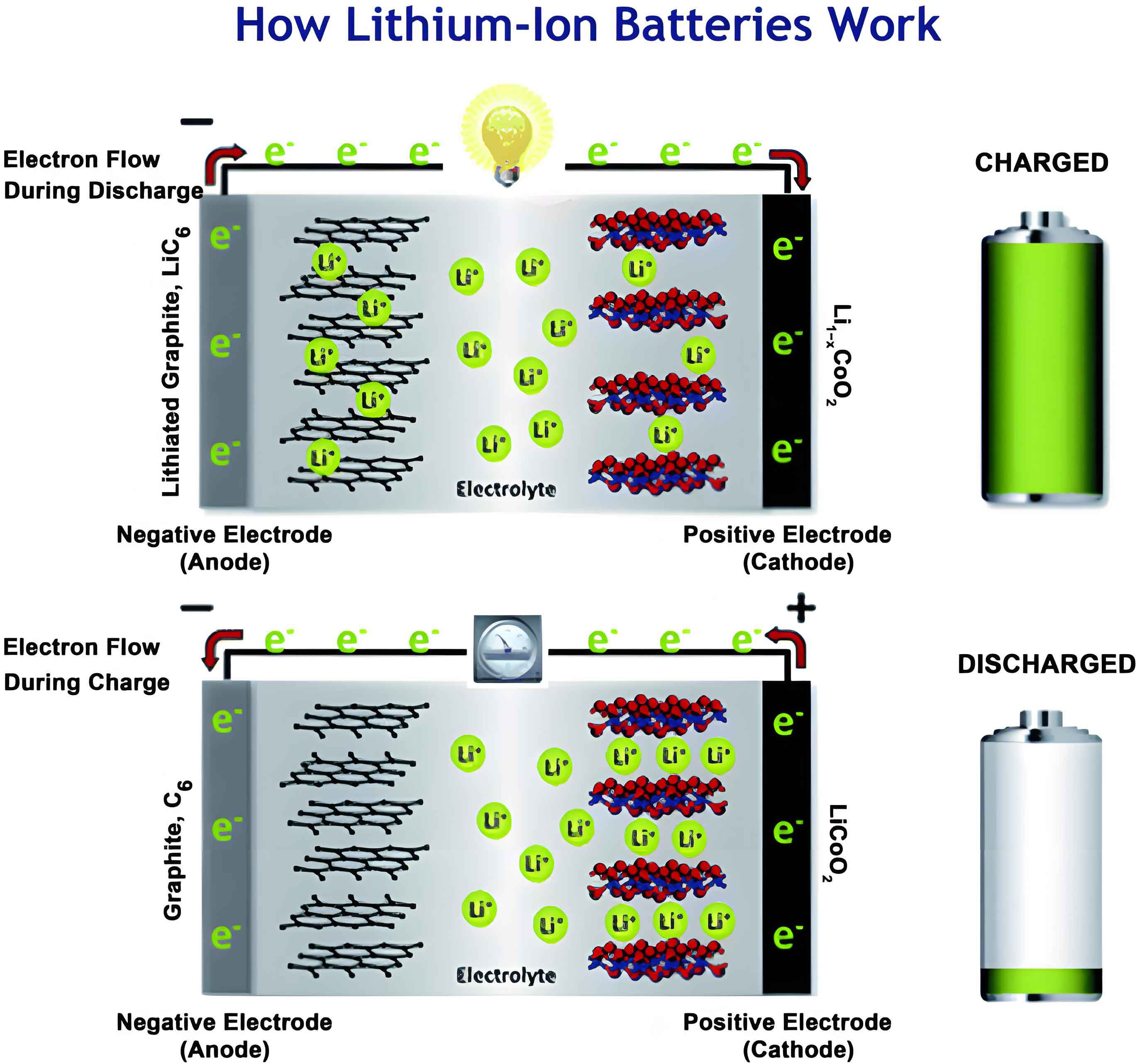
Our experimental foundation began with ensuring cell consistency, a prerequisite for meaningful analysis. We employed commercial 18650-type lithium iron phosphate (LFP) cells. A critical first step was a consistency check. Three randomly selected cells underwent standard charge-discharge cycles and full-spectrum EIS measurements. The results, summarized in the table below, confirmed excellent consistency in both capacity and impedance characteristics, validating their use for subsequent abuse testing.
| Cell No. | Charge Capacity (mAh) | Discharge Capacity (mAh) |
|---|---|---|
| 1 | 1737.4 | 1714.8 |
| 2 | 1733.5 | 1712.2 |
| 3 | 1740.8 | 1718.2 |
To select the most informative frequency point for online monitoring (as full-spectrum EIS is too slow for real-time warning), we conducted a systematic characterization. EIS spectra were collected at different States of Charge (SOC: -1%, 0%, 20%, 40%, 60%, 80%, 100%, 101%) and temperatures (5°C, 25°C, 45°C). Analysis from multiple angles—real part, imaginary part, and Distribution of Relaxation Times (DRT)—revealed that the real part of the impedance (Z’) in the low-to-mid frequency range showed the clearest correlation with SOC and its abnormal excursions. A key observation was that during both mild overcharge (101% SOC) and mild overdischarge (-1% SOC), the low-frequency real part exhibited a distinctive reversal: it increased compared to the normal 100% or 0% SOC values, often forming a local minimum point during the transition. This phenomenon suggested a fundamental change in the internal charge transfer resistance, providing a potential early warning signature.
We further analyzed the sensitivity and measurement trade-offs across different frequencies. Lower frequencies showed greater sensitivity (higher standard deviation of Z’ across SOC) but required longer measurement times. Balancing sensitivity with the need for rapid sampling, we selected the real part of the impedance at 10 Hz, denoted as $Z’_{10Hz}$, as our characteristic parameter for failure warning. The charge transfer resistance $R_{ct}$, which dominates this frequency region, is governed by the Butler-Volmer equation and can be expressed as:
$$R_{ct} = \frac{RT}{n^2 F^2 c_T [M^+] k_0 (1-x)^{\alpha} x^{1-\alpha}}$$
where $R$ is the gas constant, $T$ is temperature, $n$ is the number of electrons transferred, $F$ is Faraday’s constant, $c_T$ is the maximum intercalation concentration, $[M^+]$ is the lithium-ion concentration in the electrolyte, $k_0$ is the reaction rate constant, $x$ is the lithiation degree (related to SOC), and $\alpha$ is the symmetry factor. The rate constant $k_0$ follows an Arrhenius relationship: $k_0 = A e^{-E_a/(RT)}$. Under normal conditions, $R_{ct}$ typically decreases with increasing SOC and temperature. The observed reversal during electrical abuse indicates a breakdown in this normal behavior due to detrimental side reactions.
With the characteristic impedance identified, we proceeded to failure testing. For overcharge abuse, cells were charged at a constant 1C current beyond their voltage limit until failure. The cylindrical lithium-ion battery cells used in this study are equipped with a Current Interrupt Device (CID). During severe overcharge, pressure builds up from gas generation (e.g., due to electrolyte decomposition and lithium plating), eventually triggering the CID to permanently open the circuit, leading to a sudden open-circuit voltage and cell failure. The plots of voltage, surface temperature, and $Z’_{10Hz}$ during this process are highly instructive. The voltage shows a steady rise followed by an abrupt jump to the supply voltage at failure. Surface temperature exhibits a gradual rise with a sharper increase near the failure point, but the maximum temperature (around 40°C) remained within a range that a typical BMS might not flag as critical. Most importantly, the characteristic impedance $Z’_{10Hz}$ displayed a clear and pronounced local minimum approximately 359 seconds before the CID-actuated failure.
Similarly, for overdischarge abuse, cells were discharged at 1C current below the lower voltage limit. The failure mechanism here involves the oxidation and dissolution of the copper current collector at the negatively polarized anode. The dissolved copper ions then migrate and redeposit on the cathode surface, forming conductive deposits or dendrites. This process damages electrode structure, increases impedance, and can eventually lead to internal short circuits. We defined the failure moment as the point where the cell voltage reached its minimum during the dive into negative voltage territory. During the 1C overdischarge test, the $Z’_{10Hz}$ parameter again exhibited a distinct local minimum point, occurring approximately 251 seconds before the defined voltage-based failure point. The surface temperature rise was again lagging and non-conclusive for early warning.
The consistent appearance of a local minimum in the $Z’_{10Hz}$ trajectory prior to both overcharge and overcharge failure presents a powerful unified warning signature. However, directly detecting a simple minimum in a noisy, non-monotonic signal is prone to false alarms. To robustly identify this critical inflection point, we propose using the curvature $K_z$ of the characteristic impedance trajectory. Curvature quantifies the rate of change of the trajectory’s slope, effectively amplifying the sharp “bend” associated with the warning minimum while suppressing minor fluctuations. The curvature is calculated as:
$$K_z = \frac{z”}{(1 + (z’)^2)^{3/2}}$$
where $z’$ and $z”$ are the first and second time derivatives of the $Z’_{10Hz}$ signal, respectively. In the failure precursor stage, the curvature shows a sharp, positive spike corresponding to the concave upward bend at the impedance minimum.
To automatically and adaptively detect this anomalous curvature spike amidst normal operational data, we employ the Density-Based Spatial Clustering of Applications with Noise (DBSCAN) algorithm. DBSCAN is an unsupervised learning algorithm that groups together densely packed data points (in our case, sequential curvature values) and marks points in low-density regions as outliers or noise. Its advantages include not requiring pre-defined cluster numbers and being robust to outliers. The algorithm has two key parameters: the neighborhood search radius ($\epsilon$) and the minimum number of points ($MinPts$) required to form a dense region. We developed an adaptive scheme to set these parameters based on operational conditions:
$$MinPts = \text{floor}\left(\frac{Q \cdot f_z}{F_s \cdot |I|}\right)$$
$$\epsilon = n \cdot \text{mean}(OD(X))$$
where $Q$ is the cell’s rated capacity (Ah), $f_z$ is the sampling rate of the impedance, $I$ is the applied current (A), $F_s$ is a scaling factor (set to 50), $\text{mean}(OD(X))$ is the mean Euclidean distance among a subset $X$ of recent data points (where $X = 2 \times MinPts$), and $n$ is a multiplier (set to 3). This adaptive logic allows the warning system to adjust its sensitivity based on the C-rate and the inherent variability of the data stream.
The warning logic is as follows: 1) Continuously monitor $Z’_{10Hz}$ and compute its curvature $K_z$. 2) Periodically cluster the recent window of $K_z$ values using the DBSCAN algorithm with the adaptively calculated parameters. 3) A potential warning is triggered if a new data point is classified as an “anomaly” (noise) by DBSCAN, indicating it is distant from the normal operational cluster. 4) To confirm this as a true electrical abuse warning and not a transient artifact, a final check is performed: the curvature value of the anomalous point must be positive. This ensures the algorithm specifically detects the concave-upward bend associated with the impedance minimum, not just any outlier. When both conditions are met, an early warning signal is issued.
We rigorously validated this approach under diverse electrical abuse conditions. For overcharge, tests were conducted at 0.3C, 0.5C, 0.8C, and 1C rates. The DBSCAN-based algorithm successfully issued warnings well before the CID-actuated failure in all cases. The warning lead times were substantial, demonstrating the method’s effectiveness and quick response.
| Charge Rate (C) | Failure Time (s) | Warning Time (s) | Lead Time (s) |
|---|---|---|---|
| 0.3 | 14,092 | 13,122 | 970 |
| 0.5 | 8,481 | 8,012 | 469 |
| 0.8 | 5,239 | 4,926 | 313 |
| 1.0 | 4,261 | 3,902 | 359 |
Similarly, for overdischarge, tests at 0.5C, 1C, 2C, and 3C rates all confirmed the algorithm’s robustness. The warning was consistently triggered at the characteristic impedance minimum, providing critical lead time before severe damage occurred.
| Discharge Rate (C) | Failure Time (s) | Warning Time (s) | Lead Time (s) |
|---|---|---|---|
| 0.5 | 7,382 | 7,076 | 306 |
| 1.0 | 3,708 | 3,457 | 251 |
| 2.0 | 1,841 | 1,699 | 142 |
| 3.0 | 1,237 | 1,123 | 114 |
In conclusion, this research establishes a novel, EIS-based framework for early warning of electrical abuse failure in lithium-ion battery systems. The key findings are: First, the real part of the impedance at a carefully selected low-to-mid frequency (e.g., 10 Hz) serves as a highly sensitive characteristic parameter. Its trajectory exhibits a consistent local minimum prior to both overcharge and overdischarge failure, originating from fundamental shifts in internal charge transfer kinetics due to deleterious side reactions like lithium plating or copper dissolution. Second, transforming this impedance signal into its curvature amplifies the warning signature and improves discrimination against normal noise and fluctuations. Third, an adaptive DBSCAN clustering algorithm provides a robust, threshold-free method for online detection of the anomalous curvature spike associated with the impending failure, effectively eliminating the need for hard-to-define static thresholds. The system’s adaptability to different C-rates was successfully validated across a wide range of abuse conditions, with warning lead times ranging from over 15 minutes at low rates to over 100 seconds at very high rates.
This work provides a significant advancement in safety prognostics for lithium-ion battery management. By moving beyond traditional voltage and temperature monitoring to harness the rich information within electrochemical impedance, the proposed method offers a proactive, physics-based warning capability. Implementing such an algorithm in a BMS, possibly using dedicated impedance measurement hardware, could enable safer charging/discharging strategies, prevent catastrophic failures, and ultimately enhance the operational stability and longevity of lithium-ion battery energy storage systems and electric vehicles. Future work may explore the application of this impedance-based precursor signature to thermal runaway warning in cells without protective devices and its integration into cloud-based battery analytics platforms.