
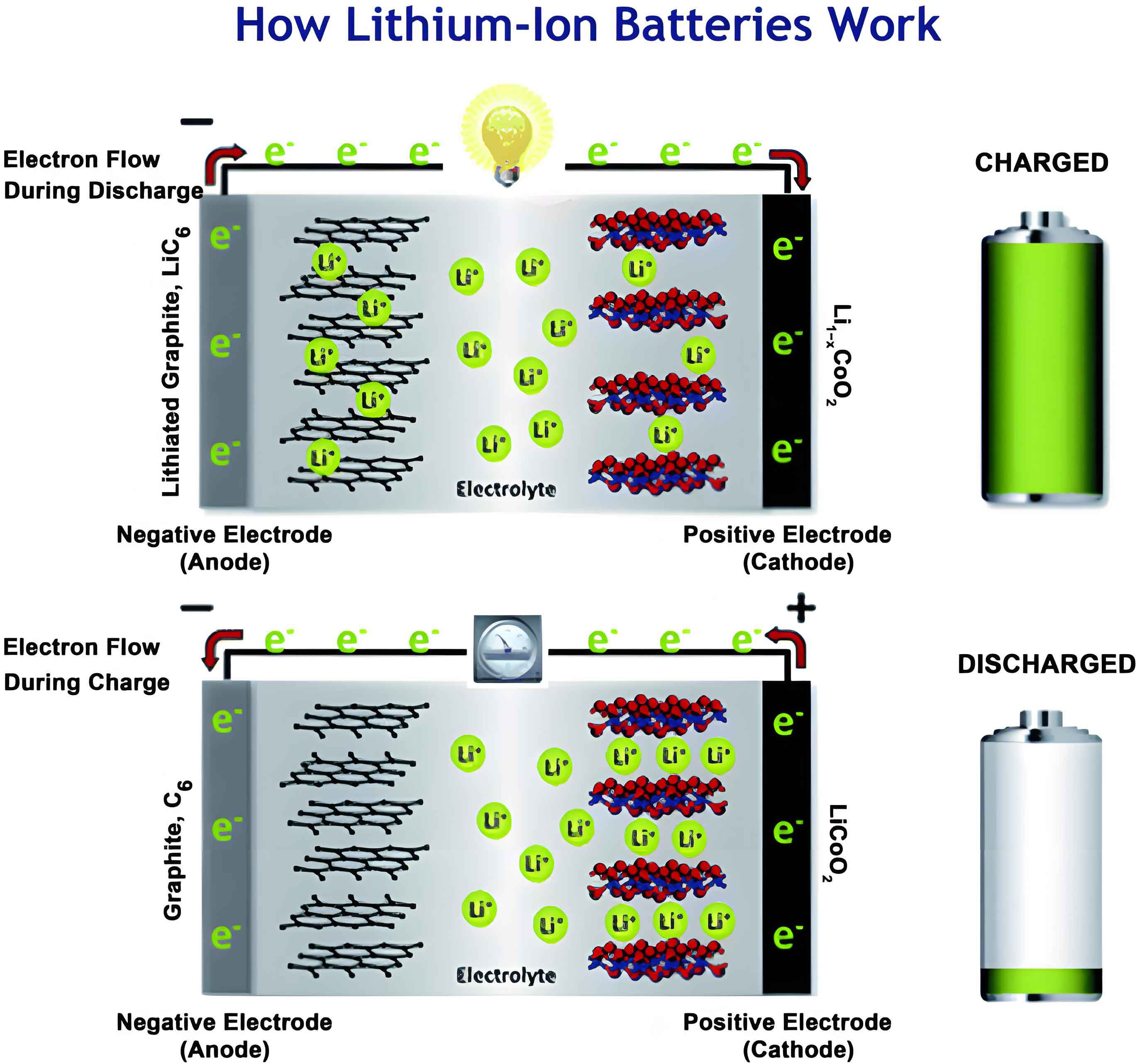
The relentless pursuit of higher energy density and, critically, enhanced safety is the defining challenge for modern electrochemical energy storage. While the ubiquitous lithium-ion battery has revolutionized portable electronics and electric transportation, its reliance on flammable organic liquid electrolytes presents an inherent risk of thermal runaway, fire, and explosion. This vulnerability hinders the deployment of high-energy lithium-ion battery systems in demanding applications like grid-scale storage, long-haul aviation, and next-generation electric vehicles. The scientific and industrial community has converged on a transformative solution: replacing the volatile liquid with a solid-state electrolyte. Among the various contenders, inorganic solid-state electrolytes stand out due to their potential for exceptional ionic conductivity, superior thermal stability, and the ability to enable the use of high-capacity lithium metal anodes, paving the way for the next leap in lithium-ion battery technology.
My analysis of the global intellectual property landscape reveals a technology on the cusp of explosive growth. For nearly two decades, patent activity related to inorganic solid-state electrolytes for lithium-ion battery applications remained modest. A significant inflection point occurred around 2017, coinciding with heightened public and industry scrutiny over the safety of conventional batteries. Since then, annual patent filings have surged dramatically, indicating a massive global R&D push. Geographically, Japan established an early and formidable lead, securing a vast portfolio of foundational patents and strategically filing in key markets like China and the United States. While starting later, China’s innovation engine has accelerated phenomenally, now accounting for a dominant share of annual new filings, though its international patent footprint remains relatively limited compared to its Japanese counterparts. The competitive field is led by major industrial corporations, primarily from East Asia. The technological focus is sharply concentrated, with sulfide-based electrolytes attracting over half of all patent filings, followed by oxides and the emerging class of halides. The patent “technology-performance” maps clearly identify the universal quest for higher ionic conductivity, while also highlighting material-specific priorities: sulfide patents heavily focus on improving stability and safety, oxide patents on cycle life, and all share a common drive to reduce cost and improve processability for mass production.
| Family | Crystal Structure Type | Representative Compound | Typical Room-Temperature Ionic Conductivity (S/cm) | Key Advantages | Primary Challenges |
|---|---|---|---|---|---|
| Oxides (OSEs) | NASICON | Li1.3Al0.3Ti1.7(PO4)3 (LATP) | 10-4 – 10-3 | Excellent air stability, wide electrochemical window, good mechanical strength. | Moderate ionic conductivity, high grain boundary resistance, rigid interface with electrodes. |
| Garnet | Li7La3Zr2O12 (LLZO) | 10-4 – 10-3 | Good stability vs. Li metal, wide window. | Surface Li2CO3 formation in air, sintering difficulties. | |
| Perovskite | Li0.34La0.56TiO3 (LLTO) | 10-5 – 10-4 | High bulk ionic conductivity. | Very high grain boundary resistance, reduced by Ti4+. | |
| Sulfides (SSEs) | Glass-Ceramic | Li7P3S11 | 10-3 – 10-2 | Very high ionic conductivity, good deformability. | Extremely sensitive to moisture (H2S release), narrow electrochemical stability window. |
| Crystalline (Thio-LISICON) | Li10GeP2S12 (LGPS) | ~10-2 | Liquid-like ionic conductivity. | High cost (Ge), poor air/electrochemical stability. | |
| Crystalline (Argyrodite) | Li6PS5Cl | 10-3 – 10-2 | High conductivity, halogen tuning possible. | Moisture sensitivity, interfacial reactions. | |
| Halides (HSEs) | LiaMCl6 (e.g., hcp, ccp) | Li3YCl6 (LYC), Li3YBr6 (LYB) | 10-4 – 10-3 | High voltage stability (>4V vs. Li+/Li), good ionic conductivity. | Moderate moisture sensitivity, instability vs. Li metal, cost of raw materials. |
| LiaMCl4 (Spinel) | Li2MnCl4 | 10-6 – 10-5 | Potential low cost. | Low ionic conductivity. |
The pursuit of the ideal solid electrolyte has crystallized into three main inorganic families, each with distinct crystal chemistry and property profiles, as summarized in Table 1. Oxide solid electrolytes (OSEs), the earliest studied, are prized for their exceptional stability. The NASICON-type LATP and garnet-type LLZO offer 3D conduction pathways through their framework structures. Their ionic conductivity, often governed by vacancy or interstitial mechanisms, can be described by the Arrhenius equation:
$$ \sigma = A \exp\left(\frac{-E_a}{k_B T}\right) $$
where $\sigma$ is the ionic conductivity, $A$ is the pre-exponential factor, $E_a$ is the activation energy for ion migration, $k_B$ is Boltzmann’s constant, and $T$ is the absolute temperature. Doping is crucial to optimize the carrier (Li+) concentration and reduce $E_a$. For instance, Al3+ doping in LATP introduces extra Li+ for charge compensation, enhancing conductivity.
Sulfide solid electrolytes (SSEs) represent the most intensively researched class due to their superb ionic conductivities, rivaling those of liquid electrolytes. The softer polarizable S2- lattice provides a low energy landscape for Li+ hopping. Materials like LGPS and Li6PS5Cl (an argyrodite) exhibit complex crystal structures with interconnected sites (e.g., 24g, 48h, 4a Wyckoff positions) that enable concerted or multi-site hopping mechanisms, leading to very low $E_a$ and high $\sigma$. Their conductivity often stems from a combination of high Li+ concentration and structural disorder, which can be engineered through composition.
Halide solid electrolytes (HSEs) have emerged as a promising newcomer, particularly for high-voltage lithium-ion battery cathodes. Compounds like Li3YCl6 feature structures where Li+ and M3+ cations share octahedral sites within a close-packed halide lattice. The introduction of trivalent M3+ (Y, In, Sc) creates Li+ vacancies, the concentration of which is critical for conductivity:
$$ [V_{Li}’] \propto [M_{Li}^{\cdot\cdot}] $$
where $[V_{Li}’]$ represents the concentration of negatively charged lithium vacancies and $[M_{Li}^{\cdot\cdot}]$ represents the concentration of effectively doubly positive M3+ on a Li+ site. The wider band gap of chlorides and bromides grants them superior oxidative stability compared to sulfides.
Despite these promising attributes, the path to commercializing inorganic solid-state electrolytes in robust lithium-ion battery systems is fraught with multifaceted challenges that extend beyond bulk ionic conductivity. A primary, practical hurdle is environmental instability. Most SSEs and HSEs are hygroscopic, reacting with atmospheric moisture to generate insulating byproducts (e.g., Li2CO3, LiOH on LLZO) or toxic gases (H2S from sulfides), severely degrading performance and posing handling difficulties. While some oxides are stable, their ionic conductivity, though decent, often lags behind the best sulfides and halides, especially when considering total (bulk + grain boundary) resistance. The grain boundary contribution can be particularly debilitating for polycrystalline oxides like LLTO.
Electrochemical stability is another critical frontier. The thermodynamic stability window of an electrolyte is bounded by its reduction potential (against the anode) and oxidation potential (against the cathode). Many SSEs have a low oxidation limit, making them incompatible with high-voltage cathodes (>4V) common in advanced lithium-ion battery designs. Conversely, most OSEs and HSEs are reduced by lithium metal, forming insulating interphases. This leads to the pervasive issue of interfacial side reactions. At the cathode, mutual diffusion of elements (e.g., Co, S) and electrolyte decomposition form high-impedance interphases. At the lithium anode, reduction of the electrolyte (e.g., Ti4+ in LATP, Y3+ in LYC) consumes both active lithium and electrolyte, increasing resistance.
Finally, the transition from a permeating liquid to a rigid solid introduces the problem of poor “solid-solid” contact. Unlike liquids, solids cannot perfectly conform to the rough surfaces of electrode particles. This results in high interfacial resistance and inhomogeneous current distribution. Furthermore, the repeated volumetric changes of electrode materials during cycling in a lithium-ion battery can break these fragile contacts, leading to performance decay. The high local current density at contact points can also promote lithium dendrite nucleation and growth, potentially short-circuiting the cell.
The research community has responded to these challenges with a rich and diverse arsenal of improvement strategies, often targeting specific weaknesses of each material family. A summary of these strategies mapped against the core challenges is presented in Table 2.
| Core Challenge | Material Most Affected | Improvement Strategies | Exemplary Approach / Effect |
|---|---|---|---|
| Air/Moisture Sensitivity | Sulfides, Halides, LLZO surface | Surface Modification/Coating | Applying hydrophobic LiF or Al2O3 layers to physically block H2O. |
| Halides, Sulfides | Compositional Tuning (Doping) | Substituting Y with In in Li3YCl6 to form a reversible hydrate, improving humidity tolerance. | |
| Insufficient Ionic Conductivity | All, especially oxides | Aliovalent Doping | Al/Ga in LATP, Ta in LLZO to increase mobile Li+ concentration or stabilize high-conductivity phases. |
| Oxides (LLTO, etc.) | Grain Boundary Engineering | Introducing amorphous Si-rich layers at LLTO grain boundaries to provide fast diffusion paths. | |
| Halides, Sulfides | Crystal Structure Engineering | Stabilizing high-conductivity phases (e.g., C2/m for LYC) via synthesis or doping. | |
| Narrow Electrochemical Window | Sulfides | Anion Substitution | Replacing S with O in Li6PS5Cl to raise the oxidation potential. |
| Halides | Anion/Cation Doping | F-doping in Li3YBr6 to improve reduction stability against Li metal. | |
| Interfacial Side Reactions & Poor Contact | All vs. Cathode | Cathode Coating (Buffer Layer) | Applying nanoscale LiNbO3, LATP, or Li3InCl6 coatings on cathode particles to suppress mutual diffusion. |
| All vs. Li Anode | Anode Interface Engineering | Using LiFSI to form a LiF-rich SEI, or a liquid Li-Hg alloy to create a self-healing, conformal interface. | |
| All | Composite Electrolytes | Combining inorganic fillers (LLZO, LATP) with polymer matrices (PEO, fluorinated) to improve flexibility and contact. | |
| High Cost & Processing Difficulty | Sulfides (Ge), General | Element Substitution & Process Optimization | Replacing Ge with Sn, Si; using mechanochemical synthesis; developing thin-film processing. |
A powerful and increasingly prevalent strategy is the development of composite electrolytes. This approach seeks to synergize the advantages of different materials. Inorganic-inorganic composites, such as blending two halides with complementary properties, can yield higher net conductivity. More impactful is the inorganic-organic composite, where a polymer matrix (e.g., PEO, PVDF) is combined with inorganic filler particles (LLZO, LATP). The polymer provides mechanical flexibility, excellent interfacial contact, and processability into thin films, while the inorganic filler enhances ionic conductivity, mechanical modulus, and electrochemical stability. The effective conductivity of such a composite can be modeled by effective medium theories, considering percolation thresholds:
$$ \sigma_{\text{eff}} = \sigma_p \phi_p + \sigma_i \phi_i f(\phi_i, \text{morphology}) $$
where $\sigma_{\text{eff}}$, $\sigma_p$, and $\sigma_i$ are the conductivities of the composite, polymer, and inorganic phase, respectively, and $\phi_p$ and $\phi_i$ are their volume fractions. The function $f$ accounts for the connectivity and shape of the inorganic particles. The integration of such composites is seen as a pragmatic pathway toward manufacturable solid-state lithium-ion battery cells.
Looking forward, the trajectory of inorganic solid-state electrolyte development points toward several key frontiers. First, strategic and global intellectual property creation is paramount. Researchers and companies must navigate existing patent thickets, particularly those held by early leaders, by focusing on novel compositional spaces, unique composite architectures, and innovative processing methods. Second, the material discovery paradigm itself is evolving. The concept of “high-entropy” or multi-principal cation solid electrolytes is gaining traction, where configurational disorder can stabilize novel structures and potentially enhance ionic transport and stability simultaneously. Furthermore, the exploration of new anion systems (e.g., oxyhalides, hydrides) and advanced composites (e.g., vertically aligned structures, 3D-interpenetrated networks) will continue. Third, a deeper, atomistic understanding of interfacial degradation mechanisms is needed. Advanced in-situ characterization techniques and multi-scale computational modeling, powered by machine learning for high-throughput screening of materials and interfaces, will be indispensable to design truly stable systems from first principles.
In conclusion, inorganic solid-state electrolytes represent a cornerstone technology for building safer, higher-energy-density lithium-ion battery systems. The journey from laboratory curiosity to commercial reality is complex, requiring simultaneous optimization of bulk properties, interfacial compatibility, environmental resilience, and cost-effective manufacturing. The vibrant global patent activity and relentless research progress across oxide, sulfide, and halide families—coupled with smart strategies like compositing and interface engineering—demonstrate a powerful collective effort to overcome these hurdles. As these challenges are systematically addressed, inorganic solid-state electrolytes are poised to unlock the next generation of lithium-ion battery performance, enabling transformative applications across transportation, grid storage, and beyond, fundamentally enhancing the safety and capability of electrochemical energy storage.