
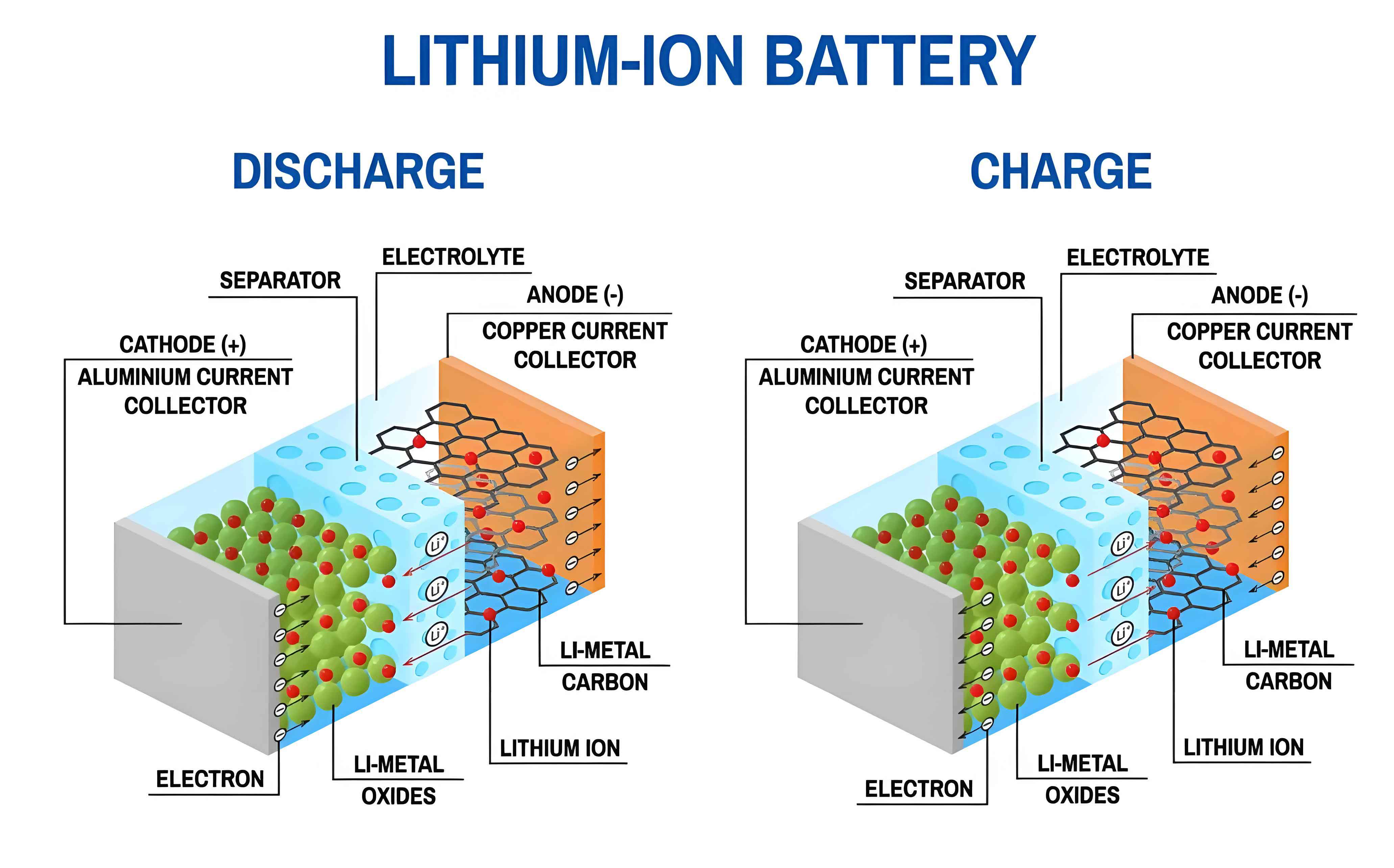
The proliferation of high-energy-density lithium-ion battery technologies has been a cornerstone of modern electrification, powering everything from portable electronics to electric vehicles and grid-scale storage. However, this very energy density harbors a significant latent risk: thermal runaway. During transport, especially of damaged, end-of-life, or recalled cells, the probability of an internal short circuit or other abuse condition triggering this catastrophic failure mode is non-negligible. A thermal runaway event involves uncontrollable exothermic reactions, leading to temperatures exceeding 800°C, violent jetting of flames and toxic gases, and the potential for gas explosions. Consequently, the safe transport of these items, classified as Class 9 dangerous goods, necessitates packaging that transcends conventional protective roles.
Specialized packaging for lithium-ion battery transport is an integrated safety system engineered to contain, mitigate, and manage a full-scale thermal runaway event originating from within. Unlike standard packaging tested primarily for mechanical integrity, this packaging must embody four core, synergistic functions: Shock & Vibration Damping, Thermal Insulation & Fire Blocking, Explosion Resistance & Pressure Relief, and Monitoring & Early Warning. While international regulations, such as the UN Model Regulations packing instruction P911, mandate that such packaging prevents fire, contains fragments, and limits external temperature, they provide no standardized methodology for verifying these capabilities. This gap leads to products with varying, unquantified performance levels. This article, from an engineering evaluation perspective, analyzes the technological challenges within each core function and proposes a comprehensive, risk-informed, whole-package testing and evaluation framework to scientifically assess the safety performance of specialized lithium-ion battery transport packaging.
Deconstructing the Core Risks: Beyond Simple Failure
The fundamental hazard of transporting lithium-ion battery units is the initiation and propagation of thermal runaway. This process can be modeled as a chain of exothermic reactions. The heat generation rate ($\dot{Q}_{gen}$) during runaway far exceeds the package’s natural heat dissipation rate ($\dot{Q}_{diss}$), leading to a catastrophic temperature rise.
$$ \frac{dT}{dt} = \frac{1}{m C_p} (\dot{Q}_{gen} – \dot{Q}_{diss}) $$
Where $T$ is temperature, $t$ is time, $m$ is mass, and $C_p$ is heat capacity. $\dot{Q}_{gen}$ accelerates due to reactions like SEI decomposition, anode-electrolyte reactions, and cathode decomposition. The consequences are multi-faceted:
- Extreme Heat & Fire: Temperatures can melt internal components and ignite surrounding materials.
- Gas Generation: Electrolyte decomposition produces a mixture of flammable gases (e.g., H₂, CO, CH₄) and toxic gases (e.g., HF, CO). The total gas yield $V_{gas}$ can be significant.
- Pressure Buildup & Explosion Risk: In a sealed or semi-sealed enclosure, generated gases increase pressure. If the gas concentration reaches the Lower Flammability Limit (LFL) and an ignition source is present, a deflagration or explosion can occur. The peak overpressure $\Delta P_{max}$ is a critical hazard parameter.
- Projectile Hazard: Cell casing rupture can eject shrapnel and burning material.
A packaging system must therefore be evaluated against this realistic, multi-hazard scenario, not just isolated mechanical tests.
Analysis of Core Protective Functions and Evaluation Gaps
1. Shock & Vibration Damping: Preventing the Initiation
The primary goal is to prevent mechanical abuse from inducing an internal short circuit in the lithium-ion battery. While standard tests (drop, stack, vibration) exist for packaging, their application for battery safety is insufficient.
| Standard Test | Typical Pass/Fail Criterion | Gap for Lithium-ion Battery Safety |
|---|---|---|
| Drop Test (e.g., 1.2m) | No rupture or leakage of container. | Does not detect internal cell damage (micro-short, separator compromise). A passing package may contain a critically damaged battery. |
| Random Vibration Test | Container integrity; no gross movement of contents. | Does not assess cumulative fatigue damage to cell internals (electrode creep, connection loosening) which can precipitate failure later. |
| Compression/Stack Test | No permanent deformation impairing safety. | Static load may not replicate dynamic crush scenarios from vehicle accidents. |
A more relevant metric is the critical shock impulse $I_{crit}$ that a packaged battery can withstand without failure, which depends on the cushioning material’s dynamic cushioning curve and the battery’s own fragility profile. The evaluation must shift from “package intact” to “battery electrochemically undamaged.” Post-test validation should include cell electrical parameter checks (e.g., internal resistance change $\Delta R_{int} < 5\%$) and potentially non-destructive imaging.
2. Thermal Insulation & Fire Blocking: Containing the Event
Once a single lithium-ion battery undergoes thermal runaway, the function is to prevent thermal propagation to adjacent cells and to block heat/flame from breaching the package exterior. Key performance indicators include maximum external surface temperature ($T_{ext, max}$), propagation inhibition time to adjacent cells ($t_{prop}$), and insulation integrity duration under direct flame impingement.
The heat flux $\dot{q}”$ through a composite packaging wall can be approximated by:
$$ \dot{q}” = \frac{T_{int} – T_{ext}}{\sum_{i=1}^{n} \frac{L_i}{k_i}} $$
where $L_i$ and $k_i$ are the thickness and thermal conductivity of each wall layer (e.g., metal shell, ceramic fiber, intumescent coating). The goal is to maximize the total thermal resistance. Standards like building material fire ratings (e.g., 60-minute integrity) are a reference but not directly applicable due to the internal, chemical fire nature. A crucial test metric is the “No Propagation” threshold under a defined thermal insult from a pilot cell, ensuring neighboring cells remain below a safe temperature (e.g., 80°C).
| Insulation Material/Strategy | Advantage | Challenge for Packaging |
|---|---|---|
| Aerogel Blankets | Extremely low thermal conductivity. | Fragile, costly, degradation under direct jet flame. |
| Ceramic Fiber Boards | High temperature stability. | Heavy, potential for gaps creating thermal bridges. |
| Intumescent Coatings | Expand to fill gaps under heat. | One-time use, performance depends on heating rate. |
| Phase Change Materials (PCMs) | Absorb latent heat at constant temperature. | Limited total heat absorption, may leak. |
3. Explosion Resistance & Pressure Relief: Managing the Consequences
This is arguably the most critical function. The packaging must withstand initial pressure rise and safely vent gases to prevent a catastrophic structural failure. It is a dynamic system balancing containment and release. The internal pressure $P(t)$ is governed by factors including gas generation rate, vent area $A_v$, and vent activation pressure $P_{vent}$.
A simplified relation for required vent area to limit peak pressure, derived from deflagration venting guidelines (e.g., NFPA 68), can be conceptualized as:
$$ A_v \propto \frac{V_{enclosure} \cdot \text{(Gas Generation Rate)}}{\sqrt{P_{vent} \cdot K_{G, mix}}} $$
where $K_{G, mix}$ is the deflagration index of the gas mixture. The challenges are unique:
- Vent Clogging: Venting must handle a mixture of hot gas, soot, and liquid electrolyte aerosol, which can clog filters or vents.
- Vent Timing: $P_{vent}$ must be low enough to prevent structural failure but high enough to maintain containment during normal transport.
- Directed Venting & Filtration: Vents should direct effluent away safely and ideally filter toxic HF. Efficiency $\eta_{HF}$ of a filter under such conditions is a key metric.
- Secondary Ignition: Venting flammable gas must not create an external fireball. Flame arrestor functionality at the vent is essential.
Evaluation requires measuring $P_{max}$, $P_{vent}$, vent flow temperature, effluent composition, and verifying no projectile release.
4. Monitoring & Early Warning: Enabling Proactive Response
An advanced packaging system incorporates sensors to detect precursors to thermal runaway (e.g., volatile organic compounds (VOCs), hydrogen, temperature rate-of-rise) and communicate an alert. This function buys critical time for emergency response.
The system’s effectiveness can be quantified by its Probability of Detection (POD) and False Alarm Rate (FAR). A reliable system maximizes POD while minimizing FAR.
$$ POD = \frac{\text{Number of True Positive Alerts}}{\text{Total Number of Actual Events}} $$
$$ FAR = \frac{\text{Number of False Positive Alerts}}{\text{Total Number of Alert Triggers}} $$
Key evaluation parameters include:
- Detection Threshold & Time: The minimum concentration of a target gas (e.g., H₂) or temperature slope that triggers an alarm, and the time delay $\Delta t_{detect}$ from onset to alarm.
- Sensor Survivability: Sensors must function long enough to trigger the alarm before being destroyed by the ensuing event.
- Communication Reliability: In metal enclosures, wireless signal attenuation must be overcome. Redundant communication paths (e.g., satellite, cellular) may be needed. Link reliability $R_{link}$ over the journey is crucial.
- Power Autonomy: The system must operate for the entire maximum expected journey duration $t_{journey}$.
Proposed Whole-Package Safety Performance Evaluation System
Based on the risk and functional analysis, we propose a holistic evaluation system centered on a Full-Scale Thermal Runaway Induction Test. The philosophy is to subject the packaging system, loaded with a representative configuration of lithium-ion battery cells (some equipped with heater tabs to induce runaway), to a realistic, worst-case internal fire scenario and measure its response across all four functions.
Test Protocol Principle
- Pre-conditioning (Mechanical): The packaged unit first undergoes a sequence of mechanical tests simulating transport hazards (vibration per ISTA profile, followed by a corner/edge drop). This assesses the Shock & Vibration Damping function in a state resembling real use.
- Instrumentation: The package is instrumented with thermocouples (internal, on cell surfaces, on external walls), pressure transducers, gas sampling lines, and the integrated Monitoring & Early Warning system is connected to a data logger.
- Thermal Runaway Induction: One or more designated “pilot” cells are forcibly heated to thermal runaway using integrated heaters. The test is considered valid only if all pilot cells achieve full runaway (confirmed by voltage collapse >80% and temperature >500°C).
- Monitoring & Data Collection: Throughout the thermal event and cool-down, data is collected on:
- Internal temperature profile and propagation to adjacent cells (Thermal Insulation).
- Internal pressure evolution and vent activation (Pressure Relief).
- External surface temperatures at multiple points.
- Time and nature of the first alert from the internal monitoring system.
- Gas composition and temperature at the vent outlet.
- High-speed and standard video of the package exterior and vent.
- Post-Test Inspection: After cooling, the package is inspected for structural integrity, breach locations, condition of venting components, and any ejected material.
Quantified Performance Evaluation Matrix
Based on the test data, the packaging is scored against a comprehensive set of quantitative criteria. The following matrix outlines the core evaluation metrics. A “Qualified” rating requires passing all minimum thresholds. An “Excellent” rating requires exceeding them in key areas, as defined by a weighted scoring formula.
| Core Function | Evaluation Indicator | Quantified Criteria & Thresholds | Measurement Method |
|---|---|---|---|
| Shock & Vibration Damping | Structural Integrity Post-Mechanical Test | No rupture, permanent deformation ≤ 2% of critical dimension, fastener secure. | Visual inspection, 3D scan comparison. |
| Cushioning Material Performance | Compressive permanent deformation ≤ 20%; no disintegration. | Material sampling, thickness gauge. | |
| Content (Battery) Integrity | No visible rupture. Post-test open-circuit voltage (OCV) change < 5%, internal resistance change < 10% from baseline. | Visual inspection, multimeter, battery tester. | |
| Thermal Insulation & Fire Blocking | External Surface Temperature | Maximum $T_{ext, max}$ ≤ 100°C during entire event. | Thermocouples on external faces. |
| Thermal Propagation Inhibition | Surface temperature of adjacent non-triggered cells ≤ 80°C. | Thermocouples on cell surfaces. | |
| Insulation Layer Integrity Duration | No burn-through or structural failure of primary insulation for ≥ 30 minutes from pilot cell ignition. | Visual (video) and temperature data. | |
| External Fire Prevention | No sustained flame (≥ 3 seconds) on package exterior. | High-speed video recording. | |
| Explosion Resistance & Pressure Relief | Vent Activation Performance | Vent opens within ±10% of its designated $P_{vent}$ pressure. | High-frequency pressure transducer. |
| Internal Pressure Control | Peak internal pressure $\Delta P_{max}$ ≤ 130 kPa (gauge). | High-frequency pressure transducer. | |
| Effluent Hazard Mitigation | Vent outlet gas temperature ≤ 150°C. HF concentration in vented gas ≤ 60 ppm (vol). | Thermocouple at vent; FTIR or specific sensor. | |
| Post-Vent Structural Integrity | No disintegration; no ejection of battery fragments or packaging components beyond a 1m perimeter. | Post-test inspection and video analysis. | |
| Monitoring & Early Warning | Alert Response Time | Time from detection of first predefined anomaly (e.g., H₂ > 100 ppm, Temp. rate > 1°C/s) to signal transmission $\Delta t_{alert}$ ≤ 30 seconds. | Data logger with synchronized timestamps. |
| Detection Accuracy | In repeated bench tests, $POD$ ≥ 99%, $FAR$ ≤ 1%. | Controlled release testing with target gases. | |
| Communication Reliability | Signal transmission success rate ≥ 99.9% in simulated transport environment (with EMI). End-to-end delay ≤ 5s. | Protocol analyzer, signal generators. | |
| System Endurance | Continuous operating time from full charge ≥ 1.5 x $t_{journey, max}$. | Power analyzer in environmental chamber. |
Comprehensive Performance Scoring and Rating
A weighted scoring model can be used to generate an overall performance score $S_{total}$, facilitating comparison and rating. Each indicator $i$ is assigned a weight $w_i$ based on its criticality (e.g., pressure control and external temperature are high weight) and a score $s_i$ from 0-100 based on measured performance relative to thresholds.
$$ S_{total} = \sum_{i=1}^{n} w_i \cdot s_i \quad \text{where} \quad \sum w_i = 1 $$
Performance Rating:
- Unqualified: Failure to meet any one of the minimum “Quantified Criteria” thresholds listed in the table. This is a binary safety gate.
- Qualified: Meets all minimum thresholds. Safe for service under the tested conditions.
- Excellent: Meets all minimum thresholds AND achieves an $S_{total}$ score above a defined high benchmark (e.g., 85). This typically requires superior performance in multiple areas, such as $T_{ext, max}$ < 60°C, $\Delta P_{max}$ < 100 kPa, and $\Delta t_{alert}$ < 15s, indicating robust safety margins and advanced design.
Conclusion and Path Forward
The safe transport of high-risk lithium-ion battery units demands a paradigm shift in packaging evaluation—from assessing passive containers to validating integrated, active safety systems. This proposed evaluation system, centered on a realistic full-scale thermal runaway test and a multi-parameter performance matrix, provides a rigorous, scientific framework to quantify the protective efficacy of specialized packaging. It bridges the critical gap left by current prescriptive regulations.
By defining clear metrics for Shock & Vibration Damping, Thermal Insulation & Fire Blocking, Explosion Resistance & Pressure Relief, and Monitoring & Early Warning, it empowers manufacturers to design to verifiable standards, allows regulators and carriers to differentiate product quality, and ultimately enhances supply chain safety. Future work must focus on the standardization of this test protocol, including defining standard battery configurations for testing, harmonizing sensor requirements for early warning systems, and establishing accredited laboratories. As lithium-ion battery technology and its associated logistics continue to evolve, a robust, performance-based evaluation system is not just an academic exercise but a fundamental necessity for sustainable and safe global electrification.