
As the demand for electrochemical energy storage continues to surge, I find that the lithium-ion battery industry faces unprecedented challenges in enhancing production efficiency, reducing energy consumption, and improving overall performance. Traditional wet-process electrode manufacturing, which involves slurry coating and solvent drying, has long been the standard but comes with significant drawbacks, including high costs, environmental concerns, and limitations in electrode performance. In this context, dry electrode technology emerges as a transformative approach, offering a solvent-free pathway that promises to redefine the landscape of energy storage devices, particularly for supercapacitors and lithium-ion batteries. Through my exploration of this field, I aim to delve into the preparation methods, unique advantages, applications, and future prospects of dry electrodes, emphasizing their pivotal role in advancing the lithium-ion battery sector.
The core of dry electrode technology lies in its elimination of solvents during manufacturing. Unlike wet processes that rely on volatile organic compounds like N-methyl-2-pyrrolidone (NMP), dry methods involve direct processing of electrode materials—such as active materials, conductive additives, and binders—without liquid media. This fundamental shift not only reduces environmental impact but also enhances electrode properties, making it a critical innovation for next-generation lithium-ion batteries. In my analysis, I will cover various dry electrode techniques, including powder spraying, binder fibrillation, and dry pressing, each contributing to improved energy density, cycle life, and cost-effectiveness. The integration of dry electrodes into lithium-ion batteries is particularly promising, as it addresses key issues like high loading, low internal resistance, and compatibility with solid-state systems.
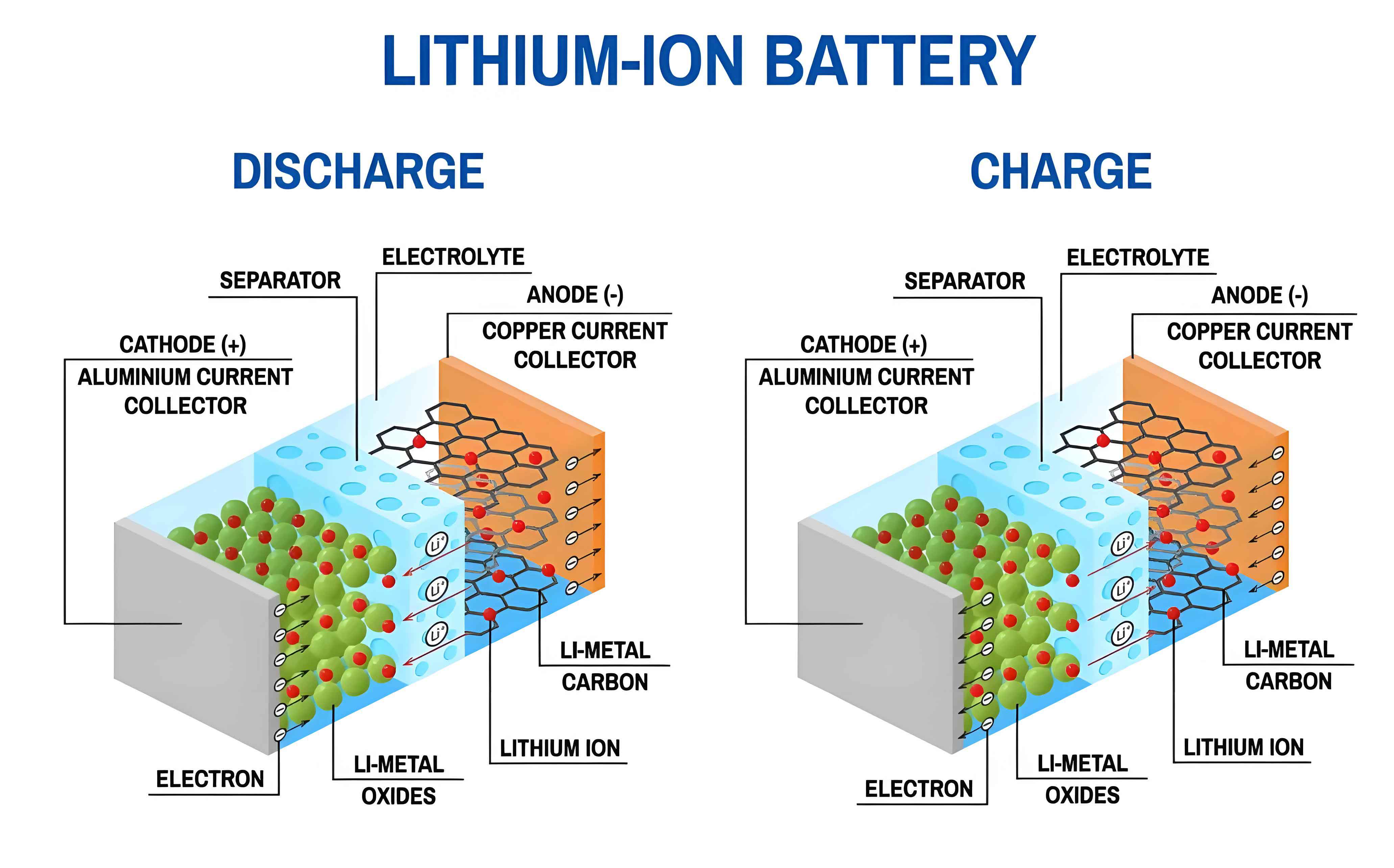
To understand the significance of dry electrode technology, I first examine its preparation methods. These processes typically follow a consistent sequence: dry blending of components, dry coating or deposition, and electrode pressing. For instance, powder spraying utilizes electrostatic forces to deposit dry particles onto a current collector, followed by thermal activation to bind the materials. This method allows for uniform distribution and high adhesion, as I have observed in studies where lithium-ion battery electrodes achieved superior mechanical strength. Another approach, binder fibrillation, involves shear-induced fibrillization of polymers like polytetrafluoroethylene (PTFE) to form a fibrous network that encapsulates active materials. This creates self-supporting films that can be laminated onto current collectors, enabling high-loading electrodes for lithium-ion batteries. Dry pressing, on the other hand, compresses dry mixtures directly onto substrates, offering simplicity and scalability. The mathematical representation of the binding efficiency in these processes can be expressed using a formula for adhesion strength, $$A = \frac{F}{S}$$, where A is the adhesion strength (in kPa), F is the force required for detachment, and S is the contact area. In dry electrodes, values often exceed 150 kPa, compared to around 85 kPa for wet-process electrodes, highlighting their robustness.
The advantages of dry electrode technology are multifaceted, and I have summarized them in Table 1 to provide a clear comparison with traditional wet methods. From an environmental perspective, the absence of solvents eliminates volatile organic compound emissions and reduces the need for energy-intensive drying and recovery systems. This aligns with global sustainability goals, especially as the lithium-ion battery industry expands. Economically, dry processing lowers capital and operational costs by minimizing equipment requirements and factory footprint. For example, in lithium-ion battery manufacturing, the drying and solvent recovery steps account for approximately 45–50% of energy consumption, but dry methods can cut this by over 30%, as estimated from industrial data. Performance-wise, dry electrodes exhibit higher surface density, lower porosity, and enhanced ionic transport, leading to improved rate capability and cycle life in lithium-ion batteries. The reduction in binder content—often below 1 wt%—further optimizes active material utilization, which is crucial for high-energy-density applications.
| Parameter | Dry Electrode Technology | Wet Electrode Technology |
|---|---|---|
| Solvent Usage | None, eliminating VOC emissions | Requires solvents like NMP, leading to environmental concerns |
| Energy Consumption | Low (reduces drying energy by ~30%) | High (drying and recovery consume 45–50% of total energy) |
| Production Cost | Lower capital and operational costs | Higher due to solvent recovery infrastructure |
| Electrode Loading | High (up to 13 mA·h·cm⁻² achievable) | Limited (typically below 4 mA·h·cm⁻²) |
| Mechanical Strength | Superior adhesion (≥150 kPa) | Moderate adhesion (~85 kPa) |
| Cycle Life in Lithium-ion Batteries | Extended (e.g., 88.2% capacity retention after 300 cycles) | Shorter due to binder migration and cracking |
| Compatibility with Solid-State Systems | Excellent, suitable for sulfide electrolytes | Poor, solvents may degrade solid electrolytes |
In supercapacitors, dry electrode technology has demonstrated remarkable potential, particularly with carbon-based materials. I have explored how dry-processed activated carbon electrodes exhibit rectangular cyclic voltammetry curves even at high scan rates, indicating ideal capacitive behavior. The absence of solvents prevents pore blockage, allowing for better electrolyte access and higher specific capacitance. For instance, in my review of studies, composite electrodes incorporating activated graphene via dry methods showed a 10.8% increase in specific capacity compared to conventional wet electrodes. This enhancement stems from the optimized microstructure, where conductive additives and binders form a percolating network without agglomeration. The energy density of supercapacitors can be calculated using the formula $$E = \frac{1}{2} C V^2$$, where E is the energy density (in J·g⁻¹), C is the specific capacitance (in F·g⁻¹), and V is the operating voltage (in V). Dry electrodes often achieve higher C values due to improved material utilization, directly boosting the performance of devices that complement lithium-ion batteries in hybrid energy storage systems.
Transitioning to lithium-ion batteries, the application of dry electrodes is even more impactful. I have investigated various cathode materials, such as lithium cobalt oxide (LCO), lithium nickel manganese cobalt oxide (NCM), and lithium iron phosphate (LFP), all benefiting from dry processing. For LCO cathodes, dry methods enable uniform binder distribution and strong current collector adhesion, resulting in lower polarization and higher rate capability. In NCM systems, dry electrodes with PTFE fibrillation have achieved loadings exceeding 6.5 mA·h·cm⁻², which is critical for high-energy-density lithium-ion batteries. The electrochemical performance can be modeled using the Butler-Volmer equation for charge transfer kinetics, $$i = i_0 \left[ \exp\left(\frac{\alpha n F \eta}{RT}\right) – \exp\left(-\frac{(1-\alpha) n F \eta}{RT}\right) \right]$$, where i is the current density, i₀ is the exchange current density, α is the charge transfer coefficient, n is the number of electrons, F is Faraday’s constant, η is the overpotential, R is the gas constant, and T is the temperature. Dry electrodes typically exhibit higher i₀ values due to reduced interfacial resistance, enhancing the efficiency of lithium-ion batteries.
For LFP cathodes, dry processing addresses challenges related to material hardness and binder dispersion. I have noted that incorporating multi-walled carbon nanotubes (MWCNTs) during dry mixing facilitates PTFE fibrillation, leading to self-supporting films with excellent cycle stability. In full-cell configurations with graphite anodes, dry LFP cathodes demonstrate capacity retention above 95% after hundreds of cycles, rivaling wet-process counterparts. The capacity fading in lithium-ion batteries can be described by an empirical formula, $$C_n = C_0 \exp(-k n)$$, where Cₙ is the capacity at cycle n, C₀ is the initial capacity, and k is the degradation rate constant. Dry electrodes often show lower k values, indicating slower degradation. Additionally, dry methods enable ultra-thick electrodes—up to 500 μm—for LFP, achieving areal capacities of 13.7 mA·h·cm⁻², which is pivotal for scaling up lithium-ion battery production without compromising performance.
The advent of solid-state batteries further underscores the importance of dry electrode technology. I have examined how dry processing is ideal for solid electrolytes, such as sulfides and oxides, which are sensitive to solvent exposure. For instance, dry-made Li₆PS₅Cl electrolyte films achieve ionic conductivities of 8.4 mS·cm⁻¹ at thicknesses below 40 μm, enabling all-solid-state lithium-ion batteries with long cycle life. The conductivity can be expressed as $$\sigma = \sum n_i q_i \mu_i$$, where σ is the ionic conductivity, nᵢ is the carrier concentration, qᵢ is the charge, and μᵢ is the mobility. Dry methods optimize these parameters by minimizing impurities and ensuring homogeneous mixing. In cathode composites, dry blending of active materials with solid electrolytes enhances interface contact, reducing interfacial resistance and improving rate performance in lithium-ion batteries. Table 2 summarizes key advancements in dry electrode applications for solid-state systems, highlighting their role in next-generation energy storage.
| Material System | Dry Electrode Method | Key Performance Metrics | Impact on Lithium-ion Batteries |
|---|---|---|---|
| Sulfide Electrolytes (e.g., Li₆PS₅Cl) | Binder fibrillation and hot pressing | Ionic conductivity: 8.4 mS·cm⁻¹; cycle life: 86.4% retention after 1000 cycles | Enables safe, high-energy all-solid-state batteries |
| Oxide Electrolytes (e.g., garnet-type) | Dry powder compression with plasticizers | Conductivity: 0.12 mS·cm⁻¹ at room temperature; flexibility for thin films | Facilitates integration into flexible lithium-ion battery designs |
| NCM Cathodes with Solid Electrolytes | Dry coating and lamination | Areal capacity: 6.8 mA·h·cm⁻²; rate capability: 40 mA·h·g⁻¹ at 4C | Boosts energy density and safety in lithium-ion batteries |
| Polymer Electrolytes (e.g., PEO-LiTFSI) | Solvent-free extrusion and calendaring | Conductivity: 2.4 mS·cm⁻¹ at 90°C; compatible with dry electrodes | Supports scalable manufacturing of solid-state lithium-ion batteries |
Despite these advancements, I recognize that dry electrode technology faces several challenges that must be addressed for widespread commercialization in lithium-ion batteries. One major issue is the selection and optimization of binders. While PTFE is commonly used for its fibrillation ability, it can undergo irreversible defluorination at low potentials, compromising stability in lithium-ion battery anodes. Moreover, PTFE’s hydrophobic nature may hinder electrolyte wetting, particularly in thick electrodes. I propose that future research should focus on developing novel binders, such as modified polymers or bio-based alternatives, that offer better compatibility and lower costs. The binder content (x in wt%) can be correlated with electrode performance through a linear regression model, $$P = a – b x$$, where P is a performance metric like capacity retention, and a and b are constants. For dry electrodes, minimizing x while maintaining mechanical integrity is crucial for lithium-ion batteries.
Another challenge lies in the scalability of dry processing methods. Powder spraying, though effective for lab-scale studies, may struggle with uniform deposition at industrial speeds. Binder fibrillation requires precise control of shear forces and temperature, which can vary with equipment design. I suggest that roll-to-roll systems with advanced gap control mechanisms could enhance throughput for lithium-ion battery production. The throughput rate (in m·min⁻¹) can be estimated using the formula $$Q = \frac{v \cdot w \cdot \rho}{m}$$, where v is the line speed, w is the electrode width, ρ is the density, and m is the mass per unit area. Dry processes aim for Q values comparable to wet coating (20–60 m·min⁻¹), but consistency across large areas remains a hurdle.
Furthermore, the integration of dry electrodes with pre-lithiation techniques presents both opportunities and difficulties. Dry mixing of lithium powder with anode materials can prevent solvent-induced side reactions, improving initial coulombic efficiency in lithium-ion batteries. However, handling reactive lithium in dry environments requires inert conditions and specialized equipment. The pre-lithiation efficiency (ηₚₗ) can be defined as $$\eta_{pl} = \frac{C_{actual}}{C_{theoretical}} \times 100\%$$, where Cₐcₜᵤₐₗ is the achieved capacity and Cₜₕₑₒᵣₑₜᵢcₐₗ is the theoretical capacity. Dry methods have shown ηₚₗ values above 95%, but further optimization is needed for cost-effective implementation in lithium-ion batteries.
Looking ahead, I envision dry electrode technology as a cornerstone for the future of energy storage, particularly in enhancing the performance and sustainability of lithium-ion batteries. Key research directions include: (1) developing multifunctional binders that combine ionic conductivity with mechanical strength; (2) optimizing dry process parameters using machine learning algorithms to predict electrode properties; and (3) expanding applications to emerging battery chemistries, such as lithium-sulfur and sodium-ion systems. The ultimate goal is to achieve energy densities exceeding 400 Wh·kg⁻¹ in lithium-ion batteries through dry-made thick electrodes, while reducing manufacturing costs by 10–15%. In conclusion, my analysis underscores that dry electrode technology is not merely an alternative but a necessary evolution for supercapacitors and lithium-ion batteries, driving us toward a more efficient and eco-friendly energy future.
To quantify the benefits, I often refer to cost models for lithium-ion battery production. The total cost per kWh can be expressed as $$C_{total} = C_{material} + C_{process} + C_{overhead}$$, where dry technology reduces Cₚᵣₒcₑₛₛ by minimizing drying and solvent recovery expenses. Empirical data suggest savings of $20–30 per kWh for lithium-ion batteries, making dry electrodes economically viable. Additionally, environmental impact assessments use life cycle analysis (LCA) metrics, such as carbon footprint (in kg CO₂ eq per kWh), where dry methods cut emissions by up to 20% compared to wet processes. As I reflect on these insights, it becomes clear that the widespread adoption of dry electrode technology will be instrumental in meeting global energy storage demands, with lithium-ion batteries at the forefront of this transformation.