
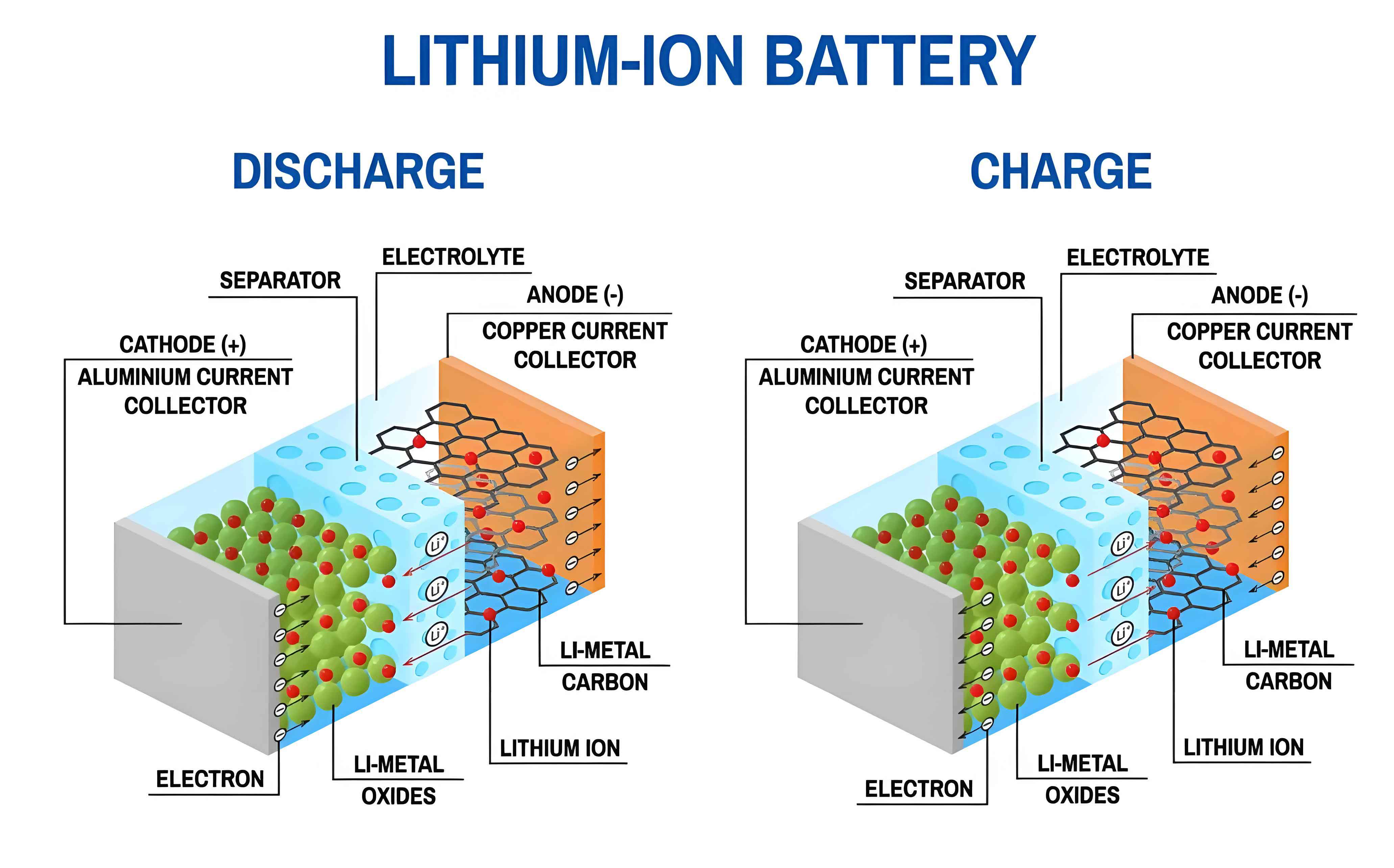
The reliable operation of modern energy storage systems and electric vehicles is fundamentally dependent on the health and performance of their core component: the lithium-ion battery. As these batteries undergo charge and discharge cycles, they experience inevitable aging, leading to capacity fade and increased internal resistance. Accurately estimating the State of Health (SOH) is therefore a critical technological challenge. Precise SOH assessment is paramount for ensuring system safety, optimizing performance, predicting remaining useful life, and enabling efficient maintenance strategies for lithium-ion battery packs and modules.
Existing methods for SOH estimation can be broadly categorized into experimental feature analysis, model-based approaches, and data-driven techniques. Feature-based methods, such as Incremental Capacity Analysis (ICA) or Differential Voltage Analysis (DVA), often require extensive data processing and smoothing, which can introduce artifacts and affect accuracy. Model-based methods, including electrochemical or equivalent circuit models, can be computationally intensive and require precise parameter identification. While data-driven machine learning methods offer high accuracy, they typically demand large datasets and complex iterative computations for training and inference.
To circumvent some of these complexities, we propose a novel, rapid assessment method for the SOH of lithium-ion battery modules based on the Lorenz Plot (LP). The core idea is to leverage the inherent inconsistency in cell voltages within a module as it ages. We extract a specific health indicator—the Maximum Lorenz Radius (MLR)—from the discharge voltage curves within a defined State of Charge (SOC) window. This study demonstrates that the MLR exhibits a strong, linear correlation with the module’s SOH, offering a robust and computationally efficient estimation technique without the need for data smoothing or complex iterative algorithms.
Fundamental Definitions and the Lorenz Plot Methodology
Before delving into the methodology, it is essential to define the key state parameters for a lithium-ion battery. The State of Health (SOH) quantifies the degradation level, typically defined from a capacity perspective as the ratio of the current maximum available capacity to the nominal capacity of a new battery. The State of Charge (SOC) represents the present available charge relative to the current maximum capacity. These are expressed mathematically as:
$$ S_{SOH} = \frac{Q_{pre\text{-}max}}{Q_{rated}} \tag{1} $$
$$ S_{SOC} = \frac{Q_{pre}}{Q_{pre\text{-}max}} \tag{2} $$
where \( Q_{rated} \) is the rated capacity of a new battery, \( Q_{pre\text{-}max} \) is the maximum available capacity of the aged battery, and \( Q_{pre} \) is the present charge capacity.
The proposed method centers on the Lorenz Plot (LP), also known as a Poincaré plot, a tool widely used to analyze the nonlinear dynamics and dispersion of multi-dimensional data in fields like geophysics and biomedicine. Its primary advantage is that it reveals data structure without requiring filtering or smoothing, thus preserving the original signal characteristics. We adapt the LP to analyze the voltage distribution among individual cells within a lithium-ion battery module during discharge.
Consider a battery module consisting of \( m \) cells connected in series. During a constant-current discharge, the Battery Management System (BMS) records the voltage of each cell. A specific SOC interval \( \Delta S_{SOC} \) is selected for analysis. Within this interval, we have a voltage dataset \( V_{SOC} = \{V_1, V_2, …, V_k\} \) for each cell, where \( k \) is the number of voltage samples in that SOC window.
For the \( j \)-th cell in the module, we calculate two fundamental statistical moments from its \( k \) voltage values within the chosen SOC interval: the mean voltage \( x_j \) and the standard deviation \( y_j \).
$$ x_j = \frac{1}{k} \sum_{i=1}^{k} V_{i,j} \tag{3} $$
$$ y_j = \sqrt{ \frac{1}{k-1} \sum_{i=1}^{k} (V_{i,j} – x_j)^2 } \tag{4} $$
Here, \( V_{i,j} \) is the \( i \)-th voltage sample of the \( j \)-th cell. The mean \( x_j \) represents the central tendency of the cell’s voltage in that interval, while the standard deviation \( y_j \) represents its volatility or fluctuation.
Next, we determine a geometric center point \( (x_0, y_0) \) for the entire module within this SOC window. This point is defined by the maximum mean voltage and the maximum standard deviation observed across all \( m \) cells:
$$ x_0 = \max( \sum_{j=1}^{m} x_j ) \tag{5} $$
$$ y_0 = \max( \sum_{j=1}^{m} y_j ) \tag{6} $$
For each cell \( j \), we then compute its Lorenz Radius \( L_j \), which is the Euclidean distance from its coordinate \( (x_j, y_j) \) to the module’s geometric center \( (x_0, y_0) \):
$$ L_j = \sqrt{ (x_j – x_0)^2 + (y_j – y_0)^2 } \tag{7} $$
The Lorenz Radius quantifies how far a particular cell’s voltage behavior deviates from the “extremes” of the module’s collective behavior. Finally, the health indicator for the module is defined as the Maximum Lorenz Radius (MLR) among all its cells:
$$ M_{MLR} = \max( \sum_{j=1}^{m} L_j ) \tag{8} $$
The MLR effectively captures the overall dispersion or inconsistency of cell voltages within the module for a given SOC interval. Intuitively, as a lithium-ion battery module ages, inconsistencies between cells tend to increase due to diverging degradation paths. This growing inconsistency is reflected in a larger spread of the \( (x_j, y_j) \) coordinates, leading to an increase in the MLR value. Therefore, we hypothesize that the MLR can serve as a robust health factor inversely correlated with the module’s SOH.
Experimental Investigation on Battery Module Aging
To validate the proposed method, an experimental study was conducted on a commercial LiFePO4 (a common type of lithium-ion battery) module. The module had a configuration of 15 cells in parallel and 4 such blocks in series (15P4S), with a nominal voltage of 12.8 V and a rated capacity of 40 Ah.
The testing protocol involved a cyclic aging process at a 1C rate, interspersed with periodic reference capacity tests at a 1/3C rate. All tests were performed under a controlled ambient temperature of 25 ± 1 °C. The capacity calibration test followed a standard Constant Current-Constant Voltage (CC-CV) charge and a CC discharge profile. The aging cycles mirrored this pattern but at the higher 1C rate. A capacity calibration test was performed after every 100 aging cycles to track the precise degradation of the module’s SOH, calculated using Equation (1). The cycling continued until the module’s SOH fell below 60%.
The table below summarizes the key data extracted from the capacity calibration tests, showing the decline in SOH with increasing cycle number.
| Cycle Number | Discharge Capacity (Ah) | Calculated SOH (%) |
|---|---|---|
| 0 | 33.21 | 83.03 |
| 100 | 32.15 | 80.38 |
| 200 | 31.40 | 78.50 |
| 300 | 30.72 | 76.80 |
| 400 | 29.89 | 74.73 |
| 500 | 29.12 | 72.80 |
| 600 | 28.30 | 70.75 |
| 700 | 27.45 | 68.63 |
| 800 | 26.65 | 66.63 |
| 900 | 25.84 | 64.60 |
| 1000 | 25.08 | 62.70 |
The overall capacity fade followed a quadratic relationship with cycle count, with a high goodness-of-fit (R² > 0.99), confirming a predictable aging trajectory. The discharge voltage curves from both the 1/3C calibration tests and the 1C aging tests clearly showed the expected shortening of the voltage plateau and a decrease in the plateau voltage as cycling progressed, indicative of capacity loss and increased internal resistance—hallmarks of lithium-ion battery degradation.
More critically for our method, analysis of the individual cell voltages within the module revealed that inconsistency was most pronounced in the low SOC region (e.g., below 30% SOC). This visual observation formed the basis for applying the Lorenz Plot analysis specifically to low-SOC data windows.
MLR as a Health Factor: Correlation with SOH
We applied the Lorenz Plot algorithm to the discharge voltage data. For every 1% SOC interval across the entire discharge range, the MLR was calculated. The results revealed a distinct pattern: the dependency of MLR on SOC was not uniform. A sharp increase in MLR was consistently observed below approximately 10% SOC, followed by a more gradual increase or a discernible peak in the 10%-30% SOC range. Most importantly, the magnitude of the MLR in these low-to-mid SOC regions showed a clear increasing trend as the module aged (i.e., as SOH decreased).
This finding confirmed our hypothesis that the MLR, representing voltage inconsistency, grows with the degradation of the lithium-ion battery module. We subsequently focused on extracting the MLR value from fixed, larger SOC intervals (e.g., 10% wide intervals) to establish a practical health indicator. Linear regression was used to model the relationship between the module’s SOH and the MLR calculated for various SOC intervals.
The following table presents a comprehensive summary of the MLR-SOH linear models for different SOC intervals, using data from the 1/3C discharge tests. The model is of the form \( S_{SOH} = \alpha – \beta \cdot M_{MLR} \), where \( \alpha \) is the intercept and \( \beta \) is the slope.
| SOC Interval | Linear Model (SSOH = α – β·MMLR) | Goodness-of-Fit (R²) |
|---|---|---|
| 0% – 10% | \( S_{SOH} = 105.6 – 0.3573 \times 10^3 M_{MLR} \) | 0.7053 |
| 10% – 20% | \( S_{SOH} = 91.62 – 0.5123 \times 10^3 M_{MLR} \) | 0.9744 |
| 20% – 30% | \( S_{SOH} = 89.05 – 0.6824 \times 10^3 M_{MLR} \) | 0.9837 |
| 30% – 40% | \( S_{SOH} = 88.18 – 0.9188 \times 10^3 M_{MLR} \) | 0.9701 |
| 40% – 50% | \( S_{SOH} = 86.84 – 1.373 \times 10^3 M_{MLR} \) | 0.9567 |
| 50% – 60% | \( S_{SOH} = 85.52 – 2.019 \times 10^3 M_{MLR} \) | 0.7588 |
The results are striking. For SOC intervals starting from 10% up to 50%, the MLR demonstrates an excellent linear negative correlation with SOH, with R² values exceeding 0.95. The interval 20%-30% yields the highest correlation (R² = 0.9837). The weaker correlations at the extremes (0%-10% and 50%-60%) can be attributed to the highly nonlinear voltage behavior at very low SOC and the minimal voltage dispersion at high SOC, respectively.
This analysis confirms that the MLR extracted from the discharge curve of a lithium-ion battery module, particularly within the 10%-50% SOC range, serves as a highly effective and simple health factor for SOH estimation.
Robustness Analysis: Discharge Rate and SOC Window
A practical SOH estimation method must maintain its accuracy under varying operational conditions, such as different discharge rates (C-rates). To test robustness, we performed the same MLR-SOH modeling using voltage data collected during the 1C aging cycles themselves, not just the 1/3C calibration tests.
The results were equally compelling. For the 1C discharge data, the MLR-SOH linear models for the intervals 10%-20%, 20%-30%, and 30%-40% all achieved R² values greater than 0.97. This demonstrates that the fundamental relationship between cell voltage inconsistency (MLR) and module health (SOH) holds across different discharge currents, making the method applicable to real-world driving or load profiles that involve varied C-rates.
Furthermore, we investigated the flexibility in choosing the SOC analysis window. In real-world BMS applications, data sampling might be limited, making it preferable to use a broader, more forgiving SOC window for calculation. We explored using MLR values calculated from cumulative intervals all starting at 10% SOC but extending to various upper limits (e.g., 10%-30%, 10%-40%, up to 10%-100%).
The findings significantly enhance the method’s practical appeal. For both 1/3C and 1C discharge data, any cumulative SOC interval beginning at 10% SOC yielded an MLR-SOH linear model with a goodness-of-fit (R²) above 0.97. For instance, using the 10%-100% SOC window (the entire discharge curve from 10% SOC onwards) still produced models with R² > 0.996 for 1/3C and R² > 0.972 for 1C data. This indicates that the method is not sensitive to the precise cutoff of the SOC window, as long as it captures the low-SOC region where inconsistencies manifest. This robustness provides substantial flexibility for implementation in battery management systems with different data logging capabilities.
The accuracy of the estimation was quantified using the Root Mean Square Error (RMSE) between the estimated SOH values from the model and the actual measured SOH values. The RMSE is calculated as:
$$ R_{RMSE} = \sqrt{ \frac{1}{N} \sum_{i=1}^{N} (S_{SOH_{e,i}} – S_{SOH_{a,i}})^2 } \tag{9} $$
where \( S_{SOH_{e,i}} \) is the estimated SOH for cycle \( i \), \( S_{SOH_{a,i}} \) is the actual SOH, and \( N \) is the number of data points. The models derived from the robust SOC intervals achieved very low RMSE values (e.g., 0.37% for 1/3C data and 0.24% for 1C data), confirming the high estimation precision of the proposed approach for lithium-ion battery module health assessment.
Conclusion and Implications
In this article, we have proposed and validated a novel, rapid method for assessing the State of Health of lithium-ion battery modules based on the Lorenz Plot. The core innovation lies in using the Maximum Lorenz Radius (MLR)—a metric quantifying the dispersion of individual cell voltages—as a direct health indicator. The key conclusions are as follows:
Firstly, a strong linear negative correlation exists between the MLR calculated from low-to-mid SOC regions (specifically 10%-50% SOC) and the module’s SOH. This provides a simple, model-free formula for SOH estimation: \( S_{SOH} = \alpha – \beta \cdot M_{MLR} \), where parameters \( \alpha \) and \( \beta \) can be determined from initial module characterization.
Secondly, the method demonstrates remarkable robustness. It performs consistently well with discharge data from different C-rates (1/3C and 1C), making it suitable for various operational profiles. Furthermore, it is highly tolerant to the selection of the SOC analysis window. Any cumulative discharge voltage data starting from approximately 10% SOC yields a reliable MLR-SOH model, offering great flexibility for implementation in real-world BMS with varying data resolution and processing constraints.
The proposed LP-based method offers distinct advantages over some existing techniques: it requires no complex data smoothing (avoiding artifacts of ICA/DVA), involves no iterative training or heavy computation (unlike many machine learning approaches), and relies solely on standard voltage measurements already available in any BMS. This makes it an attractive candidate for online, embedded SOH estimation in electric vehicles and stationary energy storage systems utilizing lithium-ion battery technology.
Future work could explore the applicability of this method to other lithium-ion battery chemistries (e.g., NMC, LCO) and different module configurations, as well as its potential for early fault detection by monitoring anomalous changes in the MLR trend. Overall, the Lorenz Plot approach presents a significant step towards simpler, more robust, and practical solutions for battery health management.