
The widespread adoption of lithium-ion battery technology in electric vehicles and energy storage systems is undeniable. However, the persistent safety risk of thermal runaway remains a significant concern, posing serious threats to equipment and personnel. Typically, a thermal runaway event in a lithium-ion battery energy storage system is triggered by abuse conditions like electrical or thermal stress, initiating in a single cell before propagating catastrophically throughout the entire pack or system. Early and accurate detection of a failing cell is paramount, as it provides a critical window for intervention before thermal runaway becomes uncontrollable.
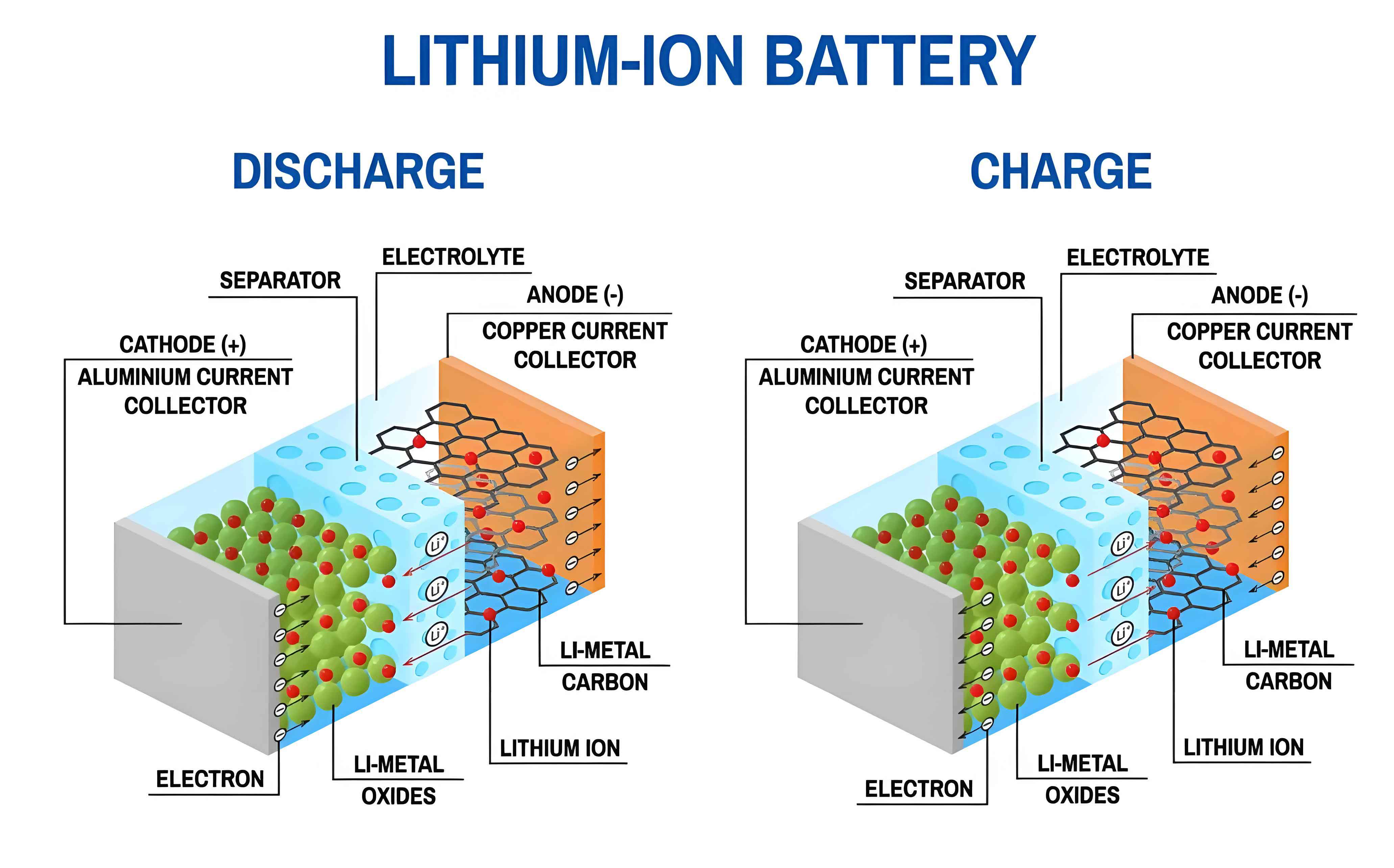
During the thermal runaway process of a lithium-ion battery, several characteristic parameters change, including rising temperature, dropping voltage, and varying internal impedance. Leveraging these multi-parameter changes enables early prediction of thermal runaway events. Existing predictive methods can be broadly categorized into those based on Battery Management System (BMS) data analytics, gas sensor detection, other feature extraction (like pressure or acoustic signals), and online impedance measurement. While promising, methods relying on the analysis of a single cell’s impedance can be susceptible to false alarms due to measurement inaccuracies, especially for high-capacity cells with low impedance values, and the inherent variability of impedance with ambient temperature and aging.
This article proposes a novel thermal runaway prediction method for lithium-ion battery packs that mitigates these issues by analyzing the distribution characteristics of cell impedances within the pack. Instead of relying on a single cell’s absolute impedance value, this method monitors the relative trend and distribution pattern of impedances across all cells. The core principle is that an incipient thermal runaway event in one cell will cause its temperature to rise abnormally. This heat propagates to neighboring cells, creating a thermal gradient within the pack. Since the impedance of a lithium-ion battery decreases with increasing temperature, this thermal gradient manifests as a corresponding impedance gradient. A cell at high risk will show the lowest impedance, with its nearest neighbors showing progressively higher values. By quantifying this distribution trend, an early warning can be issued before the cell enters full thermal runaway.
The proposed framework involves two key technical components: an online system for accurately measuring the impedance of each cell in a lithium-ion battery pack during operation, and an intelligent algorithm that processes these impedance readings to assess thermal runaway risk and issue multi-level warnings.
1. Online Impedance Measurement for Battery Pack Cells
Accurately measuring the internal impedance of individual cells within an operational lithium-ion battery pack is the foundational step for the proposed method. The chosen approach must be non-invasive, precise, and suitable for integration into battery management systems. The method adopted here is based on reactive current injection and Second-Order Generalized Integrator (SOGI) based signal processing, which offers high accuracy and minimal impact on the primary battery function.
The impedance measurement system comprises hardware for injecting a small alternating current (AC) excitation signal and software algorithms for extracting the impedance information from the resulting AC voltage response. The hardware setup is illustrated in the block diagram below and consists of several key parts:
- Microcontroller Unit (MCU): The brain of the system. It generates a programmable sine wave reference signal via a Digital-to-Analog Converter (DAC), controls the switching network via General-Purpose Input/Output (GPIO) pins, samples the AC voltage and current signals via Analog-to-Digital Converters (ADC), and runs the impedance calculation algorithm.
- Reactive Current Injection Circuit: This is a half-bridge circuit connected to the battery pack terminals via an inductor. By controlling the switches, a sinusoidal current (iL) is injected into the entire battery pack. A capacitor on the DC side of the half-bridge acts as an energy buffer, facilitating a predominantly reactive power exchange between the capacitor and the lithium-ion battery pack, thereby minimizing energy loss from the battery for measurement purposes. A control loop maintains the capacitor voltage.
- Signal Conditioning Chain: The small AC voltage signal (uB) appearing at the battery pack terminals (shared with the BMS) in response to the injected current is processed. It first passes through a high-pass filter to remove the large DC offset of the battery voltage. The filtered AC signal is then amplified by a programmable gain amplifier to a suitable level for ADC sampling.
- Switching Network: To measure individual cell impedances cost-effectively, a single signal conditioning chain is multiplexed across all cells using a relay-based switching network controlled by the MCU. The injected current flows through the entire series string, but the AC voltage drop across each individual lithium-ion battery cell is measured sequentially.
The software algorithm, implemented on the MCU, uses the SOGI technique to extract the fundamental component of the sampled voltage and current signals. The SOGI generates two orthogonal signals for any input: one in-phase and one quadrature (90° phase-shifted).
Let the injected inductor current and the resulting battery terminal voltage be represented as:
$$ i_L = I_L \sin(\omega t) $$
$$ u_B = U_B \sin(\omega t + \varphi) $$
where $I_L$ and $U_B$ are amplitudes, $\omega$ is the angular frequency, and $\varphi$ is the phase shift caused by the battery impedance.
After processing through the SOGI, we obtain the in-phase and quadrature components for both signals:
$$ i_{LF} = I_L \sin(\omega t), \quad qi_{LF} = I_L \cos(\omega t) $$
$$ u_{LF} = U_B \sin(\omega t + \varphi), \quad qu_{LF} = U_B \cos(\omega t + \varphi) $$
Instantaneous products are calculated:
$$ P_{ui} = i_{LF} \cdot u_{LF} = \frac{U_B I_L}{2}[\cos(\varphi) – \cos(2\omega t + \varphi)] $$
$$ P_{qui} = i_{LF} \cdot qu_{LF} = \frac{U_B I_L}{2}[\sin(\varphi) + \sin(2\omega t + \varphi)] $$
By averaging $P_{ui}$ and $P_{qui}$ over an integer number of cycles to eliminate the $2\omega t$ components, we get $\overline{P_{ui}}$ and $\overline{P_{qui}}$. The real ($Z_R$) and imaginary ($Z_I$) parts of the battery pack’s total impedance at frequency $\omega$ can then be derived:
$$ Z_R = \frac{2\overline{P_{ui}}}{I_L^2} = \frac{U_B}{I_L} \cos(\varphi) $$
$$ Z_I = \frac{2\overline{P_{qui}}}{I_L^2} = \frac{U_B}{I_L} \sin(\varphi) $$
Since the same current flows through all series-connected cells, the impedance of an individual lithium-ion battery cell (j) is proportional to the AC voltage measured across it ($u_{B_j}$):
$$ Z_{R_j} = \frac{U_{B_j}}{I_L} \cos(\varphi_j), \quad Z_{I_j} = \frac{U_{B_j}}{I_L} \sin(\varphi_j) $$
The magnitude of the cell impedance is $|Z_j| = \sqrt{Z_{R_j}^2 + Z_{I_j}^2}$. For the thermal runaway analysis proposed, the impedance magnitude at a specific low frequency (e.g., 20Hz) is primarily used, as it shows a strong, monotonic correlation with cell temperature.
2. Thermal Runaway Warning Method Based on Impedance Distribution
Research has established that the impedance of a lithium-ion battery cell decreases with increasing temperature prior to thermal runaway. When a cell within a pack begins to overheat, its temperature rises, and heat conducts through busbars and the module structure to adjacent cells. This creates a temperature gradient: the problematic cell is hottest, with temperatures decreasing in neighboring cells based on distance and thermal coupling.
Consequently, a corresponding impedance gradient forms within the pack. The hottest cell exhibits the lowest impedance, its immediate neighbors show slightly higher impedance, and cells farther away show impedances closer to the pack’s normal average. This distribution pattern is a key indicator of a localized thermal anomaly. The proposed method quantifies this pattern using two characteristic parameters derived from the real-time impedance measurements of all cells in the lithium-ion battery pack.
Characteristic Parameter K1 (Deviation of Minimum Impedance Cluster):
This parameter quantifies how much the cluster of cells around the minimum impedance deviates from the baseline. It is defined as:
$$ K_1 = (Z_{min2} – Z_{initial})^2 + (Z_{min} – Z_{initial})^2 + (Z_{min1} – Z_{initial})^2 $$
where:
- $Z_{min}$: The minimum impedance magnitude among all cells in the pack.
- $Z_{min1}$, $Z_{min2}$: The impedance magnitudes of the two cells adjacent to the cell with $Z_{min}$. If the minimum impedance cell is at the end of the pack, the first adjacent cell’s impedance is used for both $Z_{min1}$ and $Z_{min2}$.
- $Z_{initial}$: A reference baseline impedance, typically the average impedance of all cells measured at room temperature (e.g., 25°C) during initial commissioning or provided by the manufacturer.
A larger $K_1$ value indicates a greater deviation of the “hot spot” cluster from the norm, suggesting a higher thermal risk.
Characteristic Parameter K2 (Average Impedance Shift):
This parameter captures the overall shift in the pack’s average impedance, which is sensitive to ambient temperature changes affecting all cells uniformly. It is defined as:
$$ K_2 = \frac{Z_{initial} – Z_{real}}{Z_{initial}} \times 100\% $$
where:
- $Z_{real}$: The real-time average impedance magnitude of all cells in the pack.
Since impedance decreases with temperature, a positive $K_2$ indicates the pack’s average temperature has risen. A larger $K_2$ suggests a warmer environment or uniform pack heating.
Individually, $K_1$ and $K_2$ can be misleading. A high $K_1$ could result from cell-to-cell variation or measurement noise, not necessarily a hotspot. A high $K_2$ simply indicates a warm pack. However, in a true pre-thermal-runaway scenario, both conditions are present: a specific cell cluster is much hotter than the rest ($K_1$ is high), and the overall pack may also be warmer ($K_2$ is positive). To synthesize these two indicators intelligently, a fuzzy logic controller is employed.
Fuzzy Logic Controller for Multi-Level Warning:
The fuzzy controller takes $K_1$ and $K_2$ as inputs and produces a single output $U$ (risk level) ranging from 0 to 1. The controller consists of fuzzification, a rule base, fuzzy inference, and defuzzification.
The fuzzy sets for both inputs and the output are defined as {NB (Negative Big), NS (Negative Small), ZO (Zero), PS (Positive Small), PB (Positive Big)}. The membership functions are designed based on experimental data. An example rule base is shown in the table below:
| Rule Base (Output U) | Input K2 | |||||
|---|---|---|---|---|---|---|
| NB | NS | ZO | PS | PB | ||
| Input K1 | NB | NB | NB | NS | NS | ZO |
| NS | NB | NS | NS | ZO | PS | |
| ZO | NS | NS | ZO | PS | PS | |
| PS | NS | ZO | PS | PS | PB | |
| PB | ZO | PS | PS | PB | PB | |
The output $U$ from the fuzzy controller is a crisp number representing the assessed thermal runaway risk. A multi-level warning strategy is then implemented based on predefined thresholds:
| Fuzzy Output (U) | Warning Level | Interpretation & Recommended Action |
|---|---|---|
| 0 ≤ U < U1 | No Warning | System operating normally. |
| U1 ≤ U < U2 | Warning Level 1 | Early anomaly detected. Issue alert for inspection. Monitor closely. |
| U2 ≤ U < U3 | Warning Level 2 | Significant thermal anomaly. Issue high-priority alert and activate targeted cooling (if available). |
| U3 ≤ U ≤ 1.0 | Warning Level 3 | Imminent thermal runaway risk. Execute emergency protocol: isolate the pack/segment, trigger fire suppression system, and initiate safe shutdown. |
The thresholds $U1$, $U2$, and $U3$ are calibrated based on the specific lithium-ion battery chemistry, pack design, and safety requirements. The overall workflow of the proposed thermal runaway early warning method is a continuous loop that runs whenever the battery pack is in use.
3. Experimental Validation
To validate the proposed method, an experimental platform was constructed. A battery pack was assembled using ten 30Ah LiFePO4 (a common type of lithium-ion battery) cells in series. To simulate a cell undergoing abnormal self-heating (e.g., due to an internal short), cell number 6 was sandwiched between two programmable heating plates. The online impedance measurement system was connected to the pack to measure the impedance of each cell at a frequency of 20Hz in real-time. The heating temperature was increased in steps from room temperature (25°C) up to 110°C. At each stable temperature plateau, the impedances of all ten cells were recorded.
The results clearly demonstrated the expected impedance distribution phenomenon. As the temperature of the heated cell (Cell 6) increased, its impedance consistently decreased. More importantly, the heat conducted to neighboring cells (Cells 5 and 7), causing their impedances to also decrease, but to a lesser extent than Cell 6. Cells farther away were less affected. This created a distinct “V” or “U” shaped impedance profile across the pack, with the minimum at the heated cell.
The characteristic parameters $K_1$ and $K_2$ were calculated for each temperature step using an initial baseline average impedance $Z_{initial}$ obtained at 25°C. As predicted, both $K_1$ and $K_2$ increased monotonically with the heating plate temperature, confirming their sensitivity to the thermal gradient and overall pack warming.
These calculated ($K_1$, $K_2$) pairs were fed into the designed fuzzy controller. For this experimental setup, the warning thresholds were empirically set as: $U1 = 0.25$, $U2 = 0.37$, $U3 = 0.76$. The correlation between the fuzzy controller output $U$, the simulated cell temperature, and the triggered warning level is summarized below:
| Heated Cell Temperature | Approx. Fuzzy Output (U) | Triggered Warning Level |
|---|---|---|
| ≤ 50°C | 0 – 0.25 | No Warning |
| 50°C – 70°C | 0.25 – 0.37 | Warning Level 1 |
| 70°C – 100°C | 0.37 – 0.76 | Warning Level 2 | > 100°C | 0.76 – 1.0 | Warning Level 3 |
The experiment successfully demonstrated that the proposed method, based on the impedance distribution characteristics of the lithium-ion battery pack, could provide staged warnings corresponding to the severity of the simulated thermal anomaly. A Warning Level 1 was triggered well before the heated cell reached temperatures considered critically high, proving the method’s early warning capability.
4. Conclusion
This article has presented a robust method for the early warning of thermal runaway in lithium-ion battery packs. The method moves beyond analyzing individual cell parameters in isolation and instead leverages the collective impedance distribution pattern across the pack. By implementing an accurate online impedance measurement system for each cell and defining two characteristic parameters ($K_1$ for localized deviation and $K_2$ for global shift), the approach captures the signature of a developing “hot spot.”
The use of a fuzzy logic controller to intelligently fuse these two parameters is a key strength. It allows the system to distinguish between a genuine localized thermal anomaly (high $K_1$, moderate/high $K_2$) and other benign scenarios like uniform ambient temperature change (low $K_1$, high $K_2$) or measurement noise (sporadic high $K_1$, low $K_2$). This significantly reduces the potential for false alarms compared to methods relying on single-cell impedance or absolute temperature thresholds.
The experimental validation on a 10-cell LiFePO4 pack confirmed the theory. The impedance distribution was clearly observed around a simulated overheating cell, and the derived fuzzy risk output $U$ correlated effectively with the severity of the heating, enabling a practical three-level warning system. This multi-level approach provides valuable graduated responses, from simple alerts to full emergency actions, allowing for more nuanced and effective safety management of lithium-ion battery energy storage systems. The proposed framework offers a promising pathway towards enhancing the safety and reliability of the ubiquitous lithium-ion battery technology.