
The relentless depletion of traditional fossil fuels and escalating environmental concerns have positioned energy storage devices as pivotal components for achieving a sustainable global energy supply. Among these, the lithium-ion battery reigns supreme due to its high energy and power density, long cycle life, lack of memory effect, and environmental friendliness, finding extensive applications in electric vehicles, portable electronics, and grid storage. However, as the energy density of lithium-ion batteries continues to climb and their application scale expands dramatically, associated safety incidents emerge frequently, making the development of safer battery systems a paramount research focus.
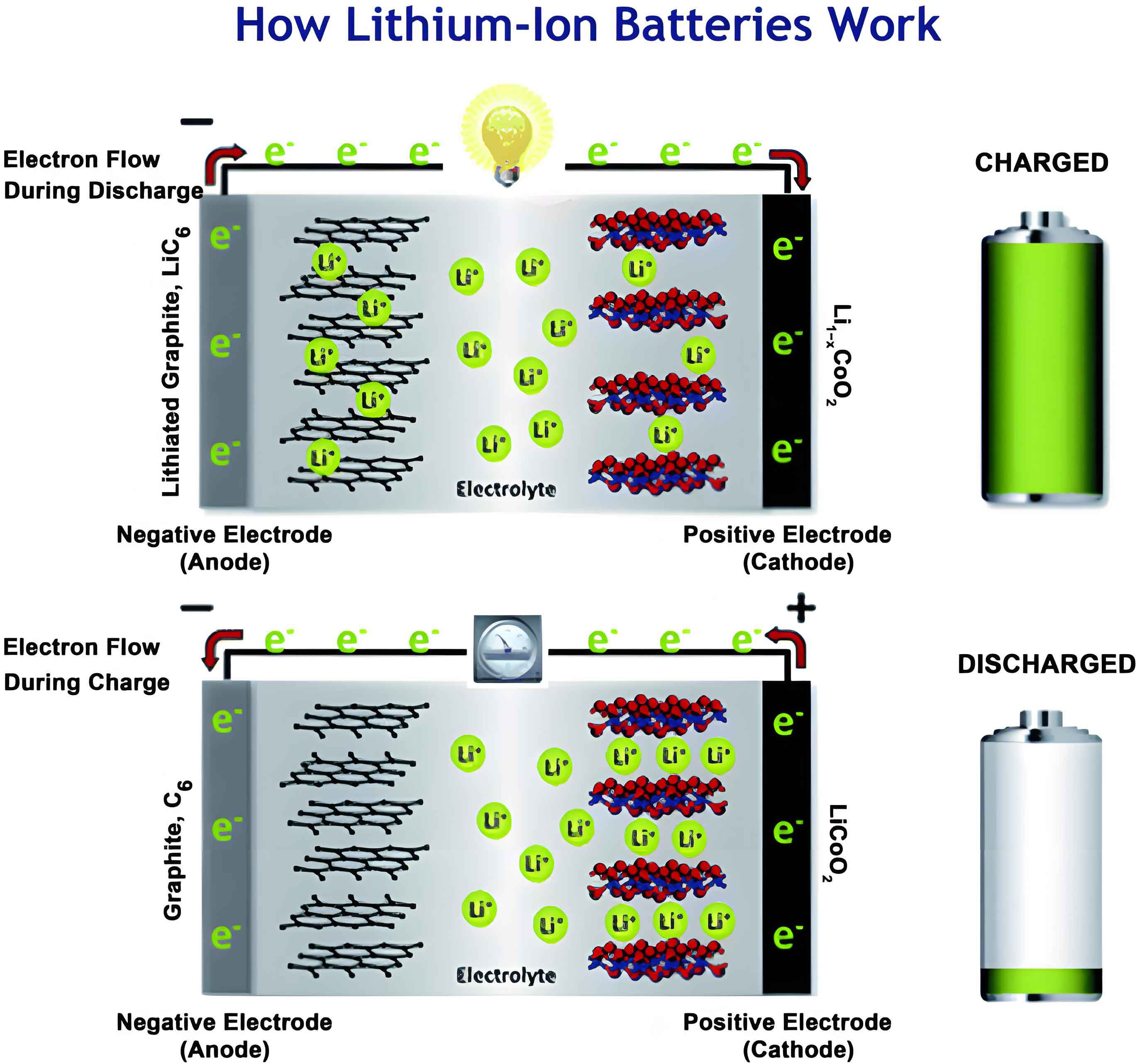
Within a lithium-ion battery, the separator is a critical component, acting as a physical barrier between the cathode and anode to prevent electrical short circuits while facilitating the transport of lithium ions. Its physicochemical properties profoundly influence the overall electrochemical performance and safety of the cell. Commercially, separators are predominantly manufactured from polyolefins like polyethylene (PE) and polypropylene (PP). While these offer decent mechanical strength and electrochemical stability, they suffer from intrinsic limitations: poor thermal stability leading to severe shrinkage at elevated temperatures, inadequate wettability with liquid electrolytes due to their hydrophobic nature, and relatively low porosity with non-uniform pore distribution. These shortcomings can trigger lithium dendrite growth, internal short circuits, and ultimately, thermal runaway, posing significant safety hazards for the lithium-ion battery.
Consequently, research is intensely focused on developing next-generation separator materials that offer superior safety without compromising performance. Polybenzimidazole (PBI), a class of heterocyclic, glassy polymers containing benzimidazole groups, has emerged as a highly promising candidate. Synthesized first in the 1960s, PBI exhibits exceptional thermal stability (glass transition temperature, Tg, exceeding 400°C), outstanding chemical resistance, remarkable mechanical strength, and inherent flame retardancy. More importantly for lithium-ion battery applications, the polar nitrogen atoms in its imidazole rings impart excellent affinity and wettability towards polar liquid electrolytes. This combination of properties positions PBI-based separators as a potential cornerstone for building high-safety, high-performance lithium-ion batteries.
Fundamental Requirements for Lithium-Ion Battery Separators
To function effectively and safely in a lithium-ion battery, a separator must satisfy a stringent set of requirements. The following parameters are essential for evaluating and designing advanced separators:
1. Chemical and Electrochemical Stability: The separator material must be inert to the electrolyte components (salts, solvents) and electrode materials across the entire operating voltage window. Any degradation or reaction can lead to gas generation, resistance increase, and capacity fade, compromising the lithium-ion battery’s lifespan and safety.
2. Wettability and Electrolyte Uptake: Rapid and complete wetting by the electrolyte is crucial. Wettability, often quantified by the contact angle, determines how effectively the separator absorbs and retains the liquid electrolyte, forming the medium for ion transport. Poor wettability leads to high interfacial resistance and inhomogeneous current distribution. The electrolyte uptake (EU) can be calculated as:
$$ EU = \frac{W_{wet} – W_{dry}}{W_{dry}} \times 100\% $$
where $W_{wet}$ and $W_{dry}$ are the masses of the separator saturated with electrolyte and in the dry state, respectively.
3. Porosity and Pore Structure: Porosity ($\Pi$), the volume fraction of void space, directly impacts electrolyte retention and ionic conductivity. An optimal balance is needed: too low porosity increases internal resistance; too high porosity may reduce mechanical strength. Porosity is typically determined by:
$$ \Pi = \frac{(W_{wet} – W_{dry}) / \rho_{electrolyte}}{V_{dry}} \times 100\% $$
where $\rho_{electrolyte}$ is the electrolyte density and $V_{dry}$ is the geometric volume of the dry separator. Equally important are pore size (ideally sub-micron to block electrode particles) and uniformity, which influence lithium-ion flux homogeneity and dendrite suppression.
4. Ionic Conductivity: This is a key performance metric, determining the power capability and rate performance of the lithium-ion battery. It depends on porosity, tortuosity ($\tau$, the曲折因子 of the pore paths), and electrolyte uptake. The effective ionic conductivity ($\sigma_{eff}$) of a separator soaked with electrolyte can be related to the bulk electrolyte conductivity ($\sigma_0$) by the macro-homogeneous model:
$$ \sigma_{eff} = \frac{\Pi}{\tau^2} \cdot \sigma_0 $$
A high $\sigma_{eff}$ (ideally > 0.1 mS cm-1) is desirable for high-rate applications.
5. Mechanical Strength and Dimensional Stability: The separator must possess sufficient tensile strength and puncture resistance to withstand winding/stacking forces during cell assembly and physical stresses (like dendrite growth) during cycling. More critically, it must exhibit minimal thermal shrinkage at high temperatures to prevent electrode contact. For safety, a separator should typically show less than 5% shrinkage after 1 hour at 90°C.
6. Thermal Stability and Shutdown Capability: This is paramount for safety. The separator should maintain its dimensional integrity at as high a temperature as possible. Some advanced designs also incorporate a “shutdown” function, where a component (e.g., PE) melts at a specific temperature (e.g., ~130°C) to block pores and halt ionic current, thereby preventing thermal runaway in the lithium-ion battery.
PBI intrinsically meets or exceeds many of these requirements, particularly in thermal/chemical stability and wettability, making it a superior base material compared to polyolefins.
Manufacturing Techniques for PBI-Based Separators
The fabrication method critically determines the microstructure, and thus the properties, of the final PBI separator. Several techniques have been successfully employed, each with distinct mechanisms and outcomes.
| Technique | Basic Principle | Key Advantages | Main Limitations | Typical PBI Membrane Morphology |
|---|---|---|---|---|
| Non-Solvent Induced Phase Separation (NIPS) | A polymer solution is cast and immersed in a non-solvent bath. Solvent/non-solvent exchange causes polymer precipitation, forming a porous matrix. | Simple equipment, wide choice of non-solvents, tunable pore size/morphology, scalable. | Often yields asymmetric structures (finger-like pores), high solvent consumption. | Often asymmetric with a dense skin layer and finger-like macrovoids or sponge-like pores, depending on conditions. |
| Vapor-Induced Phase Separation (VIPS) | The cast polymer solution is exposed to a non-solvent vapor atmosphere. Slower solvent/vapor exchange leads to controlled phase separation. | Produces more uniform, symmetric, and interconnected sponge-like pore structures; lower non-solvent consumption. | Requires precise control of atmosphere (humidity, temperature); slower process. | Highly symmetric, interconnected sponge-like or cellular pore structure throughout the cross-section. |
| Electrospinning | A polymer solution is ejected through a needle under high voltage, forming continuous nanofibers that are collected as a non-woven mat. | Very high porosity and surface area; excellent pore interconnectivity; tunable fiber diameter; good mechanical flexibility. | Lower mechanical strength compared to dense films; potential low production throughput; requires specific polymer solution properties. | Three-dimensional network of randomly or alignedly deposited nanofibers, creating interconnected pores of various sizes. |
| Template Leaching | A porogen (template) is mixed into the polymer solution. After film formation, the porogen is dissolved/leached out, leaving behind pores. | Simple and low-cost; pore size and shape dictated by the template particle; environmentally friendly if water-soluble porogens are used. | Pore connectivity can be poor; pore distribution may be uneven; difficult to achieve very small, uniform pores. | Pore morphology replicates the shape of the porogen (e.g., spherical pores from silica particles). Connectivity depends on porogen loading and percolation. |
Non-Solvent Induced Phase Separation (NIPS) is the most widely used method for fabricating PBI membranes. The final morphology (finger-like vs. sponge-like pores) is governed by the kinetics of the liquid-liquid demixing process, which depends on the compatibility between the solvent (e.g., DMAc, NMP) and the non-solvent (e.g., water, alcohols). Researchers have fine-tuned PBI membrane structures by adjusting the non-solvent composition. For instance, using isopropanol (IPA) as a non-solvent often results in a uniform, interconnected three-dimensional network due to favorable miscibility with the solvent, leading to high ionic conductivity (~1.8 mS cm-1). Adjusting the water-to-ethanol ratio in the coagulation bath systematically changes the morphology from finger-like to sponge-like pores, optimizing properties for the lithium-ion battery. Adding salts like NaCl to a water bath can alter the ionic strength and solvent/non-solvent interaction, effectively slowing the phase separation rate and promoting the formation of sponge-like structures beneficial for uniform lithium-ion flux.
Vapor-Induced Phase Separation (VIPS) offers superior control for creating symmetric structures. The slower mass transfer in the vapor phase allows for a more uniform concentration profile across the film thickness during precipitation. This typically results in PBI membranes with a homogeneous, interconnected honeycomb-like or sponge-like pore structure throughout. Such membranes exhibit high porosity (>80%), excellent electrolyte uptake (>300%), and consequently, enhanced ionic transport, contributing to improved rate capability in the lithium-ion battery.
Electrospinning produces PBI separators with inherently high porosity (often >80%) and fully interconnected pores. The fibrous structure provides a large surface area and excellent electrolyte wettability. The mechanical strength, while lower than dense films, is often sufficient for battery application, and the flexibility is exceptional. Properties can be tuned by adjusting solution viscosity, applied voltage, and collector distance. Electrospun PBI or OPBI (poly(ether benzimidazole)) nanofiber membranes demonstrate exceptional thermal stability (no shrinkage up to 300°C) and flame retardancy, directly addressing safety concerns in lithium-ion batteries.
Template Leaching provides a straightforward route. For example, using water-soluble imidazole as a porogen allows for eco-friendly processing. The pore size and porosity are controlled by the size and amount of the imidazole particles. After film casting and drying, washing with water removes the imidazole, leaving a porous PBI membrane. While effective, achieving consistently high pore connectivity can be challenging compared to phase separation methods.
Strategies for Enhancing PBI Separator Performance
While neat PBI separators already show advantages over polyolefins, their performance can be further amplified through intelligent material and structural design. Research focuses on three main strategies: nanocomposite formation, polymer blending, and multilayer structuring.
1. Nanocomposite PBI Separators
Incorporating functional nanofillers into the PBI matrix can introduce additional benefits such as enhanced mechanical strength, modified pore structure, improved ionic conductivity, and better lithium-ion flux regulation.
- Two-Dimensional Nanosheets (e.g., MXene): When MXene nanosheets are uniformly dispersed in an OPBI solution before phase separation, they can guide the formation of oriented, honeycomb-like pore channels. The MXene sheets act as barriers, directing the diffusion force parallel to their surface during solvent exchange. This unique structure promotes rapid and uniform lithium-ion transport, effectively suppressing dendrite growth. Li symmetric cells with such composites exhibit exceptionally stable cycling for over 800 hours.
- Porous Frameworks (MOFs/COFs): Incorporating metal-organic frameworks (MOFs) or covalent organic frameworks (COFs) leverages their high surface area, ordered porosity, and functional groups. For example, UiO-66 MOF particles in an OPBI matrix create a dual-pathway for ion transport: through the membrane pores and along the MOF/polymer interfaces. Sulfonated COFs (SCOFs) contain polar sulfonic acid groups that can further enhance Li+ transport and act as an ion sieve, promoting more uniform deposition on the lithium anode. These composites often show synergistic improvements in ionic conductivity (approaching 2 mS cm-1), cycle life, and rate performance of the lithium-ion battery.
2. Polymer-Blended PBI Separators
Blending PBI with other polymers combines the merits of both materials, often aiming to reduce cost while maintaining or enhancing key properties. The blend compatibility and resulting morphology are crucial.
- Blends with Engineering Plastics: Blending PBI with poly(ether imide) (PEI) via VIPS can yield a composite membrane with a robust 3D network. The ratio of PBI to PEI significantly affects the pore morphology and electrolyte uptake. An optimal ratio results in a sponge-like structure with high uptake and conductivity, leading to stable cycling in LiFePO4/Li cells.
- Surface Modification of Existing Matrices: A practical approach involves modifying commercial or alternative separator substrates with PBI. For instance, dipping a polypropylene nanofiber separator (PPNFS) into a PBI solution creates a thin, functional coating. The PBI coating not only improves electrolyte wettability but also, through electrostatic interactions, strengthens the fiber network, boosting mechanical strength dramatically. DFT calculations suggest PBI aids in lithium salt dissociation, enhancing ionic transport. Full cells (NCM811/graphite) with such modified separators demonstrate excellent capacity retention (94.7% after 200 cycles).
3. Multilayer/Janus Structural Design
This strategy aims to integrate multiple functionalities—especially the crucial “shutdown” feature—into one separator, addressing the core safety challenge of thermal runaway in lithium-ion batteries.
The design principle often involves creating a sandwich-like structure:
$$ \text{Separator} = \text{Thermally-stable layer} | \text{Shutdown layer} | \text{Thermally-stable layer} $$
- PBI/PE/PBI Trilayer Membrane: Here, a thin commercial PE layer is sandwiched between two porous PBI layers fabricated via VIPS. The PBI layers provide exceptional thermal stability (no shrinkage at 200°C), high wettability, and act as a flame-retardant skeleton. The middle PE layer melts at its characteristic temperature (~130-140°C), closing the pores and shutting down ionic conduction to prevent thermal runaway, while the PBI layers prevent direct electrode contact even after PE melting.
- PBI@PI/PEI/PBI@PI Trilayer Nanofiber Membrane: In this electrospun design, a central layer of low-melting-point PEI nanofibers is sandwiched between two strong, heat-resistant layers of PBI@PI composite nanofibers. Under normal operation, the separator has high porosity and conductivity. Under abuse conditions (~235°C), the PEI layer melts and the fibers coalesce, blocking the pores and activating the shutdown function. This design combines high strength, excellent thermal resistance, and an active safety mechanism.
The shutdown function can be modeled as a drastic increase in tortuosity ($\tau \rightarrow \infty$) or a drop in effective porosity ($\Pi_{eff} \rightarrow 0$) at the melting temperature ($T_m$) of the shutdown component:
$$ \sigma_{eff}(T) \approx \frac{\Pi_{eff}(T)}{\tau(T)^2} \cdot \sigma_0; \quad \text{where } \Pi_{eff}(T) \approx 0 \text{ for } T > T_m $$
This effectively halts the electrochemical reactions in the lithium-ion battery.
Current Challenges and Future Perspectives
Despite the remarkable progress, the path to widespread commercialization of PBI-based separators in lithium-ion batteries faces several hurdles that guide future research directions.
1. Thickness and Mechanical Strength Trade-off: High-performance PBI separators reported in academia often have thicknesses greater than 30 μm, whereas commercial polyolefin separators are typically 16-25 μm. Thinner separators increase energy density and reduce ionic resistance. Future work must focus on engineering robust, sub-20 μm PBI membranes with adequate puncture strength, possibly through advanced spinning techniques, optimized composite formulations, or ultra-thin coating technologies.
2. Cost-Effective and Scalable Manufacturing: The raw material cost of high-purity PBI is currently higher than that of polyolefins. Moreover, some fabrication methods like electrospinning or carefully controlled VIPS may have lower throughput compared to the massive extrusion/stretching processes used for PE/PP membranes. Research should target: a) Developing more economical synthesis routes for PBI polymers suitable for separators. b) Optimizing scalable processes like NIPS or VIPS with high solid-content dope solutions to improve production efficiency. c) Exploring roll-to-roll compatible processes for composite or coated separators.
3. Molecular Structure Engineering of PBI: Most studies use standard m-PBI or OPBI. Deliberate molecular design offers a vast, underexplored space. Potential avenues include:
- Side-Chain Functionalization: Grafting ionic groups (e.g., -SO3H, -COOLi) or polyether chains onto the PBI backbone could further enhance lithium-ion transference number, electrolyte affinity, and interfacial stability.
- Crosslinking: Controlled crosslinking could improve mechanical properties and solvent resistance without severely compromising porosity, potentially enabling the use of thinner membranes.
- Novel Monomers: Designing new tetraamine or diacid monomers to tailor chain flexibility, free volume, and interaction with specific electrolyte salts (e.g., LiFSI, LiTFSI).
The impact of such molecular changes on macroscopic separator properties like pore formation kinetics during phase separation, tortuosity, and long-term stability in a lithium-ion battery warrants systematic investigation.
4. Deepening the Understanding of Mechanism: While performance improvements are documented, deeper fundamental studies are needed:
- Ion Transport and Li+ Transference Number: Quantifying the precise role of PBI’s imidazole groups in Li+ solvation/desolvation and transport. How do composite interfaces (PBI/MXene, PBI/MOF) influence the Li+ transference number?
- Interfacial Compatibility and SEI Formation: In-situ and operando studies to understand the electrode/separator interface, especially with lithium metal anodes. Does the PBI surface induce a more favorable solid electrolyte interphase (SEI)?
- Multiphysics Modeling: Developing predictive models that couple ionic transport, mechanical stress (especially during dendrite growth), and thermal behavior in porous PBI structures would be invaluable for separator design.
5. Beyond Conventional Liquid Electrolytes: PBI’s stability and functional groups make it an intriguing candidate for use with advanced electrolytes:
- Gel Polymer Electrolytes (GPEs): PBI membranes could serve as a stable, non-shrinking scaffold for gel electrolytes, combining the safety of a solid structure with the conductivity of liquid electrolytes.
- High-Voltage and Solid-State Batteries: Exploring PBI’s stability with high-voltage cathodes (>4.5 V vs. Li/Li+) and its potential as a matrix or interface layer in hybrid or solid-state lithium-ion battery configurations.
In conclusion, polybenzimidazole-based separators represent a transformative materials platform for enhancing the safety and performance of next-generation lithium-ion batteries. Their exceptional thermal stability, electrolyte wettability, and chemical robustness directly address the critical limitations of incumbent polyolefin separators. Through advanced manufacturing techniques and intelligent material design—including nanocompositing, polymer blending, and multilayer structuring—the properties of PBI separators can be finely tuned to meet the stringent demands of high-energy-density systems. While challenges in cost, thickness scaling, and fundamental understanding remain, the ongoing research momentum is strong. Overcoming these hurdles will pave the way for PBI separators to transition from a promising laboratory innovation to a key enabler of safer, more reliable, and high-performing lithium-ion batteries for our electrified future.