
As a researcher in the field of energy storage and electric vehicle technologies, I have witnessed the rapid evolution of lithium-ion batteries as the cornerstone of modern electrified transportation. The widespread adoption of electric vehicles (EVs) hinges on overcoming critical performance barriers, particularly those exacerbated by low-temperature environments. In this review, I aim to synthesize the latest research progress and real-world application status of low-temperature heating techniques for lithium-ion batteries. The performance degradation of lithium-ion batteries at subzero temperatures—manifested as reduced capacity, increased impedance, slower charging, and safety risks like lithium plating—poses a significant challenge to EV reliability in cold climates. Heating technologies have emerged as a pivotal solution to restore battery functionality and ensure operational safety. This article will delve into the principles, advancements, advantages, and limitations of various heating methods, categorized into external, internal, and hybrid approaches. Through detailed analysis, qualitative comparisons, and discussions on future prospects, I hope to provide a holistic perspective that guides further research and practical implementation in the automotive industry.
The importance of lithium-ion batteries in enabling zero-emission mobility cannot be overstated. However, when temperatures drop, the electrochemical dynamics within a lithium-ion battery are severely hampered. The electrolyte viscosity increases, ion transport slows, and internal resistance rises sharply, leading to a marked decline in available energy and power output. For instance, at -20°C, the discharge capacity of a typical lithium-ion battery can drop by over 50%, while charging becomes fraught with the risk of lithium dendrite formation, which may trigger internal short circuits and thermal runaway. These issues not only curtail the driving range of EVs but also extend charging times and compromise vehicle start-up capabilities. Therefore, developing efficient heating strategies is not merely an enhancement but a necessity for the global deployment of EVs, especially in regions with harsh winters. My focus here is to explore how heating technologies can mitigate these cold-weather drawbacks, ensuring that lithium-ion batteries perform reliably across all climatic conditions.
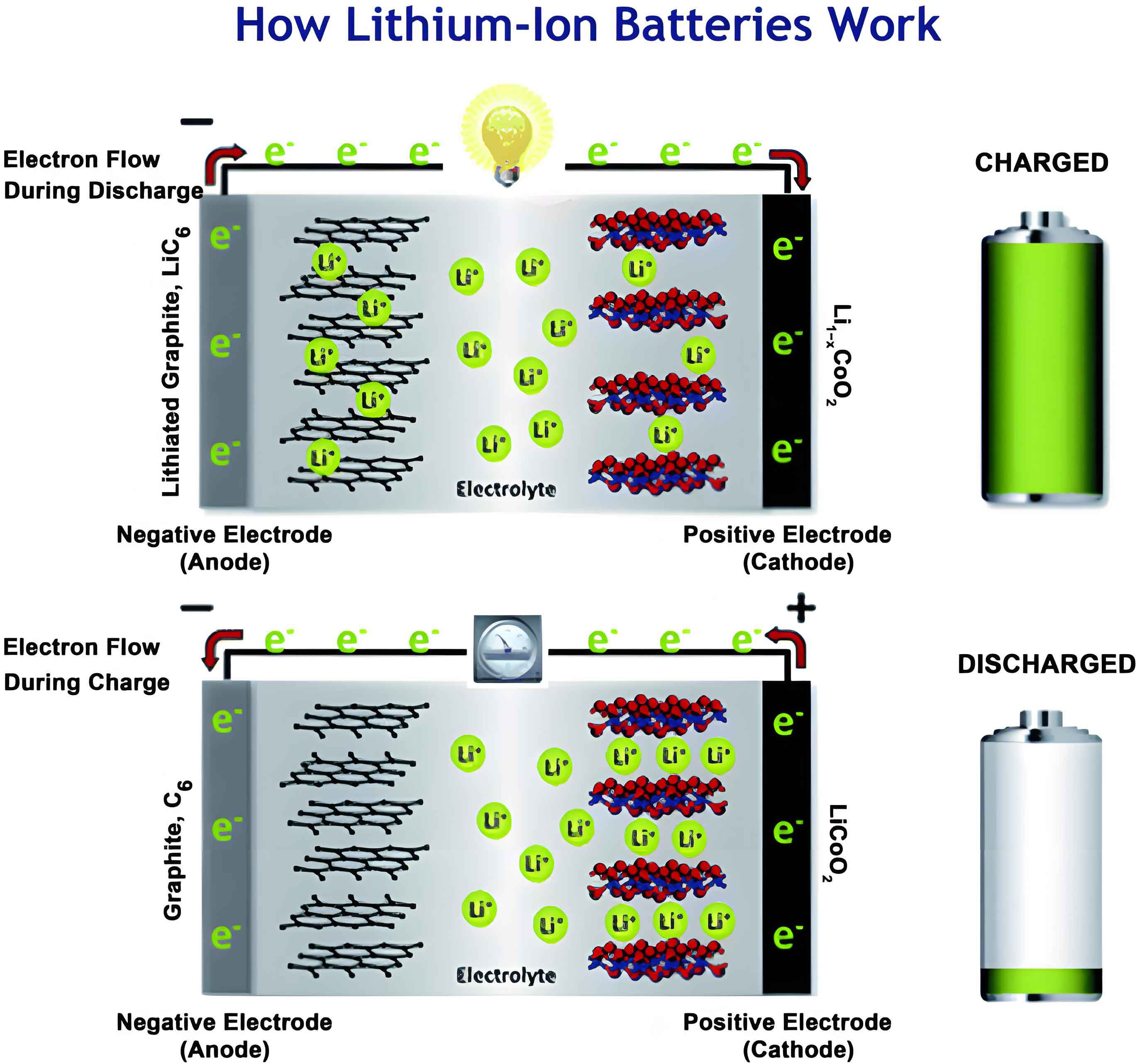
Heating techniques for lithium-ion batteries are broadly classified based on the heat source location: external heating, internal heating, and hybrid heating. External heating involves generating heat outside the battery and transferring it via convection or conduction. Internal heating produces heat within the battery itself through electrical or electromagnetic means. Hybrid heating combines both approaches to leverage their synergistic benefits. Each category encompasses multiple methods, as summarized in Table 1, which outlines their key characteristics. The performance of these technologies is evaluated based on metrics such as heating rate (temperature rise per minute), temperature uniformity (maximum temperature difference within the battery), energy consumption, impact on battery aging, cost, complexity, and safety. Optimal heating should achieve rapid warming with minimal temperature gradients, low energy drain, and negligible degradation to the lithium-ion battery’s lifespan.
| Category | Subcategory | Principle | Typical Heat Source/Mechanism |
|---|---|---|---|
| External Heating | Convection Heating | Heat transfer via fluid flow (air or liquid) | PTC heaters, heat pumps, resistive elements |
| Air Heating | Forced air circulation over battery surfaces | Electric heaters with fans | |
| Liquid Heating | Liquid circulation through channels or immersion | Liquid coolant heated by PTC or heat pumps | |
| Conduction Heating | Direct contact heat transfer | Resistive films, PTC plates, PCMs | |
| PCM Heating | Latent heat storage and release | Phase change materials (e.g., paraffin composites) | |
| Internal Heating | Current Excitation Heating | Joule heating from internal resistance during charge/discharge | DC, AC, or pulsed currents |
| Self-Heating Lithium-Ion Battery (SHLB) | Embedded resistive elements within cell structure | Nickel foil actuators | |
| Electromagnetic Induction Heating | Eddy current and magnetic polarization losses | High-frequency alternating magnetic fields | |
| Hybrid Heating | Combination Heating | Simultaneous internal and external heat generation | Current excitation plus resistive films or liquid systems |
External heating methods rely on thermal energy applied to the battery exterior. Convection heating, including air and liquid-based systems, is among the most mature technologies. Air heating uses electric heaters to warm air, which is then blown across the battery pack by fans. While simple and low-cost, its efficacy is limited by air’s low thermal conductivity and specific heat capacity, resulting in slow heating rates and poor temperature uniformity. For example, early EV models like the Toyota Prius employed air heating, but contemporary demands for faster warming have shifted focus to liquid heating. Liquid heating circulates a heated fluid (e.g., water-glycol mixtures) through channels in cold plates or directly immerses the battery. This approach offers better heat transfer coefficients, with heating rates typically ranging from 0.5 to 2°C/min, and maximum temperature differences below 5°C in optimized systems. The heat source often involves Positive Temperature Coefficient (PTC) heaters or, increasingly, heat pump systems that enhance energy efficiency. Heat pumps, which operate on reverse Carnot cycles, can achieve Coefficients of Performance (COP) greater than 1, meaning they deliver more heat energy than the electrical energy consumed. Advances like CO₂ (R744) refrigerants are improving low-temperature performance, making liquid heating a mainstream choice in modern EVs such as Tesla and BYD models.
Conduction-based external heating places heat-generating elements in direct contact with the battery surface. Resistive heating films or PTC plates are common examples. These methods shorten heat transfer paths, enabling heating rates up to 5°C/min. However, they can create significant temperature gradients if not carefully controlled, as heat conduction through the battery materials is relatively slow. For instance, using a metal heating film at 5 W power can heat a cylindrical lithium-ion battery from -10°C to 25°C in about 126 seconds, but with a maximum internal temperature difference exceeding 8°C, which may accelerate aging. Peltier effect heating, based on thermoelectric modules, offers reversible heating/cooling but suffers from low efficiency and high cost. Phase change material (PCM) heating leverages latent heat storage to maintain battery temperature during cold soaks. PCMs like paraffin-composites can provide passive heating with excellent temperature uniformity (differences under 2°C), but their heating rates are slow (e.g., 0.15°C/min), and they add weight and volume. Recent innovations involve combining PCMs with conductive additives (e.g., expanded graphite) or integrating them with active heaters to boost performance. For example, a conductive PCM coupled with a heating film achieved a heating rate of 11.59°C/min while keeping temperature differences within 5°C, showcasing the potential of hybridized external approaches.
Internal heating techniques generate heat directly within the lithium-ion battery, offering superior heating rates and uniformity by minimizing thermal resistance. Current excitation heating exploits the increased internal resistance of lithium-ion batteries at low temperatures. By applying electrical currents, Joule heat is produced internally. This category includes direct current (DC) heating, alternating current (AC) heating, and interactive pulse heating. DC heating involves discharging the battery, often in pulsed modes to mitigate polarization effects. It can achieve rapid warming—e.g., 18.70°C/min in optimized constant-voltage discharge—but consumes substantial battery energy and risks over-discharge at low state-of-charge (SOC). The heating energy consumption can be modeled as:
$$Q_{heating} = I^2 R_{int} t$$
where \(I\) is the current, \(R_{int}\) is the internal resistance, and \(t\) is time. However, high currents may accelerate capacity fade. AC heating uses sinusoidal or other alternating waveforms to cyclically charge and discharge the battery. The heating effectiveness depends on frequency and amplitude; lower frequencies (e.g., 10-100 Hz) yield higher heat generation due to greater impedance, but may induce lithium plating. High-frequency AC (e.g., 10-150 kHz) reduces plating risks while maintaining respectable heating rates. For instance, a 40 kHz sinusoidal current at 2.72C amplitude heated a battery pack at 6.45°C/min with minimal degradation. Interactive pulse heating alternates current direction between battery modules or capacitors, promoting temperature uniformity. It has demonstrated heating rates up to 11°C/min with negligible aging after hundreds of cycles. Recent advancements focus on车载 implementations by repurposing EV power electronics, such as motor drive circuits, to generate these currents without external power sources, reducing cost and complexity.
Self-heating lithium-ion batteries (SHLBs) represent a radical design innovation, where a nickel foil is embedded inside the cell. When activated via an external switch, current flows through the foil, producing intense internal heat. SHLBs can achieve extraordinary heating rates—up to 60°C/min, warming a cell from -30°C to 0°C in under 30 seconds—with energy consumption around 5.5% of capacity. However, initial designs suffered from large internal temperature gradients (over 30°C), which could harm longevity. Improvements like multiple nickel foils or intermittent heating protocols have reduced gradients to below 5°C. SHLBs also enable fast-charging protocols where the battery is briefly heated to high temperatures (e.g., 65°C) to allow high-rate charging without lithium plating, followed by rapid cooling to limit degradation. This asymmetric temperature modulation has shown promise for ultra-fast charging, achieving 75% SOC in 12 minutes with over 900 cycles. Despite their performance, SHLBs require specialized manufacturing and control systems, raising concerns about scalability and safety in large-scale EV applications.
Electromagnetic induction heating is an emerging internal method where high-frequency alternating magnetic fields induce eddy currents within the battery’s conductive components (e.g., electrodes), generating heat. Preliminary studies report heating rates as high as 71.4°C/min for thin pouch cells, with temperature standard deviations below 6°C. The heat generation can be approximated by:
$$P = \pi f \mu_0 \mu_r H^2 \sigma d^2$$
where \(f\) is frequency, \(\mu_0\) and \(\mu_r\) are permeability constants, \(H\) is magnetic field strength, \(\sigma\) is electrical conductivity, and \(d\) is material thickness. This technique is particularly effective for slim batteries but may cause uneven heating in thicker cells. Its impact on battery aging and safety remains largely unexplored, warranting further investigation before automotive adoption.
Hybrid heating combines internal and external methods to synergize their strengths. For example, integrating current excitation with external resistive films can enhance heating rates while improving temperature uniformity. In one approach, a lithium-ion battery is connected in series with a heating film, and an AC source applies current, causing simultaneous internal Joule heating and external film heating. This dual-source strategy has achieved heating rates of 3.20°C/min with reduced energy consumption compared to standalone methods. Another variant uses pulsed DC discharge through an external film, where the film acts as a load, converting otherwise wasted energy into useful heat. Optimized hybrid protocols have reached heating rates exceeding 30°C/min, though temperature gradients can be high (up to 15°C) without careful control. Models that couple electrochemical, thermal, and aging dynamics are crucial for optimizing these systems. For instance, a multi-objective genetic algorithm can balance heating time, temperature gradient, and capacity fade, yielding Pareto-optimal solutions. Hybrid heating is particularly promising for large-format lithium-ion batteries, where internal heating alone may struggle with uniformity, and external heating is too slow.
To qualitatively compare these technologies, I have summarized their performance across key metrics in Table 2. External heating methods generally offer lower heating rates but higher safety and maturity, with liquid heating being the current industry standard. Internal heating techniques excel in speed and uniformity but require sophisticated control and may pose aging risks. Hybrid approaches aim to bridge these gaps, though they increase system complexity. The choice of heating technology depends on application-specific priorities, such as cost, energy efficiency, and battery pack design.
| Technology | Heating Rate | Temperature Uniformity | Energy Consumption | Cost | Safety & Reliability |
|---|---|---|---|---|---|
| Air Heating | Low (+) | Moderate (++) | High (+) | Low (++) | High (++++) |
| Liquid Heating | Moderate (++) | Good (+++) | Moderate (+++) | Moderate (+++) | High (++++) |
| Resistive Film/PTC | High (+++) | Low (+) | Moderate (++) | Low (+) | Moderate (++) |
| PCM Heating | Low (++) | Excellent (++++) | Very Low (++++) | Moderate (+++) | Good (+++) |
| DC Heating | Very High (++++) | Good (+++) | High (++) | Low (++) | Moderate (++) |
| AC Heating | High (+++) | Good (+++) | Moderate (+++) | Moderate (+++) | Good (+++) |
| Interactive Pulse | High (+++) | Excellent (++++) | Moderate (+++) | Moderate (+++) | Good (+++) |
| SHLB | Extreme (+++++) | Moderate (++) | Low (+++) | High (++++) | Moderate (++) |
| Induction Heating | Extreme (+++++) | Moderate (++) | Moderate (+++) | High (++++) | Uncertain (+) |
| Hybrid Heating | Very High (++++) | Good (+++) | Low (++++) | Moderate (+++) | Moderate (++) |
In real-world EV applications, liquid heating coupled with heat pumps or PTC heaters dominates the market due to its reliability and integration with existing thermal management systems. Tesla, for example, uses liquid circuits with heat exchangers tied to heat pumps, while BYD incorporates direct refrigerant cooling/heating in models like the Dolphin. Air heating is now rare, reserved for early hybrid vehicles or low-cost micro-EVs. Resistive films are found in some compact cars (e.g., Wuling Hongguang Mini) but face challenges with temperature gradients. Internal heating, particularly interactive pulse methods, is gaining traction. Companies like CATL, BYD, and Nio have introduced pulse self-heating technologies that claim heating rates of 7°C/min or more, significantly improving cold-start performance and charging speed. For instance, BYD’s blade battery with pulse heating can reduce charging time by 30% in low temperatures. SHLB and induction heating remain largely experimental, though SHLB prototypes have been tested in niche applications like fuel cell buses for the Beijing Winter Olympics. The adoption of any heating technology in vehicles must consider not only performance but also cost, weight, and control complexity, which are critical for mass production.
Looking ahead, several key areas promise to shape the future of low-temperature heating for lithium-ion batteries. First, optimizing the entire “heating-insulation-charging” cycle is essential. Determining the optimal target temperature for heating—where battery performance is restored without excessive aging—requires advanced multi-physics models that couple thermal, electrochemical, and mechanical behaviors. For example, heating a lithium-ion battery to 10°C might suffice for discharge but not for fast charging, which may need 20°C or higher. Second, as battery technology evolves, heating strategies must adapt. Trends toward higher energy densities, larger cell formats, and solid-state electrolytes will alter thermal properties and aging mechanisms. For instance, solid-state lithium-ion batteries may have different thermal conductivities and plating thresholds, necessitating tailored heating approaches. Third, integration with smart battery systems and digital twins offers exciting opportunities. Embedding sensors within lithium-ion batteries can provide real-time data on internal temperatures, stresses, and lithium concentration, enabling adaptive heating controls that minimize degradation. Digital twin platforms, which create virtual replicas of battery packs, could simulate heating scenarios under various conditions, optimizing strategies via machine learning algorithms. Fourth, sustainability considerations will drive the use of eco-friendly refrigerants in heat pumps and low-energy heating methods. Finally, standardization and safety certification will be crucial as new technologies like SHLB and induction heating move toward commercialization.
In conclusion, the advancement of low-temperature heating technologies is vital for unlocking the full potential of lithium-ion batteries in electric vehicles. From traditional external methods to innovative internal and hybrid approaches, each technique offers distinct trade-offs in heating rate, uniformity, energy use, and cost. While liquid-based systems currently lead in automotive applications, internal pulse heating and self-heating designs are emerging as game-changers for extreme cold climates. Future progress will hinge on interdisciplinary research that integrates materials science, electrochemistry, thermal engineering, and data analytics. As a researcher, I believe that by refining these technologies and addressing their limitations, we can ensure that lithium-ion batteries deliver reliable, safe, and efficient performance year-round, accelerating the global transition to sustainable transportation. The journey toward all-climate lithium-ion batteries is well underway, and continued innovation will be key to overcoming the chilling challenges of tomorrow.
To further illustrate the technical aspects, mathematical modeling plays a central role in heating strategy development. The heat generation in a lithium-ion battery during current excitation can be expressed as a sum of Joule heating and reversible entropic heat:
$$q_{gen} = I^2 R_{ohmic} + I T \frac{\partial U}{\partial T}$$
where \(I\) is current, \(R_{ohmic}\) is ohmic resistance, \(T\) is temperature, and \(\frac{\partial U}{\partial T}\) is the entropic coefficient. For external heating, the heat transfer equation governs temperature evolution:
$$\rho C_p \frac{\partial T}{\partial t} = \nabla \cdot (k \nabla T) + q_{gen} + q_{ext}$$
with \(\rho\) as density, \(C_p\) as specific heat, \(k\) as thermal conductivity, and \(q_{ext}\) as external heat flux. Optimizing these equations with constraints on voltage, temperature, and SOC is essential for designing effective heating protocols. Moreover, aging models that predict capacity loss due to heating cycles must be incorporated. A common empirical aging model for lithium-ion batteries under thermal stress is:
$$Q_{loss} = A e^{-\frac{E_a}{RT}} t^n$$
where \(A\) is a pre-exponential factor, \(E_a\) is activation energy, \(R\) is the gas constant, and \(n\) is a time exponent. By coupling such models, researchers can simulate long-term impacts and identify heating parameters that maximize battery life.
In practice, the implementation of heating technologies requires careful consideration of system-level integration. For example, in an EV, the heating system must interface with the battery management system (BMS), powertrain, and cabin climate control. Energy sources for heating—whether from the grid, the lithium-ion battery itself, or regenerative braking—affect overall vehicle efficiency. Table 3 summarizes typical energy consumption and heating times for various methods based on experimental data, highlighting the trade-offs involved.
| Technology | Heating Rate (°C/min) | Temperature Range (°C) | Max ΔT (°C) | Energy Consumption (% SOC) | Heating Time (min) |
|---|---|---|---|---|---|
| Liquid Heating (PTC) | 0.72 | -20 to 13 | 7 | ~5-10 | ~46 |
| Resistive Film (5W) | 5.32 | -10 to 25 | 8.5 | ~3-5 | ~2 |
| DC Pulse Heating | 18.70 | -20 to 0 | ~5 | ~15 | ~1 |
| AC Heating (40 kHz) | 6.45 | -20 to 0 | <2 | ~5.4 | ~3 |
| Interactive Pulse | 8.60 | -7 to 29 | <3 | ~10.3 | ~4 |
| SHLB | 60.00 | -30 to 0 | 5 | ~5.5 | ~0.5 |
| Hybrid Heating | 31.13 | -20 to 10 | 15 | ~8 | ~1 |
Ultimately, the success of any heating technology depends on its ability to meet the stringent requirements of automotive applications: robustness, scalability, and cost-effectiveness. As research continues, collaborative efforts between academia, industry, and policymakers will be instrumental in translating laboratory breakthroughs into real-world solutions. The lithium-ion battery, as the heart of the EV revolution, deserves nothing less than relentless innovation to conquer the cold.