
Thermal runaway in lithium-ion batteries represents a severe safety hazard, characterized by rapid temperature rise due to internal short circuits, external impacts, or overcharging, leading to uncontrolled exothermic reactions. This phenomenon can result in performance degradation, fires, or explosions, posing significant risks to life and property. As lithium-ion batteries are central to electric vehicles and energy storage systems, ensuring their safety is critical. Statistics indicate that thermal runaway incidents account for a substantial portion of electric vehicle fires, underscoring the urgency for robust prevention technologies. In this article, I analyze patent technologies aimed at preventing thermal runaway in lithium-ion batteries, leveraging patent data to uncover global trends, key innovations, and competitive landscapes. The focus is on macro-level insights and technical breakthroughs across material optimization, structural improvements, thermal management, battery management systems (BMS), firefighting measures, and manufacturing processes. By examining patent filings, I reveal how the industry is evolving to address safety challenges in lithium-ion batteries, with emphasis on strategic recommendations for future development.
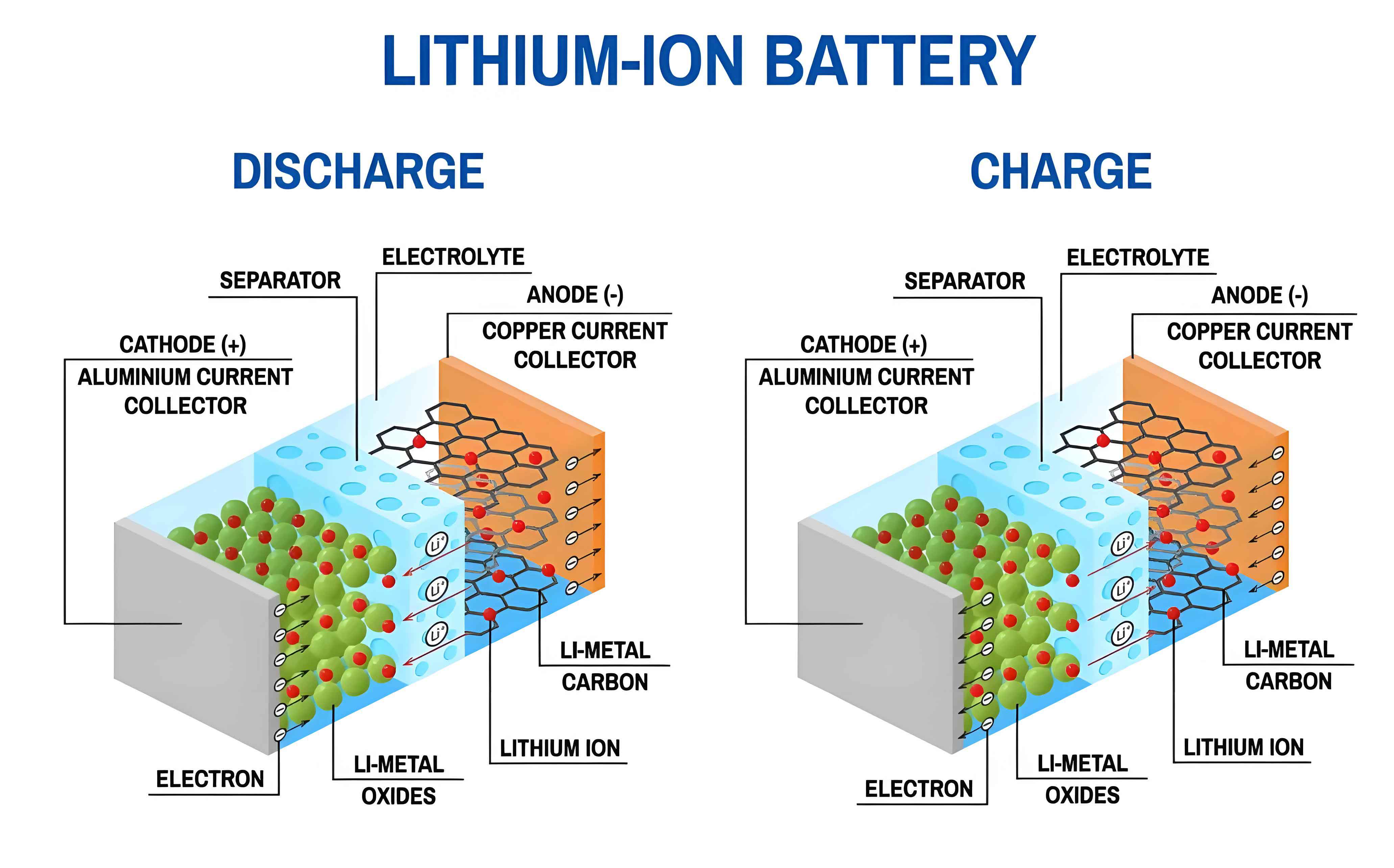
The prevention of thermal runaway in lithium-ion batteries involves multifaceted approaches, including enhancing material stability, optimizing battery design, implementing efficient cooling systems, developing intelligent monitoring, and integrating fire suppression mechanisms. These strategies collectively aim to mitigate heat accumulation, reduce initiation probabilities, and control propagation during early stages. Patent data serves as a valuable indicator of technological innovation and market focus, providing insights into the priorities of key players and regions. My analysis is based on a comprehensive dataset of patent documents, processed to eliminate noise and ensure relevance to lithium-ion battery safety. The goal is to offer a detailed perspective on how patent activity reflects the advancement of thermal runaway prevention in lithium-ion batteries, guiding stakeholders in research, policy, and commercialization efforts.
To conduct this investigation, I employed patent data from the incoPat database, with a search cutoff date of February 1, 2025. The retrieval strategy combined keywords and classification codes related to lithium-ion batteries and thermal runaway, followed by manual noise reduction. Keywords for lithium-ion batteries included terms like “lithium-ion battery,” “Li-ion battery,” “LIB,” and specific material names such as “LiFePO4” and “LiNiMnCoO2.” For thermal runaway, terms like “thermal runaway,” “thermal propagation,” “overheat,” and “fire safety” were used. Classification codes from IPC and CPC, such as H01M10 for batteries and A62C3 for fire prevention, were incorporated to enhance accuracy. Noise terms like “mobile phone” or “fuel cell” were excluded. The final dataset comprised 11,570 invention patent documents, focusing on high-value patents. Due to publication delays, data for 2024-2025 are indicative only. This methodology ensures a robust foundation for analyzing trends in lithium-ion battery thermal runaway prevention technologies.
At a macro level, the patent landscape for thermal runaway prevention in lithium-ion batteries reveals dynamic shifts in global leadership and technological emphasis. The following tables summarize key aspects of patent activity, including application trends, major applicants, patent flows, and technology branch development.
| Country/Region | Patent Share (%) | Key Growth Period | Driving Factors |
|---|---|---|---|
| China | 62 | 2000-2024 | Policy incentives (e.g., “Made in China 2025”), industrial synergy, leading firms like CATL and BYD |
| South Korea | 10 | Early 2000s onward | Green initiatives, corporate R&D by Samsung SDI and LG Energy Solution |
| Japan | 8 | Steady but slowing | Energy transition post-Fukushima, focus on high-safety batteries by Toyota and Panasonic |
| United States | 5 | Resurgence post-2021 | Technological breakthroughs (e.g., Tesla’s 4680 battery), Inflation Reduction Act support |
| Europe (EPO) | 3 | Moderate | Stringent safety regulations, collaborative models like Volkswagen-Gotion High-tech |
| Germany | 2 | Consistent | Engineering excellence, integration into European battery ecosystem |
The table above illustrates the dominance of China in patent filings for lithium-ion battery thermal runaway prevention, with a share of 62%, driven by national strategies and rapid industrialization. South Korea and Japan maintain significant but declining shares, while the United States shows renewed vigor. Europe’s contribution is smaller, reflecting a more regulated and fragmented approach. This trend underscores the pivotal role of policy and market forces in shaping innovation for lithium-ion battery safety.
| Applicant | Total Patents | Material Optimization | Structural Improvement | Thermal Management | BMS | Firefighting | Manufacturing Process |
|---|---|---|---|---|---|---|---|
| Samsung | 359 | 287 | 44 | 12 | 8 | 5 | 3 |
| LG Energy Solution | 286 | 235 | 25 | 10 | 6 | 4 | 9 |
| Panasonic | 170 | 120 | 18 | 5 | 4 | 3 | 26 |
| BYD | 105 | 87 | 10 | 2 | 3 | 1 | 2 |
| State Grid Corporation | 93 | 20 | 12 | 5 | 23 | 29 | 4 |
| Gotion High-tech | 92 | 58 | 18 | 4 | 8 | 2 | 2 |
| ATL (Amperex Technology Ltd.) | 88 | 68 | 15 | 2 | 2 | 1 | 5 |
| CATL (Contemporary Amperex Technology Co.) | 82 | 59 | 11 | 3 | 4 | 2 | 6 |
| Chinese Academy of Sciences | 79 | 65 | 3 | 7 | 4 | 0 | 0 |
| Zhuhai Coslight Battery | 56 | 44 | 5 | 3 | 2 | 1 | 1 |
This table highlights the technological composition of key applicants in lithium-ion battery thermal runaway prevention. Samsung leads with a strong focus on material optimization, while LG emphasizes materials and manufacturing. Chinese applicants like BYD and CATL show balanced portfolios, with State Grid Corporation specializing in BMS and firefighting for grid-scale storage. The data indicates that material innovation remains central, but emerging areas like thermal management and BMS are gaining traction among leaders in lithium-ion battery technology.
| Origin Country/Region | China (Target) | United States (Target) | Japan (Target) | South Korea (Target) | Europe (Target) |
|---|---|---|---|---|---|
| China | 6,917 | 88 | 36 | 24 | 121 |
| United States | 74 | 207 | 71 | 31 | 118 |
| Japan | 80 | 62 | 620 | 67 | 78 |
| South Korea | 97 | 173 | 121 | 1,034 | 228 |
| Europe | 27 | 36 | 17 | 26 | 131 |
The patent flow table reveals internationalization patterns in lithium-ion battery thermal runaway prevention technologies. China exhibits strong domestic focus but limited overseas filings, whereas South Korea demonstrates global outreach, particularly in the United States and Europe. Japan retains a robust home market, while the United States and Europe show moderate cross-border activity. This suggests that while Chinese innovation in lithium-ion battery safety is prolific, its global patent strategy may require enhancement to compete internationally.
| Technology Branch | Overall Patent Share (%) | Key Sub-branches | Growth Trend (2017-2023) | Representative Innovations |
|---|---|---|---|---|
| Material Optimization | 56.44 | Positive electrode, negative electrode, separator, electrolyte/solid-state electrolyte | Steady increase, peaking in 2023 | Solid-state electrolytes, flame-retardant additives, high-nickel cathodes |
| Structural Improvement | 12.87 | Thermal conduction paths, pressure relief devices, physical isolation | Moderate growth | Explosion-proof packaging,隔热 designs, cell stacking |
| Thermal Management | 6.93 | Active cooling, passive cooling, phase-change materials | Rapid growth (56% increase) | Liquid cooling systems, semiconductor-based cooling,复合相变材料 |
| Battery Management System (BMS) | 6.93 | Real-time monitoring, charging control, early warning algorithms | Rapid growth (153% increase) | AI-driven prediction models, multi-parameter thresholds, adaptive strategies |
| Firefighting and Extinguishing | 5.94 | Built-in suppressants, smart response systems, cooling mechanisms | Explosive growth (195% increase) | Automatic fire suppression,复合灭火剂, integrated cooling |
| Manufacturing Process | 4.95 | Electrode coating, assembly precision, defect control | Stable, with incremental improvements | Uniform coating techniques, laser welding, contamination prevention |
This table outlines the development of technology branches for preventing thermal runaway in lithium-ion batteries. Material optimization dominates, but thermal management, BMS, and firefighting show accelerated growth, driven by electric vehicle adoption and safety regulations. The evolution indicates a shift from component-level fixes to systemic protection in lithium-ion battery systems.
Delving into关键技术, I explore each branch in detail, incorporating formulas and tables to summarize advancements. The prevention of thermal runaway in lithium-ion batteries relies on interdisciplinary innovations, from chemistry to engineering.
Material optimization is fundamental to enhancing the thermal stability of lithium-ion batteries. By modifying electrode materials, separators, and electrolytes, heat generation and propagation can be suppressed. The Arrhenius equation models the temperature dependence of reaction rates in lithium-ion batteries: $$ k = A e^{-E_a/(RT)} $$ where \( k \) is the rate constant, \( A \) is the pre-exponential factor, \( E_a \) is the activation energy, \( R \) is the gas constant, and \( T \) is temperature. Reducing \( E_a \) through material design can decelerate exothermic reactions, mitigating thermal runaway in lithium-ion batteries.
| Material Type | Key Patent Technologies | Mechanism for Thermal Runaway Prevention | Performance Metrics |
|---|---|---|---|
| Positive Electrode | Surface coating with lithium borate, core-shell structures (e.g., high-nickel core with cobalt shell), particle size optimization | Inhibits oxygen release, reduces interfacial reactions, enhances structural integrity | Thermal stability up to 300°C, capacity retention >90% after cycles |
| Negative Electrode | Metal oxide coatings on silicon oxides, composite structures with graphite, pre-lithiation control | Suppresses SEI decomposition, prevents lithium dendrite formation, minimizes electrolyte reduction | Heat release reduced by 30%, cycle life extended by 50% |
| Separator | Multi-layer designs with organic/inorganic coatings, thermal shutdown layers using expandable microspheres | Blocks ion transport at high temperatures, prevents internal short circuits, improves mechanical strength | Shutdown temperature 130-150°C, tensile strength >100 MPa |
| Electrolyte/Solid-State Electrolyte | Flame-retardant additives (e.g., phosphates), solid polymer electrolytes, hybrid systems with MOFs | Reduces flammability, forms stable interphases, eliminates liquid leakage risks | Flame retardancy index >0.8, ionic conductivity >10⁻³ S/cm at 25°C |
For positive electrodes, the thermal decomposition of layered oxides like LiNixCoyMnzO2 can be described by: $$ \text{LiNiO}_2 \rightarrow \text{NiO} + \frac{1}{2}\text{O}_2 + \text{heat} $$ Coatings such as Li3BO3 act as barriers, lowering heat flow. In negative electrodes, the SEI stability is crucial; its formation enthalpy \( \Delta H_{\text{SEI}} \) can be optimized via additives to reduce reactivity. Separators utilize thermal closure properties, where porosity \( \phi \) decreases with temperature: $$ \phi(T) = \phi_0 – \alpha (T – T_0) $$ for \( T > T_0 \), with \( \alpha \) as the thermal expansion coefficient. Electrolytes incorporate flame-retardant molecules that quench free radicals, interrupting combustion chains in lithium-ion batteries.
Structural improvements focus on physical designs to dissipate heat and contain failures in lithium-ion batteries. Key approaches include optimizing thermal conduction paths, integrating pressure relief valves, and implementing隔离 barriers. The heat transfer equation guides these designs: $$ \frac{\partial T}{\partial t} = \nabla \cdot (k \nabla T) + \dot{q} $$ where \( T \) is temperature, \( k \) is thermal conductivity, and \( \dot{q} \) is heat generation rate per volume. By enhancing \( k \) through materials like graphene or aluminum, and minimizing \( \dot{q} \) via短路 prevention, structural modifications delay thermal runaway propagation in lithium-ion batteries.
| Structural Feature | Patent Examples | Function in Thermal Runaway Prevention | Design Parameters |
|---|---|---|---|
| Thermal Conduction Paths | Optimized electrode dimensions, conductive tabs, heat sinks | Rapidly distributes heat to prevent hotspots,熔断短路 points | Thermal resistance <0.1 K/W, heat dissipation rate >10 W/cm² |
| Pressure Relief Devices | Weak seams in pouch cells, shape-memory alloy vents, safety valves | Releases gases before critical pressure,避免爆炸 | Activation pressure 10-20 bar, response time <100 ms |
| Physical Isolation | Aerogel隔热 pads, air gaps, module-level barriers | Slows heat transfer between cells, contains failures | Thermal conductivity <0.02 W/(m·K), thickness 3-5 mm |
For instance, a pressure relief valve may activate when internal pressure \( P \) exceeds a threshold \( P_{\text{th}} \), governed by: $$ P = P_0 + \frac{nRT}{V} $$ where \( n \) is gas moles from electrolyte decomposition. Early venting at \( P_{\text{th}} \approx 15 \text{ bar} \) prevents rupture.隔热 materials like aerogels exhibit low \( k \), delaying temperature rise in adjacent lithium-ion battery cells.
Thermal management systems are vital for maintaining optimal operating temperatures in lithium-ion batteries, thereby preventing thermal runaway. These systems employ active cooling (e.g., liquid loops) and passive methods (e.g., phase-change materials). The cooling capacity \( Q_{\text{cool}} \) can be expressed as: $$ Q_{\text{cool}} = \dot{m} c_p \Delta T + L_f \frac{dm_{\text{PCM}}}{dt} $$ where \( \dot{m} \) is coolant flow rate, \( c_p \) is specific heat, \( \Delta T \) is temperature difference, \( L_f \) is latent heat of fusion, and \( dm_{\text{PCM}}/dt \) is phase-change material melting rate. This equation highlights how combined strategies enhance heat removal from lithium-ion batteries.
| Thermal Management Technique | Patent Innovations | Advantages for Lithium-ion Batteries | Performance Indicators |
|---|---|---|---|
| Active Cooling | Liquid cold plates with tree-shaped channels, semiconductor-based heaters/coolers, refrigerated loops | Precise temperature control, handles high heat loads, adaptable to dynamic conditions | Temperature uniformity <2°C, cooling power >50 W per cell |
| Passive Cooling | Phase-change materials (e.g., paraffin-expanded graphite), heat pipes, thermally conductive外壳 | No external power, simple integration, effective for peak heat spikes | Phase change temperature 40-60°C, enthalpy >200 kJ/kg |
| Hybrid Systems | Combined PCM and liquid cooling, adaptive fans with sensors, multi-zone management | Balances efficiency and complexity, provides backup during failures | Overall heat transfer coefficient >100 W/(m²·K), response time <30 s |
In one patent, a phase-change material with melting point \( T_m \) absorbs heat during lithium-ion battery operation, maintaining temperature near \( T_m \). The Stefan number \( Ste = c_p \Delta T / L_f \) indicates effectiveness; lower \( Ste \) values imply better buffering. Active systems may use PID controllers to regulate coolant flow: $$ \dot{m} = K_p e(t) + K_i \int e(t) dt + K_d \frac{de(t)}{dt} $$ where \( e(t) \) is temperature error. Such integration ensures lithium-ion batteries remain within safe limits, curbing thermal runaway risks.
Battery management systems (BMS) play a crucial role in preventing thermal runaway in lithium-ion batteries through real-time monitoring and control. BMS algorithms detect anomalies like overcharge or internal short circuits, adjusting operations to avert crises. The state of charge (SOC) and state of health (SOH) are estimated using models: $$ \text{SOC}(t) = \text{SOC}_0 – \frac{1}{C_n} \int_0^t I(\tau) d\tau $$ where \( C_n \) is nominal capacity and \( I \) is current. Coupled with temperature readings, BMS triggers alerts if \( T > T_{\text{safe}} \) or voltage deviations occur, safeguarding lithium-ion batteries.
| BMS Function | Patent Technologies | Impact on Thermal Runaway Prevention | Key Parameters |
|---|---|---|---|
| Real-time Monitoring | Multi-sensor networks (voltage, current, temperature), gas detection, impedance spectroscopy | Early warning of abnormalities, enables proactive interventions | Sampling rate >10 Hz, accuracy ±1 mV for voltage, ±0.5°C for temperature |
| Charging Control | Adaptive current limits, voltage cutoffs, balancing circuits | Prevents overcharge-induced heat generation, maintains cell uniformity | Charge current tolerance ±5%, balancing efficiency >90% |
| Predictive Algorithms | Machine learning models (e.g., LSTM for thermal runaway detection), physics-based simulations | Forecasts failure risks, optimizes operating conditions | Prediction horizon >1 hour, false alarm rate <0.1% |
| Safety Cutoffs | Pressure-sensitive disconnects, thermal fuses, software-based shutdowns | Isolates faulty cells, halts energy flow during emergencies | Response time <10 ms, reliability >99.9% |
A patent example employs a neural network to predict thermal runaway in lithium-ion batteries, using input features like temperature gradient \( \nabla T \) and entropy change \( \Delta S \). The model output \( y \) indicates risk level: $$ y = f(W \cdot x + b) $$ where \( f \) is activation function, \( W \) weights, \( x \) input vector, and \( b \) bias. Upon \( y > \text{threshold} \), BMS reduces charge current or initiates cooling, demonstrating how intelligence enhances lithium-ion battery safety.
Firefighting and extinguishing technologies provide last-line defense against thermal runaway in lithium-ion batteries, aiming to suppress flames and cool cells rapidly. These systems often integrate built-in suppressants, smart activation, and cooling mechanisms. The extinguishing efficiency \( \eta \) can be defined as: $$ \eta = \frac{Q_{\text{extinguished}}}{Q_{\text{total}}} $$ where \( Q_{\text{extinguished}} \) is heat quenched and \( Q_{\text{total}} \) is total heat generated. High \( \eta \) values signify effective containment in lithium-ion battery fires.
| Firefighting Approach | Patent Examples | Role in Lithium-ion Battery Safety | Effectiveness Metrics |
|---|---|---|---|
| Built-in Suppressants | Fire retardants in central pins, encapsulated灭火剂 in modules, aerosol generators | Automatic release upon temperature rise, smothers flames locally | Extinguishing time <5 s, coverage density >0.1 kg/m³ |
| Smart Response Systems | Multi-stage alarms linked to BMS, automated sprinklers with liquid cooling, gas-based suppression | Coordinated action with monitoring, minimizes collateral damage | Activation temperature 80-150°C, system reliability >95% |
| Cooling Integration | Combined water mist and coolant loops, phase-change materials for post-fire cooling, heat-absorbing barriers | Reduces thermal residue, prevents re-ignition, limits propagation | Cooling rate >10°C/s, residual temperature <50°C after event |
For instance, a patent details a灭火剂 blend for lithium-ion batteries, comprising fine particles that interrupt combustion chains via radical scavenging: $$ \text{R}^\cdot + \text{X} \rightarrow \text{RX} $$ where R• is free radical and X is suppressant. Coupled with cooling fluids that absorb heat according to \( Q = m c_p \Delta T \), such systems enhance survivability of lithium-ion battery packs during thermal runaway events.
Manufacturing process innovations contribute to preventing thermal runaway in lithium-ion batteries by reducing defects and improving consistency. Precision in electrode coating, assembly, and sealing minimizes internal short circuits and hotspots. The coating uniformity index \( U \) is critical: $$ U = 1 – \frac{\sigma_{\text{thickness}}}{\bar{\delta}} $$ where \( \sigma_{\text{thickness}} \) is standard deviation of coating thickness and \( \bar{\delta} \) is mean thickness. Higher \( U \) values (接近 1) correlate with fewer irregularities in lithium-ion battery electrodes.
| Manufacturing Aspect | Patent Technologies | Contribution to Thermal Runaway Prevention | Quality Standards |
|---|---|---|---|
| Electrode Production | Uniform slurry coating via slot-die methods, magnetic alignment of particles, dry electrode processes | Eliminates local high-resistance areas, ensures even current distribution | Coating thickness variation <±2 μm, adhesion strength >1 N/cm |
| Cell Assembly | Laser welding for precise connections, stacking with alignment tools, vacuum filling of electrolyte | Prevents misalignment-induced shorts, enhances structural integrity | Weld strength >50 MPa, electrolyte filling efficiency >99% |
| Defect Control | In-line inspection using X-ray or AI, cleanroom protocols, particle filtration systems | Detects contaminants early, reduces failure initiation points | Defect rate <0.01%, contamination level <10 particles/m³ |
| Encapsulation | Heat-sealing with barrier layers, potting with thermally conductive resins, case design for venting | Contains electrolytes, manages gas release, improves thermal contact | Seal integrity tested at >50 kPa, thermal resistance <0.05 K/W |
A patent describes a laser welding process for lithium-ion battery tabs, where energy input \( E \) is optimized: $$ E = P \cdot t $$ with \( P \) power and \( t \) time. Controlled \( E \) avoids excessive heat that could damage separators. Another innovation uses electrostatic deposition to coat active materials uniformly, reducing porosity variations that might trigger thermal runaway in lithium-ion batteries.
In conclusion, the patent analysis of thermal runaway prevention in lithium-ion batteries reveals a rapidly evolving field dominated by material innovations but increasingly embracing systemic solutions. China leads in patent volume, yet international布局 requires strengthening to globalize its advancements in lithium-ion battery safety. Key trends include the rise of thermal management, BMS, and firefighting technologies, driven by electric vehicle and energy storage demands. Material optimization remains core, with solid-state electrolytes and flame-retardant formulations offering promising paths for lithium-ion batteries.
To advance further, I recommend focusing on overseas patent strategies for Chinese entities, investing in high-growth areas like intelligent BMS and hybrid cooling systems, and fostering cross-disciplinary collaboration to integrate materials science with digital tools. Future research should aim for holistic protection frameworks that address thermal runaway in lithium-ion batteries from multiple angles—prevention, detection, and suppression—ensuring safer and more reliable energy storage solutions. The continuous innovation reflected in patents underscores the industry’s commitment to overcoming safety challenges, making lithium-ion batteries more resilient against thermal runaway threats.