
The accurate assessment of the State of Health (SOH) for lithium-ion batteries is paramount for ensuring the safety, reliability, and longevity of energy storage systems and electric vehicles. As a critical parameter within the Battery Management System (BMS), SOH quantifies the degree of degradation and remaining useful life. Precise SOH estimation enables predictive maintenance, prevents catastrophic failures, and optimizes battery utilization strategies. This work presents a novel data-driven framework for SOH estimation, focusing on the extraction of comprehensive health indicators and the development of an advanced deep learning architecture.
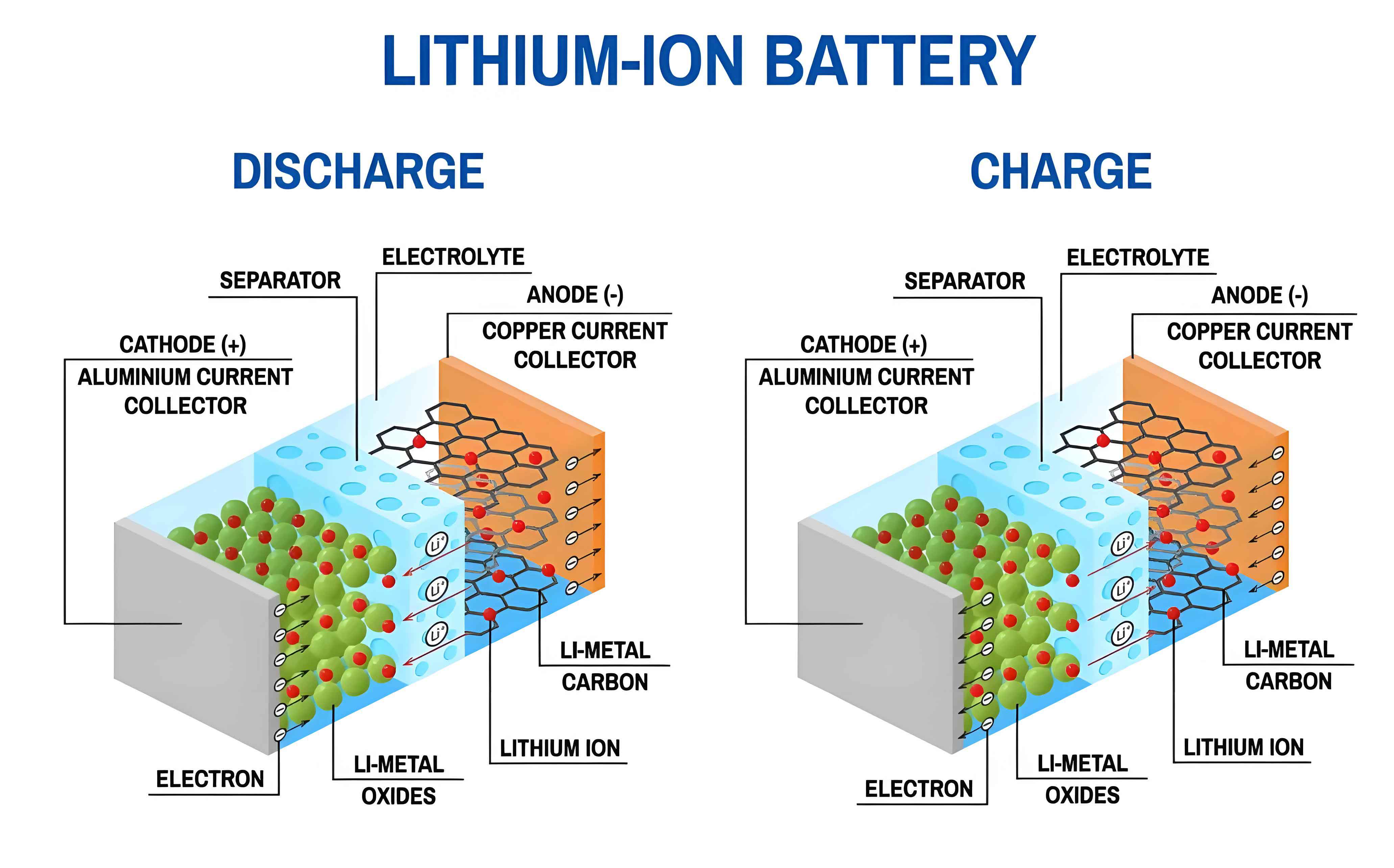
The proliferation of lithium-ion battery technology across various sectors underscores the need for robust and accurate health monitoring. Traditional model-based methods, while effective, often rely on precise parameter identification of complex electrochemical or equivalent circuit models, limiting their generalizability. In contrast, data-driven approaches leverage historical operational data to learn the intricate mapping between measurable battery signals and its underlying health state, offering a more flexible and potentially more accurate solution. However, the efficacy of such methods heavily depends on the representational power of the extracted health features and the capability of the learning model to capture long-term temporal dependencies and complex non-linear degradation patterns.
This article addresses these challenges by introducing two key innovations. First, we propose the construction of a Global Health Factor (GHF), derived from the raw incremental capacity (IC) and constant current (CC) charging curves, to provide a holistic and low-dimensional representation of battery aging characteristics. Second, we design a sophisticated hybrid neural network model, termed CNN-Residual-BiGRU-Attention, which synergistically combines convolutional layers for spatial feature extraction, a bidirectional gated recurrent unit (BiGRU) for capturing temporal dependencies, an attention mechanism for feature weighting, and residual connections to preserve information flow and enhance training stability. Furthermore, a fine-tuning estimation strategy is developed to enable accurate SOH prediction for new or similar lithium-ion batteries using only a small amount of initial cycle data.
Fundamentals and Feature Engineering for Lithium-Ion Battery SOH
The State of Health of a lithium-ion battery is commonly defined from a capacity perspective, reflecting the loss of maximum charge storage ability over time. It is calculated as:
$$ SOH = \frac{Q_{max}}{Q_{rated}} \times 100\% $$
where $Q_{max}$ is the current maximum available capacity of the lithium-ion battery, and $Q_{rated}$ is its nominal or rated capacity when fresh. The primary objective of SOH estimation is to predict this value based on operational data without requiring direct, full-cycle capacity tests, which are time-consuming and often impractical in real-world applications.
The core of an effective data-driven SOH estimation method lies in identifying and extracting informative Health Indicators (HIs) or features that are strongly correlated with the battery’s degradation. Common approaches rely on local features such as constant current charging time, voltage rise at a specific state of charge, or internal resistance. While these features can be effective, they often represent only a snapshot of the aging process. For a more comprehensive view, we propose analyzing entire diagnostic curves. The Incremental Capacity (IC) curve, obtained by differentiating capacity with respect to voltage ($dQ/dV$), is highly sensitive to internal electrochemical changes like loss of lithium inventory and active material degradation. Similarly, the shape and evolution of the voltage profile during constant current charging contain rich information about the internal state of the lithium-ion battery.
Directly using the high-dimensional raw data points from these curves as model input is computationally inefficient and may introduce noise. Therefore, we employ the Piecewise Aggregate Approximation (PAA) algorithm for dimensionality reduction. PAA segments a time series of length $m$ into $n$ contiguous frames and represents each segment by its mean value. This transforms the original high-resolution sequence $Z = \{Z_1, Z_2, …, Z_m\}$ into a lower-dimensional sequence $O = \{O_1, O_2, …, O_n\}$, where each element $O_i$ is calculated as:
$$ O_i = \frac{1}{k} \sum_{j=k(i-1)+1}^{ki} Z_j $$
$$ k = \frac{m}{n} $$
Here, $k$ is the compression ratio. We apply PAA separately to both the IC curve and the CC charging voltage curve for each cycle of the lithium-ion battery. To maintain a consistent input dimension for the neural network, each curve is segmented into a fixed number of frames (e.g., 60). This process generates a compact yet descriptive representation that preserves the essential shape and trends of the original curves. The combination of the reduced-dimension IC and CC charging curves forms our proposed Global Health Factor (GHF), offering a multi-faceted view of the lithium-ion battery’s condition per cycle. This GHF serves as the primary input to our deep learning model. The process is summarized in the following table:
| Step | Process | Output |
|---|---|---|
| 1 | Extract raw IC ($dQ/dV$) curve and CC charging voltage curve for a cycle. | Two high-dimensional vectors. |
| 2 | Apply PAA algorithm to each curve with a fixed segment count (n=60). | Two low-dimensional vectors (length n). |
| 3 | Concatenate the two low-dimensional vectors. | Global Health Factor (GHF) vector for the cycle. |
Proposed Hybrid Deep Learning Model: CNN-Residual-BiGRU-Attention
To effectively learn the complex, non-linear, and temporal relationship between the Global Health Factor sequence and the lithium-ion battery’s SOH, we design a hybrid neural network architecture. The model integrates several advanced deep learning components, each serving a specific purpose in the feature learning pipeline.
The first stage involves a one-dimensional Convolutional Neural Network (CNN). The CNN layer is adept at extracting local spatial patterns and hierarchical features from the sequential GHF input. It applies multiple filters that convolve across the input sequence, detecting relevant shapes and trends within the reduced IC and charging curves. This is followed by a max-pooling layer to reduce dimensionality further and introduce translational invariance. The output is a refined feature map that captures the salient characteristics of the input cycle’s data.
The temporal dynamics of battery degradation are crucial, as the SOH in a given cycle is dependent not only on the current state but also on the historical progression. To model this, we employ a Bidirectional Gated Recurrent Unit (BiGRU). A standard GRU is a type of Recurrent Neural Network (RNN) that uses gating mechanisms (reset and update gates) to control the flow of information, mitigating the vanishing gradient problem common in simple RNNs. The BiGRU extends this by processing the input sequence in both forward and backward directions. This allows the model to capture dependencies from both past and future contexts within the sequence, providing a richer understanding of the degradation trajectory of the lithium-ion battery.
Not all features extracted by the CNN and BiGRU contribute equally to the SOH estimation for a given cycle. An Attention Mechanism is incorporated to address this. It dynamically assigns importance weights to the hidden states output by the BiGRU at each time step. The mechanism computes a context vector as a weighted sum of all hidden states, allowing the model to “focus” on the most relevant parts of the sequence when making a prediction. This is particularly useful for identifying critical phases in the charging curve or IC peaks that are strong indicators of the lithium-ion battery’s health.
A key innovation in our architecture is the introduction of Residual Connections. Deep networks can suffer from degradation problems where accuracy saturates and then degrades rapidly with increasing depth. Residual learning frameworks ease the training of such networks by using skip connections that feed the output of one layer directly to a later layer. In our model, we add a residual connection that bypasses the initial processing layers. This ensures that the original or early-feature information is preserved and can be combined with the highly processed features from later layers. This design helps maintain information integrity, improves gradient flow during backpropagation, and generally leads to more stable and accurate training for the lithium-ion battery SOH estimation task.
The final layers consist of fully connected (Dense) layers that integrate the attended, context-aware features to produce a single scalar value—the estimated SOH for that cycle. Dropout layers are also interspersed to prevent overfitting. The complete model, named CNN-Residual-BiGRU-Attention, is optimized using the Adam algorithm to minimize the difference between the estimated and true SOH values.
Hyperparameter Optimization using Improved Artificial Bee Colony Algorithm
The performance of the proposed CNN-Residual-BiGRU-Attention model is sensitive to the choice of its hyperparameters, such as the number of convolutional filters, the number of units in the BiGRU layers, dropout rates, and learning rate. Manual tuning is inefficient. Therefore, we employ a metaheuristic optimization algorithm, the Artificial Bee Colony (ABC), to automate this search.
The standard ABC algorithm simulates the foraging behavior of honey bees, consisting of employed bees, onlooker bees, and scout bees exploring the search space (hyperparameter combinations) for the optimal “food source” (model configuration with lowest validation error). However, the random initialization of solutions in standard ABC can lead to poor distribution and slow convergence. To enhance its performance, we integrate a Tent chaotic map for initializing the population of solutions. Chaotic maps can generate sequences that are deterministic yet appear random, possessing ergodicity and non-repetition properties. The Tent map is defined as:
$$ x_{n+1} =
\begin{cases}
\frac{x_n}{0.7}, & \text{if } x_n < 0.7 \\
\frac{1 – x_n}{0.3}, & \text{if } x_n \geq 0.7
\end{cases} $$
where $x_n$ is a value in the sequence. Using this map to generate the initial population ensures a more uniform exploration of the hyperparameter space at the start, improving the diversity of solutions and accelerating the convergence of the ABC algorithm towards a high-performance configuration for the lithium-ion battery SOH estimation model. This enhanced version is referred to as the Improved Artificial Bee Colony (IABC) algorithm.
Fine-Tuning Estimation Strategy and Experimental Validation
To address the practical challenge of estimating SOH for a new lithium-ion battery with limited initial cycle data, we propose a two-stage fine-tuning strategy. This approach leverages transfer learning principles.
- Pre-training: The CNN-Residual-BiGRU-Attention model is first pre-trained on a complete dataset from a “source” lithium-ion battery (or a set of batteries). This allows the model to learn general patterns of degradation, feature extraction via CNN, and temporal modeling via BiGRU. After pre-training, the weights of the BiGRU layers are frozen. This is done because the temporal dynamics learned from the source battery might be generalizable, and freezing these layers reduces the number of trainable parameters in the next stage, preventing overfitting on small datasets.
- Fine-tuning: For a “target” lithium-ion battery (which can be the same type as the source or a new one), we use only a small initial portion of its cycle data (e.g., the first 30-40%) as the training set. This data, consisting of the GHF sequences and corresponding SOH values, is used to fine-tune the pre-trained model. During fine-tuning, only the non-frozen layers (typically the CNN layers, attention layer, and final dense layers) are updated. This process quickly adapts the model’s feature extractors to the specific characteristics of the new lithium-ion battery while retaining the general temporal understanding from pre-training.
We validate the proposed method using publicly available lithium-ion battery aging datasets from NASA and the University of Oxford. The datasets include batteries cycled under different protocols, providing a robust test for generalizability. The model’s performance is evaluated using standard regression metrics:
- Mean Absolute Error (MAE): $$ e_{MAE} = \frac{1}{N} \sum_{i=1}^{N} |y_i – \hat{y}_i| $$
- Root Mean Square Error (RMSE): $$ e_{RMSE} = \sqrt{\frac{1}{N} \sum_{i=1}^{N} (y_i – \hat{y}_i)^2} $$
- Mean Absolute Percentage Error (MAPE): $$ e_{MAPE} = \frac{1}{N} \sum_{i=1}^{N} \left| \frac{y_i – \hat{y}_i}{y_i} \right| \times 100\% $$
where $y_i$ is the true SOH, $\hat{y}_i$ is the estimated SOH, and $N$ is the number of test cycles.
Results and Analysis
The effectiveness of the Global Health Factor was first verified. Compared to using a single strong local feature (like the Gaussian-filtered IC peak), models using the GHF consistently achieved a higher coefficient of determination ($R^2$), indicating a stronger learned correlation with the true degradation of the lithium-ion battery. This confirms that the GHF provides a more comprehensive and informative input for SOH estimation.
We conducted extensive experiments to determine the minimal amount of data required for fine-tuning. The results, summarized below, show that for a target lithium-ion battery of the same type as the source, using just the first 30% of cycles for fine-tuning yields excellent results. For a different but similar lithium-ion battery, using the first 40% of data is sufficient.
| Target Battery Type | Fine-tuning Data (%) | Typical MAE | Typical MAPE |
|---|---|---|---|
| Same as Source | 30% | < 0.0035 | < 0.005% |
| Similar to Source | 40% | < 0.0035 | < 0.005% |
The superiority of the proposed CNN-Residual-BiGRU-Attention architecture was demonstrated through ablation studies. We compared its performance against several baseline and variant models, including CNN-LSTM, CNN-GRU, CNN-BiGRU, and CNN-BiGRU-Attention (without residual connections). All models were optimized using the IABC algorithm and evaluated under the same fine-tuning paradigm. The results unequivocally show that our full model achieves the highest accuracy. The following table presents a comparative analysis on two representative batteries.
| Model | Battery | eMAE | eMAPE (%) | eRMSE |
|---|---|---|---|---|
| CNN-LSTM | B0006 | 0.0136 | 1.95 | 0.0152 |
| CNN-BiGRU-Attention | B0006 | 0.0059 | 0.90 | 0.0078 |
| CNN-Residual-BiGRU-Attention (Proposed) | B0006 | 0.0031 | 0.45 | 0.0040 |
| CNN-BiGRU-Attention | B0005 | 0.0048 | 0.70 | 0.0060 |
| CNN-Residual-BiGRU-Attention (Proposed) | B0005 | 0.0032 | 0.45 | 0.0040 |
The performance gains are significant. For the same lithium-ion battery estimation (30% fine-tuning data), the proposed model reduces the MAE, MAPE, and RMSE by approximately 41-44% compared to the CNN-BiGRU-Attention model. For similar lithium-ion battery estimation (40% fine-tuning data), the error reduction is even more pronounced, around 40-46%. The residual connections prove crucial in stabilizing training and enabling the model to learn more precise mappings, leading to SOH estimation curves that closely track the true degradation with a maximum absolute error typically under 2% and often below 1% for most of the cycle life.
Conclusion
This work presents a comprehensive and highly accurate framework for estimating the State of Health of lithium-ion batteries. The core contributions are threefold. First, the introduction of a Global Health Factor, constructed via PAA dimensionality reduction of IC and CC charging curves, provides a rich and efficient descriptor of battery aging that surpasses local features. Second, the novel CNN-Residual-BiGRU-Attention neural network architecture effectively captures both spatial patterns and long-term temporal dependencies in the degradation data, with the residual connections playing a vital role in enhancing model performance and training robustness. Third, the combination of IABC-based hyperparameter optimization and a practical fine-tuning strategy enables precise SOH estimation for new lithium-ion batteries using only a small fraction of their initial cycle data, addressing a key challenge for real-world BMS applications.
Experimental validation on diverse public datasets from NASA and Oxford demonstrates the method’s effectiveness and generalizability. Even when using a simpler model like CNN-LSTM within the proposed fine-tuning framework, estimation errors remain below 2%. The full proposed model achieves remarkable accuracy, with average errors (MAE, MAPE, RMSE) often below 0.5%, representing a substantial improvement over state-of-the-art data-driven methods. This research provides a powerful theoretical and practical reference for achieving reliable, data-efficient, and accurate SOH estimation, which is critical for advancing the safety and economy of systems reliant on lithium-ion battery technology.