
In the realm of energy storage, lithium-ion batteries have revolutionized portable electronics and are increasingly pivotal for electric vehicles and grid storage. As a researcher focused on advanced battery materials, I have closely followed the evolution of cathode technologies. Among them, lithium cobalt oxide (LiCoO2, LCO) stands out due to its high volumetric energy density and operating voltage, making it a cornerstone in consumer electronics. However, pushing the charge cutoff voltage beyond 4.2 V to unlock higher capacity introduces severe challenges, including irreversible phase transitions, oxygen release, cobalt dissolution, and electrolyte decomposition. These issues compromise cycle stability and safety. To address this, modification strategies such as lattice doping, surface coating, and their synergy have emerged as effective approaches to stabilize LCO under high-voltage conditions. In this review, we delve into these strategies, emphasizing their mechanisms and outcomes, while incorporating tables and formulas to summarize key findings. The goal is to provide a comprehensive perspective on enhancing high-voltage LCO for next-generation lithium-ion batteries.
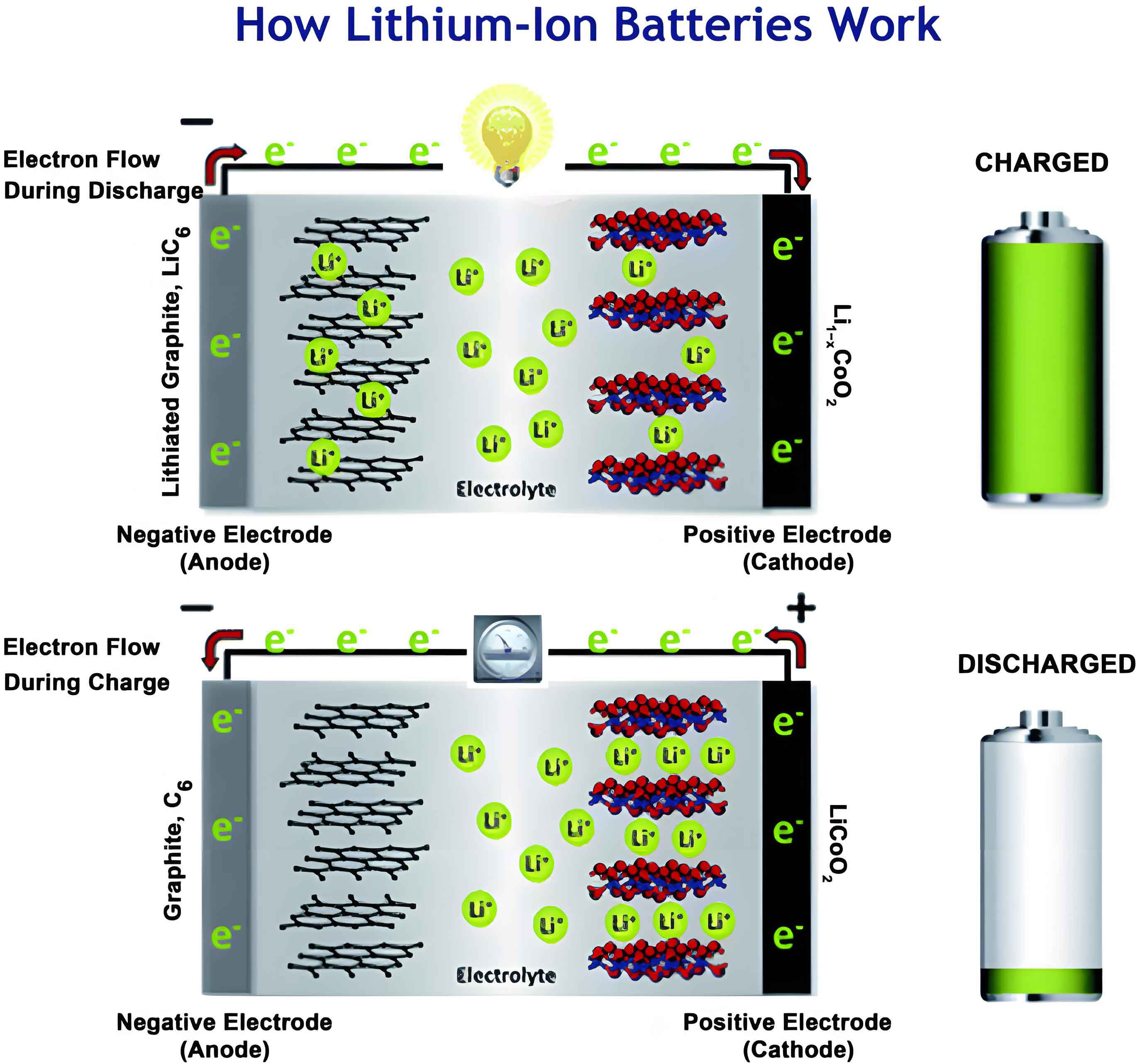
The energy density of a lithium-ion battery is governed by the equation: $$ E = C \times V $$ where \( E \) is the energy density, \( C \) is the capacity, and \( V \) is the voltage. By increasing \( V \), LCO can deliver capacities exceeding 200 mAh/g, but this exacerbates structural degradation. The underlying issues stem from the oxidation of Co³⁺ to Co⁴⁺, lattice oxygen activity, and interfacial side reactions. To mitigate these, modification techniques aim to bolster both bulk and surface stability. We begin by exploring lattice doping, which enhances structural integrity by substituting ions in the LCO lattice.
Lattice Doping for Structural Stabilization
Doping involves introducing foreign elements into the LCO crystal structure to suppress phase transitions and improve electronic conductivity. This strategy can be categorized into single-element and multi-element doping, each with distinct effects on lithium-ion battery performance.
Single-Element Doping
Single-element doping typically targets specific sites—Li, Co, or O—to alter the electronic structure. For instance, phosphorus (P) doping at Co sites modifies the crystal field, increasing the band gap and inhibiting electron compensation. This reduces cobalt dissolution and oxygen reactivity, leading to enhanced cycle stability. In high-voltage lithium-ion batteries, P-doped LCO exhibits a capacity of 215 mAh/g at 4.6 V with 93.7% retention after 100 cycles. Similarly, zirconium (Zr) doping suppresses ligand-to-metal charge transfer, stabilizing the surface. Magnesium (Mg) doping in Li layers acts as a pillar, lowering lithium-ion diffusion barriers and improving rate capability. The effect of doping on lattice parameters can be expressed as: $$ a = a_0 + k \cdot x $$ where \( a \) is the lattice constant after doping, \( a_0 \) is the original constant, \( k \) is a proportionality factor, and \( x \) is the dopant concentration. This linear approximation highlights how doping minimizes lattice distortion during high-voltage cycling.
To quantify doping efficacy, we consider the capacity fade model: $$ C_n = C_0 \cdot e^{-\beta n} $$ where \( C_n \) is the capacity after \( n \) cycles, \( C_0 \) is the initial capacity, and \( \beta \) is the degradation rate influenced by doping. A lower \( \beta \) indicates better stability. Table 1 summarizes performance metrics for single-element doped LCO in lithium-ion batteries under high voltage.
| Dopant Element | Voltage Range (V) | Initial Capacity (mAh/g) | Cycle Performance | Key Mechanism |
|---|---|---|---|---|
| P | 3.0–4.6 | 215 | 93.7% retention after 100 cycles | Band gap increase, reduced Co dissolution |
| Zr | 3.0–4.6 | 195 | 89.4% retention after 100 cycles | Suppressed oxygen redox, surface stabilization |
| Mg | 3.0–4.6 | 204 | 84% retention after 100 cycles | Pillaring effect, lower Li⁺ diffusion barrier |
| Ti | 3.5–4.5 | 150 | 97% retention after 200 cycles | Structural reinforcement, reduced polarization |
| Al | 3.0–4.6 | 197 | 86.5% retention after 100 cycles | Inhibition of phase transition, enhanced conductivity |
The choice of dopant depends on its ionic radius and valence state. For example, high-valence dopants like Ti⁴⁺ can stabilize the lattice by forming strong bonds, whereas low-valence dopants like Mg²⁺ create charge compensation effects. The overall impact on lithium-ion battery longevity is profound, as doping reduces the strain during lithium extraction and insertion.
Multi-Element Doping
Multi-element doping leverages synergistic effects to address multiple degradation pathways simultaneously. Co-doping with elements like Ru and Al, for instance, combines Ru’s ability to suppress oxygen redox with Al’s role in preventing lattice distortion. This synergy results in a capacity of 197 mAh/g at 4.53 V and 86% retention after 100 cycles in lithium-ion batteries. Similarly, ternary doping with Zn, Y, and Tb enhances structural stability through cooperative interactions, achieving 98% capacity retention at 4.55 V. The formation energy of doped systems can be modeled using: $$ \Delta E_f = E_{\text{doped}} – E_{\text{pristine}} – \sum_i n_i \mu_i $$ where \( \Delta E_f \) is the formation energy, \( E_{\text{doped}} \) and \( E_{\text{pristine}} \) are the energies of doped and pristine LCO, \( n_i \) is the number of dopant atoms, and \( \mu_i \) is their chemical potential. Negative \( \Delta E_f \) values indicate stable doping, which is crucial for high-voltage operation.
Advanced doping strategies include gradient doping, where dopant concentration varies from the surface to the bulk, creating a stabilized interface. For example, Mg gradient doping combined with Al/Ti bulk doping yields a discharge capacity of 224.9 mAh/g at 4.6 V and 75.5% retention after 200 cycles. This approach minimizes surface degradation while maintaining bulk integrity. Table 2 compares multi-element doping systems in lithium-ion batteries.
| Dopant Combination | Voltage Range (V) | Initial Capacity (mAh/g) | Cycle Performance | Synergistic Effect |
|---|---|---|---|---|
| Ru/Al | 3.0–4.53 | 197 | 86% retention after 100 cycles | Oxygen redox suppression + lattice stability |
| Zn/Y/Tb | 2.8–4.55 | 185 | 98% retention after 100 cycles | Enhanced structural cohesion |
| Mg/Ti | 2.75–4.5 | 179.7 | 82.6% retention after 100 cycles | Improved conductivity + phase stability |
| Al/Ti/Mg | 3.0–4.6 | 224.9 | 75.5% retention after 200 cycles | Bulk and surface stabilization |
| Ni/Ti/Mg | 2.7–4.5 | 174.2 | 90.2% retention after 100 cycles | Grain boundary enrichment |
| Li/Al/F | 3.0–4.6 | 208 | 89.1% retention after 100 cycles | Surface passivation + bulk doping |
The effectiveness of multi-element doping often hinges on the precise control of dopant ratios. For lithium-ion batteries, this translates to longer cycle life and higher energy density. The diffusion of lithium ions in doped LCO can be described by Fick’s law: $$ J = -D \frac{\partial c}{\partial x} $$ where \( J \) is the flux, \( D \) is the diffusion coefficient (enhanced by doping), and \( \frac{\partial c}{\partial x} \) is the concentration gradient. Higher \( D \) values facilitate faster charging and discharging, crucial for high-power applications.
Surface Coating for Interface Stabilization
Surface coating involves applying a thin layer on LCO particles to act as a physical barrier against electrolyte decomposition and side reactions. This strategy is complementary to doping, focusing on interfacial stability in lithium-ion batteries. Coatings can be composed of metal oxides, fluorides, phosphates, polymers, or solid electrolytes, each offering unique benefits.
A key advantage of coatings is their ability to suppress cobalt dissolution and oxygen release. For instance, a LiF coating derived from lithiated polyvinylidene fluoride (Li-PVDF) forms a protective layer that reduces interfacial resistance. In high-voltage lithium-ion batteries, this leads to an initial Coulombic efficiency of 91.0% and 80.5% capacity retention after 700 cycles at 4.6 V. The stability of coated interfaces can be analyzed using the Gibbs free energy change: $$ \Delta G = \Delta H – T \Delta S $$ where \( \Delta G \) represents the thermodynamic driving force for side reactions; coatings lower \( \Delta G \) by blocking reactive sites.
Another innovative coating is the “island-bridge” zirconium-based layer, composed of ZrO2 nanoparticles connected by low-crystalline zirconium hydroxide. This structure creates a triple-phase interface that lowers lithium-ion diffusion energy and inhibits degradation. Coated LCO exhibits 189.5 mAh/g at 4.5 V with 93.5% retention after 100 cycles. Polymer coatings, such as nanoporous PIM-1, form stable cathode-electrolyte interphases (CEI), enhancing cycle stability to 90% retention after 100 cycles. The impact of coating thickness on performance can be modeled as: $$ R_{\text{total}} = R_{\text{bulk}} + R_{\text{coating}} + R_{\text{interface}} $$ where \( R_{\text{total}} \) is the total resistance, and coatings minimize \( R_{\text{interface}} \) by preventing parasitic reactions.
Table 3 provides an overview of coating materials and their effects on lithium-ion battery performance.
| Coating Material | Voltage Range (V) | Initial Capacity (mAh/g) | Cycle Performance | Primary Function |
|---|---|---|---|---|
| LiF (from Li-PVDF) | 3.0–4.6 | 169.7 | 80.5% retention after 700 cycles | Barrier against electrolyte decomposition |
| Zr-based “island-bridge” | 3.0–4.5 | 189.5 | 93.5% retention after 100 cycles | Triple-phase interface stabilization |
| Polymer PIM-1 | 3.0–4.5 | 183 | 90% retention after 100 cycles | Stable CEI formation |
| Solid electrolyte (e.g., Li3PO4) | 3.0–4.6 | 192 | 82% retention after 1000 cycles | Ionic conduction + surface protection |
| AlPO4/Li3PO4 composite | 3.0–4.6 | 222 | 84% retention after 500 cycles | Fast Li⁺ transport + corrosion resistance |
| Li1.5Al0.5Ti1.5(PO4)3 | 3.0–4.6 | 214.6 | 93.6% retention after 50 cycles | High-voltage chemical stability |
| Fucoidan cross-linked polyacrylamide | 2.8–4.6 | 204 | 83.8% retention after 200 cycles | Binder-coating dual function |
Coatings also mitigate oxygen evolution, a critical issue at high voltages. The oxygen release kinetics can be expressed by the Arrhenius equation: $$ k = A e^{-E_a / RT} $$ where \( k \) is the rate constant, \( A \) is the pre-exponential factor, \( E_a \) is the activation energy (increased by coatings), \( R \) is the gas constant, and \( T \) is temperature. By raising \( E_a \), coatings slow down oxygen loss, thereby preserving structural integrity. Additionally, some coatings, like disordered rock-salt (Li/Co/Al)(O/F) layers, enhance surface conductivity, enabling rates up to 10C with 154 mAh/g capacity and 93% retention after 1000 cycles. This is vital for fast-charging lithium-ion batteries.
Synergistic Modification: Doping and Coating Combined
Combining doping and coating leverages the strengths of both strategies—bulk structural stabilization and interfacial protection—to achieve superior performance in lithium-ion batteries. This synergistic approach addresses degradation from the inside out, offering a holistic solution for high-voltage LCO.
For example, Al gradient doping coupled with a LiAlO2 thin coating results in a high reversible capacity of 230 mAh/g at 4.7 V. The doping inhibits phase transitions, while the coating acts as a lithium-ion conductive channel and barrier against side reactions. Similarly, Ti doping with a La4NiLiO8 coating suppresses voltage decay, delivering 157.1 mAh/g at 10C and 90.6% retention after 200 cycles. The synergy can be quantified using a performance enhancement factor: $$ \eta = \frac{C_{\text{synergistic}} – C_{\text{pristine}}}{C_{\text{pristine}}} \times 100\% $$ where \( \eta \) represents the percentage improvement in capacity retention, often exceeding 50% for combined modifications.
More complex systems involve multi-element doping with tailored coatings. Mn and La doping combined with a Li-Ti-O coating improves interfacial stability and lithium-ion diffusion, achieving 83% retention after 300 cycles at 4.5 V. Another study used Mn/P gradient doping and an LPO/CP coating to stabilize both bulk and surface, yielding 186.7 mAh/g at 4.6 V with 80.9% retention after 200 cycles. The overall degradation rate in synergistic systems can be modeled as: $$ \beta_{\text{syn}} = \beta_{\text{dope}} + \beta_{\text{coat}} – \Delta \beta_{\text{interaction}} $$ where \( \beta_{\text{syn}} \) is the net degradation rate, and \( \Delta \beta_{\text{interaction}} \) accounts for the positive interplay between doping and coating, leading to lower overall fade.
Table 4 compares synergistic modification strategies for lithium-ion batteries.
| Modification Approach | Voltage Range (V) | Initial Capacity (mAh/g) | Cycle Performance | Synergy Mechanism |
|---|---|---|---|---|
| Al doping + LiAlO2 coating | 3.0–4.7 | 230 | 99.96% retention after 5 cycles | Phase transition suppression + interfacial barrier |
| Ti doping + La4NiLiO8 coating | 2.7–4.3 | 174.8 | 90.6% retention after 200 cycles | Voltage decay reduction + surface stability |
| Al doping + Li4Ti5O12 coating | 2.8–4.5 | 160.4 | 89.9% retention after 100 cycles | Structural + interfacial reinforcement |
| Mn/La doping + Li-Ti-O coating | 3.0–4.5 | 183 | 83% retention after 300 cycles | Enhanced diffusion + CEI stabilization |
| Al/Ti doping + Li2TiO3 coating | 3.0–4.6 | 189.5 | 92.9% retention after 100 cycles | Bulk doping + surface protection |
| Mn/P doping + LPO/CP coating | 3.0–4.6 | 186.7 | 80.9% retention after 200 cycles | Gradient stabilization + coating synergy |
The synergy often arises from complementary effects: doping strengthens the lattice against stress during lithium extraction, while coatings prevent electrolyte penetration and cobalt leaching. For lithium-ion batteries, this translates to extended cycle life and higher energy density. The capacity retention over cycles can be expressed as: $$ C(n) = C_0 \cdot \left(1 – \frac{\beta_{\text{syn}} n}{100}\right) $$ where \( C(n) \) is the capacity after \( n \) cycles, and synergistic modifications reduce \( \beta_{\text{syn}} \), leading to flatter degradation curves.
Future Perspectives and Conclusions
Modification strategies for high-voltage LCO have significantly advanced lithium-ion battery technology, enabling higher energy densities and improved stability. From this review, we observe that doping enhances bulk structural integrity by suppressing phase transitions and oxygen redox, while coating provides interfacial protection against side reactions. The synergistic combination of both approaches offers the most promising path forward, as it addresses degradation at multiple levels.
Looking ahead, several research directions are critical for further optimizing lithium-ion batteries. First, exploring novel dopant elements and their combinations through high-throughput screening could uncover new synergistic effects. The doping efficiency can be optimized using machine learning models that predict formation energies and electronic structures. Second, advanced coating techniques, such as atomic layer deposition (ALD) or molecular layer deposition (MLD), allow for precise control over thickness and composition, enabling ultrathin yet robust barriers. The coating performance can be evaluated using impedance spectroscopy, modeled by: $$ Z(\omega) = R_s + \frac{R_{ct}}{1 + j\omega R_{ct}C_{dl}} $$ where \( Z(\omega) \) is the complex impedance, \( R_s \) is series resistance, \( R_{ct} \) is charge-transfer resistance (reduced by coatings), \( C_{dl} \) is double-layer capacitance, and \( \omega \) is angular frequency.
Third, integrating modification strategies with electrolyte engineering—such as using fluorinated solvents or additive—can further stabilize high-voltage operation. The overall cell performance depends on the interplay between cathode, anode, and electrolyte, summarized by the total energy density equation: $$ E_{\text{cell}} = \frac{C_{\text{cathode}} \times V_{\text{cathode}} \times \eta_{\text{coulombic}}}{\text{mass}_{\text{total}}} $$ where \( \eta_{\text{coulombic}} \) is the Coulombic efficiency, enhanced by modifications. Fourth, safety aspects, particularly thermal stability, must be addressed through coatings that inhibit oxygen release, as described by the thermal runaway model: $$ \frac{dT}{dt} = \frac{Q_{\text{rxn}}}{\rho C_p} $$ where \( \frac{dT}{dt} \) is the temperature rise rate, \( Q_{\text{rxn}} \) is heat generation from side reactions (mitigated by coatings), \( \rho \) is density, and \( C_p \) is heat capacity.
In conclusion, the progress in modifying high-voltage LCO cathodes has propelled lithium-ion batteries toward higher performance benchmarks. By leveraging doping, coating, and their synergy, researchers can overcome the limitations of voltage-driven degradation. Future work should focus on scalable synthesis methods, in-operando characterization, and integration with full-cell designs to realize practical applications. As lithium-ion batteries continue to evolve, these modification strategies will remain essential for achieving sustainable, high-energy-density storage systems.
To encapsulate key findings, we present a comprehensive table summarizing the impact of various modifications on lithium-ion battery parameters. This table highlights the interdependence of capacity, voltage, and cycle life, underscoring the importance of tailored approaches for high-voltage LCO.
| Modification Type | Typical Dopants/Coatings | Voltage Window (V) | Average Capacity (mAh/g) | Cycle Life Improvement | Challenges |
|---|---|---|---|---|---|
| Single-Element Doping | P, Zr, Mg, Ti, Al | 3.0–4.6 | 180–220 | 10–30% increase in retention | Optimizing dopant concentration |
| Multi-Element Doping | Ru/Al, Zn/Y/Tb, Mg/Ti | 2.8–4.6 | 170–225 | 20–40% increase in retention | Complex synthesis, cost |
| Surface Coating | LiF, Zr-based, polymers, phosphates | 3.0–4.6 | 160–220 | 15–50% increase in retention | Coating uniformity, ionic conductivity |
| Synergistic Modification | Doping + coating combinations | 3.0–4.7 | 180–230 | 30–60% increase in retention | Integration complexity, scalability |
The journey toward stable high-voltage lithium-ion batteries is ongoing, with modification strategies at its core. By continuously refining these techniques, we can unlock the full potential of LCO and related cathode materials, paving the way for next-generation energy storage solutions.