
Electrolytic copper foil serves as a critical component in modern energy storage devices, particularly as the anode current collector in lithium-ion battery technology. Its properties directly influence the battery’s energy density, power capability, cycle life, and safety. The pursuit of higher performance in lithium-ion battery systems necessitates the development of copper foils with superior mechanical strength, lower surface roughness, and excellent uniformity to accommodate high-loading electrodes and facilitate stable lithium plating/stripping during fast charging. Among various fabrication techniques, the electrodeposition method stands out due to its procedural simplicity, scalability, and cost-effectiveness. The microstructure and final properties of the electrodeposited copper foil are profoundly sensitive to the composition of the plating bath—specifically the type and concentration of organic additives—and the operational process parameters such as current density and temperature. This study systematically investigates the influence of single and combined additives, along with key electrodeposition conditions, on the surface morphology, roughness, tensile strength, and elongation of copper foil tailored for lithium-ion battery applications.
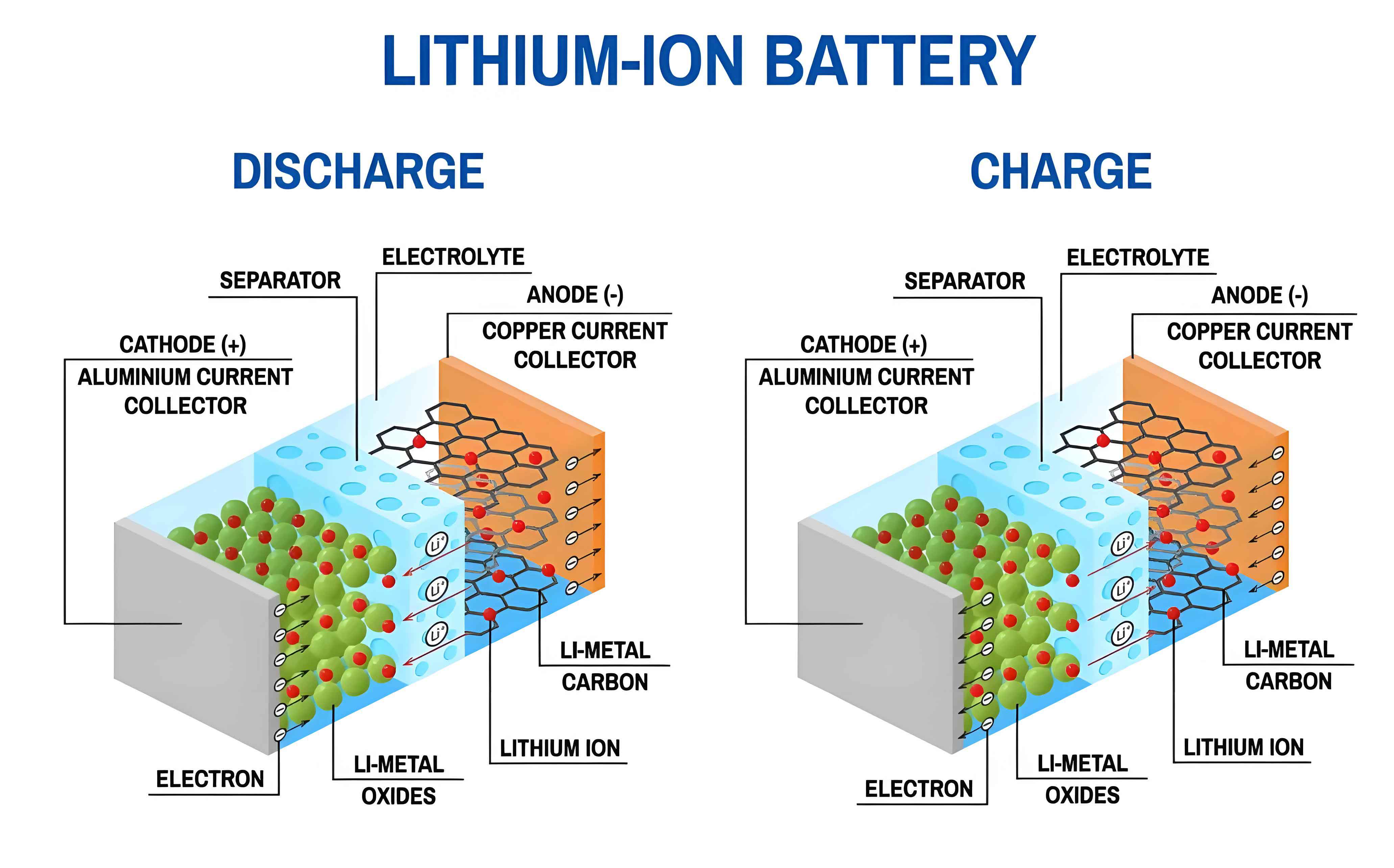
The foundational electrolyte for copper electrodeposition is typically an acidic sulfate bath. The preparation involves dissolving high-purity copper sulfate ($CuSO_4 \cdot 5H_2O$) and sulfuric acid ($H_2SO_4$) in ultrapure water under constant magnetic stirring. A small, controlled amount of chloride ions ($Cl^-$), often introduced via sodium chloride ($NaCl$), is essential as it interacts synergistically with organic additives to modulate deposition kinetics and grain refinement. The organic additives, which are the primary focus of this work, are first dissolved separately in ultrapure water to create stock solutions. These are then added to the main electrolyte using precise micropipettes to achieve the desired concentrations. The standard, or “base,” electrolyte composition used throughout this investigation is summarized in Table 1.
| Component | Chemical Formula | Concentration |
|---|---|---|
| Copper Ion Source | $CuSO_4 \cdot 5H_2O$ | 200 g/L |
| Acidifier & Conductivity Enhancer | $H_2SO_4$ | 60 g/L |
| Chloride Source | $NaCl$ | 70 mg/L |
The electrodeposition setup for laboratory-scale foil production consisted of a 1-liter polymethyl methacrylate (PMMA) cell. A high-purity titanium sheet, with dimensions of 6 cm × 5 cm and a surface roughness of 0.25 μm, served as the cathode (substrate for foil deposition). The anode was a phosphorized copper ball with a volume of approximately 2 cm³. The electrodes were connected to a direct current power supply, maintaining an inter-electrode distance of 10 cm. The electrolyte temperature was meticulously controlled using a thermostatic water bath, with variations kept within ±5 K of the setpoint. The general process flow involved substrate pre-treatment (cleaning and activation), electrodeposition under controlled parameters, followed by foil detachment, rinsing, and drying.
A target foil thickness ($d$) of 8 μm was chosen for all comparative experiments. The deposition time ($t$) required to achieve this thickness was calculated based on Faraday’s law of electrolysis, accounting for the current efficiency ($\eta$). The governing equations are:
$$ d = \frac{100 \times C \times j \times t \times \eta}{\rho} $$
where $d$ is the thickness in micrometers (μm), $C$ is the electrochemical equivalent of copper (taken as 1.186 g/(A·h) for $Cu^{2+}/Cu$), $j$ is the applied current density in A/dm², $t$ is the deposition time in hours (h), and $\rho$ is the density of copper (8.96 g/cm³). The current efficiency $\eta$, expressed as a percentage, is determined experimentally for a given set of conditions using the equation:
$$ \eta = \frac{m}{I \times C \times t} \times 100\% $$
Here, $m$ is the actual mass of copper deposited (in grams), and $I$ is the total cathodic current (in Amperes). Under the optimized additive conditions described later, the current efficiency approached 95-98%.
The performance of the produced copper foils was evaluated using three key metrics critical for lithium-ion battery performance: surface roughness, tensile strength, and elongation at break. Surface roughness, specifically the Roughness Average ($R_a$) of the matte (deposited) side, was measured using a high-resolution optical microscope. For statistical reliability, ten samples from each condition were analyzed, with three measurements taken at different locations on each sample. The average of these 30 readings was reported as the final $R_a$ value. Mechanical properties were assessed using a universal testing machine. Specimens were cut into strips 10 mm wide. To prevent crushing and slippage in the grips, the ends of each strip were laminated with thin aluminum tabs using epoxy resin, leaving a gauge length of 60 mm for testing. The crosshead speed was set to 3 mm/min. Five replicates were tested for each experimental condition, and the average tensile strength and elongation were calculated. The elongation ($\lambda$) was computed as:
$$ \lambda = \frac{L_f – L_0}{L_0} \times 100\% $$
where $L_0$ is the original gauge length and $L_f$ is the length at the point of fracture.
Influence of Single Additives
Organic additives in copper electroplating function primarily as grain refiners and levelers. They adsorb onto the cathode surface, selectively inhibiting the growth of copper crystals, promoting nucleation, and leading to a finer, more uniform grain structure. This refined microstructure is fundamental to achieving the low roughness and high strength required for lithium-ion battery current collectors. Two common additives, gelatin (a form of collagen protein) and hydroxyethyl cellulose (HEC), were first investigated individually.
Gelatin, a polypeptide, acts as a strong inhibitor and brightener. HEC, a non-ionic polymer, primarily functions as a viscosity modifier and a weak suppressor. Experiments were conducted by adding varying concentrations of each additive to the base electrolyte. The current density and temperature were held constant at 5 A/dm² and 298 K, respectively. The grain size of the deposited foils was estimated from scanning electron microscopy (SEM) images, and the results are presented in Table 2.
| Gelatin Concentration (g/L) | Avg. Grain Size (nm) | HEC Concentration (g/L) | Avg. Grain Size (nm) |
|---|---|---|---|
| 0.00 | 94 | 0.00 | 94 |
| 0.05 | 52 | 0.05 | 66 |
| 0.10 | 46 | 0.10 | 63 |
| 0.15 | 42 | 0.15 | 59 |
| 0.20 | 40 | 0.20 | 55 |
The data clearly shows that both additives effectively refine the copper grains compared to the additive-free bath. Gelatin demonstrates a more potent grain-refining effect than HEC across all tested concentrations. This can be attributed to its stronger adsorption and inhibitory action on copper ion reduction. The mechanical properties and surface roughness as a function of additive concentration are graphically summarized below. The addition of either additive significantly reduces the matte-side roughness ($R_a$) and increases the tensile strength. For gelatin, even a low concentration of 0.05 g/L causes a dramatic drop in $R_a$ from 5.4 μm to below 2 μm, with further increases providing marginal improvement. Tensile strength shows a more continuous increase with gelatin concentration, plateauing after approximately 0.10 g/L. HEC also improves both properties but is less effective than gelatin at equivalent concentrations.
Influence of Combined Additives and Orthogonal Experimental Design
In industrial practice, additive systems rarely rely on a single component. Synergistic combinations are used to achieve a balance of properties. To explore these interactions, a three-factor, three-level orthogonal experimental design ($L_9(3^4)$) was employed. The factors were the concentrations of three additives: Gelatin (A), Hydroxyethyl Cellulose (B), and Bis-(3-sulfopropyl)-disulfide (SPS) (C). SPS is a widely used accelerator (or anti-suppressor) that promotes copper deposition, often counterbalancing the excessive inhibition caused by other additives. The levels for each factor are defined in Table 3, and the specific experimental runs are laid out in Table 4.
| Factor | Level 1 | Level 2 | Level 3 |
|---|---|---|---|
| A: Gelatin (g/L) | 0.05 | 0.10 | 0.15 |
| B: HEC (g/L) | 0.3 | 0.6 | 0.9 |
| C: SPS (g/L) | 0.2 | 0.4 | 0.6 |
| Exp. No. | A: Gelatin (g/L) | B: HEC (g/L) | C: SPS (g/L) | Roughness, $R_a$ (μm) | Tensile Strength (MPa) | Elongation (%) |
|---|---|---|---|---|---|---|
| 1 | 0.05 | 0.3 | 0.2 | 2.19 | 298 | 5.38 |
| 2 | 0.05 | 0.6 | 0.4 | 2.96 | 319 | 5.19 |
| 3 | 0.05 | 0.9 | 0.6 | 3.16 | 260 | 5.07 |
| 4 | 0.10 | 0.6 | 0.2 | 2.11 | 396 | 5.01 |
| 5 | 0.10 | 0.9 | 0.4 | 2.55 | 299 | 5.20 |
| 6 | 0.10 | 0.3 | 0.6 | 3.10 | 296 | 5.08 |
| 7 | 0.15 | 0.9 | 0.2 | 2.18 | 266 | 5.50 |
| 8 | 0.15 | 0.3 | 0.4 | 3.33 | 350 | 5.30 |
| 9 | 0.15 | 0.6 | 0.6 | 2.14 | 247 | 5.26 |
Analysis of the orthogonal test results reveals significant synergistic effects. The combination of additives in Experiment No. 4 (A2B2C1: 0.10 g/L Gelatin, 0.6 g/L HEC, 0.2 g/L SPS) yielded the most favorable balance of properties for a lithium-ion battery foil: the lowest roughness (2.11 μm) and the highest tensile strength (396 MPa) among all trials. This suggests that a moderate concentration of gelatin, combined with a specific ratio of HEC and a low concentration of the accelerator SPS, creates an optimal adsorption-desorption dynamic on the growing copper surface. This dynamic promotes dense nucleation and lateral growth, leading to a fine-grained, smooth, and strong deposit. Elongation values remained relatively consistent across all experiments (5.0-5.5%), indicating that this property is less sensitive to the additive combinations within the tested range.
Influence of Process Conditions
With the optimal additive combination identified (0.1 g/L Gelatin, 0.6 g/L HEC, 0.2 g/L SPS), the influence of key electrodeposition process parameters was investigated.
Current Density ($j$): The current density is a primary driver of deposition rate and microstructure. Experiments were conducted at $j$ = 3, 5, 10, and 15 A/dm², with temperature fixed at 298 K. The relationship between current density, microstructure, and mechanical properties can be described by fundamental electrodeposition principles. The overpotential ($\eta$) increases with current density, which in turn affects the nucleation rate ($N$). A simplified model for instantaneous nucleation suggests:
$$ N = k_1 \exp\left(-\frac{k_2}{\eta}\right) $$
where $k_1$ and $k_2$ are constants. At low overpotentials (low $j$), growth of existing nuclei is favored over new nucleation, potentially leading to larger grains. At very high overpotentials (high $j$), mass transport limitations of copper ions can become significant, leading to irregular, dendritic, or powdery deposits. The experimental observations confirmed this: at 5 A/dm², the foil exhibited a fine, uniform, matte appearance. At 10 and 15 A/dm², SEM analysis revealed the presence of large, irregular crystalline protrusions embedded within the finer matrix, significantly increasing the surface roughness. The tensile strength decreased monotonically with increasing current density, with a more pronounced drop beyond 5 A/dm², as shown in Table 5. This is attributed to the coarser and more defective microstructure formed at higher deposition rates. Elongation remained largely unaffected.
| Current Density, $j$ (A/dm²) | Deposition Time for 8 μm (min) | Surface Morphology (SEM) | Roughness, $R_a$ (μm) | Tensile Strength (MPa) | Elongation (%) |
|---|---|---|---|---|---|
| 3 | ~35.2 | Fine-grained, uniform | 2.35 | 410 | 5.2 |
| 5 | ~21.1 | Very fine-grained, smooth | 2.11 | 396 | 5.0 |
| 10 | ~10.6 | Mixed fine/coarse, nodules present | 4.85 | 325 | 5.1 |
| 15 | ~7.0 | Dendritic tendencies, rough | 6.72 | 278 | 4.9 |
Temperature ($T$): Electrolyte temperature influences ionic mobility, additive adsorption/desorption kinetics, and crystallization dynamics. The Arrhenius equation relates the deposition rate constant ($k_d$) to temperature:
$$ k_d = A \exp\left(-\frac{E_a}{RT}\right) $$
where $A$ is the pre-exponential factor, $E_a$ is the activation energy, $R$ is the gas constant, and $T$ is absolute temperature. Increasing temperature generally increases deposition rate and often leads to grain coarsening due to enhanced surface diffusion of adatoms and reduced overpotential. Experiments were performed at 298 K, 308 K, and 318 K with $j$ fixed at 5 A/dm² and the optimal additive mix. Visual and microscopic inspection showed a clear trend: as temperature increased, the matte side of the foil became visibly duller and developed a high density of spherical nodular growths. This resulted in a significant increase in surface roughness, making the foil unsuitable for the stringent requirements of a lithium-ion battery anode substrate, where smoothness is crucial for uniform electrode coating and cycling performance. Consequently, detailed mechanical testing on foils produced at elevated temperatures was deemed unnecessary.
Conclusion
This comprehensive study elucidates the critical role of organic additives and process parameters in tailoring the properties of electrolytic copper foil for advanced lithium-ion battery applications. Single additives like gelatin and HEC effectively refine grain structure, reduce surface roughness, and enhance tensile strength, with gelatin exhibiting greater potency. However, a synergistic combination of additives yields superior results. An orthogonal experimental design identified an optimal formulation comprising 0.10 g/L gelatin, 0.6 g/L hydroxyethyl cellulose, and 0.2 g/L bis-(3-sulfopropyl)-disulfide. This combination produced a foil with an excellent balance of low roughness (2.11 μm) and high tensile strength (396 MPa).
Process conditions are equally decisive. A current density of 5 A/dm² was found to be optimal, producing a fine, uniform microstructure. Lower densities reduce productivity, while higher densities induce coarse, nodular growth, degrading surface quality and mechanical strength. Temperature must be carefully controlled near 298 K; even moderate increases to 308-318 K promote excessive nodulation and surface roughening, rendering the foil unsuitable for high-performance lithium-ion battery electrodes. The insights gained from this work provide a clear framework for optimizing the electrodeposition process to manufacture high-quality, cost-effective copper foil that meets the ever-increasing demands of energy density, power capability, and safety in modern lithium-ion battery technology.