
With the rapid development of renewable energy sources, the integration of wind and solar power into the grid has imposed significant pressure on power system stability. As a key technology for addressing these challenges, electrochemical energy storage, particularly using lithium iron phosphate (LiFePO4) batteries, has emerged as a vital component in modern power grids due to its advantages in peak shaving, frequency regulation, and renewable energy absorption. However, when LiFePO4 battery energy storage systems participate in grid services, they often operate under complex and prolonged conditions, such as high-rate charging and discharging cycles, which can lead to electrode activity degradation and accelerated lifespan reduction. A critical aspect of optimizing battery performance and safety is understanding the relaxation behavior—the phenomenon where battery voltage gradually recovers to an open-circuit steady state after charging or discharging. This relaxation process reflects the dissipation of polarization effects, including ohmic, electrochemical, and concentration polarization, and is essential for determining appropriate rest intervals in operational schedules. This study investigates the relaxation characteristics of LiFePO4 battery modules under simulated peak shaving and frequency regulation scenarios, analyzing factors like state of charge (SOC), charging/discharging modes, and current rates. By introducing a voltage offset rate as a metric for voltage recovery, we aim to provide insights into optimal rest times for LiFePO4 battery systems in grid applications, thereby enhancing their longevity and reliability.
The relaxation behavior of LiFePO4 batteries is influenced by multiple electrochemical processes. During operation, internal resistances and ion diffusion limitations cause voltage deviations from the equilibrium potential. When the current is interrupted, ohmic polarization vanishes instantaneously, leading to a sudden voltage drop or rise, while electrochemical and concentration polarizations decay slowly over time. The time required for the voltage to stabilize is termed the relaxation time, and the voltage change during this period is the relaxation voltage. In practical grid energy storage, LiFePO4 batteries often undergo frequent charge-discharge cycles with short rest intervals, making it crucial to quantify relaxation dynamics to prevent cumulative polarization damage. Previous studies have explored relaxation in various battery types, but few have focused on large-capacity LiFePO4 batteries under real grid operational profiles. This work fills that gap by examining a 220 Ah LiFePO4 battery module under conditions derived from actual energy storage plant data, offering a detailed analysis of relaxation phenomena and proposing guidelines for rest period implementation.
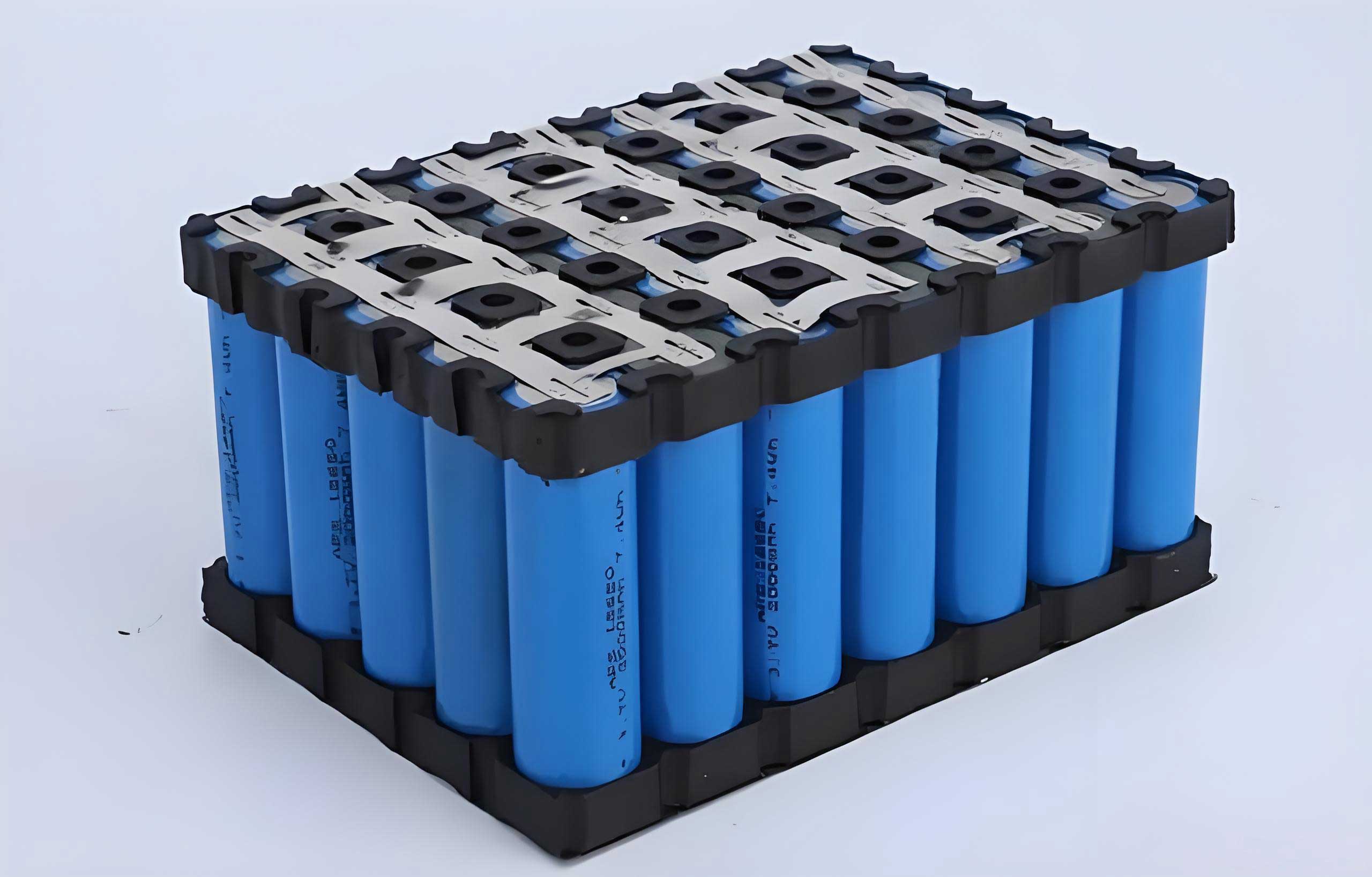
For this study, a battery module was constructed by connecting eight 220 Ah LiFePO4 cells in series. The module specifications are as follows: nominal capacity of 220 Ah, nominal voltage of 25.6 V, charge cut-off voltage of 3.8 V per cell, discharge cut-off voltage of 2.7 V per cell, dimensions of 555 mm × 430 mm × 154 mm, and an operating temperature range of −20 to 55 °C. The experimental setup included a Ningbo Bate BT60V300AC2 battery testing system, which applied controlled current profiles, and a temperature chamber maintained at 25 °C to simulate standard conditions. Data acquisition software monitored real-time voltage and current for each cell. The test protocols were designed based on operational data from a grid-connected energy storage plant in Zhenjiang, China, encompassing both peak shaving and frequency regulation modes.
In the peak shaving mode simulation, the LiFePO4 battery module underwent constant-current charging at 0.5 C rate to specified SOC levels (e.g., 90%, 70%, 50%, 30%), followed by rest periods of varying durations (0, 5, 10, 30, 60 minutes), and then constant-current discharging at 0.5 C to a lower SOC threshold (e.g., 10%). This cycle was repeated over 24 hours to capture relaxation trends. For frequency regulation mode, the module was first charged to 50% SOC at 0.5 C, then subjected to dynamic charge-discharge cycles with average rates of 0.15 C or 0.5 C but with instantaneous rate fluctuations mimicking grid frequency response. After each cycle, rest periods were applied (e.g., 0 minutes initially, then adjusted), and the process continued for 24 hours. Voltage and current data were recorded at high frequency to analyze relaxation behavior post-charge and post-discharge.
The relaxation voltage curves for the LiFePO4 battery module revealed distinct patterns under different conditions. After constant-current charging in peak shaving mode, the cell voltage exhibited an immediate drop due to the removal of ohmic polarization, followed by a gradual decline as electrochemical and concentration polarizations dissipated. For instance, when charging to 90% SOC with a 10-minute rest, the initial voltage drop was approximately 0.04 V, and the total relaxation voltage over 10 minutes was around 82 mV. In contrast, charging to lower SOC levels like 30% resulted in a smaller relaxation voltage of about 53 mV. This indicates that higher SOC leads to greater polarization and thus more pronounced relaxation effects. The relationship between relaxation voltage and SOC can be modeled using an exponential decay function:
$$
V_{\text{relax}}(t) = V_0 e^{-t/\tau} + V_{\text{steady}}
$$
where \( V_{\text{relax}}(t) \) is the voltage at time \( t \) after current interruption, \( V_0 \) is the initial polarization voltage, \( \tau \) is the relaxation time constant, and \( V_{\text{steady}} \) is the steady-state open-circuit voltage. For LiFePO4 batteries, \( \tau \) varies with SOC and current rate.
To compare relaxation times across different rest durations, the following table summarizes key observations from peak shaving experiments:
| Rest Duration (minutes) | Relaxation Voltage (mV) at 90% SOC | Approximate Time to Stabilize (seconds) |
|---|---|---|
| 0 | N/A (no rest) | N/A |
| 5 | 75 | 300 |
| 10 | 82 | 600 |
| 30 | 85 | 1800 |
| 60 | 85 | 3600 |
As shown, a rest period of 10 minutes allowed the LiFePO4 battery voltage to approach near-steady state, with further rest yielding minimal additional change. This suggests that short rests can effectively mitigate polarization without requiring lengthy interruptions, which is advantageous for grid applications where rapid response is needed.
In frequency regulation mode, the LiFePO4 battery module experienced more complex current profiles, resulting in enhanced polarization effects. The relaxation voltage after dynamic cycles was larger compared to peak shaving, and the relaxation time extended due to cumulative electrode activity loss. For example, at an average rate of 0.5 C, the relaxation voltage reached up to 100 mV, and the time to stabilize exceeded 15 minutes. The disparity between individual cells in the module also increased, with voltage differences up to 14 mV at steady state, highlighting the impact of uneven aging under high-rate conditions. The relaxation behavior can be described by a modified equation accounting for variable current rates:
$$
V_{\text{relax}}(t) = \sum_{j} I_j R_j e^{-t/\tau_j} + V_{\text{steady}}
$$
where \( I_j \) represents historical current components, \( R_j \) is associated resistance, and \( \tau_j \) is time constant for each polarization type. This underscores the need for tailored rest strategies for LiFePO4 batteries in frequency regulation to prevent performance degradation.
A critical metric introduced in this study is the voltage offset rate, denoted as \( \sigma_i \), which quantifies the deviation of instantaneous voltage from steady-state voltage. It is defined as:
$$
\sigma_i = \left| \frac{V_i – V_{\text{steady}}}{V_{\text{steady}}} \right|
$$
Here, \( V_i \) is the voltage at a given time after current interruption, and \( V_{\text{steady}} \) is the voltage after a prolonged rest (e.g., 30 minutes), considered the reference steady state. This dimensionless parameter allows for consistent evaluation of voltage recovery across different SOC levels and operational modes. For peak shaving, \( \sigma_i \) decayed rapidly with rest time, approaching values below 0.15% within 540 to 660 seconds. In frequency regulation, \( \sigma_i \) decayed slower, requiring 900 to 1100 seconds to reach similar levels, especially at higher average rates like 0.5 C. The following table illustrates the voltage offset rate trends:
| Operational Mode | Average Current Rate | Time for \( \sigma_i \) to Drop to 0.15% (seconds) | Recommended Rest Range (seconds) |
|---|---|---|---|
| Peak Shaving | 0.5 C | 600 | 540–660 |
| Frequency Regulation | 0.15 C | 828 | 900–1100 |
| Frequency Regulation | 0.5 C | 1061 | 900–1100 |
The data indicates that for LiFePO4 batteries in peak shaving, inter-cycle rests of 540 to 660 seconds are sufficient to achieve substantial voltage recovery, whereas in frequency regulation, longer rests of 900 to 1100 seconds are advisable to counteract higher polarization. These recommendations balance operational efficiency with battery health, as adequate rests reduce the risk of lithium plating and capacity fade in LiFePO4 batteries.
Further analysis considered the effect of SOC on relaxation dynamics. At high SOC (e.g., 70–90%), the LiFePO4 battery exhibited larger relaxation voltages due to increased electrode polarization near full charge. This is attributed to lithium-ion saturation in the cathode material, which slows diffusion and enhances concentration gradients. The relaxation voltage \( \Delta V \) can be correlated with SOC through an empirical relation:
$$
\Delta V = k_1 \cdot \text{SOC} + k_2 \cdot e^{\alpha \cdot \text{SOC}}
$$
where \( k_1 \), \( k_2 \), and \( \alpha \) are constants derived from experimental fits. For the tested LiFePO4 battery module, \( \Delta V \) increased by approximately 30% when SOC rose from 50% to 90%. Therefore, in grid operations, it is beneficial to reduce charging currents at high SOC to minimize polarization stress on LiFePO4 batteries.
Temperature also plays a role in relaxation, though this study focused on 25 °C. Generally, higher temperatures accelerate polarization dissipation, shortening relaxation times, while lower temperatures prolong them. Future work could explore temperature-dependent models for LiFePO4 battery relaxation to optimize rest strategies across varying environmental conditions.
The implications of these findings for grid energy storage systems are significant. By implementing tailored rest intervals based on operational mode and SOC, operators can enhance the cycle life and safety of LiFePO4 battery arrays. For instance, in peak shaving duties, scheduling 10-minute rests between charge-discharge cycles can mitigate voltage spikes and cell imbalance. In frequency regulation, where LiFePO4 batteries face erratic current demands, longer rests of 15–20 minutes after intensive cycles help restore electrode equilibrium. Additionally, real-time monitoring of voltage offset rate could be integrated into battery management systems to dynamically adjust rest periods, ensuring optimal performance for LiFePO4 batteries.
In conclusion, this research provides a comprehensive examination of relaxation phenomena in LiFePO4 batteries under grid-relevant conditions. The experiments demonstrate that relaxation voltage and time are influenced by SOC, current rate, and operational mode, with frequency regulation causing more severe polarization than peak shaving. The proposed voltage offset rate serves as a practical tool for assessing voltage recovery, guiding the selection of rest intervals. For LiFePO4 battery energy storage systems, we recommend inter-cycle rests of 540–660 seconds in peak shaving and 900–1100 seconds in frequency regulation to promote longevity and reliability. These insights contribute to the development of smarter scheduling algorithms for electrochemical energy storage, supporting the transition to resilient and sustainable power grids.
Future studies could expand on this work by investigating relaxation in larger LiFePO4 battery packs, incorporating aging effects, and exploring fast-charging scenarios. Advanced modeling techniques, such as electrochemical impedance spectroscopy coupled with machine learning, could further refine relaxation predictions for LiFePO4 batteries. As the adoption of LiFePO4 battery technology grows in grid applications, understanding and optimizing relaxation behavior will remain a key factor in maximizing their operational efficacy and lifespan.