
Electrochemical energy storage systems have gained widespread adoption in applications such as smoothing power fluctuations from renewable energy sources and performing peak shaving and valley filling on the grid and user sides. Among various battery technologies, LiFePO4 (lithium iron phosphate) batteries are extensively utilized due to their stable performance, long cycle life, and high safety. However, as usage time increases, the capacity and consistency of battery packs degrade, reducing the available capacity and energy of modules and directly impacting their service life. In this study, we focus on LiFePO4 battery modules to investigate aging characteristics and the evolution of state-of-charge (SOC) consistency under typical energy storage working conditions. We conduct cyclic tests simulating peak-valley regulation scenarios in energy storage power stations, analyze the underlying causes of aging, and propose methods for estimating cell parameters within series-connected packs. The findings aim to provide a basis for battery pack maintenance and lifespan extension.
The degradation of LiFePO4 battery packs is influenced by factors such as cycling rate, ambient temperature, and depth of discharge. In energy storage applications, where batteries undergo frequent charge-discharge cycles, understanding the aging mechanisms and consistency evolution is crucial for system reliability. Previous research has primarily focused on electric vehicle scenarios, with limited studies on energy storage-specific conditions. This work addresses this gap by examining LiFePO4 battery packs under simulated grid-scale energy storage operations.
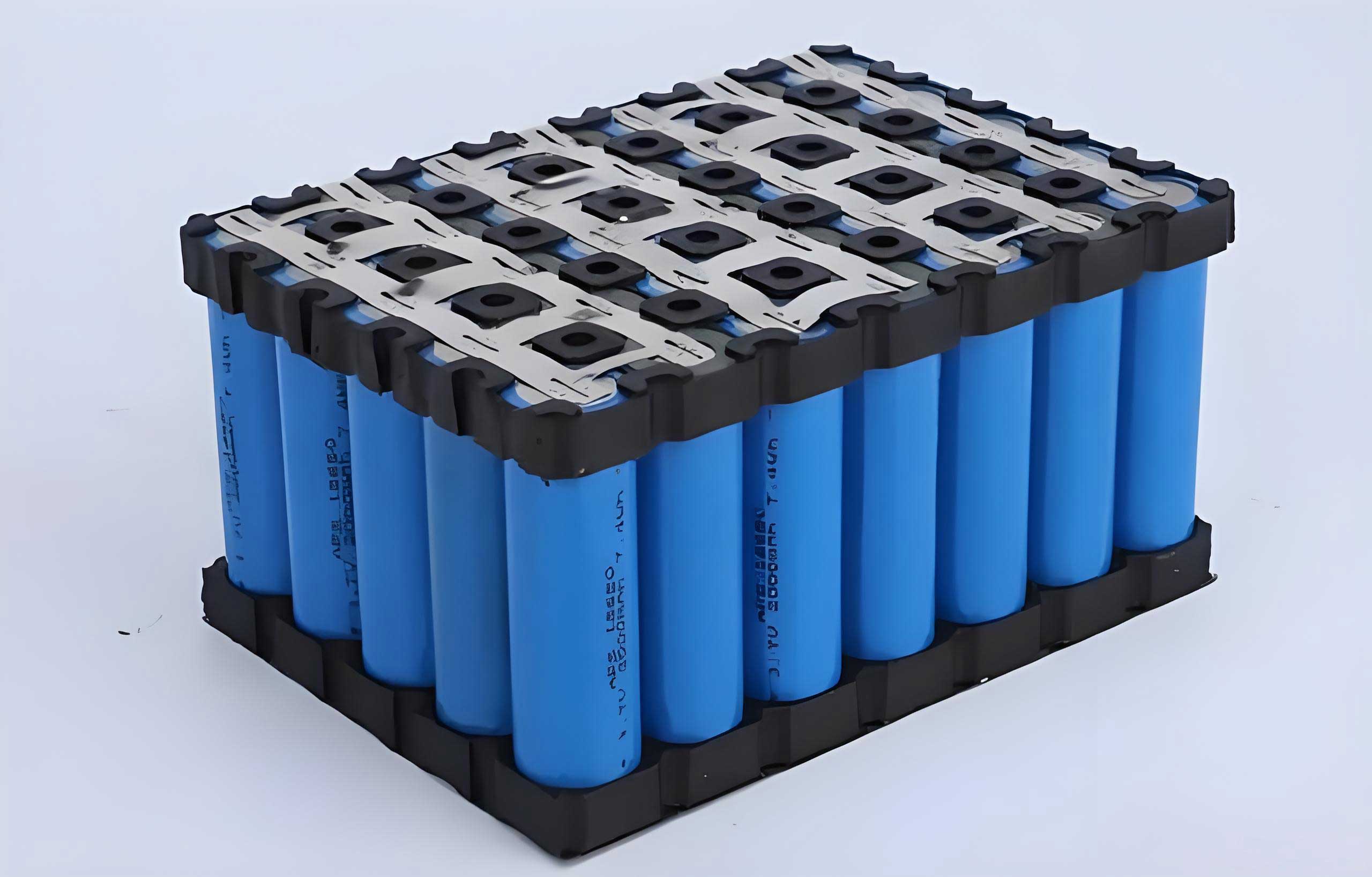
We begin by detailing the experimental setup. Two LiFePO4 battery modules, each configured as 8 series-connected cells with 1 parallel string (1P8S), are used. The key parameters of the LiFePO4 battery packs are summarized in Table 1.
| Parameter | Value |
|---|---|
| Cathode Material | LiFePO4 |
| Anode Material | Graphite |
| Rated Capacity | 150 Ah |
| Module Nominal Voltage | 25.6 V |
| Cell Upper Cut-off Voltage | 3.65 V |
| Cell Lower Cut-off Voltage | 2.50 V |
| Maximum Charge Current (25°C) | 66 A |
| Maximum Discharge Current (25°C) | 100 A |
| Operating Temperature Range | -20 to +55°C |
Prior to cyclic testing, we perform initial performance tests on the LiFePO4 battery modules, including capacity measurements, internal resistance tests, and low-current charge-discharge cycles. The internal resistance of each cell is identified using the Hybrid Pulse Power Characterization (HPPC) method at 50% SOC, where the LiFePO4 battery exhibits stable resistance. The results for the 16 cells across two modules show significant variability, with most resistances between 0.2–0.3 mΩ and a few exceeding 0.4 mΩ. The capacity distribution of individual cells, measured via low-current (0.1C) cycling, also reveals inconsistencies, with capacities ranging from approximately 160 Ah to 194 Ah. This initial inconsistency is critical as it affects the overall pack degradation.
The cyclic test simulates a typical energy storage scenario for peak-valley regulation. We set the SOC operating range between 10% and 90% to balance safety and lifespan. The charge rate is 3/8C, and the discharge rate is 1/2C. The LiFePO4 battery packs undergo 700 cycles, with performance tests every 100 cycles and low-current tests every 500 cycles. The capacity fade of the packs over cycles is shown in Figure 1 (conceptual representation). Both modules exhibit rapid capacity loss initially, followed by a slower, linear degradation phase. The module with poorer initial consistency degrades faster, reaching 75% capacity retention after 700 cycles, while the more consistent module retains 84% capacity. This underscores the impact of initial cell variations on the longevity of LiFePO4 battery packs in energy storage systems.
To delve into the aging mechanisms of the LiFePO4 battery cells, we employ Incremental Capacity Analysis (ICA). The ICA transforms the voltage-capacity (V-Q) curve into incremental capacity (IC) peaks, corresponding to phase transitions in the electrode materials. For LiFePO4 batteries, the charging curve typically shows five voltage plateaus, represented as five IC peaks (labeled ⑤ to ① from low to high voltage). The IC curves before and after cycling reveal distinct changes: the most prominent reduction occurs in peak ①, followed by peak ②, while other peaks remain relatively stable. Additionally, the peaks shift toward higher voltages due to increased polarization from rising internal resistance. These observations suggest that the primary aging modes for these LiFePO4 battery cells under storage conditions are lithium-ion loss and cathode active material loss, with minor anode material loss. The constant high-voltage region (above 3.4 V) charge capacity implies that degradation is concentrated in the mid-voltage plateau regions.
The ICA results can be quantified using the following relationship for IC:
$$IC = \frac{dQ}{dV}$$
where \(Q\) is the charge capacity and \(V\) is the voltage. The area under an IC peak corresponds to the capacity associated with a specific phase transition. The degradation in peak areas, particularly for peaks ① and ②, indicates loss of active lithium and electrode material. We model the capacity loss \(\Delta C\) as a function of cycle number \(n\) using an empirical equation:
$$\Delta C(n) = A \cdot \exp(B \cdot n) + C \cdot n$$
where \(A\), \(B\), and \(C\) are constants derived from fitting experimental data. For the LiFePO4 battery packs, the capacity fade follows a semi-exponential trend, aligning with typical aging patterns.
Given the cell-to-cell variations in aging, estimating individual cell capacities within a series-connected pack is essential for monitoring consistency. We propose a method based on module test data and initial cell characteristics. Since the high-voltage region capacity remains relatively constant with aging, we fit a function \(Q = f(V)\) for each cell from initial data. During module charging, when the pack reaches the cut-off voltage, the terminal voltage \(V_t\) of each cell is recorded. The high-voltage charge capacity \(Q_{\text{high}}\) for a cell is estimated as:
$$Q_{\text{high}} = f(V_{\text{cut\_off}}) – f(V_t)$$
where \(V_{\text{cut\_off}} = 3.65 \, \text{V}\). Similarly, the low-voltage capacity \(Q_{\text{low}}\) can be estimated. The total cell capacity \(Q_{\text{est}}\) is then:
$$Q_{\text{est}} = Q_{\text{module, mid}} + Q_{\text{high}} + Q_{\text{low}}$$
Here, \(Q_{\text{module, mid}}\) is the mid-voltage plateau capacity obtained from module charging data. This approach allows rapid capacity estimation without disassembling the pack. Validation against actual cell tests shows errors mostly within 4%, confirming its reliability for LiFePO4 battery packs.
Using this estimation method, we track the capacities of individual cells in the LiFePO4 battery modules over cycles. The results are summarized in Table 2 for selected cycles.
| Cycle Number | Cell 1 (M1) | Cell 2 (M1) | Cell 3 (M1) | Cell 4 (M1) | Cell 5 (M2) | Cell 6 (M2) | Cell 7 (M2) | Cell 8 (M2) |
|---|---|---|---|---|---|---|---|---|
| 0 | 177.2 | 169.5 | 172.8 | 175.1 | 180.3 | 176.7 | 174.9 | 178.5 |
| 100 | 175.8 | 167.3 | 170.5 | 172.9 | 178.6 | 174.8 | 172.7 | 176.4 |
| 300 | 173.4 | 164.1 | 167.2 | 169.8 | 176.2 | 172.1 | 169.8 | 173.9 |
| 500 | 170.5 | 160.9 | 163.8 | 166.5 | 173.5 | 169.2 | 166.7 | 171.0 |
| 700 | 167.2 | 157.4 | 160.1 | 162.9 | 170.6 | 166.0 | 163.3 | 167.8 |
The capacity divergence increases with cycles, emphasizing the need for active balancing in LiFePO4 battery packs for energy storage.
Next, we analyze the SOC consistency within the LiFePO4 battery packs. The pack capacity \(C_{\text{pack}}\) is limited by the weakest cell and can be expressed as:
$$C_{\text{pack}} = \min_i (SOC_i \cdot C_i) + \min_j \left( (1 – SOC_j) \cdot C_j \right)$$
where \(SOC_i\) and \(C_i\) are the SOC and capacity of cell \(i\), respectively. Using the capacity estimates, we compute the high-voltage SOC (\(SOC_H\)) for each cell as:
$$SOC_H = \frac{Q_{\text{high}}}{Q_{\text{est}}} \times 100\%$$
The evolution of \(SOC_H\) over 500 cycles is plotted in Figure 2 (conceptual). Cells with higher initial capacities show more significant SOC reduction over cycles, due to slower degradation rates and efficiency differences. For instance, in Module 2, Cell 5’s \(SOC_H\) drops to 88% after 500 cycles, creating an SOC spread of 11.7% within the pack. This divergence reduces the effective pack capacity and necessitates periodic balancing to maintain optimal performance of the LiFePO4 battery system.
To further quantify aging, we derive a model for capacity fade based on stress factors. The capacity loss rate \(\frac{dC}{dn}\) can be related to operating conditions such as charge rate \(I_c\), discharge rate \(I_d\), and temperature \(T\). For LiFePO4 battery packs under storage conditions, we propose:
$$\frac{dC}{dn} = k_1 \cdot I_c^{\alpha} + k_2 \cdot I_d^{\beta} + k_3 \cdot \exp\left(-\frac{E_a}{RT}\right)$$
where \(k_1\), \(k_2\), \(k_3\), \(\alpha\), \(\beta\) are constants, \(E_a\) is activation energy, \(R\) is gas constant, and \(T\) is temperature. Integrating this over cycles yields the capacity retention. Our experimental data fit this model with \(E_a \approx 30 \, \text{kJ/mol}\) for LiFePO4 batteries, indicating thermal acceleration of aging.
Additionally, we explore the impact of inconsistency on pack lifespan. The variance in cell capacities \(\sigma_C^2\) increases with cycles, which we model as:
$$\sigma_C^2(n) = \sigma_0^2 + \gamma \cdot n$$
where \(\sigma_0^2\) is initial variance and \(\gamma\) is a growth rate. For our LiFePO4 battery modules, \(\gamma\) is higher for the less consistent pack, leading to earlier failure. This highlights the importance of cell matching in prolonging the life of LiFePO4 battery energy storage systems.
In conclusion, our study on LiFePO4 battery packs under typical energy storage working conditions reveals that capacity degradation is influenced by initial consistency, with poorer consistency accelerating fade. ICA analysis identifies lithium-ion loss and cathode material loss as primary aging mechanisms for LiFePO4 battery cells. The proposed capacity estimation method enables monitoring of individual cells within series-connected packs, facilitating maintenance decisions. SOC inconsistency evolves due to differential aging and efficiency, underscoring the need for active management. These insights contribute to the development of more durable and reliable LiFePO4 battery-based energy storage solutions, supporting grid stability and renewable integration.
Future work could involve extending the cyclic tests to higher cycle counts, incorporating temperature variations, and developing adaptive balancing algorithms tailored for LiFePO4 battery packs. The methodologies presented here can be applied to other battery chemistries, but the specific aging patterns may differ. Ultimately, optimizing the operation and maintenance of LiFePO4 battery systems will enhance their economic viability and sustainability in the energy storage landscape.