
In the global pursuit of carbon peak and neutrality targets, photovoltaic and wind power are poised to become the backbone of clean energy. However, the inherent instability, randomness, and intermittency of renewable generation place higher demands on grid frequency control. Consequently, within new-type power systems, energy storage emerges as a critical component, essential for integrating renewable energy and ensuring grid security. Energy storage systems enhance the match between grid output and load, mitigate output fluctuations, reduce energy loss, and improve overall energy utilization efficiency. Owing to their advantages such as high energy density, absence of memory effect, fast charge/discharge capability, and rapid response, lithium batteries, particularly lithium iron phosphate (LiFePO4/LFP) batteries, have been widely adopted in recent years for electrochemical energy storage, deployed on the generation side alongside wind and solar farms and on the user side.
The lifespan of the lifepo4 battery is a pivotal performance indicator for energy storage system products, with current market expectations often requiring warranties extending up to 20 years. Research indicates that the longevity of a lifepo4 battery is influenced by a multitude of factors. Analyzing the aging mechanisms of lifepo4 batteries and the impact of various factors on system lifespan, thereby identifying key levers and optimal parameters for extending battery life, is of significant importance for enhancing the competitiveness of energy storage systems.
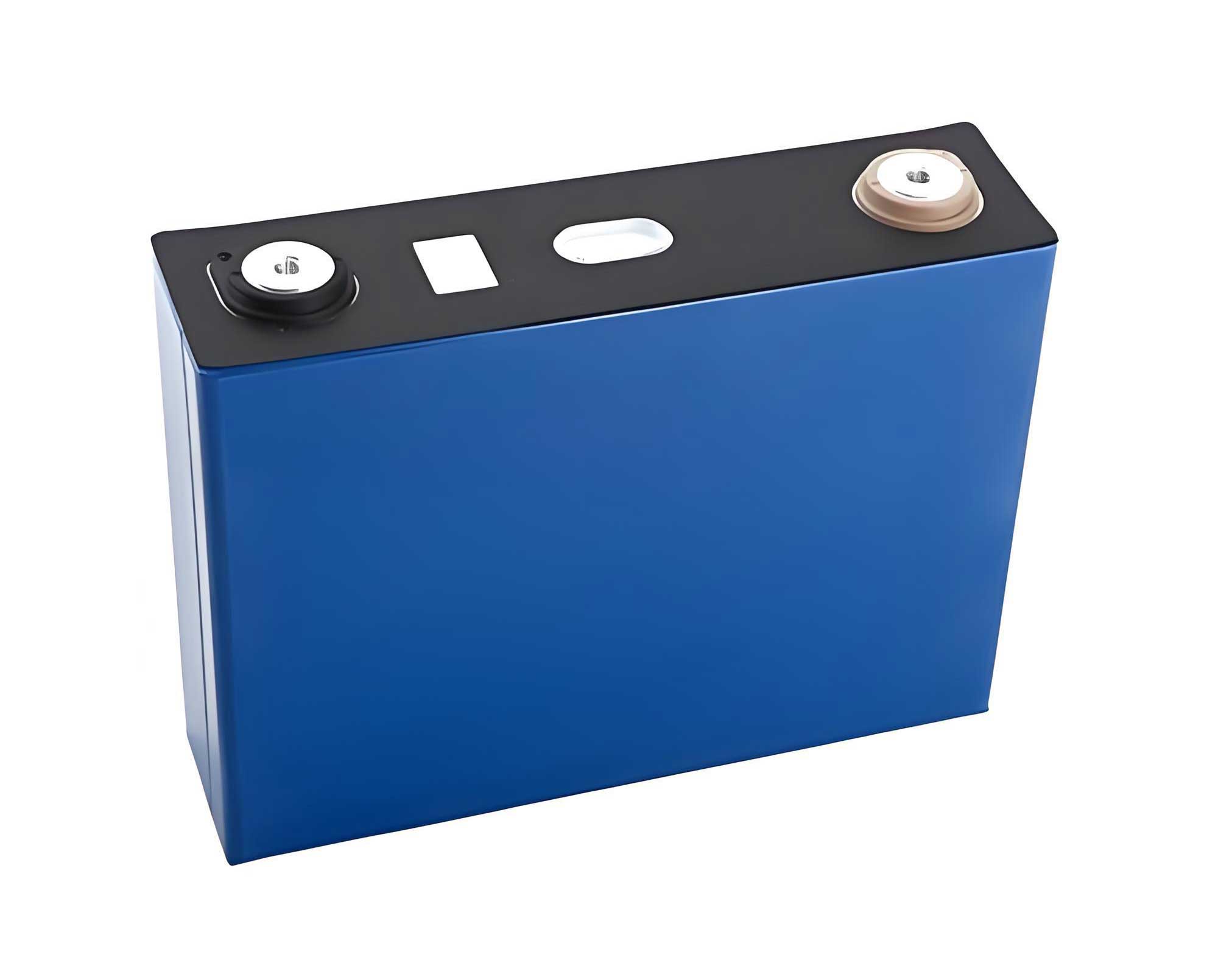
Aging Mechanisms of the Lifepo4 Battery
A lithium-ion battery comprises multiple components including cathode material, anode material, electrolyte, and separator. Its capacity fade involves a series of complex physical and chemical changes. Based on literature review and experimental data, I have summarized the performance degradation mechanisms and their influencing modes for the lifepo4 battery. The factors affecting the performance decay of a lifepo4 battery primarily include operating time, temperature, state of charge (SOC), current, and mechanical stress. Among these, time primarily influences the growth of the Solid Electrolyte Interphase (SEI) layer. Elevated temperatures accelerate both the growth and decomposition of the SEI layer, as well as the decomposition of the electrolyte and binder. Low temperatures can induce lithium plating (metallic lithium deposition). High SOC not only produces effects similar to high temperature but also leads to graphite exfoliation and lithium plating. Low SOC affects SEI decomposition and corrosion of current collectors. The magnitude of current density mainly influences graphite exfoliation, cathode material structure, and SEI layer structure. Mechanical pressure primarily affects the structure of active material particles and the electrical contact between components; excessive pressure can also trigger lithium plating risks.
In summary, the capacity loss in a lifepo4 battery is mainly attributed to three aspects: loss of active lithium (Li+), loss of active material in the electrodes, and increase in internal resistance. Lithium plating at the anode and decomposition of the SEI layer directly contribute to the loss of active lithium. Graphite exfoliation, structural changes in electrode materials, disordering of the cathode material structure, particle cracking, dissolution of transition metals, and corrosion of current collectors all impair the performance of the positive and negative electrodes. The interplay of these mechanisms under different operating conditions dictates the overall degradation trajectory of the lifepo4 battery.
Critical Factors for Extending Energy Storage System Lifespan
The key factors influencing the lifespan of an energy storage system based on the lifepo4 battery encompass the development of long-life cells, consistency control among cells, and the application conditions of the system. The development of a long-life lifepo4 battery is strongly correlated with cell design and manufacturing processes. System application conditions mainly include storage and operational parameters. In this analysis, I focus on the aspects of lifepo4 battery design, production, and application to identify optimal parameters for extending system life.
Lifepo4 Battery Design
Cell design is a crucial phase in lifepo4 battery development, where different target performances necessitate matching specific material systems and design parameters.
1. Key Materials: The selection of key materials—cathode, anode, electrolyte, and separator—is fundamental for a long-life lifepo4 battery.
| Material | Selection Strategy for Long Life | Rationale |
|---|---|---|
| Cathode (LiFePO4) | Material with high structural stability, achieved via element doping and carbon coating. | Inhibits Fe dissolution and phase transition, maintaining structural integrity. |
| Anode (Graphite) | Graphite with low expansion coefficient and appropriate particle size distribution. | Reduces particle cracking and associated SEI damage during cycling. |
| Electrolyte | Formulation containing film-forming additives and optimal salt concentration (e.g., LiPF6). | Promotes the formation of a stable, robust SEI layer on the anode. |
| Separator | Ceramic-coated or functional-coated separator. | Reduces electrode wrinkling, improves thermal stability, and enhances cycle performance. |
2. Core Design Parameters: Several design parameters within the lifepo4 battery directly impact its longevity.
| Design Parameter | Optimization Guideline for Long Life | Impact on Degradation Mechanisms |
|---|---|---|
| Slurry Formula | Increase conductive agent and binder content. | Mitigates active material detachment from electrodes during cycling. |
| Electrode Areal Density | Reduce coating weight, especially for cathode (e.g., ≤ 380 g/m²). | Shortens Li+ diffusion path, reducing polarization and side reactions. |
| Electrode Compaction Density | Lower compaction density (e.g., Cathode ≤ 2.55 g/cc, Anode ≤ 1.58 g/cc). | Increases electrode porosity, facilitating electrolyte wetting and Li+ transport. |
| Negative-to-Positive (N/P) Capacity Ratio | Increase N/P ratio (e.g., ≥ 1.12). | Provides excess anode capacity, significantly reducing lithium plating risk at high rates or low temperatures. |
| Cell Stacking/Grouping Tolerance | Maintain appropriate tolerance (e.g., 85-92% for prismatic cells). | Accommodates initial assembly and provides space for controlled expansion. |
| Electrolyte Filling Volume | Increase electrolyte amount (e.g., filling coefficient ≥ 4.0 g/Ah). | Ensures sufficient ionic conductivity throughout life, compensating for electrolyte decomposition. |
The N/P ratio is a critical design parameter. An increased N/P ratio for a lifepo4 battery directly mitigates anode overpotential during charge, which is a primary driver for lithium plating. This can be conceptually related to the anode potential ($$E_{anode}$$) during charge:
$$ E_{anode} = \mu_{Li} – \eta_{charge} $$
where $$ \mu_{Li} $$ is the chemical potential of lithium in graphite and $$ \eta_{charge} $$ is the overpotential. A higher N/P ratio effectively keeps $$ E_{anode} $$ above 0 V vs. Li/Li+, preventing lithium deposition.
Lifepo4 Battery Manufacturing
The production process of a lifepo4 battery is complex, taking approximately 14 days from raw material to finished cell. Consistency and precision are paramount.
1. Environmental Control: Production of a high-quality lifepo4 battery demands strict control over environmental moisture and dust. Excessive moisture compromises electrode and electrolyte stability and adversely affects SEI formation. Current stringent standards typically require a dew point ≤ -36°C in the electrolyte filling area and a cleanroom grade ≤ Class 100,000 (ISO 8).
2. Critical Process Steps: Specific manufacturing processes have a profound impact on the ultimate lifespan of the lifepo4 battery.
| Process Step | Key Requirement / Best Practice | Benefit for Lifepo4 Battery Life |
|---|---|---|
| Cathode Calendering (Embossing) | Implement electrode embossing/pattern pressing. | Reduces electrode wrinkling, minimizes localized lithium plating and “black spots,” enhances cycle life. |
| Electrode Drying | Control baking time and temperature precisely (e.g., Cathode moisture ≤ 350 ppm, Anode ≤ 250 ppm). | Minimizes residual water content, a key source of HF formation and subsequent corrosion. |
| Jellyroll/Cell Stack Hot Pressing | Optimize hot-pressing pressure and duration. | Improves interfacial contact between electrodes and separator, ensuring uniform current distribution. |
| Formation | Use low-current (∼0.1C), elevated temperature (∼45°C) formation protocols. | Promotes the growth of a stable, uniform SEI layer on the anode surface, a foundational step for long life. |
| Cell Assembly | Prefer stacking over winding for energy storage form factors. | Avoids issues like winding core deformation and R-angle lithium plating common in wound cells, improving cycle life. |
| Pre-lithiation | Incorporate pre-lithiation techniques (e.g., via stabilized lithium metal powder, SLMP). | Pre-supplies active lithium ions to compensate for irreversible loss during initial cycles and long-term SEI growth, boosting overall cycle life. |
Managing Lifepo4 Battery Inconsistency
Inconsistency among individual cells within a pack manifests as variations in capacity, internal resistance, self-discharge rate, lifespan, SOC, and operating voltage. These inconsistencies originate from manufacturing tolerances and are exacerbated by non-uniform operating conditions (temperature, current), creating a feedback loop that accelerates cell-to-cell divergence.
The impact of inconsistency on a lifepo4 battery-based energy storage system’s life is multifaceted: During charge/discharge, weaker cells experience deeper cycling or higher currents, leading to faster degradation. Thermal gradients within the pack cause cells to age at different rates, as temperature is a primary stressor. These factors couple during operation, potentially causing premature system failure when the weakest cell reaches its end-of-life threshold. Therefore, extending system life requires focused strategies on cell screening, thermal management, and active/passive balancing to homogenize the state of all lifepo4 battery cells in the pack.
Storage Conditions for Lifepo4 Battery and Systems
The calendar life of a lifepo4 battery or system is strongly dependent on storage time, SOC, and temperature. The degradation during storage (calendar aging) generally follows an Arrhenius-type relationship combined with a SOC-dependent function:
$$ Q_{loss}^{calendar} = A \cdot f(SOC) \cdot \exp\left(-\frac{E_a}{R T}\right) \cdot t^{z} $$
where:
• $$ Q_{loss}^{calendar} $$ is the capacity loss during storage.
• $$ A $$ is a pre-exponential factor.
• $$ f(SOC) $$ is a function describing the dependency on State of Charge.
• $$ E_a $$ is the apparent activation energy for the dominant aging reaction (in J/mol).
• $$ R $$ is the ideal gas constant (8.314 J/mol·K).
• $$ T $$ is the absolute storage temperature (in K).
• $$ t $$ is the storage time.
• $$ z $$ is the time exponent.
Empirical data shows that storage temperature has a more pronounced effect than SOC. For instance, storage at 60°C can cause capacity fade approximately 2.4 times faster than at 25°C. Similarly, storing a lifepo4 battery at a moderate SOC (e.g., 25-40%) can slow capacity fade by 15-30% compared to storage at 100% SOC. The optimal storage SOC for a lifepo4 battery is typically in the range of 30-50% at a cool temperature (e.g., 15-25°C).
Operational Conditions for Lifepo4 Battery Systems
The cycle life of a lifepo4 battery system is intricately linked to its operational profile, primarily defined by charge/discharge rate (C-rate), temperature, SOC operating window, and applied mechanical pressure.
1. Charge/Discharge Rate (C-rate): Increasing the C-rate significantly accelerates the capacity fade of a lifepo4 battery. Studies indicate that while the LiFePO4 cathode structure remains relatively stable, accelerated degradation at high rates is primarily due to exacerbated SEI growth/decomposition and lithium plating on the graphite anode caused by increased polarization. Therefore, operating the energy storage system at lower, more moderate C-rates (e.g., ≤ 0.5C for continuous operation) is beneficial for maximizing the cycle life of the lifepo4 battery.
2. Operating Temperature: Elevated operating temperatures dramatically increase the rate of capacity fade. A general empirical observation suggests that for a typical lifepo4 battery, every 1°C increase above 25°C may reduce cycle life by approximately 100 equivalent full cycles. At higher temperatures, accelerated parasitic reactions dominate, including electrolyte decomposition, transition metal dissolution from the cathode (Fe), and accelerated SEI growth/restructuring. The temperature effect on cycle life often follows an Arrhenius relationship similar to calendar aging, though with a potentially different activation energy $$E_a^{cycle}$$.
3. SOC Operating Window: The depth and range of cycling profoundly affect lifespan. Cycling a lifepo4 battery at higher SOC ranges (e.g., 75-100% SOC) leads to significantly faster capacity fade compared to cycling in lower ranges (e.g., 0-25% SOC), with degradation rates potentially doubling. This is attributed to two main factors: firstly, the higher anode potential at elevated SOC increases the thermodynamic driving force for electrolyte reduction and SEI growth. Secondly, the LiFePO4 cathode undergoes greater lattice strain at high lithium extraction levels, potentially promoting Fe dissolution, which migrates to the anode and catalyzes SEI decomposition. Therefore, for energy storage applications where full energy throughput is not constantly required, limiting the maximum SOC (e.g., to 90% or lower) and avoiding deep discharges can greatly extend the useful life of the lifepo4 battery system. The relationship can be modeled as a stress factor dependent on the SOC swing (ΔSOC).
4. Mechanical Pressure (Pre-stress): Applied pressure on prismatic or pouch-type cells within a module, known as pre-stress or stacking pressure, must be carefully optimized. Both insufficient and excessive pressure are detrimental to the cycle life of a lifepo4 battery. Insufficient pressure allows electrodes to separate during cycling due to graphite anode expansion, increasing interfacial resistance and promoting inhomogeneous current distribution and localized lithium plating. Excessive pressure restricts ionic diffusion within the electrodes and separator, also leading to massive lithium plating and rapid capacity fade. Furthermore, the optimal pressure is not static; as the lifepo4 battery cycles, internal side reactions and anode expansion cause the swelling force to increase. Research suggests an initial assembly pressure around 300 kgf for a typical large-format prismatic lifepo4 battery, which may increase by up to an order of magnitude by the end of life (e.g., SOH=60%). A force-balance equation considering elastic and swelling components is essential for module design:
$$ F_{total}(t, C) = F_{initial} + k \cdot \Delta V(C, t) $$
where $$F_{total}$$ is the total force, $$F_{initial}$$ is the initial pre-stress, $$k$$ is a system stiffness constant, and $$\Delta V$$ is the volume change of the lifepo4 battery as a function of capacity C and time t.
Summary and Future Perspectives
This analysis has systematically detailed the key factors influencing the longevity of energy storage systems centered on the lifepo4 battery, spanning cell design, manufacturing, consistency management, storage, and operational conditions. By understanding the underlying aging mechanisms—such as SEI evolution, lithium plating, and active material loss—and implementing the identified optimal parameters for material selection, design (e.g., high N/P ratio), manufacturing controls, and application (e.g., moderate temperature, limited SOC window, optimized pressure), developers can significantly extend the operational life of lifepo4 battery-based energy storage systems.
Looking forward, to maximize the economic return and reliability of these systems, a critical challenge lies in developing accurate lifespan prediction models that account for the complex coupling between calendar and cycle aging under realistic, variable operating profiles. Future research should focus on establishing physics-based or data-driven models that integrate the effects of combined stressors (e.g., fluctuating temperature, dynamic C-rates, varying SOC windows, and their sequences) on the degradation of the lifepo4 battery. Overcoming this challenge will enable predictive health management and optimized operational strategies, ultimately unlocking the full potential of long-duration energy storage using the robust lifepo4 battery technology.