
The accurate estimation of the State of Charge (SOC) remains a critical challenge for battery management systems, particularly for Lithium Iron Phosphate (LiFePO₄ or LFP) batteries. The characteristic flatness of the Open-Circuit Voltage (OCV) versus SOC curve, especially within the 20% to 80% SOC range, significantly diminishes the sensitivity and reliability of estimation methods that rely solely on electrical parameters. Traditional model-based and data-driven approaches using voltage and current data often struggle with accuracy in this plateau region and can be further complicated by hysteresis effects. This work addresses these limitations by proposing a comprehensive data fusion strategy that synergistically leverages electrical, thermal, and acoustic data sources. By moving beyond single-modality sensing, the method captures a more holistic representation of the electrochemical and physical state changes within a LiFePO₄ battery during operation.
The core innovation lies in a systematic, multi-angle feature extraction from the acquired electro-thermal-acoustic signals, followed by a robust hybrid feature selection mechanism. To overcome the shortcomings of any single selection technique, a novel fusion strategy is employed, integrating the strengths of filter methods (Spearman correlation, Mutual Information) and embedded methods (Category Boosting or CatBoost, Least Absolute Shrinkage and Selection Operator or LASSO). This ensures the identification of the most informative and non-redundant features for SOC modeling. The subsequent estimation model, built upon these selected key features, demonstrates marked improvements in accuracy, robustness, and generalizability across varying discharge rates and dynamic load profiles, offering a potent solution for precise LiFePO₄ battery management.
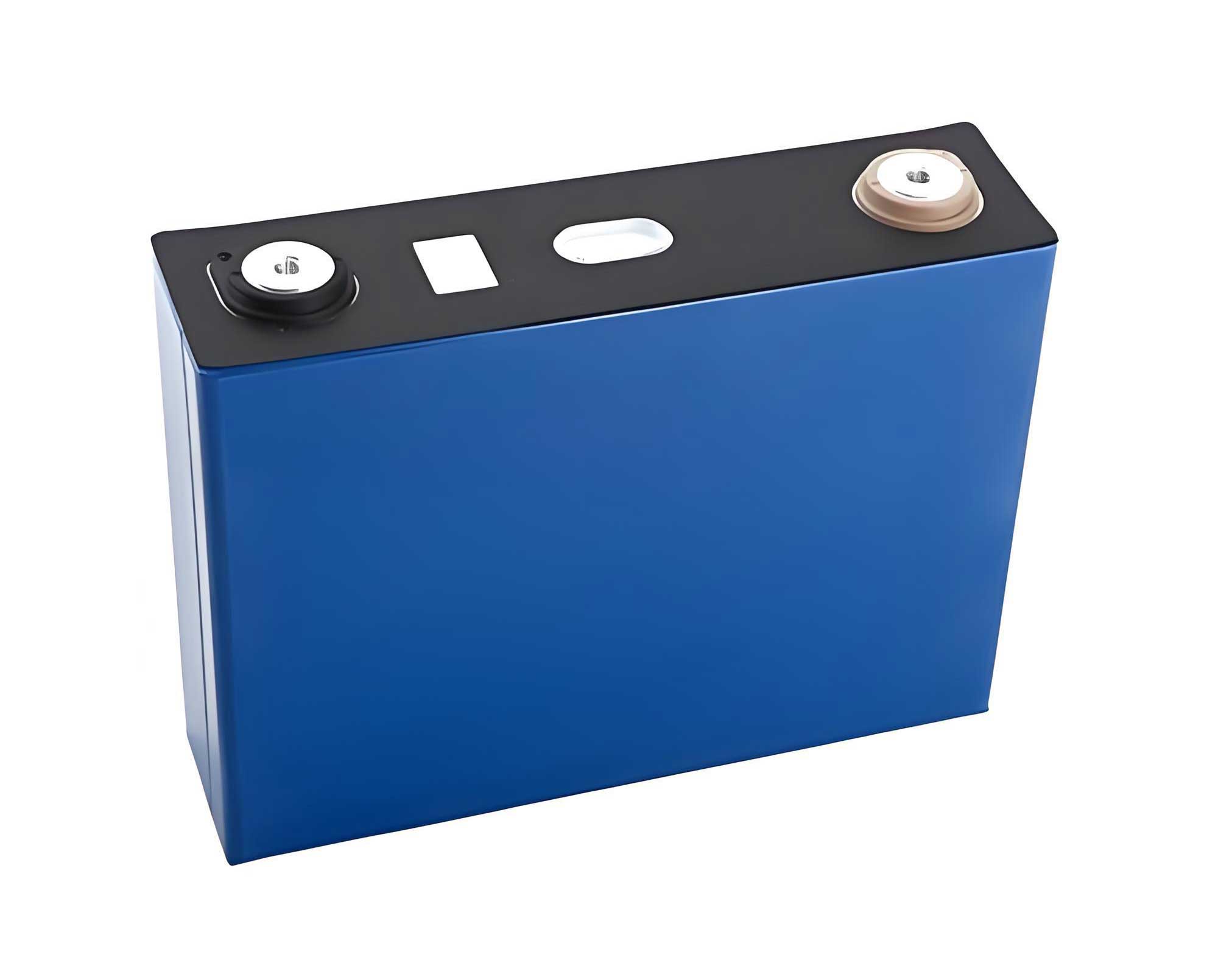
Experimental Foundation and Multi-Source Data Acquisition
The experimental validation was conducted using commercial-grade 10 Ah soft-pack LiFePO₄ batteries. A dedicated platform was established to synchronously capture electrical (voltage, current), thermal (surface temperature), and acoustic (ultrasonic through-transmission) data under controlled environmental conditions at 25°C. The ultrasonic measurement system utilized a 4 MHz piezoelectric transducer in a pitch-catch configuration, with signals sampled at a high frequency of 250 MHz. Batteries were subjected to galvanostatic charge-discharge cycles at multiple C-rates (0.4C, 0.6C, 0.8C, 1.0C) to evaluate the method’s performance under different electrical loadings.
Comprehensive Feature Engineering from Electro-Thermal-Acoustic Data
A pivotal step in this data-driven approach is the extraction of comprehensive features that encapsulate the state information from each data modality. Features were derived from multiple perspectives to capture both instantaneous states and dynamic changes.
Electrical and Thermal Feature Extraction
From the electrical and thermal signals, features are categorized into instantaneous values and short-term derivatives, providing insights into the immediate state and its rate of change. The electrical features include terminal voltage (v) and current (i), alongside their first (dv, di) and second-order derivatives (d²v, d²i). Similarly, thermal features include surface temperature (T) and its first and second derivatives (dT, d²T). These derivatives, calculated over a 1-minute time scale, are crucial for capturing dynamic electrochemical and thermal behaviors. The relationship governing temperature evolution highlights the coupling between electrical and thermal domains:
$$
\frac{dT}{dt} = \frac{Q – hA (T – T_{env})}{m c_p}
$$
where the total heat generation rate \(Q\) combines irreversible Joule heating and reversible reaction heat:
$$
Q = Q_{jou} + Q_{re} = |I|^2 R + \frac{I T \Delta S}{nF}
$$
Here, \(I\) is current, \(R\) is internal resistance, \(\Delta S\) is entropy change, \(n\) is the number of electrons transferred, \(F\) is Faraday’s constant, \(h\) is heat transfer coefficient, \(A\) is surface area, \(m\) is mass, \(c_p\) is specific heat, and \(T_{env}\) is ambient temperature. This intrinsic coupling justifies the fusion of electrical and thermal data for a more accurate state depiction.
| Signal Type | Feature Category | Features Extracted |
|---|---|---|
| Electrical | Instantaneous | Voltage (v), Current (i) |
| Short-term Change | First derivative (dv, di) | |
| Second derivative (d²v, d²i) | ||
| Thermal | Instantaneous | Temperature (T) |
| Short-term Change | First derivative (dT) | |
| Second derivative (d²T) |
Advanced Ultrasonic Signal Feature Extraction
Moving beyond conventional time-of-flight analysis, a multi-domain feature extraction protocol was implemented for the ultrasonic signals to capture the complex, non-stationary interactions between sound waves and the evolving battery microstructure.
1. Time-Domain Features: Following wavelet-based denoising, a suite of statistical and waveform-based features were calculated from the raw, absolute, and envelope-transformed signals. These features describe the signal’s energy, shape, and distribution.
| Feature Name | Formula / Description |
|---|---|
| Time of Flight (TOF) | Propagation time of the ultrasonic wave. |
| Root Mean Square (RMS) | $$ RMS = \sqrt{\frac{1}{N}\sum_{i=1}^{N} x_i^2} $$ |
| Absolute Energy (AE) | $$ AE = \sum_{i=1}^{N} x_i^2 $$ |
| Signal Amplitude (A_max, A_min) | Maximum and minimum amplitude of the signal. |
| Spectral Entropy (SE) | Entropy of the power spectrum, indicating spectral randomness. |
| Higher-Order Moments (M₃, M₄, M₅) | $$ M_k = \frac{1}{N}\sum_{i=1}^{N} |x_i|^k $$ for k=3,4,5 (related to skewness, kurtosis). |
| Envelope Features | Peak position, area under envelope, widths at various heights. |
2. Frequency-Domain Features: Fast Fourier Transform (FFT) was applied to obtain the signal’s frequency spectrum. Features describing the spectral centroid, spread, flatness, and energy distribution at specific frequency bins were extracted. The spectral centroid (SC), for instance, is calculated as:
$$
SC = \frac{\sum_{i=1}^{N} f_i X_i}{\sum_{i=1}^{N} X_i}
$$
where \(f_i\) is the frequency and \(X_i\) is the corresponding FFT magnitude at that frequency.
3. Time-Frequency Domain Features: To resolve temporal changes in frequency content, Discrete Wavelet Transform (DWT) using the db6 wavelet over 5 decomposition levels was performed. Features such as wavelet energy, entropy, and standard deviation were computed from the approximation and detail coefficients at each level. For a decomposition level \(j\), the wavelet energy \(E_j\) is:
$$
E_j = \sum_k |c_{j,k}|^2
$$
where \(c_{j,k}\) are the wavelet coefficients at level \(j\). This multi-resolution analysis is sensitive to subtle changes in the ultrasonic signal caused by lithium-ion intercalation dynamics within the LiFePO₄ battery electrodes.
Hybrid Intelligent Feature Selection Strategy
The initial comprehensive feature extraction resulted in a high-dimensional feature vector (nearly 1000 features). To prevent overfitting, reduce computational cost, and identify the most salient features, a hybrid feature selection strategy was developed. This strategy combines four distinct methods through a majority voting scheme, mitigating the bias or limitation inherent in any single method.
1. Filter Methods:
– Spearman’s Rank Correlation: Identifies monotonic relationships between each feature and the target SOC. The correlation coefficient \(r_s\) is given by:
$$ r_s = \frac{cov(R(x), R(y))}{\sigma_{R(x)} \sigma_{R(y)}} $$
where \(R\) denotes the rank.
– Mutual Information (MI): Quantifies the non-linear dependence between features and SOC, measuring the reduction in uncertainty about SOC given the feature.
2. Embedded Methods:
– CatBoost: A gradient boosting algorithm that inherently ranks feature importance based on their usage and contribution in building the decision trees.
– LASSO Regression: Performs feature selection via L1 regularization, which shrinks some coefficients to exactly zero. It minimizes the objective function:
$$ \min_{\beta} \left( \frac{1}{2N} \sum_{i=1}^{N} (y_i – \beta \cdot x_i)^2 + \lambda \sum_{j=1}^{p} |\beta_j| \right) $$
where \(\lambda\) is the regularization parameter and \(\beta_j\) are the coefficients.
Each method selected its top 5% most important features. A final feature was included in the optimal set only if it was selected by at least two of the four methods. This consensus-based approach yielded a robust set of 14 key features, comprising:
– 1 Electrical Feature: Voltage.
– 1 Thermal Feature: Temperature.
– 12 Ultrasonic Features: A mix of time-domain (e.g., TOF, A_max), frequency-domain (e.g., Spectral Entropy, Spectral Flatness, specific FFT-bin magnitudes), and time-frequency domain (e.g., Wavelet Entropy) characteristics.
Modeling, Results, and Validation
The selected 14 key features were used to train and test several machine learning models, including Random Forest (RF), Gated Recurrent Unit (GRU), and Bidirectional GRU (BiGRU). Model performance was evaluated using Mean Absolute Error (MAE) and Root Mean Square Error (RMSE):
$$
MAE = \frac{1}{n} \sum_{i=1}^{n} |Y_{t,i} – Y_{p,i}| \times 100\% \\
RMSE = \sqrt{\frac{1}{n} \sum_{i=1}^{n} (Y_{t,i} – Y_{p,i})^2} \times 100\%
$$
where \(Y_t\) is the true SOC and \(Y_p\) is the predicted SOC.
Effectiveness of the Hybrid Feature Selection
The proposed hybrid selection method proved superior to using all features or features selected by any single method. As shown in the comparative results below, it significantly reduced estimation error.
| Feature Set / Model | RF MAE(%) | GRU MAE(%) | BiGRU MAE(%) |
|---|---|---|---|
| All Features (998) | 4.11 | 4.40 | 3.57 |
| Hybrid Selection (14) | 1.91 | 0.66 | 0.58 |
| Features from Spearman only | 6.35 | 6.27 | 5.78 |
| Features from LASSO only | 2.42 | 0.96 | 0.87 |
The BiGRU model, with its ability to capture bidirectional temporal dependencies, consistently delivered the best performance when fed with the hybrid-selected features.
Superiority of Multi-Source Data Fusion
A critical ablation study demonstrated the necessity of fusing all three data modalities. Using only features from a single source led to substantially higher errors, confirming the complementary information provided by electrical, thermal, and acoustic signals for estimating the SOC of a LiFePO₄ battery.
| Features Used | MAE(%) | RMSE(%) |
|---|---|---|
| Electrical Only | 6.37 | 8.90 |
| Thermal Only | 7.53 | 13.29 |
| Ultrasonic (Time) Only | 4.82 | 6.09 |
| Electro-Thermal-Acoustic (Fused) | 0.58 | 0.72 |
Robustness and Generalization Under Varied Conditions
The framework was rigorously validated under diverse operating scenarios to prove its practicality.
1. Different Constant Current Rates: The model maintained high accuracy across C-rates from 0.4C to 1.0C, with MAE between 0.46% and 0.83%, demonstrating its independence from a fixed battery model or OCV curve.
2. Dynamic Driving Cycles: The method was tested on Dynamic Stress Test (DST) and New European Driving Cycle (NEDC) profiles, representing realistic, variable-load conditions. The results were highly promising:
| Test Condition | MAE(%) | RMSE(%) |
|---|---|---|
| DST Profile | 0.91 | 1.03 |
| NEDC Profile | 0.98 | 1.13 |
3. Robustness to Acoustic Noise: Recognizing the potential vulnerability of ultrasonic signals to environmental noise, Gaussian white noise with varying Signal-to-Noise Ratios (SNR: 10 dB, 4 dB, -2 dB) was added to the raw ultrasonic data from dynamic profiles. After wavelet denoising and feature re-extraction, the SOC estimation model showed commendable resilience. Even under strong noise interference (SNR = -2 dB), the MAE for DST and NEDC increased only to 1.41% and 1.49%, respectively, confirming the practical viability of the approach.
Conclusion
This work presents a significant advancement in the state estimation of LiFePO₄ batteries by effectively overcoming the limitations posed by their flat OCV-SOC characteristic. The proposed framework integrates multi-source electro-thermal-acoustic sensing with a sophisticated hybrid feature selection methodology. The comprehensive feature extraction from time, frequency, and time-frequency domains, particularly from ultrasonic signals, captures rich physical information related to internal material changes. The fusion-based feature selection strategy, combining Spearman correlation, Mutual Information, CatBoost, and LASSO, reliably identifies a compact yet highly informative set of key features.
The results unequivocally demonstrate that the fusion of electrical, thermal, and acoustic data is essential for achieving high-fidelity SOC estimation, outperforming any single-source approach. The Bidirectional GRU model, when trained on these selected features, achieves remarkable estimation accuracy (MAE ~0.6%) under constant current conditions. More importantly, the framework exhibits excellent generalization capability and robustness, maintaining high precision under variable C-rates, complex dynamic load profiles like DST and NEDC, and in the presence of significant acoustic noise. This study thus establishes a robust, accurate, and practical pathway for reliable battery management of LiFePO₄ battery systems in real-world applications.