
In the realm of energy storage, lithium iron phosphate (LiFePO4) batteries have emerged as a premier choice for applications demanding high safety and long cycle life, particularly in electric vehicles and renewable energy systems. However, their widespread adoption in extreme environments, such as aerospace, military operations, and high-altitude regions, is hindered by poor low-temperature performance. At sub-zero temperatures, the ionic conductivity of electrolytes decreases, charge transfer and lithium-ion diffusion rates slow down, interfacial impedance rises, and the solid electrolyte interphase (SEI) layer degrades, leading to increased internal resistance and capacity loss. These issues are exacerbated by the inherently low electronic conductivity of LiFePO4 materials. Therefore, developing a LiFePO4 battery that excels in both low-temperature and high-rate performance, while maintaining longevity, is a critical challenge with significant practical implications. In this study, we address this challenge through comprehensive optimization of key materials, innovative slurry dispersion techniques, and refined manufacturing processes, resulting in a square aluminum-shell LiFePO4 battery that delivers exceptional performance across a wide temperature range.
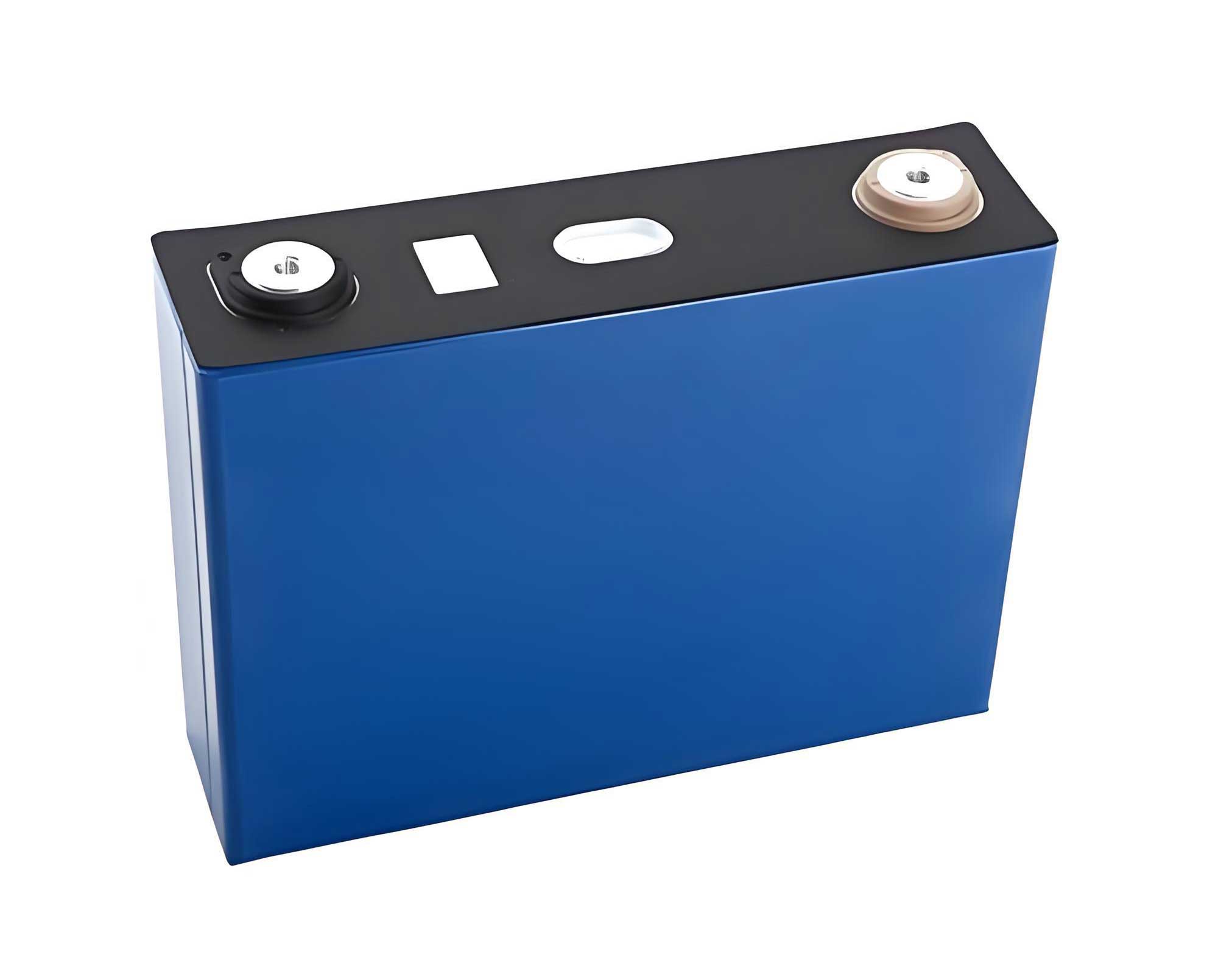
The core of our approach lies in the meticulous selection and optimization of raw materials for the LiFePO4 battery. For the cathode, we employed hydrothermal-synthesized nano-sized LiFePO4 with primary particle diameters of 80–100 nm. This material offers a high specific surface area, which facilitates lithium-ion diffusion and reduces polarization at low temperatures. The cathode slurry was prepared by mixing LiFePO4 active material, conductive carbon black (Super P), carbon nanotube (CNT) conductive paste, polyvinylidene fluoride (PVDF) binder, and a proprietary dispersant in a mass ratio of 94.5:1.6:1.3:2.5:0.1. The dispersant plays a crucial role in homogenizing the slurry, preventing agglomeration of nano-particles, and ensuring uniform coating. The slurry was coated onto a 17 μm carbon-coated aluminum foil, followed by rolling, cutting, and tab formation. For the anode, we selected hard-carbon-coated small-particle graphite to enhance lithium-ion intercalation kinetics at low temperatures. The anode slurry consisted of graphite, Super P, carboxymethyl cellulose sodium (CMC), and styrene-butadiene rubber (SBR) in a mass ratio of 94.5:2:1.5:2, coated onto 8 μm copper foil. The electrode specifications were tightly controlled: cathode thickness at (124 ± 2) μm, anode thickness at (90 ± 2) μm, with double-sided areal densities of (23.8 ± 0.3) mg/cm² and (11.4 ± 0.3) mg/cm², respectively.
The electrolyte formulation is paramount for low-temperature performance in a LiFePO4 battery. We utilized a custom low-temperature electrolyte comprising lithium hexafluorophosphate (LiPF6) in a binary solvent mixture of ethylene carbonate (EC) and ethyl methyl carbonate (EMC) with additives such as fluoroethylene carbonate (FEC) and vinylene carbonate (VC). These additives promote the formation of a stable and conductive SEI layer, reducing impedance at low temperatures. The separator was a 16 μm ceramic-coated polyethylene membrane with low透气率, ensuring mechanical stability and inhibiting dendritic growth. The cell assembly involved winding the electrodes with the separator into a full-tab square jellyroll, which was then inserted into an aluminum shell, welded, filled with electrolyte, and sealed. The formation process included a stepwise protocol: 0.05 C constant current (CC) charging for 60 min, 0.15 C CC charging for 120 min, and 0.2 C constant current-constant voltage (CC-CV) charging, followed by 0.5 C and 1 C discharge cycles. This meticulous formation helps stabilize the SEI layer and activate the LiFePO4 battery components.
To quantify the performance of our LiFePO4 battery, we conducted extensive testing under various conditions. The cell capacity was 35 Ah, and all tests were performed after aging at room temperature for 7 days. The key performance metrics included room-temperature rate discharge, low-temperature discharge at -40°C, low-temperature charging at -20°C, and cycle life at room temperature. The testing equipment included a battery test system (HRCDS-5V600A) and an environmental chamber (HIH-HH-408G) capable of temperatures from -70°C to 200°C.
First, we evaluated the room-temperature rate capability of the LiFePO4 battery. The cell was charged at 1 C to 3.65 V using a CC-CV protocol and then discharged at 15 C to 2.0 V at 25°C. The results are summarized in Table 1, and the discharge curve is illustrated below. The LiFePO4 battery exhibited a capacity retention of over 97% at 15 C, with a plateau voltage above 2.7 V and a temperature rise of 33°C. This demonstrates excellent high-rate performance, attributable to the optimized electrode kinetics and low internal resistance. The capacity retention can be modeled using the Peukert equation, which relates discharge current to capacity: $$C = I^n t$$, where \(C\) is the capacity, \(I\) is the current, \(t\) is time, and \(n\) is the Peukert coefficient. For an ideal LiFePO4 battery, \(n\) approaches 1, indicating minimal capacity loss at high rates. Our data suggests a low Peukert coefficient, confirming efficient charge transfer.
| Parameter | Value |
|---|---|
| Discharge Capacity (Ah) | 35.81 |
| Capacity Retention (%) | 97.1 |
| Plateau Voltage (V) | 2.7498 |
| Energy (Wh) | 98.47 |
| Temperature Rise (°C) | 33 |
Next, we assessed the low-temperature discharge performance of the LiFePO4 battery at -40°C. After full charging at room temperature, the cell was stored at -40°C for 24 hours and then discharged at various rates (1 C, 5 C, and 10 C) to cutoff voltages of 1.8 V or 1.5 V. The results are shown in Table 2 and the discharge curves are plotted. At 1 C discharge to 1.8 V, the LiFePO4 battery retained 94.5% of its room-temperature capacity, with a plateau voltage of 2.497 V. At 5 C to 1.8 V, capacity retention was 97.6%, and at 10 C to 1.5 V, it was 97.7%. The pull-down voltages were above 2.0 V for 5 C and above 1.5 V for 10 C, meeting the stringent requirements for low-temperature startup in applications such as automotive cold cranking. The temperature rise during discharge increased with rate, reaching 73°C at 10 C due to Joule heating. The impressive performance stems from the nano-structured LiFePO4 cathode, which reduces diffusion limitations, and the low-temperature electrolyte, which maintains high ionic conductivity. The ionic conductivity \(\sigma\) of the electrolyte can be described by the Arrhenius equation: $$\sigma = A \exp\left(-\frac{E_a}{RT}\right)$$, where \(E_a\) is activation energy, \(R\) is the gas constant, \(T\) is temperature, and \(A\) is a pre-exponential factor. Our electrolyte formulation minimizes \(E_a\), ensuring adequate conductivity even at -40°C.
| Discharge Rate | Discharge Capacity (Ah) | Capacity Retention (%) | Plateau Voltage (V) | Pull-down Voltage (V) | Temperature Rise (°C) |
|---|---|---|---|---|---|
| 1 C (@1.8 V) | 29.1 | 94.5 | 2.497 | 2.567 | 36.3 |
| 5 C (@1.8 V) | 36.0 | 97.6 | 2.531 | 2.058 | 61.9 |
| 10 C (@1.5 V) | 34.7 | 97.7 | 2.415 | 1.569 | 73.0 |
Low-temperature charging is another critical aspect for LiFePO4 battery usability in cold climates. We tested charging at -20°C with a 0.5 C constant current to 3.65 V. The LiFePO4 battery achieved a capacity retention of over 86%, with a plateau voltage above 3.4 V, indicating effective lithium-ion intercalation despite reduced kinetics. The charging curve shows a smooth voltage profile without significant polarization, thanks to the stable SEI layer formed by the additive-enhanced electrolyte. The charge acceptance at low temperatures can be analyzed using the Butler-Volmer equation for electrode kinetics: $$j = j_0 \left[\exp\left(\frac{\alpha n F \eta}{RT}\right) – \exp\left(-\frac{(1-\alpha) n F \eta}{RT}\right)\right]$$, where \(j\) is current density, \(j_0\) is exchange current density, \(\alpha\) is charge transfer coefficient, \(n\) is number of electrons, \(F\) is Faraday’s constant, and \(\eta\) is overpotential. Our optimizations increase \(j_0\) and reduce \(\eta\), enabling efficient charging at -20°C.
Cycle life is a hallmark of LiFePO4 battery technology. We performed room-temperature cycle testing at 1 C charge and discharge rates between 3.65 V and 2.0 V. The LiFePO4 battery maintained over 96% capacity retention after 588 cycles, demonstrating excellent longevity. The capacity fade rate can be modeled using a semi-empirical equation: $$C_{ret} = 1 – k \cdot N^m$$, where \(C_{ret}\) is capacity retention, \(k\) is a fade rate constant, \(N\) is cycle number, and \(m\) is an exponent. For our LiFePO4 battery, \(k\) is very small, indicating slow degradation. This is attributed to the structural stability of LiFePO4, the robust SEI layer, and the mechanical integrity of the square aluminum-shell design, which minimizes electrode strain during cycling.
To benchmark our LiFePO4 battery, we compared it with two leading commercial square aluminum-shell batteries: a domestic top-tier 20 Ah LiFePO4 battery and Toshiba’s 23 Ah lithium titanate (LTO) battery. The specifications are listed in Table 3. We focused on low-temperature discharge performance at -40°C. For the 1 C discharge test, our 35 Ah LiFePO4 battery showed 75.58% capacity retention with a pull-down voltage of 2.47 V, outperforming the Toshiba LTO battery (68.69% retention, 1.98 V pull-down). At 0.2 C discharge, our LiFePO4 battery achieved 75.21% retention versus 50.60% for the domestic LiFePO4 battery. Moreover, while the domestic battery failed to discharge at 1 C, our LiFePO4 battery succeeded with 75.40% retention. These results, summarized in Table 4, highlight the superior low-temperature capabilities of our LiFePO4 battery design. The enhanced performance stems from the synergistic effects of material selection, electrolyte formulation, and process optimizations, which collectively reduce internal resistance and improve lithium-ion transport across interfaces.
| Parameter | Our 35 Ah LiFePO4 Battery | Domestic Top-tier LiFePO4 Battery | Toshiba LTO Battery |
|---|---|---|---|
| Rated Capacity (Ah) | 35 | 20 | 23 |
| Nominal Voltage (V) | 3.2 | 3.2 | 2.3 |
| AC Internal Resistance (mΩ) | ≤0.6 | ≤0.8 | ≤1.0 |
| Mass (g) | 980 ± 20 | 600 ± 100 | 650 |
| Dimensions (W × H × T, mm) | 148.0 × 134.0 × 26.5 | 130.0 × 65.0 × 36.0 | 115.0 × 105.0 × 23.0 |
| Discharge Rate | Battery Type | Capacity Retention (%) | Pull-down Voltage (V) | Plateau Voltage (V) | Max Temperature Rise (°C) |
|---|---|---|---|---|---|
| 1.0 C | Toshiba LTO | 68.69 | 1.98 | 1.89 | 15.0 |
| Our LiFePO4 Battery | 75.58 | 2.47 | 2.39 | 21.2 | |
| 0.2 C | Domestic LiFePO4 | 50.60 | 2.53 | 2.33 | 6.5 |
| Our LiFePO4 Battery | 75.21 | 2.84 | 2.53 | 4.6 | |
| 1.0 C | Domestic LiFePO4 | Failed | N/A | N/A | N/A |
| Our LiFePO4 Battery | 75.40 | 2.47 | 2.40 | 24.3 |
The development of this advanced LiFePO4 battery involved overcoming several technical hurdles. One key innovation was the use of a dispersant in the cathode slurry for the LiFePO4 battery. Nano-sized LiFePO4 particles tend to agglomerate due to high surface energy, leading to poor coating uniformity and increased resistance. The dispersant, a polyelectrolyte, adsorbs onto particle surfaces, creating electrostatic and steric repulsion that stabilizes the suspension. This improves the homogeneity of the electrode, enhancing ionic and electronic pathways. The effectiveness can be quantified by the zeta potential \(\zeta\), where higher absolute values indicate better stability. For our slurry, \(\zeta\) was maintained above ±30 mV, ensuring consistent performance across batches.
Another aspect is the full-tab square jellyroll design. Unlike conventional wound cells with limited tabs, this design minimizes current path lengths, reducing internal resistance and improving rate capability. The resistance \(R\) of a cell can be approximated by $$R = R_{electronic} + R_{ionic} + R_{contact}$$, where \(R_{electronic}\) is electronic resistance from electrodes and collectors, \(R_{ionic}\) is ionic resistance from electrolyte and separator, and \(R_{contact}\) is contact resistance at interfaces. The full-tab design lowers \(R_{electronic}\) and \(R_{contact}\), which is crucial for high-rate discharge in a LiFePO4 battery. Additionally, the square aluminum shell provides mechanical robustness, better heat dissipation, and ease of stacking for module assembly, making this LiFePO4 battery ideal for large-scale PACK integration.
Thermal management is vital for LiFePO4 battery performance, especially under high-rate conditions. During discharge, heat generation \(Q\) follows Joule’s law and reaction entropy: $$Q = I^2 R t + \Delta S \cdot T$$, where \(I\) is current, \(R\) is internal resistance, \(t\) is time, and \(\Delta S\) is entropy change. Our LiFePO4 battery exhibits moderate temperature rises due to low \(R\), but at 10 C discharge, active cooling may be required in applications. The square shape facilitates thermal interface with cooling plates, enhancing safety and longevity.
Looking forward, there are opportunities to further optimize this LiFePO4 battery. For instance, doping LiFePO4 with metals like magnesium or vanadium could improve electronic conductivity, while advanced electrolyte additives like lithium bis(oxalato)borate (LiBOB) might enhance low-temperature performance. Machine learning algorithms could be employed to fine-tune formation protocols, reducing aging time. Moreover, scaling up production requires attention to cost-effectiveness; our process uses commercially available materials and standard equipment, keeping costs low. The energy density of this LiFePO4 battery, calculated as $$Ed = \frac{C \cdot V}{m}$$, where \(C\) is capacity, \(V\) is average voltage, and \(m\) is mass, reaches approximately 100 Wh/kg, competitive for energy storage systems.
In conclusion, we have successfully developed a square aluminum-shell LiFePO4 battery that delivers exceptional low-temperature and high-rate performance. This LiFePO4 battery achieves over 97% capacity retention at -40°C with 10 C discharge, over 86% capacity retention at -20°C with 0.5 C charging, and over 96% capacity retention after 588 cycles at room temperature. It outperforms commercial counterparts in low-temperature discharge tests, making it suitable for demanding applications in cold climates. The innovations in material selection, slurry dispersion, and cell design provide a blueprint for next-generation LiFePO4 batteries. Future work will focus on further enhancing energy density and cycle life, solidifying the position of LiFePO4 battery technology in the global energy landscape.