
With the global push towards energy conservation and emission reduction, the automotive industry is undergoing a significant transformation, shifting from traditional internal combustion engine vehicles to new energy vehicles. Among various energy storage technologies, lithium-ion batteries, particularly LiFePO4 batteries, have emerged as the dominant choice for electric vehicles due to their high energy density, long cycle life, and enhanced safety profile. However, thermal safety remains a critical bottleneck that restricts the widespread adoption and reliability of electric vehicles. The heat generated within LiFePO4 batteries during operation directly impacts their performance, longevity, and safety, making effective thermal management a paramount concern. In this study, we aim to delve into the heat generation characteristics of LiFePO4 batteries, with a specific focus on how aging influences these properties—a aspect often overlooked in existing research. By developing a comprehensive coupled electrochemical-thermal-aging model, we explore the effects of varying charging rates and ambient temperatures on the heat generation patterns of aged LiFePO4 batteries. Our findings provide valuable insights for designing advanced thermal management systems that account for battery degradation over time.
The thermal behavior of LiFePO4 batteries is complex, involving multiple physicochemical processes that occur during charge and discharge cycles. Traditional studies have primarily relied on electrochemical-thermal models to predict temperature distributions and heat fluxes. However, these models typically assume constant battery properties and neglect the progressive degradation that occurs with cycling. As LiFePO4 batteries age, side reactions such as solid electrolyte interphase (SEI) growth lead to loss of active lithium, increased internal resistance, and capacity fade. These changes inevitably alter the heat generation characteristics, yet systematic investigations into aged LiFePO4 batteries are scarce. Therefore, in this work, we address this gap by integrating an aging model into a standard electrochemical-thermal framework. We simulate long-term cycling under different operational conditions to quantify how aging modulates heat generation. The outcomes not only enhance our fundamental understanding of LiFePO4 battery thermodynamics but also offer practical guidance for optimizing thermal management strategies in real-world applications, ensuring safety and efficiency throughout the battery’s lifecycle.
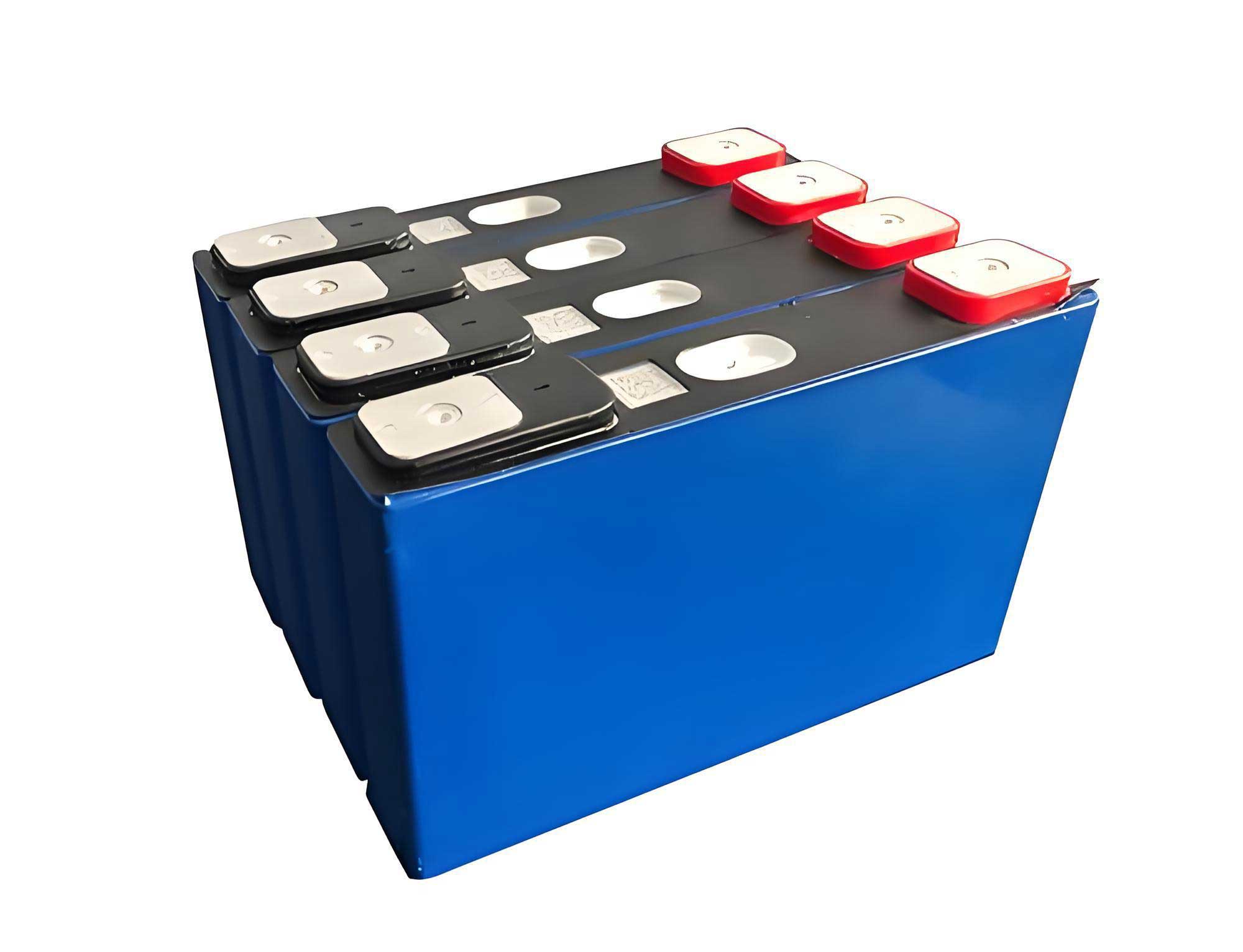
To model the behavior of LiFePO4 batteries, we adopt the pseudo-two-dimensional (P2D) electrochemical framework established by Doyle and Newman. This model captures the coupled processes in the solid and liquid phases across the positive electrode, separator, and negative electrode. The governing equations describe lithium-ion diffusion, Ohm’s law in both phases, and electrochemical kinetics via the Butler-Volmer equation. For a cylindrical LiFePO4 battery, such as the ANR26650M1A cell with a nominal capacity of 2.3 Ah, the key parameters are summarized in Table 1. These parameters serve as inputs for our simulations, enabling accurate prediction of voltage, current, and heat generation during discharge cycles.
| Parameter | Unit | Positive Electrode | Separator | Negative Electrode |
|---|---|---|---|---|
| Thickness, L | m | 8 × 10⁻⁵ | 2.5 × 10⁻⁵ | 3.4 × 10⁻⁵ |
| Active particle radius, R | m | 5 × 10⁻⁸ | – | 5 × 10⁻⁶ |
| Liquid phase volume fraction, ε_e | – | 0.444 | – | 0.357 |
| Solid phase volume fraction, ε_s | – | 0.374 | – | 0.58 |
| Maximum solid phase Li-ion concentration, c_s,max | mol/m³ | 684.18 | – | 24444 |
| Initial liquid phase Li-ion concentration, c_e | mol/m³ | 1200 | 1200 | 1200 |
| Solid phase diffusion coefficient, D_s | m²/s | 1.18 × 10⁻¹⁸ | – | 3.9 × 10⁻¹⁴ |
| Liquid phase diffusion coefficient, D_e | m²/s | 2 × 10⁻¹⁰ | 2 × 10⁻¹⁰ | 2 × 10⁻¹⁰ |
| Solid phase conductivity, σ | S/m | 0.5 | – | 100 |
| Liquid phase conductivity, κ | S/m | 0.28 | 0.28 | 0.28 |
| Thermal conductivity, λ | W/(m·K) | 0.2 | ||
| Specific heat capacity, C_p | J/(kg·K) | 1100 | ||
| Density, ρ | kg/m³ | 2047 | ||
| Ideal gas constant, R | J/(mol·K) | 8.314 | ||
| Faraday constant, F | C/mol | 96500 | ||
| Li-ion transfer number, t₊ | – | 0.363 | ||
| Electrochemical reaction rate constant, k | m².⁵/(mol⁰.⁵·s) | 2.5 × 10⁻¹¹ | – | 1.5 × 10⁻¹¹ |
The solid-phase diffusion of lithium ions within active particles is governed by Fick’s second law in spherical coordinates:
$$ \frac{\partial c_s(t,r)}{\partial t} = \frac{1}{r^2} \frac{\partial}{\partial r} \left( r^2 D_s \frac{\partial c_s(t,r)}{\partial r} \right) $$
where \( c_s(t,r) \) is the solid-phase lithium concentration at radial position \( r \) and time \( t \), and \( D_s \) is the solid-phase diffusion coefficient. The boundary conditions at the particle center and surface are:
$$ D_s \left. \frac{\partial c_s(t,r)}{\partial r} \right|_{r=0} = 0 $$
$$ D_s \left. \frac{\partial c_s(t,r)}{\partial r} \right|_{r=R} = – \frac{j_i}{F} $$
Here, \( j_i \) is the local reaction current density, related to the total current \( I \) by \( j_i = I / (F a_s) \), with \( a_s = 3 \varepsilon_s / R \) being the specific surface area. The liquid-phase diffusion in the electrolyte is described by:
$$ \varepsilon_e \frac{\partial c_e}{\partial t} = D_e \frac{\partial^2 c_e}{\partial x^2} + a_s (1 – t_+) j_i $$
where \( c_e \) is the liquid-phase concentration, \( \varepsilon_e \) is the liquid-phase volume fraction, \( D_e \) is the liquid-phase diffusion coefficient, and \( t_+ \) is the Li-ion transference number. Ohm’s law for the solid and liquid phases gives the potential distributions:
$$ \sigma_{\text{eff}} \frac{\partial \phi_s}{\partial x} = – i_s $$
$$ \kappa_{\text{eff}} \frac{\partial \phi_e}{\partial x} = \kappa_{\text{eff}} \frac{2RT}{F} (1 – t_+) \frac{\partial \ln c_e}{\partial x} – i_e $$
with effective conductivities \( \sigma_{\text{eff}} = \sigma \varepsilon_s^{1.5} \) and \( \kappa_{\text{eff}} = \kappa \varepsilon_e^{1.5} \). The Butler-Volmer equation governs the electrochemical reaction kinetics at the electrode-electrolyte interface:
$$ j_i = j_0 \left[ \exp\left( \frac{\alpha_a F}{RT} \eta_i \right) – \exp\left( -\frac{\alpha_c F}{RT} \eta_i \right) \right] $$
where \( j_0 = F k_i c_e^{\alpha_a} c_{s,\text{surf}}^{\alpha_c} (c_{s,\text{max}} – c_{s,\text{surf}})^{\alpha_a} \), \( \eta_i = \phi_s – \phi_e – U_{\text{ref}}(c_{s,\text{surf}}/c_{s,\text{max}}) \) is the surface overpotential, and \( U_{\text{ref}} \) is the open-circuit potential as a function of state of charge (SOC). For LiFePO4 batteries, these equations collectively predict the voltage response and current distribution during operation.
To account for battery aging, we incorporate a model for SEI layer growth on the negative electrode. This side reaction consumes active lithium and increases internal resistance. The total current density is split into main reaction and side reaction components:
$$ j = j_i + j_{\text{sei}} $$
The SEI growth current density follows a Tafel equation with diffusion limitations:
$$ j_{\text{sei}} = \frac{c_e}{\frac{1}{n F k_{\text{sei}} \exp\left( -\frac{\alpha_n F}{RT} \eta_{\text{sei}} \right)} + \frac{\delta}{n F D_{\text{sei}}}} $$
where \( k_{\text{sei}} \) is the reaction rate constant, \( \delta \) is the SEI film thickness, \( D_{\text{sei}} \) is the diffusion coefficient in the SEI, and \( \eta_{\text{sei}} \) is the overpotential for SEI formation. The evolution of film thickness is given by:
$$ \frac{d\delta}{dt} = \frac{j_{\text{sei}}}{n F} \frac{M_{\text{sei}}}{\rho_{\text{sei}}} $$
with \( M_{\text{sei}} \) and \( \rho_{\text{sei}} \) being the molar mass and density of the SEI layer. The resistance due to SEI growth is calculated as \( R_{\text{sei}} = R_{0,\text{sei}} + \delta / k_{\text{sei}} \). Key parameters for the aging model are listed in Table 2.
| Parameter | Unit | Value |
|---|---|---|
| Molar mass of SEI, M_{\text{sei}} | kg/mol | 0.16 |
| Density of SEI, ρ_{\text{sei}} | kg/m³ | 1600 |
| SEI conductivity, k_{\text{sei}} | S/m | 5 × 10⁻⁶ |
| Initial SEI resistance, R_{0,\text{sei}} | Ω·m² | 0.01 |
| Diffusion coefficient in SEI, D_{\text{sei}} | m²/s | 2 × 10⁻¹⁰ |
| Reaction rate constant, k_{\text{sei}} | mol/(m²·s) | 1 × 10⁻¹⁰ |
The thermal behavior of the LiFePO4 battery is modeled using an energy balance equation that includes heat generation from electrochemical processes and conduction. Neglecting radiation, the governing equation is:
$$ \rho C_p \frac{\partial T}{\partial t} = \nabla \cdot (\lambda \nabla T) + q_{\text{batt}} $$
where \( q_{\text{batt}} \) is the total heat generation rate per unit volume, computed from the electrochemical model as the sum of reversible heat, irreversible heat, and ohmic heat. The boundary condition at the battery surface considers convective cooling:
$$ -\lambda \left. \frac{\partial T}{\partial n} \right|_{\text{surface}} = h (T_{\text{batt}} – T_{\text{air}}) $$
with \( h \) being the convective heat transfer coefficient. For natural convection, \( h \) is typically around 5–10 W/(m²·K). This coupled electrochemical-thermal-aging model is implemented in COMSOL Multiphysics, allowing us to simulate cycling under various conditions.
We first validate our model by comparing simulation results with experimental data from literature for fresh LiFePO4 batteries. The discharge voltage curves at different rates show excellent agreement, confirming the accuracy of the electrochemical-thermal component. Additionally, the capacity fade predicted by the aging model over long-term cycling aligns well with empirical degradation trends, as shown in prior studies. This validation ensures that our integrated model reliably captures the behavior of LiFePO4 batteries across their lifespan.
Having established the model, we investigate the impact of charging rates on the aging and heat generation of LiFePO4 batteries. We simulate cycles with constant discharge at 1 C but varying charge rates: 0.5 C, 1 C, 2 C, and 3 C. The ambient temperature is fixed at 298 K. After 4000 cycles, we analyze the SEI film thickness, internal resistance, capacity retention, and discharge heat generation. The results are summarized in Table 3.
| Charging Rate | SEI Film Thickness Increase | Relative Capacity Retention | Average Discharge Heat Generation Power (W) | Total Discharge Heat (J) | Percentage Increase in Average Power vs. 3 C Charging |
|---|---|---|---|---|---|
| 0.5 C | High | 85% | 1.25 | 8500 | 5.3% |
| 1 C | Medium | 88% | 1.21 | 8700 | 2.8% |
| 2 C | Low | 90% | 1.19 | 8900 | 1.1% |
| 3 C | Very Low | 92% | 1.18 | 9000 | Baseline |
The data clearly indicate that lower charging rates accelerate aging in LiFePO4 batteries. This is because slower charging allows more time for side reactions like SEI growth to occur, leading to greater lithium loss and higher internal resistance. Consequently, aged batteries exhibit elevated heat generation during discharge. For instance, after 4000 cycles, the average discharge heat generation power for the 0.5 C charged battery is about 5.3% higher than that for the 3 C charged battery. However, due to capacity fade, the total heat generated per discharge decreases slightly, as the discharge duration shortens. The heat generation power profile shifts leftward, with peak power occurring earlier in the cycle. This underscores the importance of considering charging strategies in thermal management for LiFePO4 batteries.
We further analyze the components of heat generation in aged LiFePO4 batteries. For a fresh battery discharging at 1 C, the total heat \( q_{\text{batt}} \) comprises reversible heat \( q_{\text{rev}} \), irreversible heat \( q_{\text{irr}} \), and ohmic heat \( q_{\text{ohm}} \). These can be expressed as:
$$ q_{\text{rev}} = j_i T \frac{\partial U_{\text{ref}}}{\partial T} $$
$$ q_{\text{irr}} = j_i \eta_i $$
$$ q_{\text{ohm}} = \sigma_{\text{eff}} \left( \frac{\partial \phi_s}{\partial x} \right)^2 + \kappa_{\text{eff}} \left( \frac{\partial \phi_e}{\partial x} \right)^2 + \frac{2 \kappa_{\text{eff}} RT}{F} (1 – t_+) \frac{\partial \ln c_e}{\partial x} \frac{\partial \phi_e}{\partial x} $$
In aged LiFePO4 batteries, the increased SEI resistance raises the overpotential \( \eta_i \), boosting irreversible heat. Additionally, the ohmic heat increases due to higher overall impedance. Our simulations show that the negative electrode contributes significantly to the total heat, as SEI growth predominantly occurs there. The positive electrode’s heat generation remains relatively stable. This differential aging effect must be accounted for in thermal designs to prevent localized hot spots.
Next, we examine the influence of ambient temperature on the aging and heat generation of LiFePO4 batteries. We simulate 1 C charge-discharge cycles at three ambient temperatures: 283 K, 298 K, and 313 K. After 4000 cycles, we evaluate capacity retention and discharge heat characteristics. The results are compiled in Table 4.
| Ambient Temperature (K) | Relative Capacity Retention | Average Discharge Heat Generation Power (W) | Total Discharge Heat (J) | Percentage Increase in Average Power vs. 283 K | Percentage Decrease in Total Heat vs. 283 K |
|---|---|---|---|---|---|
| 283 | 95% | 1.15 | 9200 | Baseline | Baseline |
| 298 | 90% | 1.19 | 8950 | 3.4% | 2.6% |
| 313 | 87% | 1.25 | 8850 | 8.5% | 3.7% |
Higher ambient temperatures accelerate aging in LiFePO4 batteries due to enhanced kinetics of side reactions. At 313 K, the capacity retention drops to 87% after 4000 cycles, compared to 95% at 283 K. This accelerated degradation leads to higher discharge heat generation powers; the average power at 313 K is approximately 8.5% greater than at 283 K. However, the total heat per discharge decreases slightly because of reduced capacity. These findings highlight the dual role of temperature: while elevated temperatures improve ionic conductivity and reduce polarization initially, they promote long-term degradation that exacerbates heat generation. Therefore, thermal management systems for LiFePO4 batteries must maintain optimal temperature ranges to balance performance and longevity.
To generalize our results, we derive empirical correlations for heat generation in aged LiFePO4 batteries. Based on our simulation data, the average discharge heat generation power \( \bar{q} \) can be approximated as a function of cycle number \( N \), charging rate \( C_{\text{charge}} \), and ambient temperature \( T_{\text{amb}} \):
$$ \bar{q} = \bar{q}_0 \left( 1 + \alpha \ln \left( \frac{N}{N_0} \right) \right) \left( 1 + \beta \left( \frac{1}{C_{\text{charge}}} – \frac{1}{C_0} \right) \right) \exp\left( \gamma \left( T_{\text{amb}} – T_0 \right) \right) $$
where \( \bar{q}_0 \) is the baseline power for a fresh battery, and \( \alpha, \beta, \gamma \) are fitting coefficients. For our LiFePO4 battery, \( \alpha \approx 0.02 \), \( \beta \approx 0.05 \), and \( \gamma \approx 0.01 \, \text{K}^{-1} \). Such correlations can aid in predictive thermal management for LiFePO4 batteries in electric vehicles.
In summary, our coupled electrochemical-thermal-aging model provides a robust framework for studying heat generation in LiFePO4 batteries throughout their lifecycle. We demonstrate that aging significantly alters thermal behavior, with lower charging rates and higher ambient temperatures leading to more severe degradation and increased heat generation powers. These insights are crucial for designing adaptive thermal management systems that account for battery health. Future work could extend this model to include other aging mechanisms like lithium plating or particle cracking, and validate predictions with experimental data from real-world cycling of LiFePO4 batteries. As the adoption of LiFePO4 batteries grows, understanding their aged heat generation will be key to ensuring safety and efficiency in electric vehicles.
The implications of this study are far-reaching for the development of next-generation thermal management strategies. For instance, battery management systems (BMS) could incorporate real-time aging estimates to adjust cooling demands proactively. Moreover, charging protocols could be optimized to minimize degradation-induced heat rise. By integrating aging-aware models, we can enhance the thermal safety and longevity of LiFePO4 batteries, contributing to the sustainable advancement of electric mobility. Our work underscores the importance of a holistic approach that considers not just instantaneous thermal responses but also long-term degradation effects in LiFePO4 batteries.