
As the world grapples with the depletion of non-renewable energy resources and escalating environmental pollution, battery technology has seen remarkable advancements. Electric vehicles are progressively replacing traditional fuel-powered cars, capturing a significant share of the market. Among various energy storage solutions, lithium-ion batteries stand out due to their high specific energy, long cycle life, and low self-discharge rates, making them a cornerstone for electric vehicle propulsion. However, safety concerns persist, with issues such as thermal runaway during overcharging or collisions remaining prevalent. Therefore, a deep dive into the heat generation mechanisms of lithium-ion batteries is crucial for enhancing their safety and performance.
In this study, I focus on the 18650 LiFePO4 battery, a widely used variant known for its stability and cost-effectiveness. My objective is to explore the heat generation phenomena under different discharge rates, specifically from 1 C to 3 C, by developing a two-dimensional axisymmetric electrochemical-thermal coupled model. This approach allows for a detailed analysis of heat accumulation in electrode and separator regions, as well as the contributions from reaction heat, ohmic heat, and polarization heat. Through this investigation, I aim to provide insights that can inform the design of effective thermal management systems for high-rate applications.
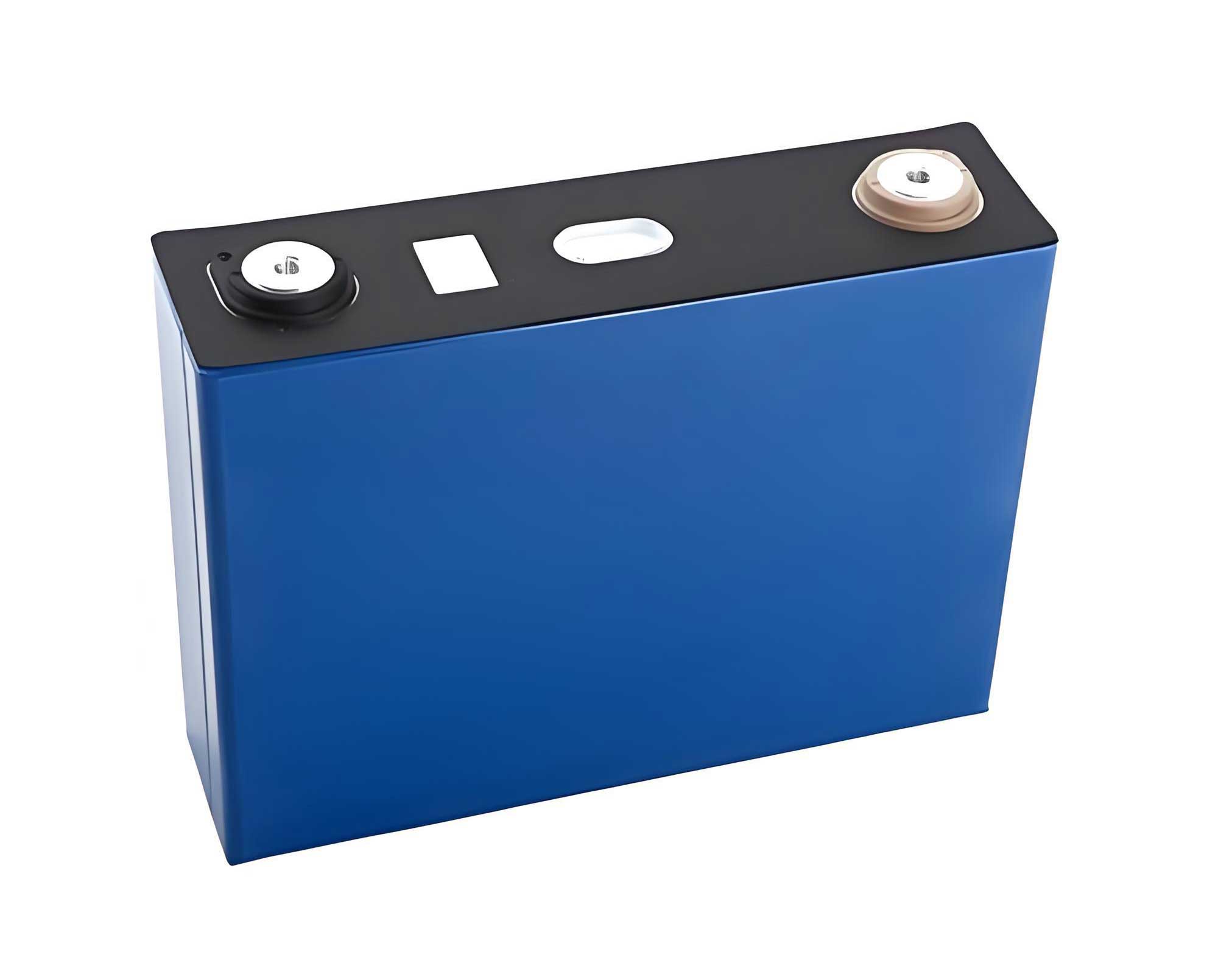
The modeling work is conducted using COMSOL Multiphysics, a versatile multiphysics simulation software. The LiFePO4 battery under consideration has a nominal voltage of 3.2 V, a nominal capacity of 1.53 Ah, an internal resistance ranging from 30 to 50 mΩ, a discharge cut-off voltage of 2.0 V, and an operational temperature range of 253.15 K to 333.15 K (-20°C to 60°C). The discharge process is emphasized over charging due to its higher temperature rise and greater heat generation, which become more pronounced with increasing discharge rates, potentially leading to thermal runaway.
To establish the electrochemical-thermal coupled model, I begin with a physical representation. The 18650 LiFePO4 battery is modeled in a 2D axisymmetric geometry, which simplifies the complex three-dimensional structure while capturing essential radial and axial variations. This geometry includes the negative electrode (anode), separator, positive electrode (cathode), and current collectors, all wound in a spiral configuration typical of cylindrical cells. The mesh consists of 1,576 elements, with a minimum mesh quality of 0.4146 and an average mesh quality of 0.8188, ensuring numerical accuracy. The model integrates two primary physics interfaces: the Lithium-Ion Battery interface for electrochemical reactions and the Heat Transfer in Solids interface for thermal analysis.
The electrochemical model is based on the pseudo-two-dimensional (P2D) framework proposed by Newman and colleagues, which accounts for lithium-ion diffusion in active particles and charge transport in electrodes and electrolyte. The governing equations include mass conservation, charge conservation, and electrochemical kinetics. For the thermal part, energy conservation is applied, incorporating heat generation from various sources and heat dissipation to the environment. The key equations are as follows:
The overall energy balance for the LiFePO4 battery is given by:
$$ \rho c_p \frac{\partial T}{\partial t} = k_T \nabla^2 T + Q $$
where \( \rho \) is the average density, \( c_p \) is the specific heat capacity, \( T \) is the transient temperature, \( t \) is time, \( k_T \) is the thermal conductivity, and \( Q \) is the total heat generation rate.
The total heat generation \( Q \) comprises reversible reaction heat \( Q_{\text{rev}} \), irreversible polarization heat \( Q_{\text{rea}} \), and ohmic heat \( Q_{\text{ohm}} \):
$$ Q = Q_{\text{rev}} + Q_{\text{rea}} + Q_{\text{ohm}} $$
Each component is defined as:
Reaction heat: $$ Q_{\text{rev}} = J^i_{\text{Li}} T \left( \frac{\partial E_{\text{eq},i}}{\partial T} \right) $$
where \( J^i_{\text{Li}} \) is the lithium-ion flux at the particle surface and \( E_{\text{eq},i} \) is the equilibrium potential of electrode \( i \).
Polarization heat: $$ Q_{\text{rea}} = J^i_{\text{Li}} \eta_i $$
where \( \eta_i \) is the overpotential.
Ohmic heat: $$ Q_{\text{ohm}} = -\mathbf{i}_s \cdot \nabla \phi_s – \mathbf{i}_l \cdot \nabla \phi_l $$
where \( \mathbf{i}_s \) and \( \mathbf{i}_l \) are the current densities in the solid and liquid phases, respectively, and \( \phi_s \) and \( \phi_l \) are the corresponding potentials.
The boundary conditions for heat transfer consider both convective and radiative cooling at the outer surface of the LiFePO4 battery:
$$ -k_T \frac{\partial T}{\partial x} \bigg|_{x=L} = h (T – T_{\infty}) + \varepsilon \sigma_{\text{kir}} (T^4 – T_{\infty}^4) $$
where \( h \) is the convective heat transfer coefficient (5–10 W/(m²·K) for natural convection), \( T_{\infty} \) is the ambient temperature (set to 298.15 K for simulations), \( \varepsilon \) is the surface emissivity, and \( \sigma_{\text{kir}} \) is the Stefan-Boltzmann constant.
To parameterize the model, I compile data from literature and experimental measurements. The electrochemical parameters are critical for accurately simulating the behavior of the LiFePO4 battery. Key parameters include electrode porosities, active material properties, and electrolyte characteristics. Temperature-dependent effects are incorporated to reflect real-world performance. For instance, the electrolyte conductivity \( \kappa_2 \), lithium-ion diffusion coefficient in electrolyte \( D_2 \), and thermodynamic factor \( v \) are expressed as functions of temperature \( T \) and concentration \( c \):
$$ \kappa_2 = 1 \times 10^{-4} \times c \left( -10.5 + 0.074T – 6.96 \times 10^{-5} T^2 + 0.668c – 0.0178cT + 2.8 \times 10^{-5} c T^2 + 0.494c^2 – 8.86 \times 10^{-4} c^2 T \right)^2 $$
$$ D_2 = 1 \times 10^{-4} \times 10^{-4.43 – \frac{54}{T – 299} – 0.005c – 2.2 \times 10^{-4}c} $$
$$ v = 1 – 0.002c + 0.001c^2 $$
Similarly, the solid-phase diffusion coefficients for the positive electrode \( D_{s,p} \) and negative electrode \( D_{s,n} \) in the LiFePO4 battery are given by:
$$ D_{s,p} = 8 \times 10^{-16} \exp \left[ \frac{48,000}{R} \left( \frac{1}{T_{\text{ref}}} – \frac{1}{T} \right) \right] $$
$$ D_{s,n} = 1 \times 10^{-14} \lambda \exp \left[ \frac{59,760}{R} \left( \frac{1}{T_{\text{ref}}} – \frac{1}{T} \right) \right] $$
with $$ \lambda = 1 + 0.001 (T – T_{\text{ref}}) $$ where \( T_{\text{ref}} = 298.15 \, \text{K} \) and \( R \) is the universal gas constant.
These parameters are summarized in the tables below to provide a clear reference. The use of tables and formulas helps in consolidating the complex data involved in modeling the LiFePO4 battery.
| Parameter | Value | Unit |
|---|---|---|
| Nominal Voltage | 3.2 | V |
| Nominal Capacity | 1.53 | Ah |
| Internal Resistance | 30–50 | mΩ |
| Discharge Cut-off Voltage | 2.0 | V |
| Operating Temperature Range | 253.15–333.15 | K |
| Positive Electrode Active Material | LiFePO4 | – |
| Negative Electrode Active Material | Graphite | – |
| Electrolyte Type | LiPF6 in EC/DMC | – |
| Component | Parameter | Value | Unit |
|---|---|---|---|
| Positive Electrode | Thickness | 70 × 10^{-6} | m |
| Porosity | 0.33 | – | |
| Active Particle Radius | 5 × 10^{-7} | m | |
| Negative Electrode | Thickness | 60 × 10^{-6} | m |
| Porosity | 0.36 | – | |
| Active Particle Radius | 1 × 10^{-6} | m | |
| Separator | Thickness | 25 × 10^{-6} | m |
| Porosity | 0.45 | – | |
| Overall Battery | Average Density \( \rho \) | 2,500 | kg/m³ |
| Specific Heat Capacity \( c_p \) | 1,100 | J/(kg·K) | |
| Thermal Properties | Thermal Conductivity \( k_T \) | 1.2 (radial), 20 (axial) | W/(m·K) |
| Surface Emissivity \( \varepsilon \) | 0.8 | – |
To validate the model, I compare simulation results with experimental data obtained under controlled conditions. The experiments involve discharging the LiFePO4 battery at 1 C, 2 C, and 3 C rates in an environmental chamber at 298.15 K. Voltage and surface temperature are measured using a Maccor-series 4000 battery tester and T-type thermocouples. The validation shows good agreement: for voltage, relative errors are 1.42% at 1 C, 2.15% at 2 C, and 1.73% at 3 C; for temperature rise, errors are 5.64%, 5.95%, and 6.78%, respectively. All errors are below 10%, confirming the model’s reliability for analyzing the LiFePO4 battery’s thermal behavior.
With the validated model, I proceed to simulate the temperature distribution and heat generation mechanisms. The results reveal significant insights into how discharge rates affect the LiFePO4 battery’s thermal performance. Under 1 C discharge, the maximum temperature rise is moderate, with heat distributed relatively evenly across the cell. As the discharge rate increases to 2 C and 3 C, the temperature rise escalates substantially. For instance, at 3 C, the internal temperature difference increases by 0.75 K compared to 1 C, representing a 2.14-fold rise. This indicates that higher discharge rates exacerbate temperature non-uniformity, which can accelerate degradation and pose safety risks for the LiFePO4 battery.
The spatial temperature profiles show that hotter regions tend to concentrate in the lower middle part of the cylindrical LiFePO4 battery. This is attributed to the upper section having current collectors and terminals that facilitate heat dissipation, while the active core retains heat. In 3D renders derived from the 2D axisymmetric model, the heat accumulation becomes more localized at higher rates, emphasizing the need for effective cooling strategies. Such strategies could include active thermal management systems to maintain the LiFePO4 battery within its optimal operating range of 293.15 K to 313.15 K (20°C to 40°C), thereby preventing thermal runaway.
Delving deeper into heat generation types, I analyze the contributions from reaction heat, polarization heat, and ohmic heat over the discharge cycles. At the onset of discharge, ohmic heat dominates due to high internal resistance from ion migration barriers. This is captured by the equation for ohmic heat, where current densities and potential gradients are largest initially. As the LiFePO4 battery warms up, ohmic heat gradually decreases but remains significant. Polarization heat, linked to overpotential, shows a dip mid-discharge before rising again toward the end as resistance builds. Reaction heat, which can be endothermic or exothermic depending on the entropy change, starts negative (absorbing heat) and turns positive (releasing heat) later in discharge. For the LiFePO4 battery, the reversible heat is influenced by the temperature derivative of the equilibrium potential, which is positive for the negative electrode.
To quantify these effects, I compute the proportional contributions from different regions and heat types. The findings are summarized in the table below, highlighting how the LiFePO4 battery’s heat generation evolves with discharge rate.
| Discharge Rate | Positive Electrode Heat (%) | Negative Electrode Heat (%) | Separator Heat (%) | Ohmic Heat (%) | Polarization Heat (%) | Reaction Heat (%) |
|---|---|---|---|---|---|---|
| 1 C | 45.2 | 30.1 | 24.7 | 58.5 | 25.3 | 16.2 |
| 2 C | 40.8 | 25.6 | 33.6 | 65.7 | 22.1 | 12.2 |
| 3 C | 38.5 | 22.4 | 39.1 | 72.4 | 18.9 | 8.7 |
From Table 3, it is evident that as the discharge rate increases, the separator’s share of heat generation grows substantially, from 24.7% at 1 C to 39.1% at 3 C. This is primarily due to enhanced ohmic heating in the separator region, where ion transport through the electrolyte becomes more resistive at higher currents. Concurrently, the positive electrode remains a significant heat source, while the negative electrode’s contribution diminishes. In terms of heat types, ohmic heat becomes increasingly dominant, accounting for 72.4% of total heat at 3 C discharge in the LiFePO4 battery. Polarization heat decreases slightly, and reaction heat drops to under 10%, indicating that irreversible effects overshadow reversible thermal effects at high rates.
These trends can be explained through the underlying physics. The ohmic heat \( Q_{\text{ohm}} \) scales with the square of the current density, as per Joule’s law, making it highly sensitive to discharge rate. For the LiFePO4 battery, the current density \( i \) increases linearly with C-rate, leading to a quadratic rise in ohmic heating. Mathematically, this can be expressed as:
$$ Q_{\text{ohm}} \propto i^2 R_{\text{internal}} $$
where \( R_{\text{internal}} \) is the effective internal resistance. At 3 C, the current is three times that at 1 C, so ohmic heat increases by roughly a factor of nine, consistent with its growing proportion.
Polarization heat \( Q_{\text{rea}} \) is related to activation and concentration overpotentials, which also rise with current but not as steeply. The Butler-Volmer equation governs the kinetics:
$$ J^i_{\text{Li}} = i_{0,i} \left[ \exp\left(\frac{\alpha_a F \eta_i}{RT}\right) – \exp\left(-\frac{\alpha_c F \eta_i}{RT}\right) \right] $$
where \( i_{0,i} \) is the exchange current density, \( \alpha_a \) and \( \alpha_c \) are charge transfer coefficients, and \( F \) is Faraday’s constant. As discharge rate climbs, \( \eta_i \) increases, boosting polarization heat, but its relative impact is tempered by the dominant ohmic effects in the LiFePO4 battery.
Reaction heat \( Q_{\text{rev}} \) depends on the entropy change \( \partial E_{\text{eq},i}/\partial T \). For the graphite negative electrode in the LiFePO4 battery, this derivative is positive, causing initial endothermic behavior. The magnitude of reaction heat is smaller compared to irreversible heats, especially at high rates, because it is linearly proportional to current, whereas ohmic heat scales quadratically.
To further illustrate the thermal dynamics, I derive an integrated heat balance equation for the LiFePO4 battery during discharge. Combining all terms, the total heat generation per unit volume can be approximated as:
$$ Q_{\text{total}} = \sigma_s |\nabla \phi_s|^2 + \sigma_l |\nabla \phi_l|^2 + j \eta + j T \frac{\partial E_{\text{eq}}}{\partial T} $$
where \( \sigma_s \) and \( \sigma_l \) are solid and liquid phase conductivities, \( j \) is the transfer current density, and other symbols retain their meanings. This formulation underscores the competition between different heat sources in the LiFePO4 battery.
In practice, the implications of these findings are profound for designing battery thermal management systems (BTMS). For LiFePO4 batteries operating at high discharge rates, such as in electric vehicles or power tools, effective cooling must target the separator and positive electrode regions where heat generation is highest. Active methods like liquid cooling or phase change materials could be employed to dissipate ohmic heat efficiently. Moreover, monitoring internal temperature gradients is crucial to prevent localized hotspots that might degrade the LiFePO4 battery prematurely.
Another aspect to consider is the impact of ambient temperature. While this study focuses on 298.15 K, variations can alter heat generation patterns. For instance, at lower temperatures, internal resistance increases, potentially amplifying ohmic heat. Future work could extend the model to include ambient temperature effects on the LiFePO4 battery’s performance.
In summary, my investigation using a 2D axisymmetric electrochemical-thermal coupled model reveals that the 18650 LiFePO4 battery exhibits rate-dependent heat generation characteristics. As discharge rate increases from 1 C to 3 C, overall temperature rise and internal non-uniformity escalate, primarily driven by ohmic heating in the separator and positive electrode. Ohmic heat constitutes over 70% of total heat at 3 C, while reaction and polarization heats play lesser roles. These insights emphasize the necessity for robust thermal management in high-rate applications of LiFePO4 batteries to ensure safety and longevity. By leveraging such models, engineers can optimize battery design and cooling strategies, paving the way for safer and more efficient energy storage solutions.
To conclude, the LiFePO4 battery remains a promising technology, and understanding its thermal behavior is key to unlocking its full potential. Continued research into multi-physics modeling, coupled with experimental validation, will further enhance our ability to predict and control heat generation in lithium-ion batteries under diverse operating conditions.