
In recent years, the global automotive industry has witnessed a paradigm shift towards electrification, driven by policy support, technological innovation, and maturing supply chains. The sales of new energy vehicles, particularly electric vehicles (EVs), have experienced explosive growth, with millions of units sold annually. However, despite this progress, several challenges persist, especially in low-temperature environments. The performance of lithium-ion batteries, the primary energy storage units in EVs, degrades significantly in cold conditions, leading to reduced driving range, prolonged charging times, and diminished power output. This has hindered the widespread adoption of EVs in regions with harsh winters, often referred to as the “EV winter performance bottleneck.” Among various battery chemistries, the lifepo4 battery (lithium iron phosphate battery) has gained popularity due to its safety, longevity, and cost-effectiveness. However, like other lithium-ion batteries, the lifepo4 battery suffers from poor low-temperature performance, necessitating effective heating solutions.
To address these issues, various battery heating methods have been developed and deployed in production vehicles. Common approaches include positive temperature coefficient (PTC) heaters, heating films, liquid circulation systems, phase-change materials, and heat pumps. Each method has its advantages and drawbacks in terms of heating rate, temperature uniformity, energy efficiency, and complexity. For instance, PTC heating is mature and low-cost but suffers from high energy consumption and large temperature gradients across the battery pack. Heating films offer better uniformity but require precise thermal management. Liquid heating provides high thermal conductivity but adds system complexity. Phase-change materials enable passive heating but often have low thermal conductivity. Heat pumps are efficient but can be costly. In contrast, pulse heating, a self-heating technology that utilizes alternating current pulses to generate Joule heat within the battery, has emerged as a promising solution. It offers rapid heating rates, minimal temperature differences, and simplicity in implementation, making it a focal point for research and development in the EV industry. This study focuses on the pulse heating performance of lifepo4 battery systems, investigating key factors that influence heating efficacy and providing insights for optimizing thermal management in low-temperature environments.
The degradation of lifepo4 battery performance in cold temperatures is primarily attributed to increased internal resistance and reduced ion mobility. At low temperatures, the diffusion and migration rates of lithium ions in the electrodes and electrolyte decrease, leading to higher polarization and reduced capacity. This can also exacerbate safety risks, such as lithium plating and dendrite formation, which may cause internal short circuits. Therefore, effective heating is crucial not only for performance but also for safety. Pulse heating leverages the fact that battery internal resistance rises substantially in cold conditions. By applying high-frequency alternating current pulses, the battery generates internal heat through Joule heating, thereby warming itself without external heaters. The heating rate depends on factors like current amplitude, frequency, battery state of charge (SOC), initial temperature, and battery capacity. In this work, we conduct extensive experiments on multiple EVs equipped with lifepo4 battery packs to evaluate pulse heating performance under real-world conditions, aiming to clarify the relationships between these factors and heating outcomes.
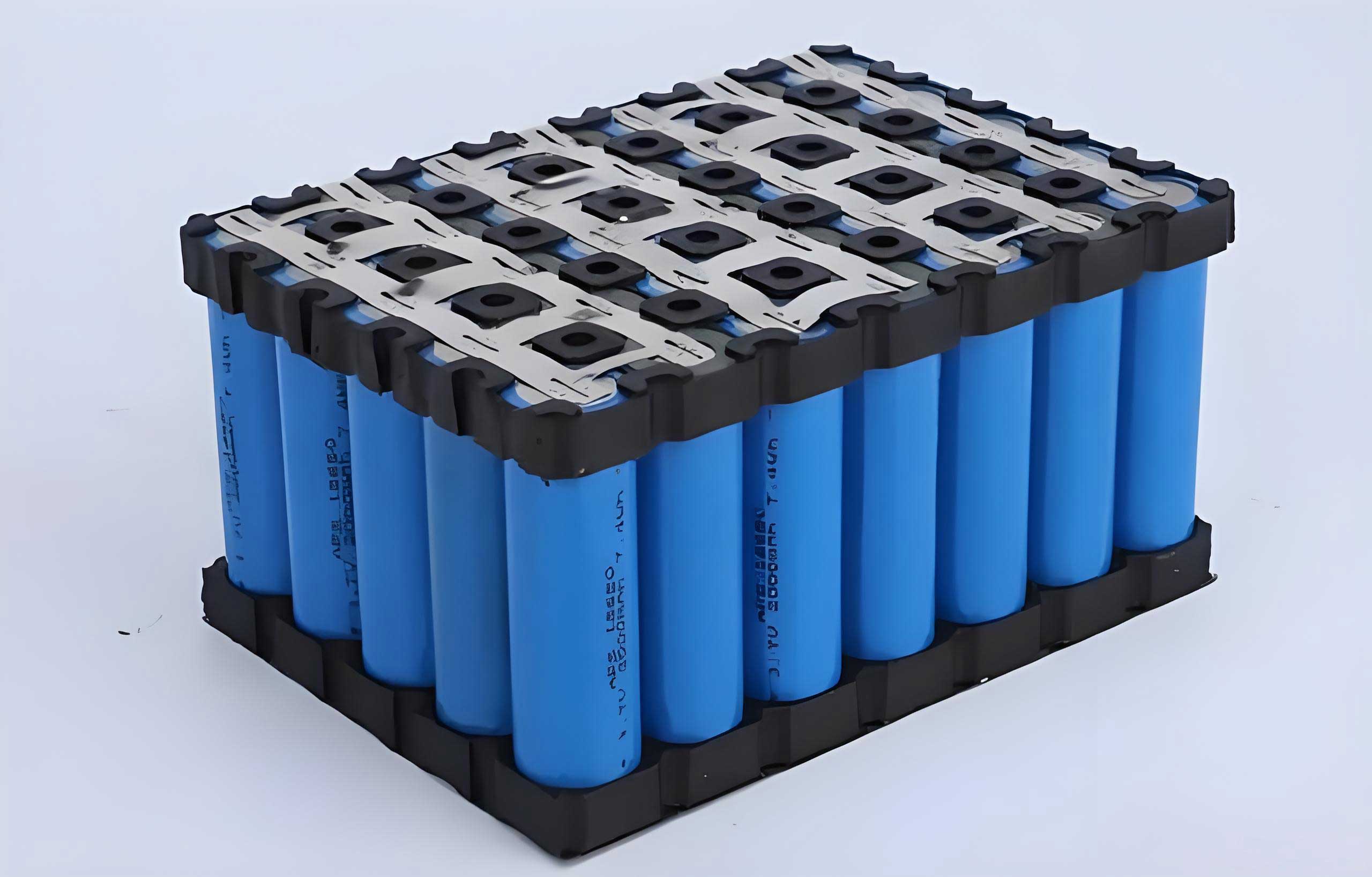
The fundamental principle of pulse heating can be described by Joule’s law, where the heat generated within a lifepo4 battery is proportional to the square of the root-mean-square (RMS) current and the internal resistance. The temperature rise of the battery can be modeled using the following equation:
$$ \Delta T = \frac{I_{RMS}^2 R t}{c m} $$
where \( \Delta T \) is the temperature increase, \( I_{RMS} \) is the effective current during pulse heating, \( R \) is the internal resistance of the lifepo4 battery pack, \( t \) is the heating time, \( c \) is the specific heat capacity of the battery, and \( m \) is the mass of the battery pack. This equation assumes minimal heat loss to the environment, which is reasonable when insulation is used. It highlights that heating performance is influenced by electrical parameters, battery properties, and thermal characteristics. For instance, a higher internal resistance at lower temperatures leads to more heat generation, potentially increasing the heating rate. Conversely, a larger battery mass requires more heat to achieve the same temperature rise, thus reducing the heating rate. This theoretical framework guides our experimental analysis.
To systematically evaluate pulse heating, we designed a comprehensive testing program involving multiple vehicle models. All vehicles were equipped with lifepo4 battery packs of varying capacities and a 160 kW permanent magnet synchronous motor. The tests were conducted in extreme cold conditions in Heilongjiang Province, China, during the winter of 2023-2024, to simulate real-world low-temperature scenarios. The key parameters for pulse heating were standardized across tests to ensure comparability, as shown in Table 1. The switching frequency, frequency randomness, and current peaks were set to balance heating effectiveness, battery safety, and noise-vibration-harshness (NVH) concerns.
| Parameter | Value |
|---|---|
| Switching Frequency | 1300 Hz |
| Frequency Randomness | ±500 Hz |
| Current Peak | 800 A |
The test vehicles included both plug-in hybrid electric vehicles (PHEVs) and battery electric vehicles (BEVs), with lifepo4 battery capacities ranging from 18.4 kWh to 70.5 kWh. Detailed specifications are provided in Table 2. This diversity allowed us to study the impact of battery size and vehicle type on pulse heating performance. Each vehicle underwent multiple test runs under different initial conditions, such as SOC levels and starting temperatures. The heating process was controlled by two main criteria: a maximum heating duration and a cutoff temperature. Specifically, we tested two scenarios: a 5-minute heating with a cutoff of -10°C, and a 15-minute heating with a cutoff of 0°C, as summarized in Table 3. Pulse heating would stop when either the time limit or temperature limit was reached.
| Vehicle | Powertrain Type | Battery Capacity (kWh) | Battery Capacity (Ah) | Motor Power (kW) |
|---|---|---|---|---|
| A | PHEV | 18.4 | 52.5 | 160 |
| B | PHEV | 18.9 | 54.0 | 160 |
| C | PHEV | 35.0 | 88.0 | 160 |
| D | BEV | 70.5 | 181.5 | 160 |
| E | BEV | 68.8 | 181.5 | 160 |
| Scenario | Heating Duration (min) | Cutoff Temperature (°C) |
|---|---|---|
| 1 | 5 | -10 |
| 2 | 15 | 0 |
Data acquisition was performed using high-precision instruments, including CAN bus analyzers, power analyzers, and current clamps, to record real-time parameters such as battery temperature, current, voltage, and SOC. The temperature sensors were placed at multiple points within the lifepo4 battery pack to monitor temperature distribution and calculate averages. For each test run, we computed the average heating rate as the total temperature rise divided by the heating time, and the temperature difference as the maximum variation among sensor readings. This enabled a quantitative assessment of pulse heating performance.
The experimental results reveal significant insights into the behavior of lifepo4 battery under pulse heating. First, we compared the heating rates across different vehicles and conditions. Table 4 presents the results for the 15-minute heating scenario, showing the starting and ending temperatures, temperature difference, initial SOC, and average heating rate. Similarly, Table 5 summarizes the results for the 5-minute heating scenario. These tables illustrate how factors like battery capacity, initial temperature, and SOC affect the outcomes.
| Vehicle | Test Run | Initial Temp (°C) | Final Temp (°C) | Temp Diff (°C) | Initial SOC (%) | Avg Heating Rate (°C/min) |
|---|---|---|---|---|---|---|
| A | 1 | -18 | 0 | 5 | 86.5 | 2.3 |
| 2 | -19 | 0 | 4 | 58.3 | 2.4 | |
| 3 | -23 | 0 | 4 | 97.7 | 2.4 | |
| 4 | -24 | 0 | 5 | 31.1 | 2.7 | |
| 5 | -26 | 0 | 4 | 36.4 | 2.6 | |
| B | 1 | -26 | 0 | 3 | 86.6 | 1.9 |
| 2 | -27 | 0 | 3 | 54.6 | 1.9 | |
| C | 1 | -17 | 0 | 3 | 30.3 | 1.9 |
| 2 | -17 | 0 | 4 | 39.2 | 2.0 | |
| E | 1 | -10 | 0 | 5 | 77.8 | 1.3 |
| Vehicle | Test Run | Initial Temp (°C) | Final Temp (°C) | Temp Diff (°C) | Initial SOC (%) | Avg Heating Rate (°C/min) |
|---|---|---|---|---|---|---|
| A | 1 | -21 | -10 | 3 | 25.9 | 3.7 |
| D | 1 | -15 | -10 | 2 | 94.9 | 1.2 |
| 2 | -18 | -12 | 1 | 40.5 | 1.1 | |
| E | 1 | -13 | -10 | 3 | 29.4 | 1.0 |
From these tables, several trends emerge. First, the initial SOC of the lifepo4 battery shows no clear correlation with the heating rate. For example, in Vehicle A, high SOC (86.5%) and low SOC (31.1%) both yielded similar heating rates around 2.3-2.7°C/min. This suggests that SOC, within the tested range, does not significantly impact the Joule heating process, likely because the internal resistance of lifepo4 battery is relatively stable across SOC levels at low temperatures. Second, the initial temperature strongly influences the heating rate: lower starting temperatures generally lead to higher heating rates. This is evident in Vehicle A, where heating rates increased from 2.3°C/min at -18°C to 2.7°C/min at -24°C. This aligns with the theoretical model, as lower temperatures increase internal resistance \( R \), thereby boosting heat generation per equation (1). Third, battery capacity plays a critical role. The BEVs (Vehicles D and E) with larger lifepo4 battery packs (around 70 kWh) exhibited lower heating rates (1.0-1.3°C/min) compared to PHEVs (Vehicles A, B, C) with smaller packs (18-35 kWh), which achieved rates up to 2.7°C/min. This is because larger packs have greater mass \( m \), requiring more heat for the same temperature rise. Fourth, heating duration affects temperature uniformity. Longer heating times (15 minutes) resulted in larger temperature differences across the battery pack (3-5°C), while shorter times (5 minutes) kept differences smaller (1-3°C). This indicates that prolonged heating can exacerbate thermal gradients, potentially impacting battery longevity and safety.
To further analyze these observations, we can derive a modified version of the heating equation that incorporates temperature-dependent internal resistance. For a lifepo4 battery, the internal resistance typically follows an Arrhenius-like relationship with temperature:
$$ R(T) = R_0 \exp\left(\frac{E_a}{k T}\right) $$
where \( R_0 \) is a reference resistance, \( E_a \) is the activation energy, \( k \) is Boltzmann’s constant, and \( T \) is the absolute temperature. Substituting into equation (1), we get:
$$ \Delta T = \frac{I_{RMS}^2 R_0 t}{c m} \exp\left(\frac{E_a}{k T}\right) $$
This nonlinear equation explains why heating rates are higher at lower temperatures: the exponential term increases as \( T \) decreases. However, as the lifepo4 battery warms up, \( R(T) \) decreases, reducing the heating power and causing the heating rate to slow down over time. This aligns with our finding that heating rates tend to decline as heating progresses. Additionally, the mass term \( m \) in the denominator clarifies why larger battery packs have lower heating rates. For a given current and time, the temperature rise is inversely proportional to mass. Therefore, optimizing pulse heating for different lifepo4 battery sizes requires adjusting current levels or heating strategies.
We also investigated the impact of pulse heating on vehicle performance metrics, such as acceleration and charging speed. Using simulation models based on experimental data, we evaluated how raising the battery temperature from -10°C to 0°C affects power output and charging capability. The results are summarized in Tables 6 and 7. For instance, in a BEV with a lifepo4 battery, heating to 0°C increased the discharge power, reducing 0-100 km/h acceleration time by 4.5%. Similarly, charging power improved, cutting the time for a 30-80% SOC charge by 16%. These improvements underscore the practical benefits of pulse heating for enhancing user experience in cold climates.
| Vehicle Type | Cutoff Temperature (°C) | Initial SOC (%) | Discharge Power (kW) | 0-100 km/h Time (s) | Performance Improvement |
|---|---|---|---|---|---|
| BEV (E) | -10 | 50 | 126 | 10.95 | Baseline |
| BEV (E) | 0 | 50 | 134 | 10.46 | 4.5% faster |
| PHEV (F) | -10 | 50 | 51 | 14.60 | Baseline |
| PHEV (F) | 0 | 50 | 65 | 13.00 | 11% faster |
| Vehicle Type | Cutoff Temperature (°C) | Initial SOC (%) | Charging Power (kW) | 30-80% SOC Time (min) | Time Reduction |
|---|---|---|---|---|---|
| BEV (E) | -10 | 30 | 8.2 | 42.6 | Baseline |
| BEV (E) | 0 | 30 | 20.0 | 35.8 | 16% shorter |
| PHEV (F) | -10 | 30 | 22.6 | 57.8 | Baseline |
| PHEV (F) | 0 | 30 | 43.9 | 43.8 | 28.2% shorter |
Beyond experimental results, we can explore optimization strategies for pulse heating of lifepo4 battery systems. One approach is adaptive current control, where the pulse amplitude is adjusted based on real-time temperature and SOC feedback to maximize heating efficiency while avoiding issues like lithium plating. The risk of lithium plating, which can occur at high currents and low temperatures, is a critical safety concern for lifepo4 battery. To mitigate this, frequency modulation can be employed. Studies suggest that lower frequencies enhance heating but increase plating risk, so an optimal frequency range must be identified. Our tests used a switching frequency of 1300 Hz with randomness to balance these factors. Another strategy is to incorporate thermal insulation around the lifepo4 battery pack to reduce heat loss, thereby improving heating rates and uniformity. This is particularly important for large packs where heat dissipation can be significant.
Furthermore, the integration of pulse heating with other thermal management systems, such as heat pumps or liquid cooling, could offer synergistic benefits. For example, pulse heating could rapidly warm the lifepo4 battery to a moderate temperature, after which a heat pump maintains efficiency for further heating or cabin warming. This hybrid approach may reduce overall energy consumption and enhance system reliability. Additionally, advanced battery management systems (BMS) can use models like equation (1) to predict heating needs and schedule pre-heating before charging or driving, improving convenience for users.
In terms of scalability, pulse heating technology is applicable to various lifepo4 battery configurations, from small PHEV packs to large BEV packs. However, design considerations differ. For larger lifepo4 battery packs, higher currents or distributed heating circuits might be necessary to achieve acceptable heating rates. This involves trade-offs with power electronics cost and complexity. Our research indicates that while heating rates decrease with pack size, the absolute temperature rise can still be sufficient for performance recovery if properly managed. Future work could focus on multi-objective optimization, minimizing energy consumption, heating time, and temperature gradients simultaneously.
From a broader perspective, the adoption of pulse heating for lifepo4 battery aligns with the trend towards smarter, more integrated vehicle systems. As EVs evolve, thermal management becomes a key differentiator for range, safety, and durability. The lifepo4 battery, with its robust chemistry, is well-suited for pulse heating due to its tolerance to high currents and stable resistance characteristics. This technology not only addresses cold-weather challenges but also contributes to battery longevity by preventing deep discharges at low temperatures. Moreover, by reducing charging times, it supports the expansion of fast-charging infrastructure, which is crucial for EV adoption.
To conclude, our extensive experimental study on pulse heating performance of lifepo4 battery for electric vehicles yields several key findings. First, the initial SOC has no significant effect on heating rates, simplifying control algorithms. Second, lower initial temperatures lead to higher heating rates due to increased internal resistance, as described by the exponential model. Third, heating rates decrease with larger battery capacity because of greater thermal mass. Fourth, longer heating durations increase temperature differences within the lifepo4 battery pack, highlighting the need for uniformity management. Fifth, pulse heating substantially improves vehicle acceleration and charging performance, validating its practical utility. These insights provide a foundation for optimizing pulse heating systems in real-world applications.
Looking ahead, we recommend further research into adaptive control strategies, integration with other thermal systems, and long-term effects on lifepo4 battery health. Pulse heating represents a promising solution to the low-temperature woes of EVs, and its continued development will play a vital role in making electric mobility viable in all climates. The lifepo4 battery, with its inherent advantages, is poised to benefit greatly from these advancements, driving the sustainable transportation revolution forward.
In summary, this work underscores the importance of pulse heating as an efficient and effective method for enhancing the low-temperature performance of lifepo4 battery in electric vehicles. Through rigorous testing and analysis, we have clarified the relationships between key factors and heating outcomes, offering valuable guidance for engineers and researchers. As the EV market grows, technologies like pulse heating will be instrumental in overcoming environmental barriers and delivering reliable, high-performance vehicles to consumers worldwide. The lifepo4 battery, central to this endeavor, continues to be a focus of innovation, ensuring that electric vehicles can thrive even in the coldest conditions.