
The rapid advancement of electrochemical energy storage has positioned battery technology as a cornerstone for modern power grids and electric mobility. Among various lithium-ion chemistries, the lifepo4 battery stands out due to its inherent safety, long cycle life, and thermal stability, making it a preferred choice for large-scale energy storage systems (ESS) and electric vehicles. The chemical stability of the olivine-structured LiFePO4 cathode material provides a higher thermal runaway onset temperature compared to other layered oxide cathodes. However, under extreme abuse conditions such as overcharging, even a lifepo4 battery can undergo catastrophic failure. Overcharging drives lithium ions excessively from the cathode to the anode, leading to lithium plating and the formation of conductive lithium dendrites. This can cause internal short circuits, triggering exothermic side reactions that escalate into thermal runaway—a self-sustaining, uncontrolled increase in temperature accompanied by gas venting, fire, and potentially explosion.
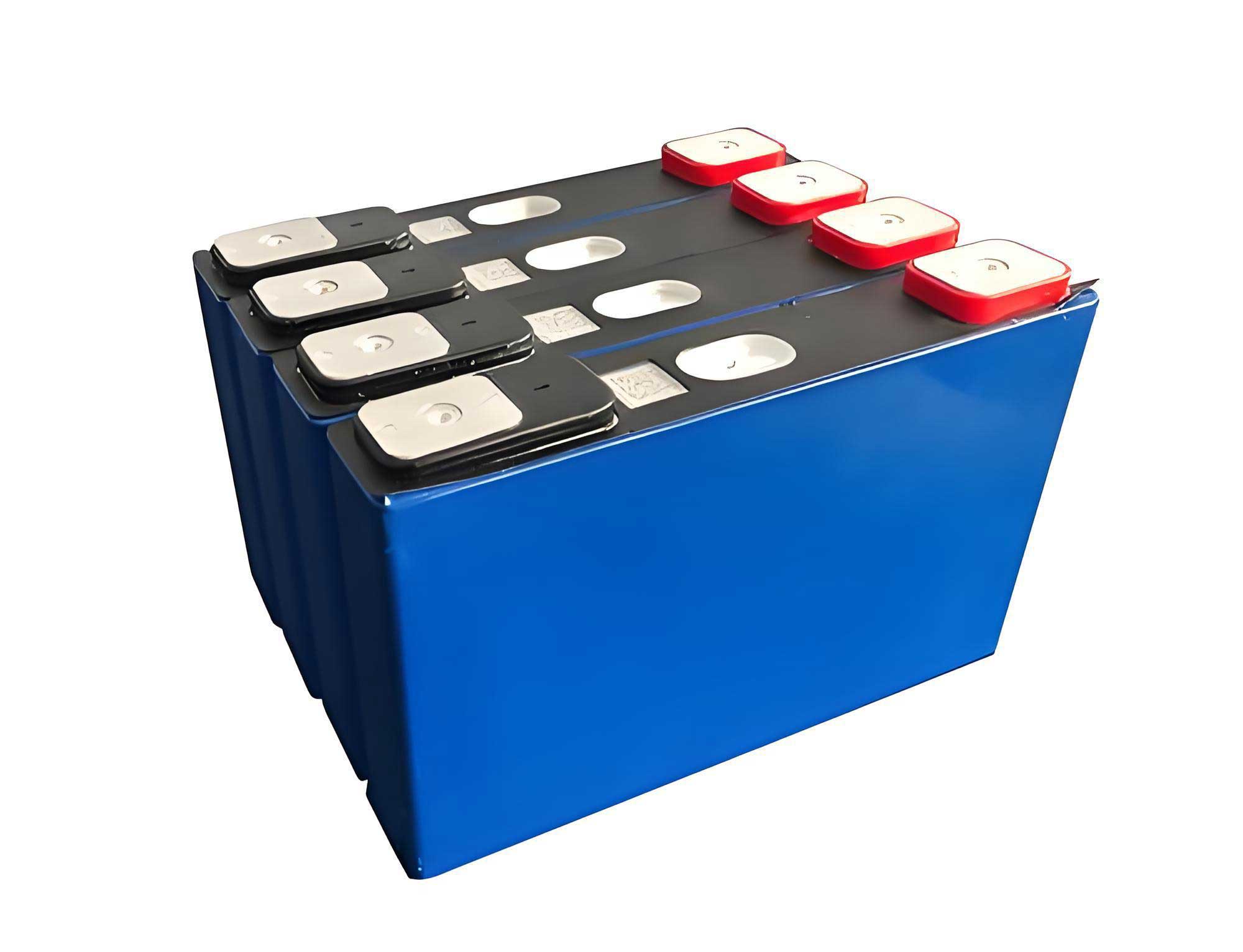
The transition from a single failing lifepo4 battery module to a cascading failure within a densely packed battery cluster represents a critical, yet less studied, scaling challenge. In a real-world ESS, lifepo4 battery modules are arranged in series and parallel configurations to achieve required voltage and capacity, forming larger cluster units. The thermal interaction between adjacent modules can drastically alter the failure propagation dynamics, heat accumulation, and gas dispersion patterns compared to an isolated single-module test. Therefore, understanding the thermal runaway characteristics at the cluster level is paramount for designing effective safety protocols and fire suppression systems. This article presents a detailed experimental investigation into the overcharge-induced thermal runaway behavior of both a single lifepo4 battery module and a cluster-level configuration, followed by an evaluation of the fire suppression efficacy using water mist.
Experimental Methodology for Thermal Runaway and Suppression
The experimental platform was designed to simulate realistic failure scenarios within an energy storage enclosure. Two primary test subjects were used:
- A Single lifepo4 battery Module: Constructed from 32 prismatic cells in a 4-parallel 8-series configuration (4P8S). Each cell had a nominal voltage of 3.2 V and a capacity of 86 Ah, resulting in a module rating of 25.6 V, 344 Ah, and approximately 8.8 kWh.
- A Cluster-level lifepo4 battery Configuration: Comprising five identical modules as described above, arranged in a “plus-sign” (+) pattern. The central module was designated for overcharging, surrounded by four adjacent modules to study thermal propagation.
The abuse condition was a constant current (CC) overcharge at a rate of 0.5C (172 A) until thermal runaway was initiated. Upon the appearance of open flame, the charging was terminated, and a medium-pressure water mist system (0.2 MPa) was activated remotely. The system delivered a fine spray directly onto the target modules to simulate targeted firefighting.
Comprehensive real-time monitoring was employed:
- Electrical Parameters: Voltage and current of the overcharged module(s) were recorded.
- Thermal Monitoring: An array of K-type thermocouples was placed on the surface and within the interstitial spaces of the modules to map temperature evolution.
- Gas Detection: Hydrogen (H2) and Carbon Monoxide (CO) detectors were positioned at vertical heights of 0 m (just above the module), 2 m, 4 m, and 6 m to analyze gas generation and dispersion.
- Visual Recording: High-definition video cameras provided visual documentation of venting, smoke production, ignition, and fire suppression.
The primary chemical reactions leading to gas generation during the overcharge and thermal runaway of a lifepo4 battery involve the decomposition of the electrolyte and binder. Lithium dendrites (Li) reacting with the polyvinylidene fluoride (PVDF) binder produce hydrogen gas:
$$ \text{—CH}_2\text{—CF}_2\text{—} + \text{Li} \rightarrow \text{—CF=CF—} + \text{LiF} + \text{H}_2 \uparrow $$
Concurrently, the delithiated cathode becomes highly oxidizing and reacts with the organic electrolyte solvent (represented here as C3H4O), producing carbon monoxide:
$$ \text{O}_2 (\text{from cathode}) + \text{C}_3\text{H}_4\text{O} \rightarrow 3\text{CO} \uparrow + \text{H}_2\text{O} $$
Monitoring H2 and CO serves as both an early warning sign and a key indicator of reaction severity.
Thermal Runaway Characteristics: Single Module vs. Cluster
The experimental results revealed profound differences in the thermal runaway behavior between a single module and a module within a cluster.
Single lifepo4 battery Module Failure
The single module’s voltage gradually increased to about 1.6 times its nominal voltage before plateauing. The first safety valve opened at 1181 seconds, followed by sequential venting of others. Dense smoke emission began at 1770 seconds. Open flame ignition occurred at 2219 seconds, after which the water mist was activated. The fire was completely extinguished at 2364 seconds with no re-ignition during continued cooling.
Temperature Profile: The temperature rise was relatively gradual until smoke emission (~100°C at module center). After ignition, the surface temperature peaked at approximately 600°C. The average temperature rise rate from ignition to peak was about 8.31 °C/s over 44 seconds.
Gas Dispersion: Gas detection followed a predictable, height-dependent diffusion pattern. H2 and CO were first detected at the 0m sensor, followed by sensors at 2m, 4m, and 6m with increasing delay. Concentrations were generally highest at the lowest sensor near the source.
Cluster-level lifepo4 battery Module Failure
The central module in the cluster followed a similar voltage trajectory but with a faster timeline due to less effective heat dissipation. Venting started earlier at 1015 seconds, with smoke at 1715 seconds and ignition at 1952 seconds. The fire was suppressed by 2068 seconds.
Temperature Profile: The thermal behavior was drastically more severe. Following ignition, the temperature of the central (0#) module’s surface skyrocketed from 173.3°C to 942.7°C in just 18 seconds, yielding an immense temperature rise rate of 42.74 °C/s. This peak temperature was over 340°C higher than the single module’s peak. Significant heat was transferred to adjacent modules, particularly the one positioned above the ignition source, due to convective rising of hot gases and flames.
Gas Dispersion: The gas detection pattern deviated from the simple vertical diffusion model. In this constrained cluster environment, the highest H2 concentration was recorded at the 2m sensor, not the 0m sensor. This indicates that gaseous products did not simply rise vertically but were influenced by turbulent flows, obstructions from other modules, and the geometry of the enclosure.
| Parameter | Single Module | Cluster Module (Central) |
|---|---|---|
| Time to First Venting (s) | 1181 | 1015 |
| Time to Smoke (s) | 1770 | 1715 |
| Time to Ignition (s) | 2219 | 1952 |
| Peak Surface Temperature (°C) | ~600 | ~942.7 |
| Critical Temperature Rise Rate (°C/s) | 8.31 | 42.74 |
| Primary Gas Dispersion | Orderly, vertical | Complex, turbulent |
Fire Suppression Efficacy of Water Mist
The application of water mist proved to be highly effective in suppressing fires for both the single and cluster lifepo4 battery configurations. The mechanism involves multiple synergistic effects: Cooling: The evaporation of fine water droplets extracts a substantial amount of latent heat from the fire plume and the hot battery surfaces, rapidly reducing temperature. Oxygen Displacement: The vapor produced displaces oxygen in the immediate vicinity of the flames, creating a local inert atmosphere. Radiation Attenuation: The mist acts as a barrier, attenuating thermal radiation between burning and unburned modules, thus hindering fire spread.
In both experiments, open flames were extinguished within 116-145 seconds of water mist activation. The most critical observation was the absence of re-ignition during the sustained cooling period (over 10-15 minutes of continuous spraying), which is essential for a lifepo4 battery system where internal chemical reactions may continue to produce heat even after visible flames are gone.
| Test Configuration | Fire Extinguished? | Time to Extinguish (s) | Re-ignition? | Average Cooling Rate Post-Ignition (°C/s) |
|---|---|---|---|---|
| Single Module | Yes | 145 | No | ~3.43 |
| Cluster Module | Yes | 116 | No | ~7.41 |
The higher cooling rate observed in the cluster test is attributed to the more intense initial fire, which enhanced the heat transfer efficiency to the water mist. However, it is noted that due to severe heat accumulation, the temperature rebound after the initial rapid cooldown was more pronounced in the cluster than in the single module test, underscoring the necessity for prolonged cooling in cluster-level incidents.
Critical Analysis and Implications for ESS Safety Design
The comparative analysis yields several critical insights for the safety engineering of lifepo4 battery-based energy storage systems:
1. Severity of Cluster Thermal Runaway: The experiment conclusively demonstrates that a lifepo4 battery module within a cluster fails more violently and reaches significantly higher temperatures than an identical module failing in isolation. The restricted space between modules in a cluster severely impedes passive heat dissipation, leading to accelerated heat accumulation and a positive feedback loop that intensifies the thermal runaway reaction. The temperature rise rate in the cluster was more than five times faster. This has direct implications for the thermal management system design, requiring more aggressive active cooling strategies and adequate spacing for ventilation in ESS layouts.
2. Gas Detection and Early Warning Strategy: The assumption that lighter-than-air gases like H2 will rise uniformly in a column is invalid in a complex, obstructed environment like a battery cluster. The non-vertical dispersion pattern observed necessitates a multi-point, three-dimensional gas detection grid within an ESS container. Relying on single-point or ceiling-only sensors may lead to delayed or missed warnings. Detectors should be placed at various heights and locations, including between modules, to ensure reliable early detection of venting gases—a precursor to thermal runaway.
3. Efficacy of Water Mist Suppression: Water mist is validated as an effective firefighting agent for lifepo4 battery fires, even at the challenging cluster level. Its ability to rapidly cool surfaces and prevent re-ignition is crucial. The key operational lesson is the requirement for sustained application. Suppression systems must be designed to deliver cooling for an extended duration (e.g., 15-30 minutes) to fully quench deep-seated chemical reactions and prevent thermal runaway propagation to neighboring modules, which was successfully prevented in this test.
4. Design Recommendations: Based on these findings, several design recommendations can be formulated:
- Module Layout: Incorporate maximum practicable spacing between lifepo4 battery modules and racks to facilitate heat dissipation and allow fire suppressant penetration.
- Thermal Barriers: Consider installing non-combustible thermal barriers between module groups to slow down heat transfer during a thermal event.
- Gas Sensing Array: Implement a networked gas detection system with sensors at low, mid, and high levels, strategically placed to account for turbulent flows.
- Suppression System Design: Specify water mist or other fine spray systems with sufficient capacity and nozzle placement to ensure direct impingement on all modules, with a guaranteed minimum discharge duration to address post-suppression heating.
Conclusion
This experimental study delineates the significant escalation in hazard when a thermal runaway event occurs within a cluster of lifepo4 battery modules, as opposed to a single module. The confined geometry leads to extreme heat accumulation, resulting in temperature peaks near 1000°C and temperature rise rates exceeding 40°C/s, far surpassing the parameters observed in single-module failures. Furthermore, the dispersion of hazard gases like H2 and CO becomes complex and non-uniform, invalidating simple vertical detection models. The research also provides strong evidence for the effectiveness of water mist as a fire suppression agent, demonstrating its capability to rapidly extinguish flames and, with sustained application, prevent re-ignition even in severe cluster fires.
For the safe large-scale deployment of lifepo4 battery energy storage systems, safety protocols and infrastructure must be designed with these cluster-level dynamics in mind. This includes optimized module spacing for thermal management, a comprehensive and strategically placed multi-point gas detection network for early warning, and the integration of fire suppression systems capable of delivering sustained, targeted cooling. Future work should focus on refining detection algorithms based on multi-sensor data fusion and evaluating the long-term effectiveness and potential secondary impacts (like electrical shorting) of various suppressants on large-scale lifepo4 battery arrays to further enhance the safety and reliability of grid-scale energy storage.