
With the advancement of smart grid initiatives and the application of environmentally friendly and energy-saving technologies, lithium iron phosphate (LiFePO4) batteries are gradually replacing valve-regulated lead-acid (VRLA) batteries in direct current (DC) power systems for substations. As an engineer focused on power system reliability, I have observed that the LiFePO4 battery offers distinct advantages, including absence of heavy metal pollution, lighter weight, smaller volume, low self-discharge rate, high specific energy, high working voltage, no memory effect, and long cycle life. These properties make LiFePO4 batteries ideal for substation backup power requirements, emphasizing lightweight design, compact size, and extended service life. However, during operation, LiFePO4 batteries pose risks such as combustion or explosion if design flaws, substandard materials, inadequate protection circuits, poor manufacturing processes, or extreme conditions like overcharging, over-discharging, and temperature extremes occur. Therefore, studying safety protection technologies for stationary LiFePO4 batteries is critically important.
The primary purpose of a station DC power supply is to ensure uninterrupted DC power in substations. Under normal alternating current (AC) power conditions, DC power is provided via AC/DC conversion modules. During AC power failures, batteries serve as backup power sources. Traditionally, VRLA batteries have been widely used due to their maturity, ease of maintenance, and low cost, but they suffer from heavy metal pollution, large weight and volume, and stringent temperature requirements. Battery life is closely related to temperature; for every 10°C increase in ambient temperature, battery lifespan is halved. This relationship can be expressed mathematically:
$$ L = L_0 \cdot 2^{-\frac{T – T_0}{10}} $$
where \( L \) is the battery lifespan at temperature \( T \), \( L_0 \) is the lifespan at reference temperature \( T_0 \) (typically 25°C), and \( T \) is the ambient temperature in degrees Celsius. In contrast, LiFePO4 batteries exhibit superior high-temperature performance, cycle performance, high-rate charge-discharge capability, and environmental friendliness, making them suitable for harsh environments with limited space and high temperatures. Hence, LiFePO4 batteries are being pilot-tested in DC power systems.
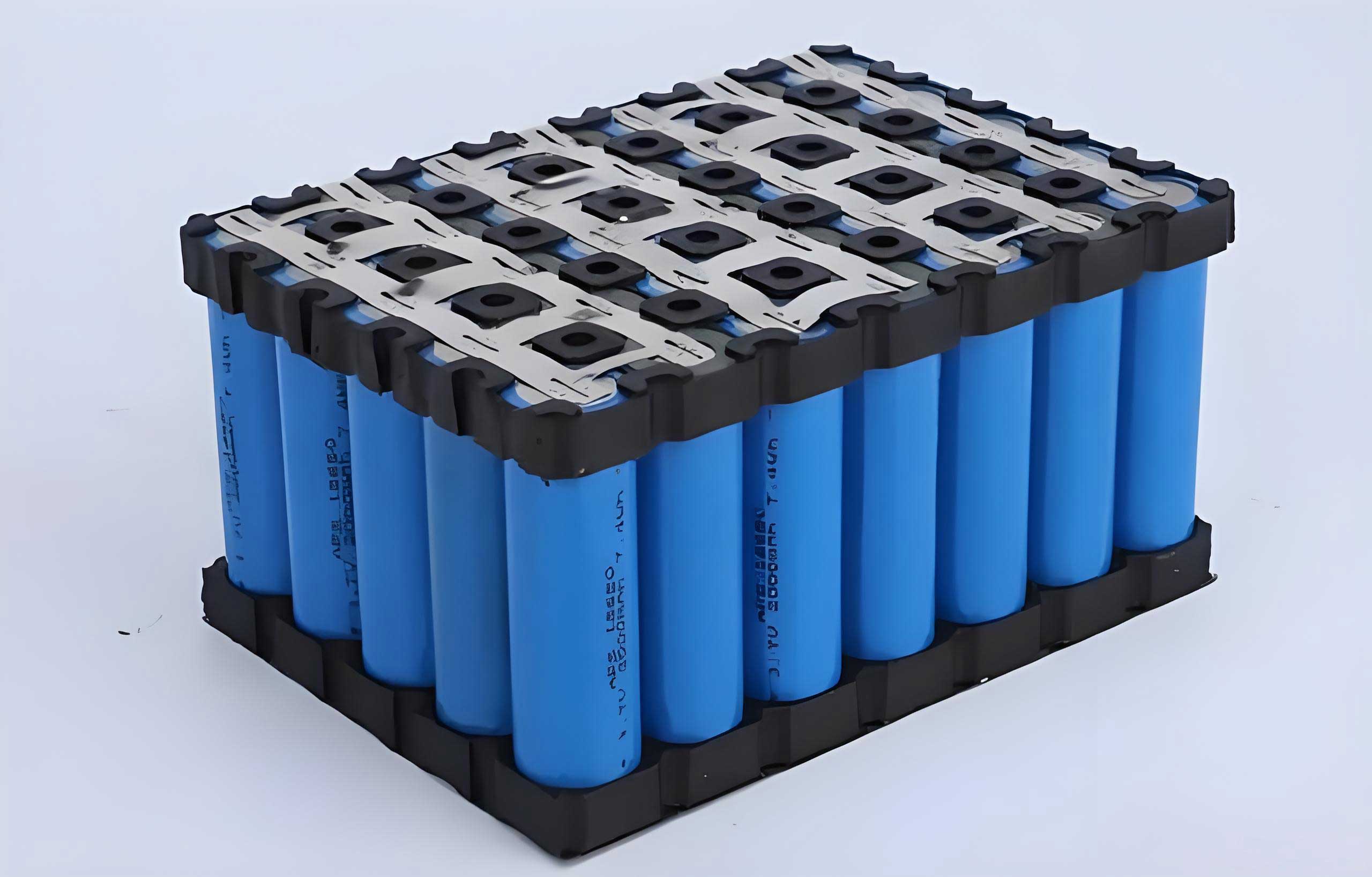
To address safety concerns, I propose a comprehensive safety protection framework for LiFePO4 batteries, integrating active and passive protection designs alongside safety regulations. This approach mitigates hazards and provides a foundation for safe deployment of LiFePO4 battery systems in substations.
Active Safety Protection Design for LiFePO4 Batteries
Active safety protection focuses on preventing fires by optimizing the LiFePO4 battery itself, along with associated charging and monitoring systems. Key components include battery cell design, battery enclosure, charging equipment, and DC monitoring devices.
Battery Cell Design
Based on the electrochemical principles of LiFePO4 batteries, safety can be enhanced by improving thermal stability of the cathode, anode, and electrolyte. Additives such as anti-overcharge agents, optimized electrolyte solvent systems, and flame-retardant additives significantly boost safety under conditions like overcharge, short circuit, high temperature, thermal shock, low temperature, impact, and puncture. For instance, the thermal runaway threshold temperature \( T_{tr} \) for a LiFePO4 battery can be modeled as:
$$ T_{tr} = T_0 + \Delta T_{additive} $$
where \( T_0 \) is the baseline thermal runaway temperature without additives, and \( \Delta T_{additive} \) represents the temperature increase due to safety additives. Research indicates that proper additive use can raise \( T_{tr} \) by 20–30°C, reducing fire risks.
| Property | LiFePO4 Battery | VRLA Battery |
|---|---|---|
| Energy Density (Wh/kg) | 90–160 | 30–50 |
| Cycle Life (cycles) | 2000–5000 | 300–500 |
| Operating Voltage (V per cell) | 3.2–3.3 | 2.0–2.1 |
| Self-Discharge Rate (% per month) | 1–3 | 3–5 |
| Temperature Sensitivity | Moderate | High |
| Environmental Impact | Low | High (lead pollution) |
Battery Enclosure
Individual LiFePO4 battery cells are housed in materials like steel, aluminum, nickel-plated iron, or aluminum-plastic film. For station use, multiple cells are integrated into modules with robust enclosures that provide mechanical protection against impact and collision. The enclosure design must consider heat dissipation and structural integrity. A well-designed LiFePO4 battery enclosure can withstand forces up to a certain threshold, expressed as:
$$ F_{max} = k \cdot A \cdot \sigma $$
where \( F_{max} \) is the maximum impact force tolerated, \( k \) is a safety factor, \( A \) is the surface area, and \( \sigma \) is the material strength. This ensures the LiFePO4 battery remains intact under physical stress.
Charging Equipment
The charger for LiFePO4 batteries must include output overcurrent and overvoltage protection to prevent overcharging. It should operate in constant current (CC) and constant voltage (CV) modes, with real-time control from the DC monitoring system. The charging process for a LiFePO4 battery can be described by the following stages:
1. **Constant Current (CC) Phase**: The charger supplies a fixed current \( I_{charge} \) until the battery voltage reaches the setpoint \( V_{max} \).
2. **Constant Voltage (CV) Phase**: The charger maintains \( V_{max} \) while the current gradually decreases to a cutoff value \( I_{cutoff} \).
The charging efficiency \( \eta_{charge} \) for a LiFePO4 battery is given by:
$$ \eta_{charge} = \frac{E_{stored}}{E_{input}} \times 100\% $$
where \( E_{stored} \) is the energy stored in the LiFePO4 battery, and \( E_{input} \) is the energy supplied by the charger. Advanced chargers achieve efficiencies above 95% for LiFePO4 batteries, minimizing heat generation.
DC Monitoring System
As the core of the protection system, the DC monitor continuously tracks parameters such as voltage, current, and temperature of individual LiFePO4 battery cells, modules, and the overall bank. It also monitors the charger’s output. Upon detecting values beyond thresholds (e.g., overvoltage \( V > V_{th} \), overtemperature \( T > T_{th} \)), the system triggers alarms and disconnects the charger. The monitor can automatically set equalization and float voltages based on LiFePO4 battery characteristics. For example, the equalization voltage \( V_{eq} \) for a LiFePO4 battery is typically:
$$ V_{eq} = 3.6 \, \text{V per cell} $$
and the float voltage \( V_{float} \) is:
$$ V_{float} = 3.4 \, \text{V per cell} $$
Regular equalization cycles are scheduled to balance cell voltages, enhancing the longevity of the LiFePO4 battery bank. The monitoring algorithm can be summarized as:
$$ \text{Action} = \begin{cases}
\text{Alarm \& Disconnect} & \text{if } V > V_{th} \text{ or } T > T_{th} \\
\text{Normal Operation} & \text{otherwise}
\end{cases} $$
This proactive approach ensures the LiFePO4 battery operates within safe limits, preventing thermal runaway.
Passive Safety Protection Design for LiFePO4 Batteries
Passive safety protection involves additional devices to warn and suppress fires if a LiFePO4 battery fails, containing the hazard and preventing spread to other substation equipment.
Flame-Retardant and Fireproof Design
Battery enclosures and racks are lined with high-temperature-resistant, thermally insulating flame-retardant materials. These materials delay flame and heat propagation, providing layered defense. The thermal resistance \( R_{th} \) of such materials can be calculated as:
$$ R_{th} = \frac{d}{\lambda \cdot A} $$
where \( d \) is thickness, \( \lambda \) is thermal conductivity, and \( A \) is area. Higher \( R_{th} \) values indicate better insulation, crucial for LiFePO4 battery safety. For instance, using ceramic fiber mats with \( \lambda = 0.05 \, \text{W/m·K} \) and \( d = 10 \, \text{mm} \) significantly slows heat transfer during a LiFePO4 battery fire.
Dedicated Automatic Fire Suppression System
This system monitors temperature and smoke concentration inside LiFePO4 battery enclosures. If thresholds are exceeded, it activates to extinguish fires using agents effective against lithium-ion battery fires, such as aerosol or clean chemical suppressants. The suppression mechanism involves cooling and chemical inhibition to halt thermal runaway. The required extinguishing agent mass \( m_{agent} \) for a LiFePO4 battery fire can be estimated as:
$$ m_{agent} = C \cdot E_{battery} $$
where \( C \) is a constant (e.g., 0.1 kg/kWh), and \( E_{battery} \) is the energy capacity of the LiFePO4 battery in kWh. Rapid agent deployment reduces temperature and captures free radicals, suppressing combustion.
Smoke Detection and Alarm
Smoke sensors placed in battery enclosures, racks, and rooms detect particles and gases like nitrogen oxides. Upon exceeding concentration limits, alarms alert personnel for evacuation. Sensors may include suction devices to improve detection efficiency. The smoke concentration \( S \) is compared to a threshold \( S_{th} \):
$$ \text{Alarm Condition: } S \geq S_{th} $$
where \( S_{th} \) is typically set at 0.5–2.0% obscuration per meter for LiFePO4 battery environments. Early warning is vital for mitigating risks associated with LiFePO4 battery failures.
| Component | Function | Key Parameters |
|---|---|---|
| Flame-Retardant Lining | Delay heat/flame spread | Thermal resistance \( R_{th} \), ignition temperature |
| Automatic Fire Suppression | Extinguish battery fires | Agent mass \( m_{agent} \), response time < 10 s |
| Smoke Detection System | Early fire warning | Smoke concentration \( S \), detection sensitivity |
Safety Protection Standards and Guidelines for LiFePO4 Batteries
Establishing and adhering to standards is essential for safe LiFePO4 battery deployment. This involves technical specifications and usage protocols.
Accelerating Technical Standard Development
Standards for LiFePO4 battery products should include tests for temperature tolerance, short circuit, overcharge, crush, and flame resistance. Compliance ensures safety in design and manufacturing. For example, a standard might mandate that LiFePO4 batteries pass a nail penetration test without fire, or withstand overcharge at 1.5 times the rated voltage for 1 hour. Standardized testing protocols provide a benchmark for evaluating LiFePO4 battery safety.
Standardized Usage Practices
Users must follow guidelines to maintain LiFePO4 battery safety:
- Regular visual inspections for swelling, damage, or leakage; discontinue use if defects are found.
- Avoid extreme environmental conditions (e.g., temperatures beyond -20°C to 60°C for LiFePO4 batteries).
- Professional handling during installation and maintenance; no unauthorized disassembly.
- Prevent mechanical abuse like impact or compression.
The lifecycle management of a LiFePO4 battery can be modeled to optimize safety:
$$ \text{Safety Index} = \sum_{i=1}^{n} w_i \cdot f_i(\text{condition}) $$
where \( w_i \) are weights for factors such as temperature, charge cycles, and physical integrity, and \( f_i \) are functions assessing each factor. Regular monitoring of this index helps preempt failures in LiFePO4 battery systems.
Conclusion
Through this research, I have demonstrated that a holistic safety protection strategy combining active and passive designs, along with stringent standards, can effectively address risks in stationary LiFePO4 battery applications. Active measures like optimized cell design, robust enclosures, intelligent charging, and real-time monitoring prevent incidents, while passive systems like flame-retardant materials, automatic suppression, and smoke detection contain emergencies. The integration of these technologies supports the widespread adoption of LiFePO4 batteries in substation DC power systems, offering enhanced performance, environmental benefits, and reliability. Future work should focus on refining protection algorithms and standardizing practices globally to ensure the safe evolution of LiFePO4 battery technology in grid applications.
In summary, the LiFePO4 battery represents a significant advancement over traditional VRLA batteries, but its safety must be prioritized. By implementing the proposed protection framework, utilities can leverage the advantages of LiFePO4 batteries while mitigating potential hazards. Continuous innovation in materials, monitoring, and suppression will further solidify the role of LiFePO4 batteries in modern power systems, contributing to grid resilience and sustainability.