
In recent years, the widespread adoption of lifepo4 batteries, also known as lithium iron phosphate batteries, in electric vehicles and energy storage systems has raised significant safety concerns due to the risk of thermal runaway and subsequent fires. As a researcher focused on battery safety, I have investigated the effectiveness of hydrogel-based fire-extinguishing agents in suppressing lifepo4 battery fires. Traditional water-based extinguishers, while effective in cooling, often suffer from poor water retention and adhesion, limiting their ability to prevent re-ignition. In this study, I explore a hydrogel complex composed of carboxymethyl cellulose (CMC) and aluminum chloride (AlCl3) solution, which exhibits temperature-sensitive properties—low viscosity at room temperature for easy application and high viscosity at elevated temperatures for enhanced adhesion and continuous cooling. Through comprehensive experiments on single lifepo4 batteries and 2×2 lifepo4 battery packs, I analyze flame characteristics, temperature profiles, and extinguishing efficiency. The results demonstrate that the hydrogel agent rapidly reduces battery temperatures below the thermal runaway threshold, restricts flame propagation, and prevents re-ignition, offering a promising solution for mitigating lifepo4 battery fires. This article delves into the synthesis, properties, and experimental validation of the hydrogel, supported by tables and mathematical models to summarize key findings.
The lifepo4 battery, with its high energy density and stability, is prone to thermal runaway under abusive conditions such as overcharging or mechanical damage. Once thermal runaway occurs, the lifepo4 battery releases flammable electrolytes and gases, leading to intense fires that are challenging to extinguish. Conventional extinguishing agents like CO2 or dry powder may suppress flames temporarily but often fail to address the internal chemical reactions, causing re-ignition. Water-based agents, with their high heat capacity, are more effective, but their rapid evaporation and poor surface adhesion limit long-term cooling. To overcome this, I developed a hydrogel extinguisher that combines 1% CMC solution with 1% AlCl3 solution, forming a 2% hydrogel complex. This agent leverages the hydrophilic nature of CMC to retain water and the cross-linking effect of AlCl3 to enhance structural integrity, making it ideal for lifepo4 battery fire scenarios.
To understand the hydrogel’s behavior, I conducted thermogravimetric analysis (TGA) and temperature-sensitivity tests. The TGA curve, shown in Figure 1, reveals that the hydrogel maintains about 78% of its mass up to 328°C, as non-bound water evaporates slowly. Between 328°C and 380°C, rapid mass loss occurs due to polymer chain breakdown and bound water release, with a peak mass loss rate of 1.3 g/°C at 355°C. Beyond 380°C, the mass stabilizes as water fully vaporizes. This indicates that the hydrogel can retain moisture even at high temperatures, ensuring prolonged cooling when applied to a lifepo4 battery. The temperature sensitivity was evaluated by measuring light transmittance of hydrogel solutions at different concentrations (1%, 2%, and 3%) across a temperature range. The transmittance drops sharply at critical points—67–70°C for 1%, 75–78°C for 2%, and 79–82°C for 3%—signifying a phase transition from a fluid state to a viscous gel. This property allows the hydrogel to flow easily during application and adhere firmly to hot lifepo4 battery surfaces, providing sustained heat absorption. The 2% hydrogel was selected for experiments due to its optimal sensitivity range for lifepo4 battery fires.
The experimental setup involved heating 100% state-of-charge (SOC) lifepo4 batteries to induce thermal runaway. Key parameters of the lifepo4 batteries are summarized in Table 1. Both single lifepo4 batteries and 2×2 lifepo4 battery packs were tested, with and without hydrogel application. A 2 kW heating plate was placed 2 cm below the batteries, and K-type thermocouples measured temperature at various heights above the positive terminal. Digital cameras recorded flame images, and a spray system delivered the hydrogel at a flow rate of 1.17 L/min from a height of 1.2 m. The hydrogel was applied immediately upon flame appearance, and data on flame height, temperature, and extinguishing time were collected. Each test was repeated four times to ensure reliability.
| Parameter | Value |
|---|---|
| Model | SONY us18650ft Lifepo4 Battery |
| Nominal Voltage | 3.2 V |
| Capacity | 1500 mAh |
| Dimensions | 18 mm × 65 mm |
| Chemical Type | Lithium Iron Phosphate (LiFePO4) |
The combustion behavior of a single lifepo4 battery without hydrogel intervention is characterized by an initial heating phase, followed by gas release, ignition, and a stable flame period. Upon heating, the lifepo4 battery surface darkens, and at around 528 seconds, a popping sound occurs with the first flame due to auto-ignition of ejected gases. The flame subsides briefly but re-ignites at 718 seconds as electrolyte leaks and combusts, reaching a peak flame height of 250 mm and a maximum surface temperature of 557.8°C. The flame extinguishes after approximately 40 seconds, but the lifepo4 battery remains hot, posing a re-ignition risk. With hydrogel application at 688 seconds, the flame is disrupted into a Y-shape due to the spray momentum, and the flame height decreases from 200–250 mm to 150–200 mm within 9 seconds. The hydrogel’s water mist dilutes flammable gases, while the gel component adheres to the lifepo4 battery surface, cooling it from 600°C to below 200°C without re-ignition. This highlights the efficacy of hydrogel in suppressing single lifepo4 battery fires.
For the 2×2 lifepo4 battery pack, the fire dynamics are more complex due to thermal interactions between cells. Without hydrogel, the pack exhibits multiple ignition events: an initial flame at 542 seconds, a secondary intense fire at 686 seconds as adjacent cells ignite, and a peak flame height of 466 mm. The maximum surface temperature reaches 637.2°C, and temperatures remain elevated for over 150 seconds after flame extinction, indicating persistent heat generation within the lifepo4 batteries. With hydrogel sprayed at 776 seconds, the flame height is reduced from an average of 300 mm to 200 mm, and the fire is extinguished in 38 seconds. The hydrogel not only cools the lifepo4 batteries but also forms a barrier between cells, hindering heat transfer. Temperature data show a rapid decline, with the lifepo4 battery surface cooling at a rate of 16.8°C/s and the flame zone at 22.3°C/s. No re-ignition occurs, demonstrating the hydrogel’s ability to mitigate cascading failures in lifepo4 battery packs.
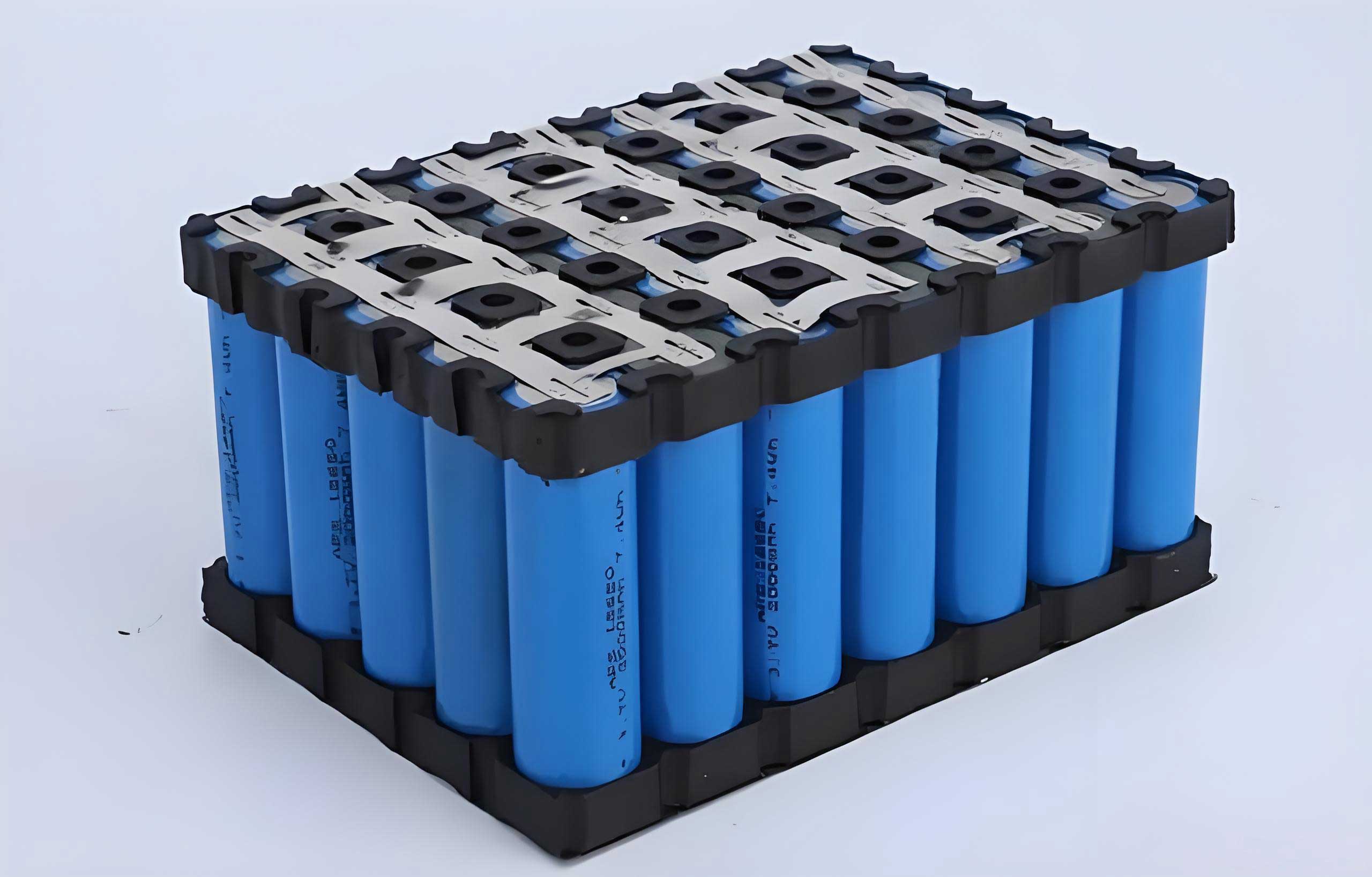
To quantify the extinguishing performance, I analyzed flame height and temperature profiles using mathematical models. The flame height \( L_f \) of a lifepo4 battery jet fire can be related to the gas release rate \( \dot{m} \) and ambient conditions. For a diffusion flame, the correlation is often expressed as:
$$ L_f = k \cdot \dot{m}^{n} $$
where \( k \) is a constant dependent on fuel properties and \( n \) is an exponent typically around 0.5 for turbulent jets. In our experiments, the gas release rate from a lifepo4 battery during thermal runaway varies with temperature, which can be modeled using the Arrhenius equation:
$$ \dot{m} = A \exp\left(-\frac{E_a}{RT}\right) $$
Here, \( A \) is the pre-exponential factor, \( E_a \) is the activation energy, \( R \) is the gas constant, and \( T \) is the absolute temperature of the lifepo4 battery. When hydrogel is applied, the cooling effect reduces \( T \), thereby decreasing \( \dot{m} \) and \( L_f \). The temperature drop \( \Delta T \) due to hydrogel cooling can be described by a heat balance equation:
$$ m_b C_p \frac{dT}{dt} = -h A_s (T – T_{\infty}) – \dot{m}_w \Delta H_v $$
where \( m_b \) is the mass of the lifepo4 battery, \( C_p \) is its specific heat capacity, \( h \) is the heat transfer coefficient, \( A_s \) is the surface area, \( T_{\infty} \) is the ambient temperature, \( \dot{m}_w \) is the water evaporation rate from the hydrogel, and \( \Delta H_v \) is the latent heat of vaporization. The hydrogel enhances \( \dot{m}_w \) by retaining water, leading to faster cooling. Table 2 summarizes key parameters derived from the experiments for both single and pack configurations of lifepo4 batteries.
| Configuration | Extinguishing Time (s) | Hydrogel Used (L) | Max Flame Height Reduction (%) | Surface Cooling Rate (°C/s) | Re-ignition Occurrence |
|---|---|---|---|---|---|
| Single Lifepo4 Battery | 9 | 0.18 | 25 | 22.2 | No |
| 2×2 Lifepo4 Battery Pack | 38 | 0.76 | 33 | 16.8 | No |
The mechanism of hydrogel extinguishing involves multiple phases: First, upon spray impact, the water mist disrupts the flame structure and dilutes oxygen and flammable gases around the lifepo4 battery. Second, the gel component, due to its temperature sensitivity, transitions to a viscous state upon contacting hot surfaces, coating the lifepo4 battery and sealing cracks to prevent gas escape. Third, the retained water gradually evaporates, absorbing heat continuously and maintaining the lifepo4 battery temperature below the thermal runaway threshold of approximately 200°C. This multi-phase action addresses both external flames and internal heat generation, which is critical for lifepo4 battery safety. The hydrogel’s effectiveness can be further optimized by adjusting the CMC and AlCl3 concentrations. For instance, a higher CMC content may increase viscosity but reduce sprayability, so a balance is essential for practical applications in lifepo4 battery systems.
In addition to experimental data, I performed a theoretical analysis of heat transfer in lifepo4 batteries during hydrogel application. The temperature distribution within a cylindrical lifepo4 battery can be modeled using the heat conduction equation in cylindrical coordinates:
$$ \frac{1}{r} \frac{\partial}{\partial r} \left( r k \frac{\partial T}{\partial r} \right) + \frac{\partial}{\partial z} \left( k \frac{\partial T}{\partial z} \right) + \dot{q} = \rho C_p \frac{\partial T}{\partial t} $$
where \( r \) and \( z \) are radial and axial coordinates, \( k \) is thermal conductivity, \( \dot{q} \) is internal heat generation rate from chemical reactions, \( \rho \) is density, and \( t \) is time. For a lifepo4 battery under thermal runaway, \( \dot{q} \) is high, but hydrogel cooling introduces a boundary condition at the surface:
$$ -k \frac{\partial T}{\partial n} = h (T – T_{\infty}) + \epsilon \sigma (T^4 – T_{\infty}^4) + \dot{m}_w \Delta H_v $$
with \( n \) as the normal direction, \( \epsilon \) as emissivity, \( \sigma \) as Stefan-Boltzmann constant, and the last term representing evaporative cooling from the hydrogel. Solving this numerically (e.g., using finite element methods) shows that hydrogel application reduces core temperatures significantly, preventing thermal propagation in lifepo4 battery packs. This aligns with our observations that adjacent cells in the pack did not ignite post-application.
The economic and environmental aspects of hydrogel use for lifepo4 battery fires are also noteworthy. Compared to synthetic agents like perfluorohexanone, hydrogel is water-based, biodegradable, and low-cost. Its preparation involves simple mixing of CMC and AlCl3, making it scalable for industrial use in lifepo4 battery storage facilities. However, challenges remain, such as potential corrosion from AlCl3 on battery components, which requires further study. Future work could explore alternative cross-linkers or additives to enhance fire suppression while minimizing side effects on lifepo4 battery integrity.
In conclusion, the hydrogel extinguishing agent developed from CMC and AlCl3 demonstrates superior performance in controlling lifepo4 battery fires. Through temperature-sensitive behavior, it ensures effective application and sustained cooling, reducing flame heights by 25-33% and cooling lifepo4 battery surfaces at rates up to 22.3°C/s. Experiments on single lifepo4 batteries and packs confirm that hydrogel prevents re-ignition and inhibits inter-cell heat transfer, addressing key limitations of traditional extinguishers. The integration of mathematical models and experimental data provides a comprehensive framework for optimizing hydrogel formulations for lifepo4 battery safety. As the adoption of lifepo4 batteries grows in energy storage and electric mobility, such innovative fire suppression technologies will be crucial for risk mitigation. Continued research into hydrogel composites and their deployment systems can further enhance the safety profile of lifepo4 battery technologies worldwide.
To summarize key formulas and parameters, Table 3 lists the mathematical symbols used in this analysis related to lifepo4 battery fires and hydrogel extinguishing.
| Symbol | Description | Typical Value for Lifepo4 Battery |
|---|---|---|
| \( L_f \) | Flame height | 200–500 mm |
| \( \dot{m} \) | Gas release rate | 0.1–0.5 g/s |
| \( E_a \) | Activation energy for thermal runaway | 100–150 kJ/mol |
| \( C_p \) | Specific heat capacity of lifepo4 battery | 800–1000 J/(kg·K) |
| \( \Delta H_v \) | Latent heat of water vaporization | 2260 kJ/kg |
| \( h \) | Heat transfer coefficient with hydrogel | 50–100 W/(m²·K) |
This study underscores the importance of advanced materials like hydrogel in addressing the unique challenges of lifepo4 battery fires. By leveraging temperature-sensitive properties and enhanced water retention, hydrogel agents offer a viable path toward safer lifepo4 battery systems, contributing to the broader goals of sustainable energy storage and fire safety engineering.