
Lithium-ion batteries have become the cornerstone of modern portable electronics and, more significantly, the electric vehicle (EV) revolution. Their superiority over legacy battery technologies like lead-acid or nickel-based systems lies in their high operating voltage, superior specific energy, excellent cycle life, and lack of memory effect. However, the persistent challenge of thermal safety casts a shadow over their widespread adoption. Incidents involving fires or explosions, often highlighted in media reports, directly impact public confidence in EV technology. At the heart of this safety challenge is the phenomenon of thermal runaway—a vicious cycle of self-heating that can lead to catastrophic failure.
This self-heating originates from the complex interplay of electrical and chemical energy conversion during operation. During long-term or high-rate charge/discharge cycles, side reactions, electrode polarization, and internal resistance contribute to heat generation. If this heat cannot be dissipated effectively, the internal temperature of the cell rises. Upon reaching critical thresholds, this can trigger exothermic decomposition reactions of battery components like the solid electrolyte interphase (SEI), the electrolyte, and even the cathode material itself. These reactions release further heat, accelerating the temperature rise in a positive feedback loop that culminates in thermal runaway, often accompanied by venting, fire, or explosion.
Therefore, a fundamental understanding of the thermal runaway mechanism is paramount for enhancing the intrinsic safety of lithium-ion batteries and guiding safer system design. Among various cathode chemistries, lithium iron phosphate (LiFePO4) stands out for its remarkable safety profile. Its olivine crystal structure provides exceptional thermal and chemical stability. LiFePO4 cathode material offers a theoretical capacity of approximately 170 mAh/g, a flat operating voltage around 3.4 V vs. Li/Li+, and demonstrates remarkable stability even when heated to 200°C under ambient pressure. Combined with its long cycle life, abundance of raw materials, and lower cost, these attributes make the LiFePO4 battery a predominant choice for applications where safety and longevity are critical, such as electric buses and energy storage systems.
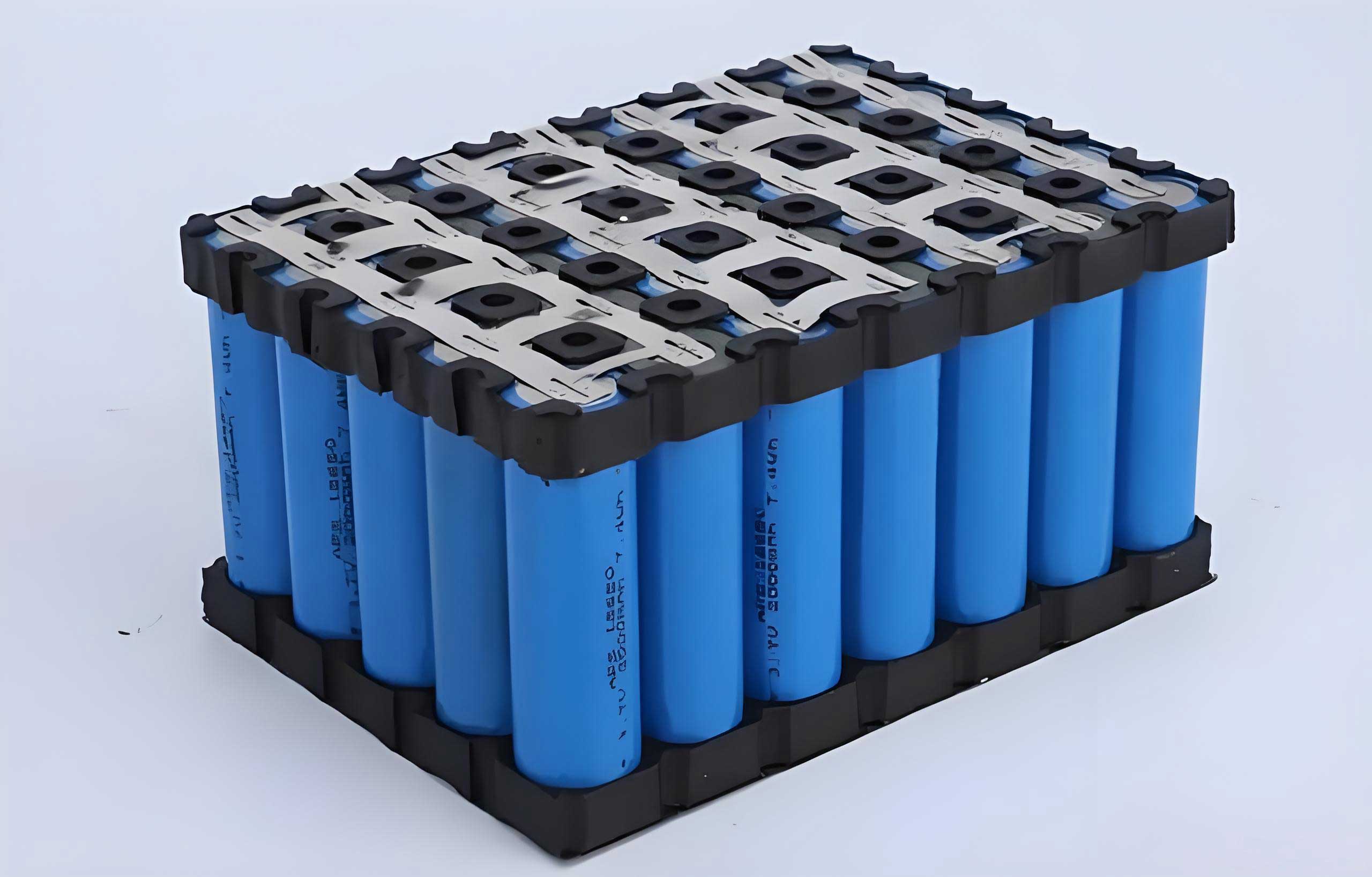
Despite the inherent stability of the LiFePO4 chemistry, it is not entirely immune to thermal runaway under extreme abusive conditions. Furthermore, the safety characteristics of a battery evolve throughout its lifetime. Cycling induces aging mechanisms—such as SEI growth, lithium plating, and mechanical degradation of electrodes and separators—that can alter its thermal response. Studying the aged state is thus crucial for real-world safety assessment. This investigation focuses on the thermal behavior of cycled LiFePO4 batteries at different states of charge (SOC) under adiabatic conditions, simulating a worst-case scenario where no heat is lost to the surroundings.
The Accelerating Rate Calorimeter (ARC) is an indispensable tool for such studies. Operating on a “heat-wait-seek” principle, the ARC can detect minute self-heating rates from a sample and then maintain an adiabatic environment, allowing the thermal runaway sequence to unfold naturally. This provides invaluable data on onset temperatures, heating rates, and maximum temperatures reached during failure. In this study, we employ ARC testing combined with comprehensive post-mortem analysis to probe the SOC-dependent thermal stability of 18650-type LiFePO4 batteries after extensive cycling. The goal is to qualitatively and quantitatively assess how the energy content of the aged LiFePO4 battery influences its propensity for thermal runaway.
Experimental Methodology
Cell Preparation and Aging Protocol
The test subjects were commercial 18650 cylindrical LiFePO4 batteries. The key specifications of the fresh LiFePO4 battery are summarized in Table 1.
| Parameter | Specification |
|---|---|
| Nominal Capacity | 1.5 Ah |
| Nominal Voltage | 3.2 V |
| Charge Cut-off Voltage | 3.65 V |
| Discharge Cut-off Voltage | 2.0 V |
| Maximum Continuous Discharge Current | 3C |
| Cathode Material | LiFePO4 |
| Anode Material | Graphite |
Prior to aging and testing, all cells underwent a standard formation process: two cycles at 0.2C rate between 2.0 V and 3.65 V to ensure stable SEI formation. Subsequently, the cells were subjected to an accelerated aging protocol consisting of 100 cycles at a 1C rate (1.5 A). Each cycle involved a constant current (CC) charge to 3.65 V, followed by a constant voltage (CV) hold until the current dropped to 0.02C, a rest period, and then a CC discharge to 2.0 V. This cycling induces realistic aging, mimicking capacity fade and impedance growth over the battery’s life.
After the 100-cycle aging, the cells were prepared for ARC testing at three distinct SOC levels: 10%, 50%, and 100%. This was achieved by performing a final 1C constant current charge to the respective capacity corresponding to each SOC. The cells were then allowed to rest for thermal and voltage equilibrium before being sealed in the ARC. The precise parameters for the ARC test cells are listed in Table 2. To prevent interference from melting plastics during the high-temperature experiment, the original PVC sleeve and top insulating gasket were carefully removed from each LiFePO4 battery beforehand.
| Sample ID | State of Charge (SOC) | Post-Aging Condition | Pre-ARC Mass (g) |
|---|---|---|---|
| Cell-10 | 10% | After 100 cycles at 1C | 42.15 |
| Cell-50 | 50% | After 100 cycles at 1C | 42.20 |
| Cell-100 | 100% | After 100 cycles at 1C | 42.25 |
Accelerating Rate Calorimetry (ARC) Testing
Thermal runaway tests were conducted using an adiabatic accelerating rate calorimeter (ARC). The instrument was configured to operate in the standard heat-wait-seek (H-W-S) mode. The detailed test parameters are provided in Table 3.
| Parameter | Setting |
|---|---|
| Start Temperature | 50 °C |
| Temperature Step | 5 °C |
| Wait Time | 30 minutes |
| Exotherm Detection Sensitivity (dT/dt) | 0.02 °C/min |
| Abort Temperature | 350 °C |
The process begins by heating the sample to the start temperature. The system then enters a wait period for temperature stabilization. Subsequently, it seeks for any self-heating rate ($\frac{dT}{dt}$) exceeding the detection threshold of 0.02 °C/min. If the self-heating rate is below this threshold, the system heats by another temperature step and repeats the cycle. Once an exotherm is detected ($\frac{dT}{dt} \geq 0.02$ °C/min), the ARC switches to an adiabatic tracking mode. In this mode, the furnace temperature precisely follows the sample’s temperature, minimizing heat loss and allowing the exothermic reactions to proceed under nearly ideal adiabatic conditions. The test continues until thermal runaway concludes or the abort temperature is reached.
Post-Mortem Analysis
Following the ARC tests, the cells were carefully weighed to determine mass loss due to venting. They were then dissected in an argon-filled glovebox to observe internal physical damage. The jellyrolls were extracted and unrolled to inspect the condition of the electrodes and separator.
The separators were retrieved, thoroughly rinsed with dimethyl carbonate (DMC) to remove residual electrolyte, and dried in a vacuum oven at 100°C for 1 hour. Their gas permeability (Gurley value) was measured using an automated densometer, which records the time required for 100 cc of air to pass through a standard area (6.45 cm²) under a specific pressure (1.215 kPa). A lower Gurley value indicates higher porosity or larger pore size. The surface morphology of the separators was examined using a scanning electron microscope (SEM) at an acceleration voltage of 1 kV and 10,000x magnification.
Results and Discussion
Thermal Behavior Under Adiabatic Heating
The temperature-time profiles and self-heating rate curves for the aged LiFePO4 battery at different SOCs are the core of this analysis. The data reveals a stark contrast in thermal stability.
For the 10% SOC and 50% SOC LiFePO4 battery samples, the thermal trajectory was remarkably similar and non-catastrophic. As shown in the temperature profiles, both cells exhibited a steady temperature rise following the ARC’s step heating until approximately 159°C. At this point, a sharp, transient temperature drop was observed. This is a classic signature of pressure relief valve (PRV) rupture. The sudden release of internal gases and possibly ejected electrolyte carries away a significant amount of heat, causing the measured temperature to decrease. Crucially, after this venting event, neither cell resumed self-heating. The self-heating rate remained negative or near zero, and the temperature plateaued. This indicates that the exothermic reactions within these partially charged, aged LiFePO4 battery cells were not sufficiently vigorous to sustain thermal runaway once the internal pressure was released and some active material was ejected. The cells reached a stable, non-reactive state.
In stark contrast, the fully charged (100% SOC) LiFePO4 battery followed a path to complete thermal runaway. Its temperature profile also showed the characteristic dip near 159°C, confirming PRV activation. However, the cooling effect was only momentary. The cell quickly resumed self-heating, indicating that the underlying chemical reactions were too intense to be quenched by venting alone.
The self-heating rate curve for the 100% SOC cell is particularly instructive. After resuming self-hearing post-vent, the heating rate began a sustained and dramatic increase starting at around 174°C. This marks the beginning of the uncontrolled thermal acceleration phase. The heating rate escalated as follows:
- At $T \approx 191$ °C, $\frac{dT}{dt} = 1$ °C/min.
- At $T \approx 220$ °C, $\frac{dT}{dt} = 2.4$ °C/min (or 0.04 K/s).
Beyond 220°C, the heating rate skyrocketed, leading to a violent thermal runaway event. The temperature surged uncontrollably, reaching a maximum recorded temperature of approximately 340°C before the test was terminated. The entire sequence for the 100% SOC LiFePO4 battery can be described by a positive feedback loop where heat generation far outpaces any heat loss:
- Initial heating leads to SEI decomposition > heat.
- Heat causes separator softening/melting > internal short circuit > more heat.
- Heat triggers reaction between delithiated cathode (FePO4) and electrolyte > intense heat.
- Heat leads to anode reaction with binder/electrolyte > more heat.
- Venting occurs but fails to stop the reaction cascade, leading to thermal runaway.
The difference in behavior underscores a fundamental principle: the thermal stability of a LiFePO4 battery is profoundly state-dependent. A lower SOC means less extractable lithium in the anode and a more lithiated (and thus more thermally stable) cathode. The reduced chemical energy directly translates to a lower heat release potential during abusive heating.
Mass Loss Analysis
Visual inspection of all post-ARC cells confirmed venting activity. Residue from ejected material was visible around the vent cap, and electrolyte stains were evident on the can surface, as expected from a LiFePO4 battery undergoing thermal abuse. The mass loss was quantified and is presented in Table 4.
| Sample ID | Initial Mass (g) | Final Mass (g) | Mass Loss (g) | Mass Loss (%) |
|---|---|---|---|---|
| Cell-10 (10% SOC) | 42.15 | 38.06 | 4.09 | 9.7% |
| Cell-50 (50% SOC) | 42.20 | 38.03 | 4.17 | 9.9% |
| Cell-100 (100% SOC) | 42.25 | 37.26 | 4.99 | 11.8% |
The data reveals a clear trend: mass loss increases with SOC. The 10% SOC LiFePO4 battery lost 9.7% of its mass, the 50% SOC cell lost 9.9%, and the 100% SOC cell lost 11.8%. This correlation is significant. A higher SOC LiFePO4 battery contains more active lithium and a greater amount of delithiated, reactive cathode material (FePO4). During the thermal runaway sequence, these components participate in more vigorous reactions with the electrolyte, generating more gas and potentially ejecting more material through the vent. The substantially higher mass loss in the 100% SOC cell is a direct physical manifestation of the more intense and complete series of decomposition reactions that characterize thermal runaway, compared to the more limited venting events in the lower SOC cells.
Post-Mortem Physical and Material Analysis
Dissection of the cells provided visual and physical evidence aligning perfectly with the thermal data. A reference, uncycled, and un-tested LiFePO4 battery was also dissected for baseline comparison.
- Reference Cell: The jellyroll was intact. Electrodes and separator could be separated cleanly. The separator was white and pristine.
- Cell-10 (10% SOC): The jellyroll structure remained coherent. The electrodes and separator were separable, though the separator appeared translucent grayish-white, indicating some thermal exposure.
- Cell-50 (50% SOC): The jellyroll was intact but showed more signs of distress. The separator was gray and translucent, with some anode material adhering to it, suggesting local detachment or reaction. Separation of components was still possible.
- Cell-100 (100% SOC): The internal state was severely degraded. The copper current collector from the anode showed discoloration (oxidation). The jellyroll was fused; the separator had completely disintegrated, causing the cathode and anode to be welded together. Active material was extensively shedded. This is the hallmark of a cell that experienced extreme temperatures and internal short circuits.
The condition of the separator is a critical diagnostic. In a LiFePO4 battery, the separator’s failure—through melting, shrinkage, or pore closure—is often the trigger for the large-scale internal short circuit that dramatically accelerates heating. The properties of the retrieved separators were analyzed quantitatively and qualitatively.
Gurley Permeability Test: The results, summarized in Table 5, show a dramatic evolution with increasing SOC.
| Separator Source | Gurley Value (s/100 cc) | Interpretation |
|---|---|---|
| Reference Cell | 308 | Normal, pristine porosity. |
| Cell-10 (10% SOC) | >999,999 (Dense) | Extremely low permeability. Indicates pore closure. |
| Cell-50 (50% SOC) | 26 | Very high permeability. Indicates pore structure damage/ enlargement. |
| Cell-100 (100% SOC) | N/A (Melted/Vanished) | Complete structural failure. |
The Gurley value for the 10% SOC cell indicates the separator pores had completely closed (“shutdown” function), severely limiting ion flow and likely helping to halt the thermal process after venting. For the 50% SOC cell, the drastically reduced Gurley value suggests the separator did not just shutdown but suffered physical damage—the pores melted and coalesced into much larger holes or the film thinned and ruptured locally. This creates low-resistance pathways for internal short circuits. The separator from the 100% SOC cell was not testable as it had largely vaporized or integrated into the electrode mass.
Scanning Electron Microscopy (SEM): The SEM images provide visual confirmation.
The reference separator showed a uniform, microporous structure. The separator from the 10% SOC LiFePO4 battery exhibited a melted, largely featureless surface with most pores sealed—consistent with the “shutdown” mechanism and high Gurley value. The separator from the 50% SOC cell showed a mixed morphology: areas of melting and pore closure adjacent to regions where the porous structure was severely compromised or torn, explaining the low Gurley value and potential short-circuit sites.
Synthesis of Mechanisms and Thermal Runaway Pathways
Integrating all findings allows us to construct a detailed, SOC-dependent failure pathway for the aged LiFePO4 battery under adiabatic heating.
For Low SOC (10%, 50%):
The sequence is dominated by the separator’s shutdown function and limited chemical driving force.
1. Heating causes the polyethylene-based separator to soften and eventually melt, closing its pores. This increases internal resistance but can also electrically isolate electrode areas.
2. The SEI on the anode, which is relatively thin at low SOC, decomposes exothermally.
3. The cathode (largely LiFePO4) is in a lithiated, stable state. Its reaction with the electrolyte is weak.
4. Internal pressure builds from gas generation (electrolyte solvent vaporization, minor SEI/electrolyte decomposition).
5. At ~159°C, the pressure relief valve ruptures, ejecting hot gases and material, causing a temperature drop.
6. With the energy content (SOC) low and the separator potentially in a shutdown state, the remaining reactions are insufficient to overcome the heat loss from venting and the increased internal resistance. The system stabilizes. The LiFePO4 battery avoids thermal runaway.
For High SOC (100%):
The sequence involves more intense, cascading reactions where separator failure leads to catastrophic short circuits.
1. Initial heating steps are similar: SEI decomposition, separator softening.
2. The cathode is now highly delithiated (FePO4), which is significantly more reactive with the electrolyte than LiFePO4. This reaction is strongly exothermic:
$$ \text{FePO}_4 + \text{Electrolyte} \rightarrow \text{Heat} + \text{Gas} + \text{Other Products} $$
This reaction likely kicks in strongly around 170-200°C, contributing to the rapid rise in self-heating rate observed.
3. The anode is lithium-rich, providing ample fuel for reactions with the electrolyte and binder.
4. The intense, localized heat from these reactions causes the separator to not just shutdown but to melt catastrophically, creating large-scale internal short circuits. This releases the stored electrical energy ($\frac{1}{2}CV^2$) almost instantaneously as joule heat:
$$ Q_{\text{short}} = \int I^2 R_{\text{short}} \, dt $$
where $R_{\text{short}}$ is very small, leading to a massive current $I$ and intense heating.
5. Pressure builds rapidly from gas-producing reactions. The PRV opens at ~159°C, but the venting is insufficient to quench the now fiercely exothermic system.
6. All exothermic reactions (cathode/electrolyte, anode/electrolyte, binder decomposition, etc.) accelerate according to the Arrhenius law:
$$ k = A e^{-E_a/(RT)} $$
where the rate constant $k$ increases exponentially with temperature $T$. This leads to the thermal runaway condition where the total heat generation rate $\dot{q}_{\text{gen}}$ far exceeds any possible heat loss rate $\dot{q}_{\text{loss}}$:
$$ \dot{q}_{\text{gen}}(T) \gg \dot{q}_{\text{loss}}(T) $$
7. Temperature skyrockets, causing further decomposition of all cell components, culminating in peak temperatures exceeding 300°C.
Conclusion
This comprehensive study on aged 18650-type LiFePO4 batteries elucidates the critical influence of state of charge on thermal stability under adiabatic conditions. Using Accelerating Rate Calorimetry coupled with detailed post-mortem analysis, we have demonstrated a clear boundary between safe venting and catastrophic thermal runaway.
The aged LiFePO4 battery at low states of charge (10% and 50% SOC) exhibited robust safety. Upon heating, the primary failure mode was pressure relief valve activation at approximately 159°C. The subsequent venting of gases and material, combined with the inherent stability of the lithiated LiFePO4 cathode and the separator’s shutdown function, effectively halted the exothermic reaction sequence. No thermal runaway occurred.
Conversely, the fully charged (100% SOC) aged LiFePO4 battery was highly susceptible to thermal runaway. Following initial venting at a similar temperature, the cell experienced a relentless increase in self-heating rate, beginning markedly at 174°C. This acceleration is attributed to the exothermic decomposition of the delithiated cathode (FePO4) with the electrolyte, followed by separator collapse and large-scale internal short circuits. The heating rate escalated from 1 °C/min at 191°C to 2.4 °C/min at 220°C, before entering an uncontrollable thermal runaway that peaked near 340°C.
Post-test analysis provided physical corroboration: mass loss increased with SOC (9.7% @ 10% SOC → 11.8% @ 100% SOC), and separator damage progressed from pore closure at low SOC, to rupture and high permeability at mid-SOC, and finally to complete disintegration at full SOC.
The findings underscore a fundamental safety principle for systems utilizing LiFePO4 battery technology: thermal runaway risk is a strong function of energy content. While the LiFePO4 chemistry is inherently safer than many alternatives, a fully charged cell retains significant potential for violent failure under extreme thermal abuse. This has direct implications for battery management system (BMS) strategies, thermal management design, and safety protocols, particularly for applications involving aged battery packs. Strategies such as maintaining lower operational SOC buffers in high-risk environments or implementing state-dependent thermal protection limits could be informed by such data. This work quantitatively reinforces the safety advantage of the LiFePO4 battery at partial states of charge and highlights the critical temperature thresholds and reaction dynamics that govern its failure.