
As a researcher in the field of new energy, I have witnessed the rapid development of electrochemical energy storage technologies, particularly those centered on the lifepo4 battery. These systems are pivotal for ensuring secure, low-carbon, and efficient power supply, aligning with global initiatives like carbon peak and neutrality. The lifepo4 battery, with its advantages such as fast charging-discharging rates, high power density, and long cycle life, has become a cornerstone in energy storage stations. However, the inherent risk of thermal runaway in lifepo4 battery systems poses significant safety challenges, including fire and explosion hazards. In this article, I will delve into the thermal runaway mechanisms of lifepo4 battery energy storage stations, exploring the formation processes and proposing comprehensive prevention and control strategies. The analysis will be supported by tables and formulas to summarize key points, emphasizing the critical role of lifepo4 battery safety in sustainable energy infrastructure.
The thermal runaway behavior in a lifepo4 battery is a complex chain reaction initiated by internal failures. Typically, a single lifepo4 battery cell consists of a lithium iron phosphate (LiFePO4) cathode, a graphite anode, an electrolyte, and a separator. The process can be modeled through a series of exothermic reactions. Initially, during overcharging, the cathode undergoes delithiation, and the anode experiences lithiation, leading to voltage elevation. This can be represented by the electrochemical reaction:
$$ \text{LiFePO}_4 \rightleftharpoons \text{Li}^+ + \text{FePO}_4 $$
As overcharging continues, lithium plating occurs on the graphite anode, forming lithium dendrites. The degradation of the solid electrolyte interphase (SEI) film releases gases such as ethylene (C2H4) and ethane (C2H6), described by:
$$ \text{SEI} \rightarrow \text{C}_2\text{H}_4 + \text{C}_2\text{H}_6 + \text{other hydrocarbons} $$
Subsequent heat accumulation causes separator meltdown, internal short circuits, and decomposition of the LiFePO4 cathode, releasing oxygen:
$$ \text{LiFePO}_4 \rightarrow \text{FePO}_4 + \text{Li}^+ + \frac{1}{2}\text{O}_2 $$
The electrolyte, often containing LiPF6 and organic solvents, decomposes under high temperatures, producing flammable gases like hydrogen (H2), carbon monoxide (CO), and carbon dioxide (CO2):
$$ \text{LiPF}_6 \rightarrow \text{LiF} + \text{PF}_5 $$
$$ \text{PF}_5 + \text{solvent} \rightarrow \text{HF} + \text{alkyl fluorides} $$
This cascade culminates in thermal runaway, where heat generation exceeds dissipation, leading to fire or explosion. In a lifepo4 battery pack, thermal propagation occurs via conduction, convection, and radiation, potentially igniting adjacent cells and causing large-scale failures.
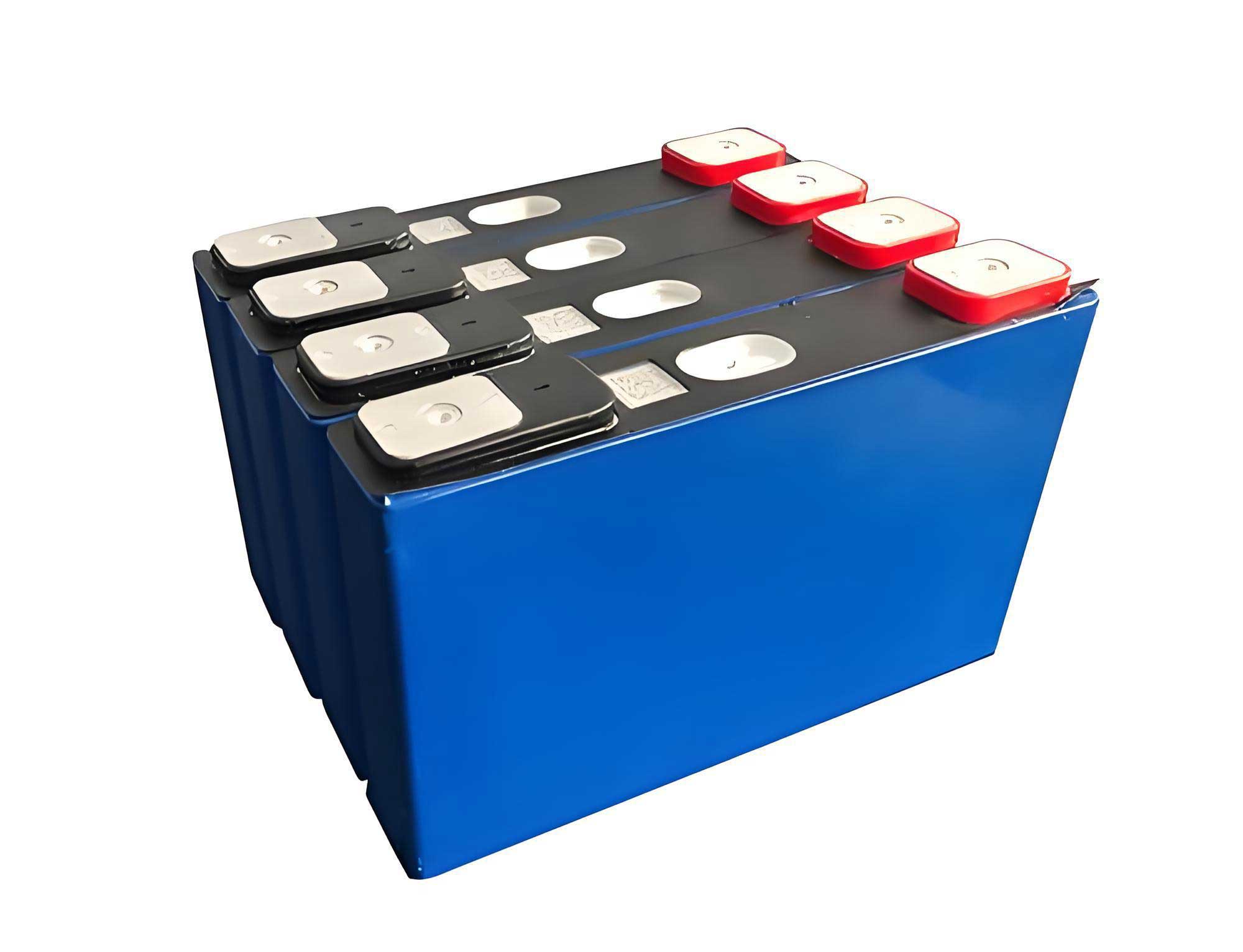
To better understand the triggers of thermal runaway in lifepo4 battery systems, I have categorized the primary causes into several factors, as summarized in Table 1. Each factor highlights vulnerabilities that must be addressed to enhance the safety of lifepo4 battery energy storage stations.
| Category | Description | Impact on Lifepo4 Battery |
|---|---|---|
| Battery Cell Faults | Defects from manufacturing, such as poor electrode materials, electrolyte impurities, or separator damage. | Reduces thermal stability, leading to internal short circuits and early failure. |
| Equipment Deficiencies | Inadequate design of prefabricated cabins, corrosion in harsh environments, or improper wiring installation. | Increases risk of electrical faults and heat accumulation in lifepo4 battery packs. |
| Technical Limitations | Lack of standardized safety protocols and insufficient monitoring systems in early-stage stations. | Hinders timely detection and response to lifepo4 battery anomalies. |
| Electrical Abuse | Overcharging, over-discharging, or high-rate cycling due to battery management system (BMS) failures. | Causes lithium plating, gas generation, and heat buildup in lifepo4 battery cells. |
| Thermal Abuse | Poor temperature control from faulty cooling systems or extreme ambient conditions. | Accelerates degradation and triggers exothermic reactions in lifepo4 battery components. |
| Mechanical Abuse | Physical damage from挤压,碰撞, or跌落 during transport or assembly. | Compromises cell integrity, causing electrolyte leakage and internal shorts in lifepo4 battery units. |
Addressing these triggers requires a multi-faceted approach. For instance, electrical abuse can be mitigated by optimizing the BMS to prevent overcharging. The voltage threshold for a lifepo4 battery should be carefully set to avoid exceeding safe limits. The relationship between state of charge (SOC) and voltage can be expressed as:
$$ V_{\text{cell}} = E_0 – \frac{RT}{F} \ln \left( \frac{\text{SOC}}{1-\text{SOC}} \right) $$
where \( V_{\text{cell}} \) is the cell voltage, \( E_0 \) is the standard potential, \( R \) is the gas constant, \( T \) is temperature, and \( F \) is Faraday’s constant. By monitoring this, the BMS can regulate charging currents to protect the lifepo4 battery from abuse.
To eliminate thermal runaway risks, I propose strategies focused on improving the intrinsic safety of the lifepo4 battery, enhancing management systems, and refining fire protection configurations. First, enhancing the lifepo4 battery本体 safety involves material modifications. For example, coating graphite anodes with flame-retardant oxides like Al2O3 can prevent direct contact during separator failure. The thermal conductivity of such coatings can be modeled using Fourier’s law:
$$ q = -k \nabla T $$
where \( q \) is heat flux, \( k \) is thermal conductivity, and \( \nabla T \) is temperature gradient. This reduces heat transfer between electrodes in a lifepo4 battery. Additionally, using ceramic-coated separators or solid-state electrolytes can eliminate flammable liquid components, significantly lowering fire risks in lifepo4 battery cells.
Second, optimizing the BMS is crucial for lifepo4 battery safety. A smart BMS should integrate multi-parameter monitoring, including voltage, current, temperature, and gas emissions. For temperature management, the heat generation in a lifepo4 battery can be estimated using the Bernardi equation:
$$ \dot{Q} = I(E – V) + I T \frac{dE}{dT} $$
where \( \dot{Q} \) is heat generation rate, \( I \) is current, \( E \) is open-circuit voltage, \( V \) is terminal voltage, and \( T \) is temperature. By实时 monitoring, the BMS can activate cooling systems or disconnect the lifepo4 battery pack during anomalies. Furthermore, cell balancing algorithms are essential to maintain uniformity among lifepo4 battery cells, preventing overcharging in weaker cells. A common method is active balancing, where energy is redistributed using:
$$ \Delta E = \frac{1}{2} C (V_1^2 – V_2^2) $$
with \( C \) as capacitance and \( V_1, V_2 \) as cell voltages. This ensures all lifepo4 battery cells operate within safe ranges.
Third, fire prevention configurations must be robust. Beyond traditional smoke detectors, gas sensors for H2, CO, and volatile organic compounds (VOCs) can provide early warnings for lifepo4 battery thermal runaway. The gas concentration dynamics can be described by diffusion equations:
$$ \frac{\partial C}{\partial t} = D \nabla^2 C + S $$
where \( C \) is concentration, \( D \) is diffusion coefficient, and \( S \) is source term from lifepo4 battery reactions. For灭火, automatic systems like heptafluoropropane (HFC-227ea) are widely used. The required灭火剂 concentration for a lifepo4 battery cabin can be calculated based on volume and hazard level. Additionally, pressure relief devices are vital to prevent explosions. The pressure buildup in a failing lifepo4 battery can be modeled using the ideal gas law:
$$ PV = nRT $$
where \( P \) is pressure, \( V \) is volume, \( n \) is moles of gas generated from lifepo4 battery decomposition. Venting mechanisms ensure safe pressure release, protecting personnel and equipment.
To summarize the prevention strategies, Table 2 outlines key measures across the three domains, emphasizing their application to lifepo4 battery energy storage stations. These approaches collectively enhance the reliability and safety of lifepo4 battery systems, mitigating fire risks.
| Strategy Domain | Specific Measures | Benefits for Lifepo4 Battery Safety |
|---|---|---|
| Battery本体 Enhancement | Use of flame-retardant additives, ceramic separators, solid-state electrolytes, and PTC materials. | Improves thermal stability, prevents internal shorts, and reduces flammability of lifepo4 battery cells. |
| BMS Optimization | Real-time monitoring of voltage, current, temperature, and gases; advanced balancing algorithms; predictive analytics. | Enables early fault detection, prevents electrical abuse, and maintains lifepo4 battery pack homogeneity. |
| Fire Protection Configuration | Installation of gas and smoke detectors, automatic HFC-227ea灭火 systems, pressure relief vents, and阻燃 cabin materials. | Provides rapid response to thermal runaway, contains fires, and minimizes damage in lifepo4 battery stations. |
In practice, implementing these strategies requires careful engineering. For example, in a lifepo4 battery energy storage station, the layout of灭火 nozzles should ensure uniform agent distribution. The required flow rate for HFC-227ea can be derived from:
$$ \dot{m} = \frac{C \cdot V}{t} $$
where \( \dot{m} \) is mass flow rate, \( C \) is design concentration, \( V \) is protected volume, and \( t \) is discharge time. This ensures effective suppression for lifepo4 battery fires. Moreover, regular maintenance and testing are essential to keep safety systems functional. I recommend using IoT-based monitoring for lifepo4 battery stations, where data from sensors is analyzed using machine learning algorithms to predict failures. For instance, anomaly detection can be based on deviations from normal operating parameters of lifepo4 battery cells.
Looking ahead, the integration of automation and smart technologies will further advance lifepo4 battery safety. Research into new materials, such as graphene-enhanced electrodes or ionic liquid electrolytes, may offer higher thermal thresholds for lifepo4 battery systems. Additionally, standardization of safety codes specific to lifepo4 battery energy storage will facilitate widespread adoption. As we transition to renewable energy grids, the role of lifepo4 battery storage becomes increasingly critical, and ensuring its safety through continuous innovation is paramount.
In conclusion, the fire formation mechanisms in lifepo4 battery energy storage stations stem from thermal runaway, driven by material failures and operational abuses. By focusing on battery本体 improvements, BMS enhancements, and robust fire protection, we can significantly reduce risks. The lifepo4 battery, with its inherent advantages, can be made safer through these strategies, supporting a sustainable energy future. As I continue to explore new energy solutions, I am confident that with concerted efforts, lifepo4 battery technology will evolve to be both efficient and secure, powering our world without compromise.