
With the large-scale construction and operation of electrochemical energy storage power stations, fire accidents in energy storage power stations occur frequently, causing serious damage to life and property. Therefore, it is urgent to study the thermal runaway mechanism and its corresponding suppression technology for lithium battery energy storage systems, particularly focusing on the LiFePO4 battery, to ensure the safety and stability of energy storage power stations. In this study, we aim to establish a reliable thermal runaway model for the LiFePO4 battery and simulate fire accidents in a prefabricated compartment, followed by an investigation of fire emergency technologies. We propose an updated dichotomy methodology to revise the heat release rate for accurate simulation of the LiFePO4 battery’s thermal behavior. Based on actual dimensions, we construct geometric models of the battery cabinet and prefabricated compartment to simulate fire accidents, identifying key stages and parameters. Furthermore, we explore fire alarm systems and water mist fire extinguishing systems for the prefabricated compartment. The results provide insights into optimal fire protection designs for LiFePO4 battery-based energy storage systems.
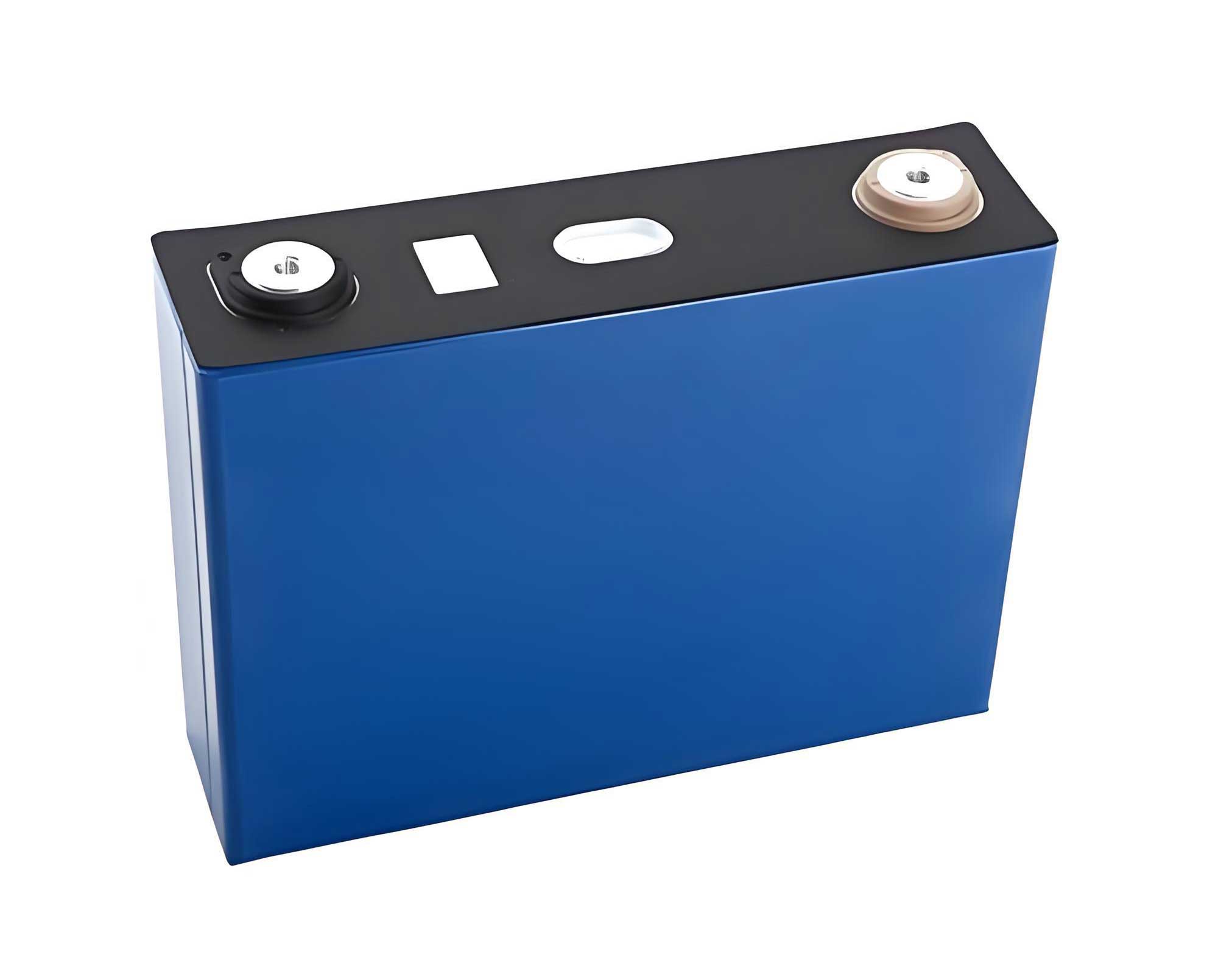
The LiFePO4 battery, known for its high energy density and stability, is widely used in energy storage applications. However, due to its combustible internal materials, the LiFePO4 battery is prone to thermal runaway, leading to severe fire hazards. To address this, we conduct numerical simulations using the Fire Dynamics Simulator (FDS) software. Initially, we focus on building a single LiFePO4 battery model. The basic governing equations for fire simulation include the conservation of mass, momentum, and energy. The continuity equation for mass conservation is given by:
$$ \frac{\partial \rho}{\partial t} + \nabla \cdot (\rho \mathbf{u}) = 0 $$
where $\rho$ is the density (kg/m³), $t$ is time (s), and $\mathbf{u}$ is the velocity vector (m/s). The momentum equation, or Navier-Stokes equation, is expressed as:
$$ \frac{\partial (\rho \mathbf{u})}{\partial t} + \nabla \cdot (\rho \mathbf{u} \mathbf{u}) + \nabla p = \rho \mathbf{g} + \nabla \cdot \tau $$
where $p$ is pressure (Pa), $\mathbf{g}$ is gravitational acceleration, and $\tau$ is the viscous stress tensor (Pa). The energy conservation equation is:
$$ \frac{\partial (\rho h_s)}{\partial t} + \nabla \cdot (\rho h_s \mathbf{u}) = \dot{q}_m – \nabla \cdot \mathbf{q} + \Phi $$
where $h_s$ is the specific enthalpy (J/kg), $\dot{q}_m$ is the volumetric heat source (W/m³), $\mathbf{q}$ is the radiation heat flux vector (W/m²), and $\Phi$ is the dissipation coefficient (W/m³). These equations form the foundation for simulating the thermal runaway of the LiFePO4 battery.
To ensure accuracy, we adopt an updated dichotomy method to revise the heat release rate curve of the LiFePO4 battery. Experimental data from previous studies show that the heat release rate of a LiFePO4 battery during combustion peaks at around 98.99 kW, with a surface temperature reaching 573°C. However, direct use of the experimental heat release rate in FDS leads to discrepancies in temperature prediction. Our updated dichotomy method involves iteratively adjusting the heat release rate to match the experimental temperature curve. The process is summarized in the following algorithm:
- Start with the experimental heat release rate curve for the LiFePO4 battery.
- For the early and middle stages of combustion, halve the heat release rate at each time step and compare the simulated temperature with the experimental data.
- Repeat the halving process until the simulated temperature converges to the experimental curve.
- For the late stage of combustion, expand the adjustment interval by doubling the heat release rate range around the node from the previous step, then apply the dichotomy method again to fine-tune the curve.
This approach significantly improves the prediction of the LiFePO4 battery’s surface temperature, as shown in comparative simulations. The revised heat release rate curve allows for more reliable modeling of the LiFePO4 battery’s thermal runaway behavior.
Next, we construct a 1:1 geometric model of the battery cabinet and prefabricated compartment based on real dimensions. The battery cabinet measures 1.2 m in length, 0.725 m in width, and 2.3 m in height, containing 9 layers with 2 battery boxes per layer. Each battery box houses 16 LiFePO4 battery cells, arranged in two columns of 8 cells each. The prefabricated compartment is designed to accommodate three such cabinets, with dimensions of 5.898 m in length, 2.352 m in width, and 2.393 m in height. The simulation domain is set to 6 m × 2.5 m × 2.5 m, with a grid resolution of 0.1 m in each direction, resulting in 60 × 25 × 25 grids. We assume that the initial thermal runaway occurs in the bottom-left cell of the third cabinet, as this location is prone to inadequate cooling. Temperature detectors (T1, T2, T3) are placed at a height of 2 m in front of each cabinet to monitor internal temperature, while visibility and CO concentration sensors are installed at strategic points.
The simulation of thermal runaway combustion in the prefabricated compartment reveals three distinct stages: initial heating, flame generation, and flame propagation. The temperature changes at the detection points are summarized in Table 1.
| Stage | Time Range (s) | Temperature Trend | Key Observations |
|---|---|---|---|
| Initial Heating | 0-100 | Gradual increase | Battery temperature rises due to external heat source. |
| Flame Generation | 100-350 | Rapid increase | Flames ignite, leading to sharp temperature rise. |
| Flame Propagation | 350-450 | Peak and spread | Heat accumulates, igniting adjacent LiFePO4 battery cells. |
The temperature at T3, closest to the initial heat source, exhibits an exponential rise, reaching approximately 774°C at 450 s. The combustion of the LiFePO4 battery generates significant amounts of CO gas and smoke. The CO volume fraction increases over time, with a sharp rise around 350 s, eventually spreading throughout the compartment. The visibility decreases rapidly, dropping to 0.14 m at 415 s, which hampers evacuation efforts. The evolution of smoke diffusion can be described by the following empirical relation for visibility $V$ (m) as a function of time $t$ (s):
$$ V(t) = V_0 e^{-k t} $$
where $V_0$ is the initial visibility and $k$ is a decay constant dependent on smoke generation rate. For our LiFePO4 battery fire simulation, $k$ is estimated to be 0.012 s⁻¹ based on data fitting.
To enhance fire safety, we investigate various fire alarm systems for the prefabricated compartment. Four types of detectors are evaluated: thermal detectors, smoke detectors, infrared beam linear smoke detectors, and CO detectors. The alarm response times are compared in Table 2.
| Detector Type | Alarm Time (s) | Advantages | Disadvantages |
|---|---|---|---|
| Thermal Detector | >50 | Simple design | Slow response due to distance from heat source. |
| Smoke Detector | 4.5 | Quick smoke detection | May be affected by ventilation. |
| Infrared Beam Linear Smoke Detector | 3.2 | Fastest response | Higher cost. |
| CO Detector | 15.6 | Detects toxic gas | Moderate response time. |
The infrared beam linear smoke detector shows the shortest alarm time of 3.2 s, making it the most effective for early warning in LiFePO4 battery fires. This is attributed to its sensitivity to smoke particles, which are generated early in the combustion process of the LiFePO4 battery.
For fire suppression, we focus on a water mist fire extinguishing system installed in the prefabricated compartment. The system’s performance is influenced by spray intensity, geometric parameters (nozzle spacing and spray angle), and water mist particle diameter. We define the spray intensity $I$ (L/(min·m²)) as:
$$ I = \frac{Q}{A} $$
where $Q$ is the flow rate (L/min) and $A$ is the protected area (m²). The average temperature in the compartment over 500 s is used as a metric to evaluate effectiveness. Simulations are conducted with varying parameters, and the results are summarized in Table 3.
| Parameter | Range Tested | Optimal Value | Effect on Average Temperature |
|---|---|---|---|
| Spray Intensity | 0-30 L/(min·m²) | 18 L/(min·m²) | Temperature drops below 50°C with diminishing returns beyond. |
| Nozzle Spacing | 1.7-3.2 m | 2.6-2.9 m | Ensures coverage of fire source without overlap or gaps. |
| Spray Angle | 20°-180° | 120°-160° | Balances coverage and droplet penetration. |
| Particle Diameter | 10-1000 μm | 50 μm | Maximizes heat absorption while maintaining momentum. |
The spray intensity has a marginal effect beyond 18 L/(min·m²), as shown by the temperature trend:
$$ T_{avg}(I) = T_0 – \alpha I + \beta I^2 $$
where $T_0$ is the initial temperature, and $\alpha$ and $\beta$ are coefficients derived from regression analysis. For the LiFePO4 battery fire, $\alpha = 2.5$ °C·min·m²/L and $\beta = 0.05$ °C·min²·m⁴/L², indicating a parabolic relationship. The geometric parameters are interdependent; for instance, a spray angle of 120° paired with a nozzle spacing of 2.6 m yields similar performance to 130° and 2.8 m. This allows flexibility in system design for different compartment layouts. The water mist particle diameter $D_{v,0.5}$ (volume median diameter) affects灭火 efficiency through the surface area-to-volume ratio. The optimal diameter of 50 μm for the LiFePO4 battery fire balances droplet momentum and heat absorption, as described by:
$$ \eta = \frac{6}{D_{v,0.5}} \cdot \frac{\rho_w c_p \Delta T}{\Delta H_{vap}} $$
where $\eta$ is the cooling efficiency, $\rho_w$ is water density, $c_p$ is specific heat, $\Delta T$ is temperature difference, and $\Delta H_{vap}$ is heat of vaporization. For diameters below 30 μm, droplets may not reach the fire source, while above 50 μm, the surface area decreases, reducing cooling capacity.
Based on the optimal parameters, we simulate the water mist system with a spray intensity of 18 L/(min·m²), nozzle spacing of 2.6 m, spray angle of 120°, and particle diameter of 50 μm. The temperature profile before and after spray activation is shown in Figure 1. The spray is triggered at 4.02 s when the battery surface temperature reaches 120°C. The compartment temperature drops rapidly to 27°C, with a slight rebound due to ongoing reactions in the LiFePO4 battery, but stabilizes within 100 s. Compared to no spray, the water mist effectively suppresses flame propagation and prevents re-ignition, highlighting its suitability for LiFePO4 battery fire suppression.
In discussion, our findings emphasize the importance of accurate modeling for the LiFePO4 battery’s thermal runaway. The updated dichotomy method addresses limitations in FDS simulations, enabling reliable predictions. The three-stage fire progression underscores the need for early detection and rapid suppression. The infrared beam linear smoke detector offers the fastest response, but a multi-sensor approach combining smoke and CO detection may enhance reliability for LiFePO4 battery fires. The water mist system parameters provide a guideline for designers; however, real-world adjustments may be needed based on compartment size and battery configuration. Future work could explore adaptive spray systems that adjust parameters in real-time based on fire dynamics.
In conclusion, we have successfully simulated thermal runaway fires in a prefabricated compartment for LiFePO4 battery energy storage systems. Our updated dichotomy method improves the accuracy of heat release rate modeling for the LiFePO4 battery. The fire simulation reveals critical stages and hazards, such as high temperatures, CO generation, and smoke obscuration. For fire emergency technology, the infrared beam linear smoke detector is recommended for early warning, and a water mist system with optimized parameters (spray intensity of 18 L/(min·m²), nozzle spacing of 2.6-2.9 m, spray angle of 120°-160°, and particle diameter of 50 μm) effectively suppresses LiFePO4 battery fires. These results contribute to the safety design of energy storage power stations utilizing LiFePO4 batteries, paving the way for more resilient infrastructure. Further studies should consider large-scale experiments and integration with battery management systems for holistic safety solutions.
Throughout this research, the LiFePO4 battery has been the focal point due to its widespread use and fire risks. By addressing simulation challenges and proposing practical fire protection measures, we aim to mitigate the dangers associated with LiFePO4 battery thermal runaway. The methodologies and insights presented here can be extended to other battery chemistries, but the specific parameters for the LiFePO4 battery remain crucial for accurate application. As energy storage evolves, continuous refinement of these techniques will be essential to safeguard lives and assets in the era of renewable energy.