
The global transition towards sustainable transportation has catalyzed an unprecedented adoption of electric vehicles (EVs). At the heart of this revolution lies the lithium-ion battery, with Lithium Iron Phosphate (LiFePO4 or LFP) emerging as a dominant cathode material due to its intrinsic safety, long cycle life, and cost-effectiveness. However, this widespread deployment foreshadows a looming challenge: a tidal wave of retired LiFePO4 battery packs. Traditional recycling methods, often based on pyrometallurgical or hydrometallurgical processes that recover constituent metals, are economically and environmentally less attractive for LiFePO4 due to its relatively low raw material value. Consequently, direct regeneration—a process that restores the electrochemical performance of the cathode material itself—has gained significant traction as a strategic, closed-loop solution. This approach minimizes energy consumption, carbon footprint, and waste generation across the battery’s lifecycle.
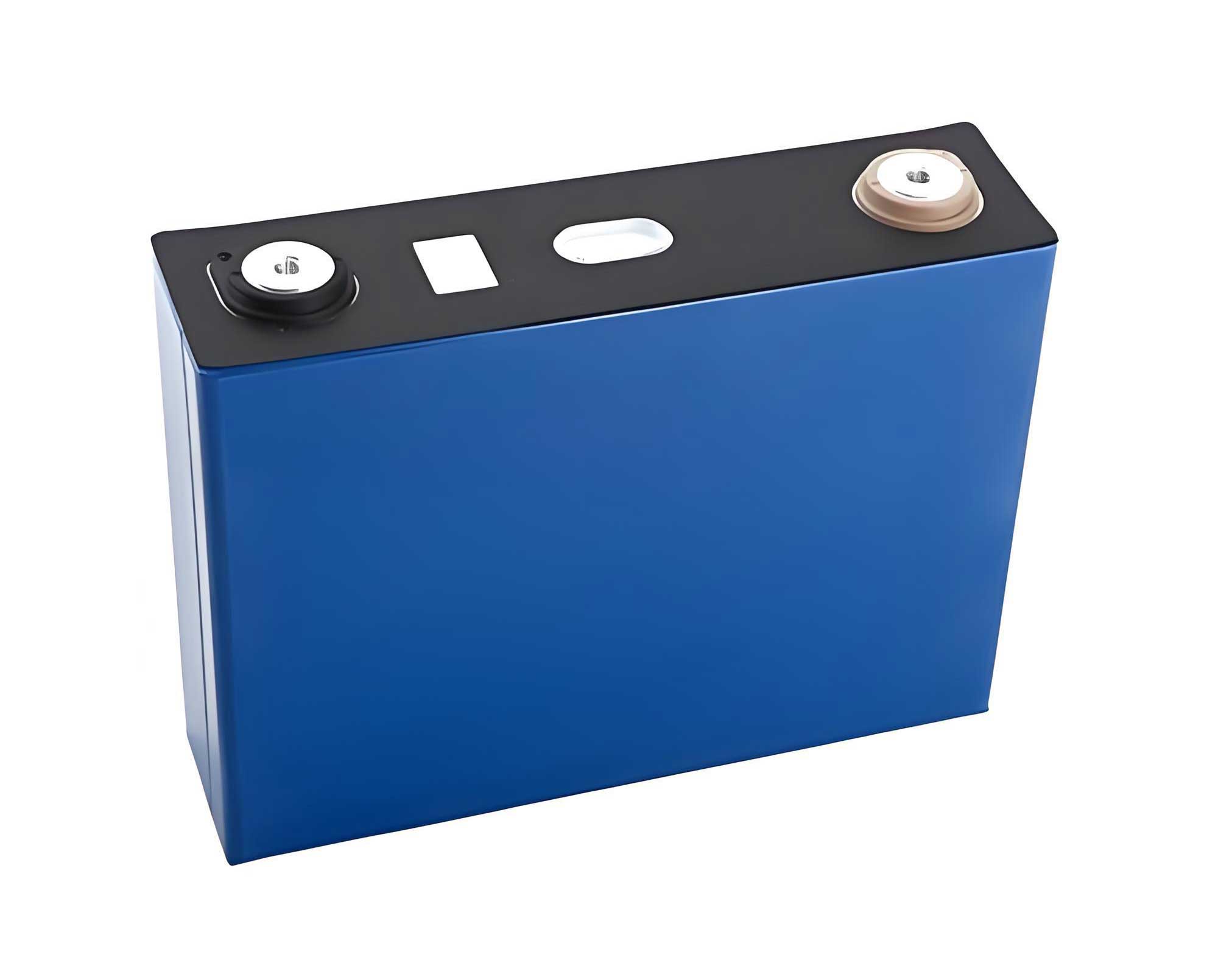
The primary mode of failure in a spent LiFePO4 battery is the irreversible loss of active lithium ions. This loss occurs through mechanisms such as continuous growth and reformation of the solid electrolyte interphase (SEI) on the anode, side reactions, and lithium plating. Therefore, the cornerstone of direct regeneration is an efficient and controllable lithium compensation strategy. My research investigates the use of lithium-rich Li5AlO4 (LAO) as a novel cathode pre-lithiation agent for the direct repair of degraded LiFePO4 cathodes. The objective is to evaluate its efficacy in replenishing the lithium inventory, thereby reviving the capacity and cycling stability of retired LiFePO4 battery materials, while exploring its advantages over other sacrificial agents like Li5FeO4.
The synthesis of the LAO pre-lithiation agent was achieved via a solid-state reaction, meticulously designed to ensure phase purity and crystallinity. Stoichiometric amounts of Al2O3 and LiOH·H2O (1:10 molar ratio) were mixed and subjected to a multi-step calcination protocol under an inert argon atmosphere: 450°C for 12 hours, followed by 600°C for 12 hours, and a final prolonged sintering at 800°C for 70 hours. This rigorous process promotes the complete formation of the anti-fluorite Li5AlO4 phase while minimizing impurities like LiAlO2. The phase identity and morphology of the synthesized LAO were confirmed using X-ray Diffraction (XRD) and Scanning Electron Microscopy (SEM).
To simulate real-world recycling scenarios, cathode sheets were fabricated by blending degraded LiFePO4 powder (harvested from retired batteries with varying States of Health, SOH) with the as-synthesized LAO powder, conductive carbon (Super P), and polyvinylidene fluoride (PVDF) binder in an 8:1:1 mass ratio. The amount of LAO added was precisely calculated based on its theoretical lithium donation capacity (up to 4 Li+, ~600 mAh/g) and the estimated degree of lithium loss in the degraded LiFePO4 battery material. The electrochemical evaluation was conducted in two configurations:
- Half-cells: The regenerated LiFePO4+LAO composite cathode versus lithium metal, to isolate and study the cathode’s performance.
- Full-cells: The regenerated LiFePO4+LAO composite cathode versus a Li4Ti5O12 (LTO) anode. This configuration is critical as it provides a lithium-free anode, thereby offering unambiguous proof that the lithium ions supplied by LAO are the sole source of active lithium, directly validating the compensation effect.
The initial galvanostatic charge-discharge profile of a pure LAO cathode versus Li/Li+ revealed its function as a sacrificial agent. During the first charge, LAO undergoes an irreversible decomposition reaction, releasing lithium ions and oxygen gas while transforming into a stable LiAlO2 phase. The reaction can be represented as:
$$ \text{Li}_5\text{AlO}_4 \rightarrow \text{LiAlO}_2 + \text{O}_2(g) + 4\text{Li}^+ + 4e^- $$
This reaction primarily occurs above 4.0 V vs. Li/Li+, providing a substantial initial charge capacity (~600 mAh/g at 0.025C), which is fundamentally the “lithium source” for compensation.
The effectiveness of LAO in repairing degraded LiFePO4 from spent LiFePO4 battery units was first assessed in half-cells. The addition of LAO dramatically altered the first-cycle charge profile. A distinct high-voltage plateau (3.5-4.2 V) corresponding to LAO decomposition appeared, supplementing the characteristic LiFePO4 charge plateau at ~3.45 V. Crucially, the total first-cycle charge capacity saw a remarkable increase. As summarized in Table 1, for degraded cathodes with SOH of 90%, 80%, and 70%, the charge capacity was elevated to 301.5, 272.4, and 358.7 mAh/g, respectively, far exceeding that of the control samples (degraded LiFePO4 mixed with inert graphite). This confirms that LAO successfully donates its lithium to the system.
| Sample (SOH of Degraded LFP) | LAO Addition (wt.%) | 1st Cycle Charge Capacity (mAh/g) | 1st Cycle Discharge Capacity (mAh/g) | Capacity after 500 cycles at 1C (mAh/g) | Capacity Retention after 500 cycles (%) |
|---|---|---|---|---|---|
| Degraded LFP (90%) + Graphite | 0 | 136.5 | 132.8 | – | – |
| Degraded LFP (90%) + LAO | 2.83 | 301.5 | 147.1 | 138.3 | 94.0 |
| Degraded LFP (80%) + Graphite | 0 | 132.1 | 128.9 | – | – |
| Degraded LFP (80%) + LAO | 5.67 | 272.4 | 151.8 | 136.8 | 90.1 |
| Degraded LFP (70%) + Graphite | 0 | 140.6 | 135.2 | – | – |
| Degraded LFP (70%) + LAO | 8.50 | 358.7 | 151.9 | 145.6 | 95.9 |
Following the initial compensation cycle, the long-term cycling stability of the regenerated LiFePO4 battery cathodes was evaluated at 1C. As shown in the last column of Table 1, all LAO-treated samples exhibited excellent capacity retention, exceeding 90% after 500 cycles. This indicates that the presence of the residual, electrochemically inert LiAlO2 phase does not detrimentally affect the structural integrity or Li+ diffusion pathways within the olivine LiFePO4 framework. The electrochemical reactions governing the subsequent cycles are the classic, reversible two-phase transformation of LiFePO4:
$$ \text{LiFePO}_4 \rightleftharpoons \text{FePO}_4 + \text{Li}^+ + e^- $$
While half-cell data is promising, the definitive proof of lithium compensation lies in full-cell testing with a zero-lithium anode. I assembled full-cells using the regenerated LiFePO4+LAO as the cathode and LTO as the anode. The LTO anode operates at a safe voltage of ~1.55 V vs. Li/Li+ and does not contribute any lithium, making it an ideal diagnostic tool. The results, presented in Table 2, provide conclusive evidence. For the cathode with SOH 80%, the addition of LAO resulted in a first-cycle charge capacity increase of 46.1 mAh/g compared to the graphite-mixed control. This extra capacity can only originate from the lithium released by LAO, which subsequently intercalates into the LTO anode during discharge. This irrefutably demonstrates that LAO effectively functions as an internal lithium reservoir, directly repairing the lithium deficiency in the retired LiFePO4 battery cathode.
| Full-cell Configuration (Cathode SOH) | 1st Cycle Charge Capacity (mAh/g, cathode mass) | Capacity Gain from LAO (mAh/g) | Key Observation |
|---|---|---|---|
| Degraded LFP (90%) + Graphite // LTO | 122.3 | – | Minimal gain, likely due to poor electrical contact with small amount of LAO. |
| Degraded LFP (90%) + LAO // LTO | 125.0 | 2.7 | |
| Degraded LFP (80%) + Graphite // LTO | 105.8 | – | Significant and clear lithium compensation effect. |
| Degraded LFP (80%) + LAO // LTO | 151.9 | 46.1 | |
| Degraded LFP (70%) + Graphite // LTO | 98.4 | – | Positive gain, but lower than for SOH 80%, suggesting potential side reactions from excessive oxygen release. |
| Degraded LFP (70%) + LAO // LTO | 114.0 | 15.6 |
The data reveals an interesting non-linear relationship between the degree of degradation (SOH), the amount of LAO added, and the compensation efficiency. The optimal repair effect was observed for the cathode with SOH 80%. For the more severely degraded cathode (SOH 70%), a larger amount of LAO was required. However, the higher oxygen evolution from the decomposition of a larger quantity of LAO may lead to gaseous side reactions that could consume some of the active lithium or cause localized delamination, slightly reducing the net compensation efficiency observed in the full-cell. This highlights a critical parameter for process optimization: the precise stoichiometric matching of LAO addition to the specific lithium loss in each batch of retired LiFePO4 battery material.
In conclusion, this comprehensive study establishes Li5AlO4 as a highly effective and promising cathode pre-lithiation agent for the direct regeneration of retired LiFePO4 battery cathodes. The mechanism involves the irreversible, first-charge decomposition of LAO to donate active lithium ions, which replenish the lithium inventory lost during the battery’s previous service life. The regenerated LiFePO4 cathodes exhibit not only restored initial capacity but also outstanding long-term cycling stability, with capacity retention rates exceeding 90% after 500 cycles. Full-cell validation with an LTO anode provides definitive proof that the lithium ions originate from LAO, confirming the core principle of the compensation strategy. While challenges such as the optimal dosing of LAO and management of oxygen byproduct exist, this work lays a strong foundation for an efficient, direct-recycling pathway. By circumventing energy-intensive metal extraction processes, the LAO-based direct regeneration technique offers a sustainable and economically viable future for managing the impending wave of retired LiFePO4 battery materials, contributing significantly to the circular economy of the electric vehicle industry.