
The widespread integration of renewable energy sources necessitates robust, large-scale energy storage solutions. Among these, lithium iron phosphate (LiFePO4 or LFP) batteries have emerged as a dominant technology due to their inherent safety, long cycle life, and stable chemistry. However, safety remains a paramount concern, particularly under abusive conditions such as overcharging. Overcharge can lead to lithium plating, separator failure, internal short circuits, and ultimately, thermal runaway—a self-accelerating exothermic reaction that can result in fire, explosion, and cascading failure within an energy storage system. This work presents a comprehensive, first-person investigation into the multi-parameter characteristics of overcharge-induced thermal runaway in commercial prismatic aluminum-shell LiFePO4 batteries and proposes an innovative, self-triggering suppression device.
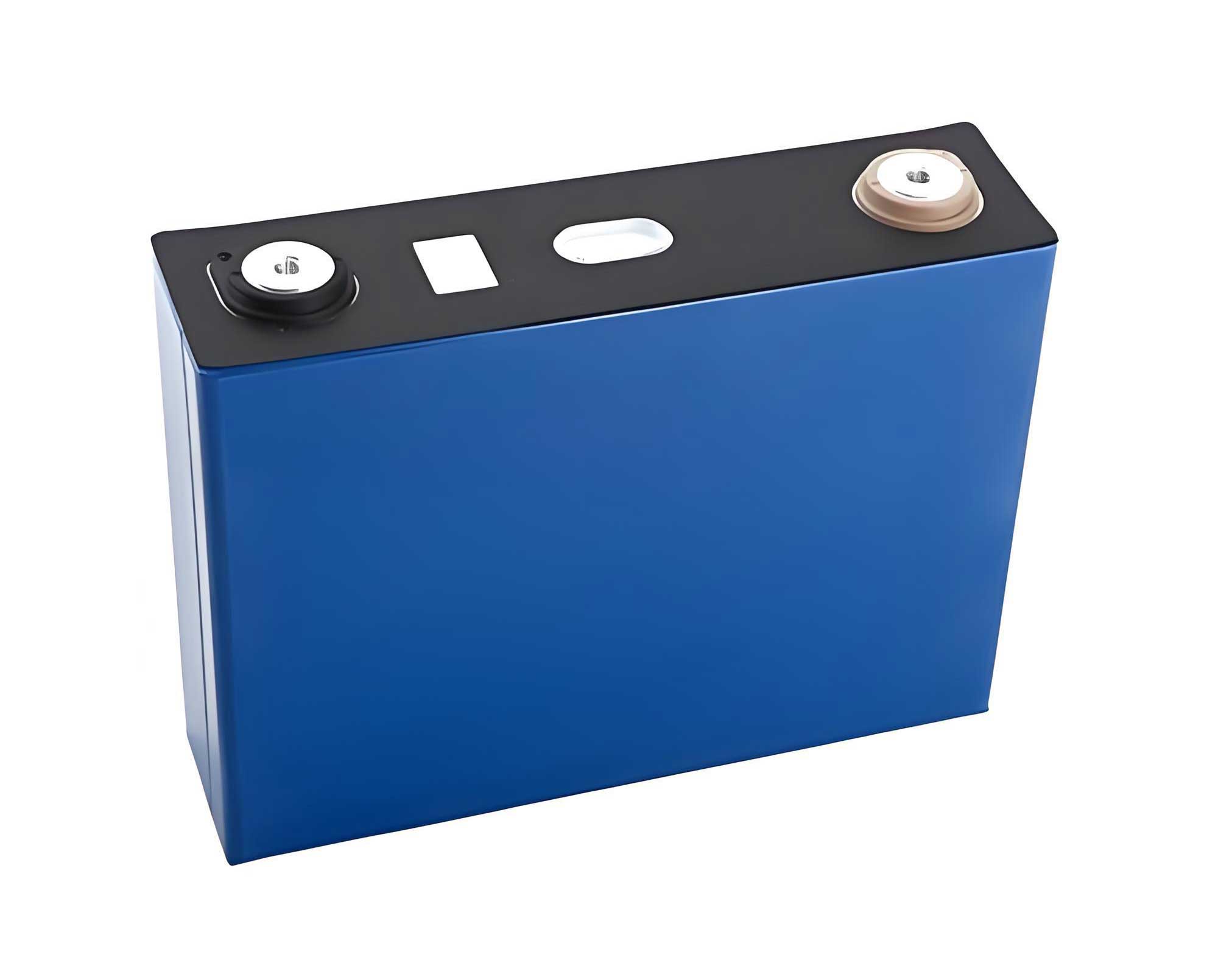
Our experimental approach was designed to mimic real-world conditions within a static, enclosed battery module. We constructed an in-situ multi-parameter testing platform where a single LiFePO4 battery under test was placed inside a module enclosure alongside dummy cells. This setup replicated the confined environment of an actual energy storage rack. A critical innovation was the design of an in-situ gas monitoring system. A pump drew gas from directly above the test LiFePO4 battery’s vent port through a tube to an external collection box housing CO, CO₂, and H₂ sensors, minimizing detection delay. To capture early mechanical failure, high-temperature resistance strain gauges were attached to the battery surface to measure expansion deformation. Voltage, surface temperatures at multiple points, and gas concentrations were synchronously recorded during controlled overcharge tests.
We systematically studied LiFePO4 batteries of three capacities (20 Ah, 52 Ah, 100 Ah) under various overcharge currents (0.5C, 1.0C, 1.5C). The thermal runaway process consistently followed a pattern of sequential events: initial slow heating and gas generation, visible swelling, vent opening with electrolyte and gas ejection, and finally, a thermal runaway peak followed by cooling. The voltage profile served as a clear indicator of internal degradation, typically following a trajectory described by the increasing overpotential:
$$ V(t) = V_0 + I \cdot R_{int}(t) + \eta(t) $$
where $V_0$ is the nominal voltage, $I$ is the overcharge current, $R_{int}(t)$ is the increasing internal resistance due to side reactions and lithium plating, and $\eta(t)$ is the concentration overpotential from depleted lithium ions. The voltage would rise slowly, then sharply, before a sudden drop signaling an internal short circuit.
The temperature evolution is governed by the heat balance equation during overcharge:
$$ mC_p \frac{dT}{dt} = I^2R_{int}(t) + \sum Q_{rxn} – hA(T – T_{amb}) $$
Here, $mC_p$ is the heat capacity, $I^2R_{int}$ is Joule heating, $\sum Q_{rxn}$ is the sum of exothermic reaction heats (SEI decomposition, electrolyte reactions, etc.), and the last term represents convective heat loss. Initially, heat generation is slow. As reactions accelerate, the term $\sum Q_{rxn}$ dominates, leading to an exponential temperature rise characteristic of thermal runaway. The rate constant for these Arrhenius-type reactions is:
$$ k = A \exp\left(-\frac{E_a}{RT}\right) $$
This explains why higher overcharge currents, which generate more initial Joule heating and accelerate side reactions, led to earlier and more severe thermal runaway peaks in our tests on the LiFePO4 battery.
A pivotal finding was the behavior of gas generation. For the prismatic LiFePO4 battery, small amounts of CO and H₂ were reliably detected a few seconds to minutes before the safety vent opened. CO₂ detection coincided nearly with venting. This sequence aligns with known chemistry: H₂ and light hydrocarbons form from early lithium-electrolyte reactions and binder decomposition at lower temperatures, while significant CO₂ release is linked to SEI and electrolyte decomposition at higher temperatures (>120°C). However, gas detection is inherently limited by the vent opening pressure, a fixed mechanical threshold.
The most significant and reliable early warning signal was mechanical deformation. The strain gauges detected surface expansion hundreds of seconds before any gas was detected and even earlier before the internal short circuit. This deformation is a direct consequence of internal gas pressure buildup from the earliest side reactions within the LiFePO4 battery. The stress-strain relationship can be approximated for the thin battery casing. The internal pressure $P$ causes a strain $\epsilon$:
$$ \epsilon \approx \frac{P \cdot r}{E \cdot t} $$
where $r$ is the characteristic dimension, $E$ is the Young’s modulus of the casing, and $t$ is its thickness. As reactions proceed, $P$ increases, leading to measurable $\epsilon$. The following table summarizes the critical time advantages observed for deformation warning across different tests on the LiFePO4 battery:
| Capacity (Ah) | Overcharge Rate (C) | Deformation Detected (s) | First Gas Detected (s) | Short Circuit (s) | Early Warning Advantage (vs. Short) | |
|---|---|---|---|---|---|---|
| 52 | 0.5 | 232 | 1148 | 1167 | >935 s | |
| 52 | 1.0 | 187 | 521 | 539 | >352 s | |
| 52 | 1.5 | 97 | 340 | 345 | >248 s | 100 |
| 0.5 | 231 | 928 | 1272 | >1041 s |
This data unequivocally shows that surface deformation monitoring provides the earliest possible indication of an overcharge fault in a LiFePO4 battery, far outperforming voltage, temperature, or gas-based methods whose alarm thresholds are often reached too late. The strain gauge is a simple, low-cost sensor that can be integrated directly onto the LiFePO4 battery surface, offering a transformative approach to early warning in energy storage systems.
While early detection is crucial, effective suppression is the final barrier against catastrophe. Most existing methods, like water mist, have drawbacks such as causing electrical short circuits and equipment damage. We therefore developed and tested a novel, self-triggering thermal runaway suppression device specifically for LiFePO4 battery modules. The core is a solid-state thermosensitive insulating material (TSIM) composed of an oxidizer (e.g., KNO₃, Sr(NO₃)₂), a fuel (e.g., Mg, Al), and a binder. Upon reaching a designed activation temperature (e.g., 80°C or 180°C), the device triggers without external power or signal. The TSIM undergoes a rapid decomposition reaction, producing a fine aerosol of solid microparticles (e.g., K₂CO₃, SrCO₃) and inert gases.
The suppression mechanism is threefold: 1) Endothermic Decomposition: The chemical reaction of the TSIM itself is highly endothermic, absorbing significant heat from the failing LiFePO4 battery. 2) Particle Cooling: The generated solid particles have high heat capacity and undergo further endothermic processes (melting, vaporization) as they are heated by the battery. 3) Inerting and Isolation: The aerosol cloud blankets the battery, diluting oxygen and flammable volatiles around the LiFePO4 battery.
In our validation test, a 52 Ah LiFePO4 battery was overcharged at 1C. A B80-type device (80°C activation) was placed above its vent. Upon venting and temperature rise, the device activated within 1 second at 77°C. The result was dramatic: the peak surface temperature of the LiFePO4 battery was suppressed from an uncontrolled 358.80°C to 259.06°C. A second, higher-temperature device (B180-type) activated later to maintain suppression. Post-test analysis confirmed the electrical insulation properties of the aerosol residue, ensuring no risk of shorting adjacent cells. This device is compact, low-cost, requires no wiring or external power, and acts locally—making it ideal for distributed, module-level thermal runaway suppression in LiFePO4 battery energy storage systems.
In conclusion, this work provides a detailed multi-parameter analysis of overcharge-induced thermal runaway in commercial LiFePO4 batteries. We established that mechanical deformation is the most effective early warning parameter, offering a critical time advantage for system intervention. Furthermore, we designed and demonstrated a practical, self-triggering suppression device based on thermosensitive materials that can significantly mitigate the severity of a thermal runaway event in a LiFePO4 battery. The integration of early deformation sensing with distributed, self-activated suppression technology presents a powerful and pragmatic safety paradigm for the future of large-scale LiFePO4 battery energy storage, enhancing reliability and protecting critical infrastructure.