
With the rapid global integration of renewable energy sources, electrochemical energy storage stations have become indispensable for grid stability and energy management. Among various battery technologies, the lithium iron phosphate (LiFePO4) battery has emerged as a dominant choice for large-scale energy storage due to its inherent safety, long cycle life, and environmental friendliness. However, the practical utilization rate of energy storage systems often falls short of expectations, frequently below 50%. A primary contributor to this underperformance is the accelerated capacity degradation and potential safety hazards encountered during operation, particularly under challenging environmental conditions such as low temperatures or uneven thermal distributions. Charging a lifepo4 battery under these suboptimal conditions can trigger detrimental side reactions, most notably lithium plating, which severely compromises both longevity and safety. Therefore, developing and evaluating charging methodologies that can mitigate these issues is paramount for ensuring the reliable, efficient, and long-term operation of energy storage systems. This article, from my research perspective, proposes a systematic framework for evaluating various charging protocols for lifepo4 battery systems, with a specific focus on low-temperature and non-isothermal scenarios.
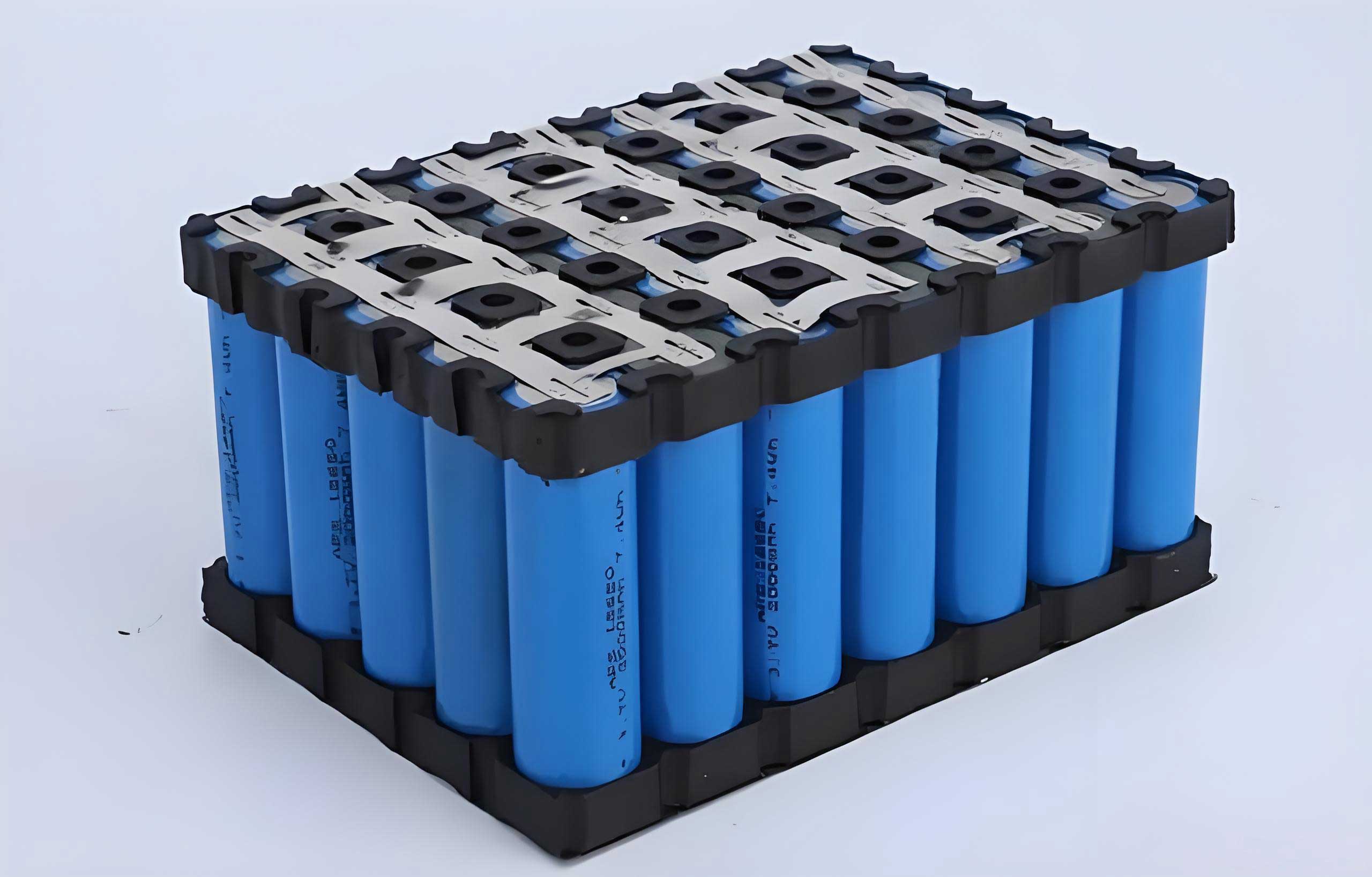
The core of a meaningful evaluation lies in a physically accurate model that can predict internal battery states under various charging stresses. Traditional models often overlook critical failure mechanisms. To address this, I developed a coupled electrochemical-side reaction-thermal model specifically for a lifepo4 battery. This model integrates the fundamental charge/discharge reactions with the lithium plating side reaction and the resulting thermal effects.
Within the negative electrode, two competing reactions occur. The main (desirable) reaction is the intercalation of lithium ions into the graphite host:
$$ \text{Li}^+ + \text{e}^- + \text{C} \rightarrow \text{LiC}_6 $$
The deleterious side reaction, lithium plating, occurs when lithium ions are reduced directly to metallic lithium on the particle surface:
$$ \text{Li}^+ + \text{e}^- \rightarrow \text{Li} $$
The total current density at the negative electrode is the sum of both:
$$ i_{\text{all}} = i_{\text{main}} + i_{\text{Li}} $$
The main reaction kinetics are governed by the Butler-Volmer equation:
$$ i_{\text{main}} = 2 i_{\text{main,0}} \sinh\left(\frac{0.5F\eta}{RT}\right) $$
$$ i_{\text{main,0}} = F k_{\text{main}} c_e^{0.5} (c_{s,\text{max}} – c_{s,\text{surf}})^{0.5} c_{s,\text{surf}}^{0.5} $$
$$ \eta = \phi_s – \phi_e – U_{\text{OCV}} $$
Similarly, the lithium plating current density is:
$$ i_{\text{Li}} = i_{\text{Li,0}} \left[ \exp\left(\frac{\alpha_{\text{Li,a}} F \eta_{\text{Li}}}{RT}\right) – \exp\left(-\frac{\alpha_{\text{Li,c}} F \eta_{\text{Li}}}{RT}\right) \right], \quad (\eta_{\text{Li}} < 0) $$
$$ i_{\text{Li,0}} = F k_{\text{Li}} c_e^{\alpha_{\text{Li,a}}} $$
$$ \eta_{\text{Li}} = \phi_s – \phi_e – U_{\text{Li}}^{\text{eq}} – i_{\text{Li}} R_{\text{film}} $$
Crucially, lithium plating initiates when the overpotential $\eta_{\text{Li}}$ becomes negative. Solid-phase and liquid-phase diffusion are described by Fick’s law:
$$ \frac{\partial c_s}{\partial t} = \frac{D_s}{r^2} \frac{\partial}{\partial r} \left( r^2 \frac{\partial c_s}{\partial r} \right) $$
$$ \varepsilon_e \frac{\partial c_e}{\partial t} = \frac{\partial}{\partial x} \left( D_e^{\text{eff}} \frac{\partial c_e}{\partial x} \right) + \frac{(1 – t_+) a_s}{F} j_{\text{all}} $$
Charge conservation in the solid and electrolyte phases is given by:
$$ -\sigma_s^{\text{eff}} \frac{\partial \phi_s}{\partial x} = i_{\text{all}} $$
$$ -\kappa_e^{\text{eff}} \frac{\partial \phi_e}{\partial x} + \frac{2 \kappa_e^{\text{eff}} RT}{F} (t_+ – 1) \frac{\partial \ln c_e}{\partial x} = i_{\text{all}} $$
The thermal behavior is captured by an energy balance equation:
$$ \rho C_p \frac{\partial T}{\partial t} – \lambda \frac{\partial}{\partial x} \left( \frac{\partial T}{\partial x} \right) = Q_{\text{all}} $$
$$ Q_{\text{all}} = Q_{\text{act}} + Q_{\text{ohm}} + Q_{\text{ent}} $$
Finally, the model is fully coupled via the Arrhenius relationship, which links temperature-dependent parameters (like reaction rate constants $k$ and diffusion coefficients $D$):
$$ Y = Y_{\text{ref}} \exp\left[ \frac{E_a}{R} \left( \frac{1}{T_{\text{ref}}} – \frac{1}{T} \right) \right] $$
This comprehensive model allows for the simulation of internal states, most importantly the lithium plating current $i_{Li}$, under any charging profile and thermal condition. Key parameters for a representative 280 Ah lifepo4 battery are summarized below.
| Parameter | Negative Electrode | Separator | Positive Electrode |
|---|---|---|---|
| Thickness, $L$ ($\mu m$) | 34 | 30 | 70 |
| Active Particle Radius, $R_s$ (nm) | 3.5 | – | 36.5 |
| Electrolyte Volume Fraction, $\varepsilon_e$ | 0.33 | 0.54 | 0.332 |
| Active Material Volume Fraction, $\varepsilon_s$ | 0.55 | – | 0.43 |
| Main Reaction Rate Constant, $k_{\text{main}}$ (m$^{2.5}$ mol$^{-0.5}$ s$^{-1}$) | 8.21e-12 | – | 3e-6 |
| Li-plating Rate Constant, $k_{\text{Li}}$ (m$^{-1.1}$ mol$^{0.7}$ s$^{-1}$) | 1200 | – | – |
| Max Li Concentration in Solid, $c_{s,\text{max}}$ (mol m$^{-3}$) | 31370 | – | 22806 |
| Solid Diffusion Coefficient, $D_s$ (m$^2$ s$^{-1}$) | 3.9e-14 | – | 1.18e-18 |
| Electrolyte Diffusion Coefficient, $D_e$ (m$^2$ s$^{-1}$) | 2e-10 | 2e-10 | 2e-10 |
| Solid Conductivity, $\sigma_s$ (S m$^{-1}$) | 100 | – | 0.5 |
| Specific Heat Capacity, $C_p$ (J kg$^{-1}$ K$^{-1}$) | 800 | 800 | 800 |
| Density, $\rho$ (kg m$^{-3}$) | 2500 | 1200 | 1500 |
| Thermal Conductivity, $\lambda$ (W m$^{-1}$ K$^{-1}$) | 1.04 | 1 | 1.48 |
To effectively compare different charging methods for a lifepo4 battery, a multi-dimensional evaluation index system must be established. Relying on a single metric like charging time is insufficient, as it may compromise safety or longevity. I propose a comprehensive set of six key performance indicators (KPIs) tailored for energy storage applications, especially under stressful conditions.
| Evaluation Index (Symbol) | Description | Rationale |
|---|---|---|
| Charging Duration ($t$) | Total time to complete the charge cycle. | Shorter times enable faster response to grid dispatch signals, improving system flexibility. |
| Energy Consumption ($W$) | Total electrical energy drawn from the grid during charging. | Lower consumption indicates higher charging efficiency, reducing operational cost and energy waste. |
| State of Charge at Termination ($SOC_{\text{end}}$) | The usable capacity percentage reached at the end of charge. | A higher $SOC_{\text{end}}$ ensures more energy is available for subsequent discharge, maximizing utility. |
| Lithium Plating Ratio ($\lambda_{Li}$) | Ratio of plated lithium to total cyclable lithium ions. | The most critical safety and aging indicator for low-temperature charging. Quantifies irreversible capacity loss and short-circuit risk. |
| Maximum of Max Temperature Difference (max(max($\Delta T$))) | The peak value of the spatial temperature difference within the battery during the entire charge. | Reveals the worst-case localized heating and reaction heterogeneity, which can accelerate degradation. |
| Average of Max Temperature Difference (avr(max($\Delta T$))) | The time-averaged value of the spatial temperature difference. | Indicates the overall level and persistence of thermal non-uniformity during the charging process. |
Determining the relative importance of these six indices is crucial. A subjective weight ($w_{\text{AHP}}$) is derived using the Analytic Hierarchy Process (AHP), where expert judgment defines pairwise comparisons. An objective weight ($w_{\text{EWM}}$) is calculated using the Entropy Weight Method (EWM), which assesses the information disparity among the index values from different charging methods. A combined weight ($w_{\text{comb}}$) is then formulated to balance expert insight with data-driven evidence:
$$ w_{\text{comb}} = 0.5 \cdot w_{\text{AHP}} + 0.5 \cdot w_{\text{EWM}} $$
For a representative case, the calculated weights might be: $w_{\text{comb}} = [0.058, 0.032, 0.445, 0.086, 0.232, 0.147]$ for the indices $[t, W, \lambda_{Li}, SOC_{\text{end}}, \text{max(max}(\Delta T)), \text{avr(max}(\Delta T))]$. This highlights the dominant weight given to the lithium plating ratio and thermal homogeneity for a lifepo4 battery in low-temperature evaluation.
To handle the inherent fuzziness and uncertainty in evaluating complex systems like a lifepo4 battery under stress, I employ a Normal Grey Cloud Clustering model. This method is particularly adept at dealing with information that is both partially known (grey) and randomly distributed (cloud). The first step is to normalize all index values into a “relative deterioration degree” ($x_i$) ranging from 0 (best) to 1 (worst), using defined best-case ($x_{i0}$) and worst-case ($x_{i1}$) thresholds. For example, for the lithium plating ratio $\lambda_{Li}$, $x_{i0}=0$ and $x_{i1}=0.2$.
The core of the model is the whitening weight function $f_k(x)$, which determines the degree to which a specific index value $x$ belongs to a predefined grey class $k$ (where $k=1$ is “Excellent”, $k=2$ is “Good”, $k=3$ is “Fair”, and $k=4$ is “Poor”). These functions are defined based on the class boundaries $[a_{ik}, a_{i(k+1)}]$ for each index. Let $C_x$ be the central value for class $k$, $L_x$ the left boundary, and $R_x$ the right boundary. The functions use an expectation $E_n$ and entropy $He$ to introduce randomness.
For the lower-bound class ($k=1$):
$$ f_1(x) =
\begin{cases}
\exp\left(-\frac{(x – C_x)^2}{2(E’_n)^2}\right), & x \in [C_x, R_x] \\
0, & x \notin [C_x, R_x]
\end{cases} \quad \text{with} \quad E_n = \frac{R_x – C_x}{3}, \quad He = \frac{E_n}{10} $$
For the upper-bound class ($k=4$):
$$ f_4(x) =
\begin{cases}
\exp\left(-\frac{(x – C_x)^2}{2(E’_n)^2}\right), & x \in [L_x, C_x] \\
0, & x \notin [L_x, C_x]
\end{cases} \quad \text{with} \quad E_n = \frac{C_x – L_x}{3}, \quad He = \frac{E_n}{10} $$
For the middle classes ($k=2, 3$):
$$ f_k(x) =
\begin{cases}
\exp\left(-\frac{(x – C_x)^2}{2(E’_n)^2}\right), & x \in [L_x, R_x] \\
0, & x \notin [L_x, R_x]
\end{cases} \quad \text{with} \quad E_n = \frac{R_x – L_x}{6}, \quad He = \frac{E_n}{10} $$
Here, $E’_n$ is a normally distributed random number with expectation $E_n$ and standard deviation $He$. The final whitening value is obtained by averaging over hundreds of simulations to account for this randomness.
The grey class membership degree $u_k(x)$ for an index value is then:
$$ u_k(x) = \frac{f_k(x)}{\sum_{k=1}^{4} f_k(x)} $$
Finally, the comprehensive grey clustering coefficient $c_k$ for a specific charging method is calculated by aggregating the membership degrees of all indices, weighted by their combined importance $w_{\text{comb}}$:
$$ c_k = \sum_{i=1}^{6} u_k(x_i) \cdot w_{\text{comb}, i} $$
The clustering coefficient vector $(c_1, c_2, c_3, c_4)$ represents the likelihood that the evaluated charging method belongs to each performance grade. A method with high $c_1$ and low $c_4$ is superior.
I applied this comprehensive evaluation framework to assess six distinct charging methods for a 280 Ah lifepo4 battery at -5°C. The methods are: (Mode 1) Constant Current-Constant Voltage (CC-CV), (Mode 2) Multi-stage declining CC-CV, (Mode 3) Pulsed CC-CV (with negative pulses), (Mode 4) Multi-stage CC-CV with lithium plating avoidance in early stages, (Mode 5) Dynamic current charging with continuous lithium plating avoidance, and (Mode 6) Multi-stage Constant Voltage (CV) charging. The simulation results from the coupled model provide the raw data for all six indices under each mode.
| Charging Mode | $t$ (s) | $W$ (kJ) | $\lambda_{Li}$ | $SOC_{\text{end}}$ | max(max($\Delta T$)) (°C) | avr(max($\Delta T$)) (°C) |
|---|---|---|---|---|---|---|
| Mode 1: CC-CV | 3137 | 27.02 | 0.1152 | 0.84 | 1.180 | 0.535 |
| Mode 2: Multi-stage CC-CV | 4054 | 26.75 | 0.1009 | 0.84 | 1.145 | 0.370 |
| Mode 3: Pulsed CC-CV | 3447 | 31.79 | 0.1175 | 0.84 | 1.138 | 0.702 |
| Mode 4: Li-avoidance (stages) | 4235 | 26.87 | 0.0935 | 0.84 | 1.182 | 0.272 |
| Mode 5: Dynamic Li-avoidance | 2097 | 23.61 | 0.0000 | 0.74 | 1.164 | 0.655 |
| Mode 6: Multi-stage CV | 3743 | 26.72 | 0.1152 | 0.84 | 0.737 | 0.386 |
A critical observation is that only Mode 5 successfully suppressed lithium plating entirely ($\lambda_{Li}=0$), validating its control strategy. All other modes exhibited varying degrees of plating. After normalizing these values to their relative deterioration degrees and processing them through the Normal Grey Cloud Clustering model with the predetermined weights, the comprehensive grey clustering coefficients for each mode were obtained. The results are best visualized by the distribution of the clustering coefficient $c_k$.
| Charging Mode | $c_1$ (Excellent) | $c_2$ (Good) | $c_3$ (Fair) | $c_4$ (Poor) | $(c_1+c_2)$ Sum | Ranking |
|---|---|---|---|---|---|---|
| Mode 5: Dynamic Li-avoidance | 0.512 | 0.365 | 0.123 | 0.000 | 0.877 | 1 |
| Mode 4: Li-avoidance (stages) | 0.231 | 0.418 | 0.298 | 0.053 | 0.649 | 2 |
| Mode 2: Multi-stage CC-CV | 0.195 | 0.401 | 0.323 | 0.081 | 0.596 | 3 |
| Mode 6: Multi-stage CV | 0.178 | 0.342 | 0.350 | 0.130 | 0.520 | 4 |
| Mode 1: CC-CV | 0.132 | 0.285 | 0.381 | 0.202 | 0.417 | 5 |
| Mode 3: Pulsed CC-CV | 0.085 | 0.249 | 0.376 | 0.290 | 0.334 | 6 |
The analysis yields a clear and compelling conclusion. Mode 5, the dynamic lithium-avoidance charging strategy, is unequivocally the optimal method for charging a lifepo4 battery under low-temperature conditions. Its clustering coefficient for the “Poor” grade ($c_4$) is zero, while the combined weight for the “Excellent” and “Good” grades ($c_1 + c_2$) reaches 0.877, significantly higher than all other methods. This superior performance stems directly from its core design principle: actively modulating the charging current to keep the lithium plating overpotential $\eta_{Li}$ above zero throughout the entire process. While it results in a slightly lower terminal SOC (74% vs. 84%) compared to some other methods due to its aggressive plating avoidance, the trade-off is immensely beneficial. It completely eliminates the primary cause of low-temperature degradation and failure in a lifepo4 battery, thereby maximizing long-term cycle life and operational safety for the energy storage system.
In contrast, conventional methods like standard CC-CV (Mode 1) or pulsed charging (Mode 3) score poorly because they induce significant lithium plating. Multi-stage methods (Modes 2, 4, 6) show incremental improvements by reducing currents at higher SOC, but only the one explicitly designed to avoid plating (Mode 4) comes close to the performance of the dynamic method. This evaluation framework, integrating a high-fidelity physical model with a sophisticated fuzzy-grey assessment strategy, provides a powerful and quantitative tool for researchers and engineers. It moves beyond simplistic metrics and enables the informed selection and further optimization of charging protocols, ensuring that lifepo4 battery-based energy storage systems can operate reliably, efficiently, and safely across their entire lifespan, even in demanding environments.