
The shipping industry stands as a fundamental pillar of the global economy. Its transition towards sustainable practices is paramount for broader economic and environmental objectives. With growing scrutiny on energy consumption and emissions, the imperative to develop clean, efficient, and sustainable marine propulsion technologies has never been greater. Among the various pathways for green shipping—including LNG, methanol, hydrogen fuel cells, and renewable energy integration—battery-electric propulsion has emerged as a particularly promising solution for specific vessel segments. The continuous maturation of lithium battery technology has positioned it at the forefront of this shift, making lifepo4 battery-powered vessels a significant development direction for the maritime sector.
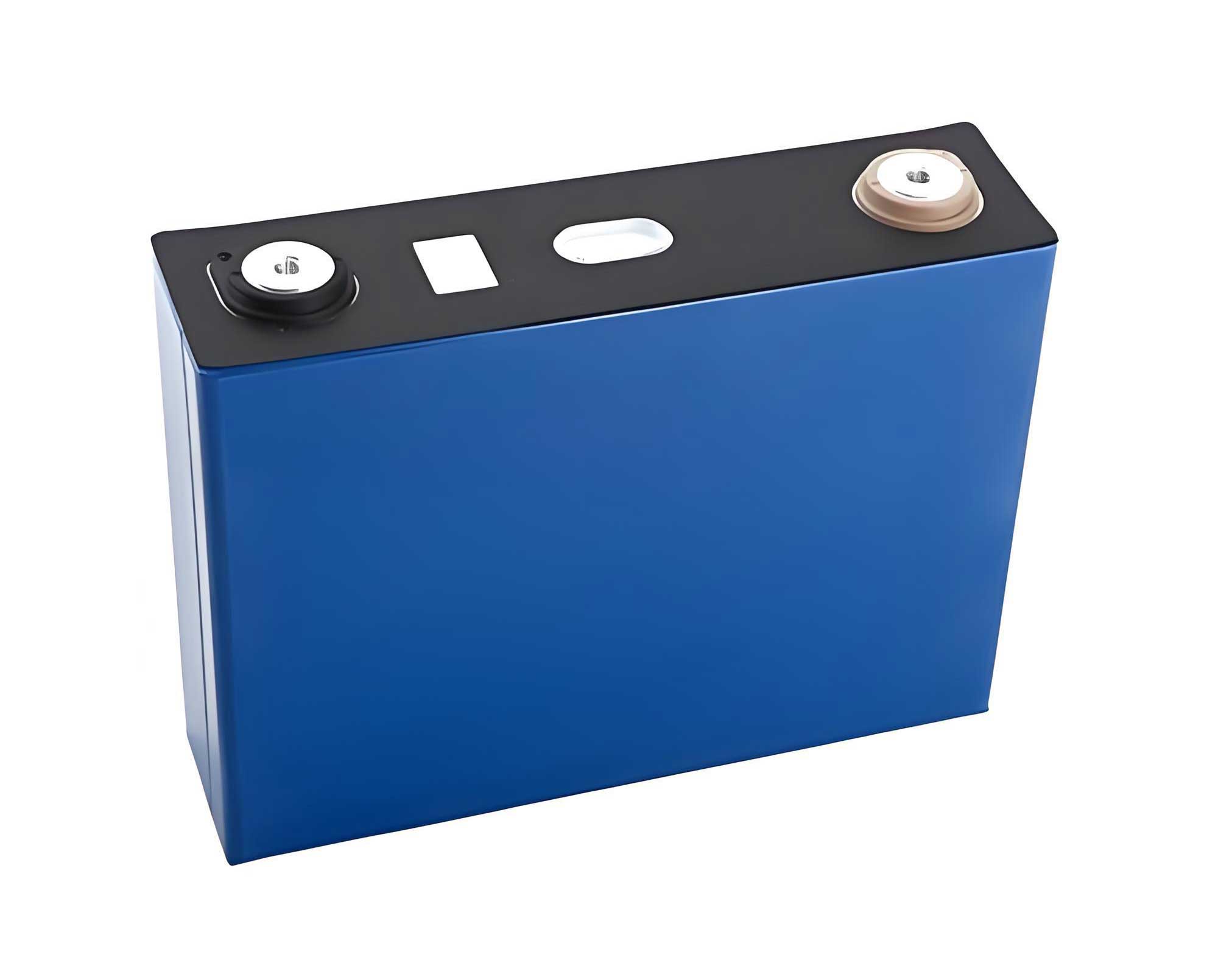
1. Technological Profile of Marine Batteries
1.1 Comparative Analysis of Lithium Battery Chemistries
Multiple lithium-ion chemistries exist, each with distinct performance characteristics suitable for different applications. For marine use, where safety, longevity, and reliability are non-negotiable, the choice of chemistry is critical. The primary contenders include Lithium Iron Phosphate (lifepo4 battery), Lithium Manganese Oxide (LMO), Lithium Cobalt Oxide (LCO), and Lithium Nickel Manganese Cobalt Oxide (NMC). A detailed comparison reveals why the lifepo4 battery is predominantly specified for maritime applications by leading classification societies like the China Classification Society (CCS).
| Parameter | Lithium Iron Phosphate (Lifepo4) | Lithium Manganese Oxide (LMO) | Lithium Cobalt Oxide (LCO) | Lithium NMC |
|---|---|---|---|---|
| Nominal Voltage (V) | 3.2 – 3.3 | 3.7 – 3.9 | 3.6 | 3.6 – 3.7 |
| Gravimetric Energy Density (Wh/kg) | 120 – 160 | 100 – 120 | 150 – 200 | 150 – 220 |
| Volumetric Energy Density (Wh/L) | ~220 | ~200 | ~400 | ~350 |
| Typical Cycle Life (to 80% DoD) | > 3500 cycles | 500 – 1000 cycles | 500 – 800 cycles | 1000 – 2000 cycles |
| Thermal Runaway Onset | > 270°C | ~250°C | ~150°C | ~210°C |
| Operational Temperature Range (°C) | -30 to +60 | -20 to +50 | -20 to +50 | -20 to +55 |
| Inherent Safety / Stability | Excellent (Strong P-O bond) | Good | Poor (Oxygen release) | Moderate |
| Toxicity & Environmental Impact | Low (No heavy/rare metals) | Low | High (Cobalt) | Moderate (Cobalt, Nickel) |
| Cost Trend (Raw Materials) | Low & Stable (Fe, P) | Low | High & Volatile (Co) | Moderate-High (Ni, Co) |
| Marine Certification Status | Widely Certified (CCS, DNV, etc.) | Limited | Not Certified for Propulsion | Conditional / Emerging |
The data underscores the compelling advantages of the lifepo4 battery. Its superior safety profile, derived from the stable olivine structure and strong P-O covalent bonds that prevent oxygen release, is the foremost reason for its maritime adoption. Coupled with exceptional cycle life, tolerance to a wide temperature range, and the use of abundant, low-toxicity materials, the lifepo4 battery presents a balanced and reliable choice for vessel operators, despite its slightly lower energy density compared to NMC or LCO chemistries.
1.2 Electrochemical Principles of the Lifepo4 Battery
The operation of a lifepo4 battery is based on the movement of lithium ions between the cathode (LiFePO₄) and the anode (typically graphite). During charging, an external electrical potential forces Li⁺ ions to de-intercalate from the cathode material, travel through the electrolyte and separator, and embed themselves into the anode lattice. During discharge, this process reverses, generating an electric current.
The core redox reactions at the cathode are as follows:
Charging Reaction (Cathode):
$$ \text{LiFePO}_4 \rightarrow \text{Li}_{1-x}\text{FePO}_4 + x\text{Li}^+ + x e^- $$
Here, lithium ions and electrons are extracted from the LiFePO₄, forming FePO₄.
Discharging Reaction (Cathode):
$$ \text{FePO}_4 + x\text{Li}^+ + x e^- \rightarrow \text{Li}_{x}\text{FePO}_4 $$
Here, lithium ions and electrons are re-inserted into the FePO₄ structure, reforming LiFePO₄.
The overall cell reaction can be summarized as:
$$ \text{LiFePO}_4 + 6\text{C} \ \underset{\text{discharge}}{\stackrel{\text{charge}}{\rightleftharpoons}} \ \text{FePO}_4 + \text{LiC}_6 $$
The flat voltage plateau of this reaction (around 3.2V) contributes to stable power delivery, a key feature for marine propulsion systems.
1.3 Systemic Advantages for All-Electric Vessels
Integrating a lifepo4 battery system as the primary energy source for a vessel offers transformative benefits:
- Enhanced Reliability and Durability: The multi-thousand-cycle life of a lifepo4 battery significantly exceeds the operational lifespan of traditional marine engines between major overhauls. Its broad operational temperature range ensures performance in diverse climates, from cold northern seas to warm tropical waters.
- Superior Environmental Profile: The absence of cobalt, nickel, and other contentious metals makes the lifepo4 battery more sustainable and easier to recycle. Its operation produces zero local emissions (NOx, SOx, PM, CO2), drastically improving air quality in ports and inland waterways.
- High Power Capability and Efficiency: Lifepo4 battery cells can sustain high discharge (and charge) rates (often 2-5C continuous). When configured into large-scale battery banks, they can deliver the multi-megawatt power levels required for propulsion with high round-trip efficiency (>95%), reducing energy waste compared to thermal engines.
- Design Flexibility and Space Optimization: The modular nature of lifepo4 battery packs allows them to be shaped to fit available hull spaces (e.g., in double bottoms, cargo holds converted to battery rooms, or even in containerized formats). This enables new vessel designs and the retrofit of existing ships.
- Operational Performance: Electric propulsion powered by a lifepo4 battery provides near-instant torque, excellent maneuverability, and significantly reduced noise and vibration, enhancing crew comfort and passenger experience.
2. Current State of Lifepo4 Battery-Powered Vessels
2.1 International Development and Market Trends
The modern era of electric shipping began in earnest in the 2010s, driven by stringent Emission Control Area (ECA) regulations and rapid cost reductions in battery technology. The global fleet of all-electric and hybrid vessels has grown exponentially.
Notable pioneering projects include:
- MS “Ampere” (2015, Norway): The world’s first fully electric car ferry, operating on a 5.6 km route. Its success proved the technical and commercial viability of electric ferries, utilizing a 1 MWh battery system.
- “Yara Birkeland” (2021, Norway): A landmark 120 TEU autonomous and zero-emission container feeder vessel. Its 6.8 MWh lifepo4 battery system enables it to perform its planned operational profile with zero emissions.
- “PortLiner EC110” (Netherlands): A 280 TEU inland container vessel featuring a swappable, containerized lifepo4 battery system, addressing range and charging time challenges for inland logistics.
- “Ika Rere” (2021, New Zealand): A fully electric, high-speed passenger ferry with 550 kWh battery capacity, serving urban waterway transit.
The market is expanding beyond ferries to include offshore support vessels, cruise ships, tugboats, and short-sea cargo vessels.
| Year | Estimated Fleet Size (All-Electric Vessels) | Estimated Market Value (USD Billion) | Key Driver Segments |
|---|---|---|---|
| 2022 | ~ 500 – 600 | ~ 6.5 | Ferries, Inland/Coastal Cargo, Tourist Vessels |
| 2024 (Projected) | ~ 900 – 1100 | ~ 7.3 – 8.0 | Expansion into OSVs, Tugs, Larger Ferries |
| 2027 (Projected) | ~ 2000 – 3000 | ~ 10.0 – 12.0 | Deep-sea Short-Sea Feeder, Hybrid Cruise Liners |
| 2030 (Projected) | > 5000 | > 20.0 | Broad adoption across most vessel segments under 10,000 GT |
2.2 Domestic Progress in China
China has emerged as a global leader in the construction and deployment of all-electric vessels, particularly for its vast inland waterway network. A series of groundbreaking vessels have entered service:
- “River Dolphin” (2019): A 2,000 DWT pure electric cargo ship, pioneering the use of large-scale lifepo4 battery power for inland cargo transport.
- “Junlv Hao” (2020): The first passenger ship in China built according to the new pure electric ship guidelines, operating on the Yangtze River in Wuhan.
- “Yangtze River Three Gorges 1” (2022): The world’s largest pure-electric cruise ship, with a colossal 7.5 MWh lifepo4 battery capacity, capable of sailing 100 km per charge.
- “Jiang Yuan Bai He” (2022): A 120 TEU pure electric container ship for inland shipping, featuring a 4,620 kWh containerized battery system with a 220 km range.
- Numerous other vessels including “Guangyou 19” tourist ships, “Yun Gang Dian Tuo 1” harbor tugs, and various cargo ships demonstrate rapid diversification and scaling.
The domestic market value for electric vessels in China was estimated at nearly USD 14 billion in 2021, reflecting massive state and private investment in the sector. The focus is not only on newbuilds but also on the systematic retrofit of the existing inland fleet.
2.3 Evolving Regulatory Framework and Standards
The safe integration of high-energy lifepo4 battery systems into the marine environment requires robust and evolving regulations. The regulatory landscape has progressed significantly:
| Year | Regulatory Body | Document / Action | Significance for Lifepo4 Batteries |
|---|---|---|---|
| 2014 | China Classification Society (CCS) | Guideline for Solar PV and Lithium Iron Phosphate Battery Systems | First specific technical guideline for marine lifepo4 battery systems. |
| 2019 | China Classification Society (CCS) | Guidelines for Survey of Pure Electric Propulsion Ships | First comprehensive rule set dedicated to all-electric ships, superseding the 2014 guideline. |
| 2019 | China MSA | Technical Rules for Statutory Survey of Inland River Ships (2019 Amendment) | Provided legal basis for using CCS-certified lifepo4 battery as main power source on inland ships. |
| 2020 | CCS | Green Ship Specification (2020 Revision) | Explicitly promoted the application of clean energy batteries like lifepo4 battery. |
| 2023 | CCS | Rules for Ships Applying Battery Power (2023) | Replaced the 2019 Guidelines, introducing more stringent safety requirements for battery rooms, fire protection, and battery management systems (BMS). |
| Ongoing | International Maritime Organization (IMO) | Development of IGF Code amendments for low-flashpoint fuels & new technologies. | International regulatory framework is catching up, with new chapters/sections expected for battery power. |
These regulations address critical areas such as battery cell and module certification, Battery Management System (BMS) requirements, thermal runaway propagation prevention, ventilation, fire detection and suppression (often requiring water mist or aerosol systems, not just gas), electrical protection, and emergency procedures. The lifepo4 battery‘s inherent safety characteristics make it easier to comply with these evolving, stringent rules.
3. Constraints and Strategic Development Pathways
3.1 Key Constraints on Widespread Adoption
Despite the progress, several interconnected barriers hinder the mass adoption of lifepo4 battery-powered vessels.
- Technical & Standardization Hurdles:
- Energy Density vs. Range: While sufficient for many short-sea and inland routes, the gravimetric and volumetric energy density of current lifepo4 battery technology limits the practical range of larger oceangoing vessels without frequent recharging or prohibitively large/weighty battery installations. The specific energy challenge can be expressed as a limiting equation for maximum range (R):
$$ R = \frac{\eta_{sys} \cdot E_{batt}}{P_{prop}} $$
where $\eta_{sys}$ is total system efficiency, $E_{batt}$ is the total onboard battery energy (kWh), and $P_{prop}$ is the average propulsion power (kW). For a given hull and speed, $P_{prop}$ is relatively fixed, making $E_{batt}$ (and thus battery mass/volume) the limiting factor. - Charging Infrastructure & Grid Demand: Fast-charging a multi-megawatt-hour lifepo4 battery bank requires high-power shore connection infrastructure (often tens of MW). Many ports, especially older ones, lack this capacity. Coordinating vessel charging schedules to avoid grid overload peaks is a complex logistical and electrical engineering challenge.
- Battery Longevity & Degradation Modeling: Predicting the state-of-health (SOH) and remaining useful life (RUL) of a marine lifepo4 battery system under highly variable load profiles (e.g., tugboat vs. ferry) is complex. Accurate models are needed for lifecycle cost analysis and warranty purposes.
- Energy Density vs. Range: While sufficient for many short-sea and inland routes, the gravimetric and volumetric energy density of current lifepo4 battery technology limits the practical range of larger oceangoing vessels without frequent recharging or prohibitively large/weighty battery installations. The specific energy challenge can be expressed as a limiting equation for maximum range (R):
- Economic Challenges:
- High Capital Expenditure (CapEx): The initial cost of the lifepo4 battery system can increase vessel capital cost by 25-40% compared to a conventional diesel counterpart, though this gap is narrowing.
- Lifecycle Cost Uncertainty: While operational expenditure (OpEx) on fuel and maintenance is lower, the need for one or more complete lifepo4 battery replacements within a vessel’s 25-30 year life adds significant cost. The total cost of ownership (TCO) is highly sensitive to electricity price, bunker fuel price, carbon taxation, and future battery replacement cost.
$$ \text{TCO} = \text{CapEx} + \sum_{t=1}^{N} \frac{\text{OpEx}_t}{(1+r)^t} + \sum_{k} \frac{\text{Battery Replacement Cost}_k}{(1+r)^{t_k}} $$
where $r$ is the discount rate and $t_k$ are the years of battery replacement.
- Crew Competency & Safety Culture: Operating a vessel centered on a high-voltage DC lifepo4 battery plant requires new skills. Crews must be trained in high-voltage safety, BMS monitoring, thermal management system operation, and specific emergency responses to battery incidents (e.g., thermal runaway, gas release).
3.2 Strategic Pathways for Future Development
To overcome these constraints and accelerate the adoption of lifepo4 battery technology, a multi-faceted strategy is essential.
- Technology Innovation Roadmap:
- Next-Generation Battery Chemistries: Support R&D into advanced lifepo4 battery variants (e.g., doped with Mn, Mg) and novel cell designs (e.g., blade-style) that improve energy density while retaining safety. Parallel research into solid-state batteries must continue for the long-term future.
- Smart Charging & Energy Management: Develop AI-driven port microgrids and vessel energy management systems (EMS) that integrate with the BMS to optimize charging schedules, utilize local renewables, provide grid services (V1G, V2G), and minimize demand charges.
- Standardized, Modular & Swappable Systems: Promote the design of containerized or modular lifepo4 battery units with standardized interfaces. This facilitates easier maintenance, upgrade, and potentially “battery swapping” at dedicated hubs, effectively decoupling charging time from vessel operation time.
- Policy & Financial Enablers:
- Targeted Subsidies & Green Financing: Implement direct subsidies for the battery cost differential, provide low-interest green loans, or offer tax incentives for operators of lifepo4 battery-powered vessels to improve their initial financial competitiveness.
- Internalize Environmental Costs: Strengthen and expand emission control areas (ECAs), implement meaningful carbon pricing schemes, and enforce stricter local emission standards in ports. This makes the zero-local-emission advantage of the lifepo4 battery a direct financial benefit.
- Mandate Green Port Infrastructure: Regulate or incentivize ports to install high-power shore charging systems as part of their licensing or environmental performance criteria.
- Ecosystem & Capacity Building:
- Develop Comprehensive Training Standards: Classification societies and maritime administrations must develop and mandate new training and certification modules for engineers and officers on lifepo4 battery vessel operations, maintenance, and safety.
- Establish Battery Lifecycle Services: Foster an industry for second-life applications (e.g., stationary storage), efficient recycling, and material recovery specifically for marine lifepo4 battery packs to improve sustainability and potentially reduce lifecycle costs.
- Promote Pilot Projects and Data Sharing: Encourage public-private partnerships for piloting new vessel types and operational models. Create anonymized data pools on lifepo4 battery performance and degradation in real-world marine conditions to de-risk investments for future adopters.
4. Conclusion
The application of lifepo4 battery technology represents a cornerstone of the maritime industry’s decarbonization journey. Its unparalleled safety, long cycle life, and environmental friendliness have already made it the chemistry of choice for the first generation of all-electric and hybrid vessels, particularly in the inland, coastal, and short-sea segments. The global and domestic fleet is growing rapidly, supported by an evolving regulatory framework that prioritizes safety. The strategic value of the lifepo4 battery in reducing local emissions, noise, and operational costs is clear and proven in numerous commercial operations.
However, the transition is not without challenges. Limitations in energy density, the need for extensive charging infrastructure, high initial costs, and the requirement for new operational competencies present significant hurdles. Addressing these requires a concerted, long-term strategy focusing on continuous technological advancement, supportive and intelligent policy frameworks, strategic infrastructure investment, and the development of a skilled workforce and a circular economy for marine batteries.
The path forward for the lifepo4 battery in shipping is one of incremental expansion and deepening integration. As technology improves and the ecosystem matures, the economic case will strengthen, enabling the lifepo4 battery to power an ever-greater portion of the world’s vessels, steering the maritime industry towards a cleaner and more sustainable future.