
In recent years, LiFePO4 batteries have gained widespread adoption in energy storage and power transformation systems due to their excellent stability, reliability, and long cycle life. However, like other lithium-ion batteries, LiFePO4 batteries pose significant fire hazards when subjected to abusive conditions such as thermal, electrical, or mechanical stress. The fire risk associated with large-capacity LiFePO4 batteries is particularly concerning in applications like grid-scale energy storage and substation systems, where hundreds or thousands of cells are packed together. A single cell undergoing thermal runaway can trigger cascading failures, leading to large fires or explosions. Therefore, understanding the fire behavior and hazards of LiFePO4 batteries is crucial for developing effective safety designs and fire suppression technologies. In this article, we explore the fire risk of LiFePO4 batteries through experimental investigations, focusing on combustion characteristics, heat release rates, and the influence of state of charge (SOC). We aim to provide insights that can enhance the safety of LiFePO4 battery systems in real-world applications.
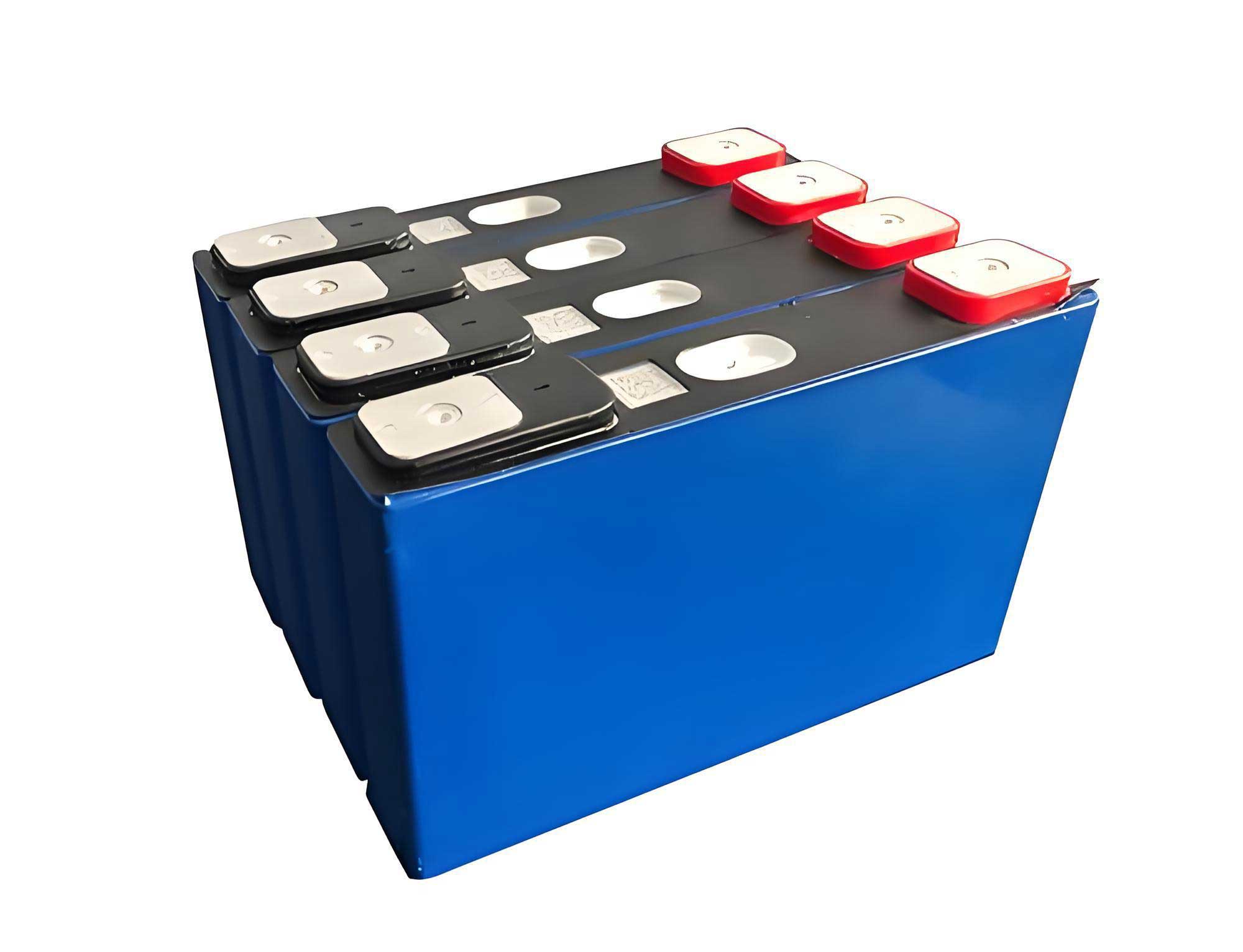
Our study centers on a large-format LiFePO4 battery with a nominal capacity of 228 Ah, which is representative of cells used in stationary storage. We conducted thermal abuse tests under controlled conditions to simulate scenarios where a LiFePO4 battery might overheat due to external factors. The experiments were designed to measure key parameters such as temperature, voltage, mass loss, and heat release rate (HRR) during thermal runaway and subsequent combustion. By varying the SOC (0%, 50%, and 100%), we evaluated how the energy state of a LiFePO4 battery affects its fire dynamics. The results highlight the intense fire hazards posed by high-SOC LiFePO4 batteries and underscore the importance of SOC management for risk mitigation.
The experimental setup involved a custom-built fire test platform capable of handling large-scale battery fires. The platform included a combustion chamber, instrumentation for HRR measurement via oxygen consumption calorimetry, and data acquisition systems for temperature and voltage. The LiFePO4 battery was heated using an external heater to induce thermal runaway, and the ejected gases were ignited to study combustion behavior. Thermocouples were attached to various points on the LiFePO4 battery surface to monitor temperature gradients, while voltage probes recorded electrical changes. This setup allowed us to capture the full progression of a LiFePO4 battery fire, from initial heating to flame extinction.
The combustion behavior of a LiFePO4 battery during thermal runaway can be divided into distinct stages, as observed in our tests. For LiFePO4 batteries at high SOC, the process typically includes initial jet fire, stable combustion, multiple jet fires, and eventual flame decay. These stages are driven by the sequential failure of internal components. As the LiFePO4 battery heats up, the solid-electrolyte interphase (SEI) decomposes around 90°C, generating gases that increase internal pressure. Eventually, the safety vent ruptures, releasing flammable gases that ignite upon contact with air. For a LiFePO4 battery with 100% SOC, this leads to intense jet flames, while lower SOC LiFePO4 batteries exhibit milder combustion. The number of jet fire events correlates with SOC: we recorded three jet fires for 100% SOC, two for 50% SOC, and only one for 0% SOC in a LiFePO4 battery. This indicates that the energy content in a LiFePO4 battery directly influences the violence of its failure.
Temperature and voltage profiles provide critical insights into the thermal runaway mechanism of a LiFePO4 battery. During heating, the temperature of a LiFePO4 battery rises gradually until the safety vent opens, which we denote as the venting temperature \( T_v \). For the LiFePO4 batteries tested, \( T_v \) ranged from 164°C to 168°C, showing little dependence on SOC. After venting, the temperature may dip slightly due to gas ejection, but it then surges rapidly as internal short circuits occur. This surge corresponds to the thermal runaway temperature \( T_{tr} \), where the LiFePO4 battery’s internal materials react exothermically. The peak temperature \( T_{max} \) reached by a LiFePO4 battery varies significantly with SOC: we measured 573°C for 100% SOC, 432°C for 50% SOC, and 262°C for 0% SOC. These values highlight the elevated fire risk of a fully charged LiFePO4 battery.
Voltage behavior in a LiFePO4 battery during thermal runaway is equally telling. Before thermal runaway, the voltage of a LiFePO4 battery shows a slight decay due to electrode dissolution, but it remains relatively stable. The voltage drop, indicative of massive internal short circuits, occurs after venting. In our tests, the voltage drop time lagged behind the venting time by several hundred seconds for a LiFePO4 battery, suggesting that venting is an early warning sign. This delay is attributed to the隔膜 melting at higher temperatures (above 130°C), which bridges electrodes and causes shorting. For safety monitoring, combining gas detection with voltage and temperature sensing could improve early warning for a LiFePO4 battery system.
Mass loss during combustion of a LiFePO4 battery reflects the consumption of materials and the release of gases. We tracked mass loss continuously and found that it aligns with the combustion stages. Initially, mass loss is minimal as the LiFePO4 battery heats up. Upon venting, there is a sharp mass drop as gases escape, accounting for a large fraction of total loss. For example, in a 0% SOC LiFePO4 battery, venting-related mass loss constituted 89.6% of the total, indicating that most gases are ejected early. In contrast, for a 100% SOC LiFePO4 battery, subsequent combustion phases contribute more to mass loss due to sustained reactions. The mass loss rate peaks during jet fire events, reaching up to 11.1 g/s for a 100% SOC LiFePO4 battery. This metric underscores the rapid material ejection in a high-energy LiFePO4 battery.
To quantify the fire hazard, we calculated the heat release rate (HRR) using oxygen consumption calorimetry. The HRR profile for a LiFePO4 battery reveals multiple peaks corresponding to jet fires. For a 100% SOC LiFePO4 battery, we observed three HRR peaks: the first at 20.41 kW during initial venting, the second at 74.83 kW during a secondary jet fire, and the third at 98.99 kW during the most intense combustion phase. The total heat released by this LiFePO4 battery was 13.94 MJ. In comparison, a 50% SOC LiFePO4 battery had lower HRR peaks (maximum 52.82 kW) and a total heat of 10.33 MJ, while a 0% SOC LiFePO4 battery showed a single HRR peak of 41.74 kW and 7.68 MJ total heat. These data demonstrate that the fire intensity of a LiFePO4 battery scales with its SOC.
We can express the HRR calculation mathematically based on oxygen consumption. The heat release rate \( \dot{Q} \) is given by:
$$ \dot{Q} = E \left[ \dot{m}_0(\text{O}_2) – \dot{m}(\text{O}_2) \right] $$
where \( E \approx 13.1 \, \text{kJ/g} \) is the heat release per gram of oxygen consumed, \( \dot{m}_0(\text{O}_2) \) is the initial mass flow rate of oxygen, and \( \dot{m}(\text{O}_2) \) is the mass flow rate during combustion. For a LiFePO4 battery fire, incomplete combustion may produce CO, so we adjust the formula as:
$$ \dot{Q} = \left\{ E\phi – \left[ E(\text{CO}) – E \right] \frac{1-\phi}{2} \frac{X(\text{CO})}{X(\text{O}_2)} \right\} \frac{\dot{m}_e}{1 + \phi (\alpha – 1)} \frac{M(\text{O}_2)}{M_a} \left[1 – X_0(\text{H}_2\text{O})\right] X_0(\text{O}_2) $$
Here, \( \phi \) is the oxygen depletion factor, \( E(\text{CO}) \approx 17.6 \, \text{kJ/g} \), \( X \) denotes mole fractions, \( \dot{m}_e \) is the exhaust gas flow rate, and \( \alpha \) is the air expansion factor. These equations allow precise HRR estimation for a burning LiFePO4 battery.
The normalized HRR, expressed per unit area, further illustrates the fire risk. For a 100% SOC LiFePO4 battery, the peak normalized HRR reached approximately 2.91 MW/m², exceeding that of gasoline (2.2 MW/m²). A 50% SOC LiFePO4 battery had 1.55 MW/m², and a 0% SOC LiFePO4 battery had 1.22 MW/m², comparable to diesel fuel. This places a high-SOC LiFePO4 battery among the most hazardous combustibles, emphasizing the need for robust fire protection.
Several factors influence the fire behavior of a LiFePO4 battery. The SOC is paramount, as it determines the available electrochemical energy. During thermal runaway, a high-SOC LiFePO4 battery releases more energy, leading to higher temperatures and faster reaction rates. The chemical reactions in a LiFePO4 battery involve decomposition of the SEI, electrolyte oxidation, and cathode breakdown. For a LiFePO4 battery, the stable phosphate structure mitigates oxygen release, but electrolyte combustion still drives fires. The overall energy release \( Q_{total} \) from a LiFePO4 battery can be modeled as:
$$ Q_{total} = Q_{electrochemical} + Q_{chemical} + Q_{short} $$
where \( Q_{electrochemical} \) is the energy from cell discharge, \( Q_{chemical} \) is from material reactions, and \( Q_{short} \) is from internal short circuits. In a LiFePO4 battery, \( Q_{electrochemical} \) dominates at high SOC, making SOC management a key safety strategy.
We conducted additional analyses to correlate SOC with fire parameters. The table below summarizes critical data for LiFePO4 batteries at different SOCs:
| SOC | Venting Time (s) | Voltage Drop Time (s) | Peak Temperature (°C) | Total Heat Release (MJ) | Peak HRR (kW) |
|---|---|---|---|---|---|
| 0% | 1886 | 3252 | 262 | 7.68 | 41.74 |
| 50% | 1960 | 2636 | 432 | 10.33 | 52.82 |
| 100% | 2074 | 2243 | 573 | 13.94 | 98.99 |
This table clearly shows that as SOC increases in a LiFePO4 battery, the fire becomes more severe: higher temperatures, more heat released, and greater HRR peaks. The venting time also slightly increases with SOC for a LiFePO4 battery, possibly due to differences in internal pressure buildup.
Another important aspect is the mass loss distribution during combustion of a LiFePO4 battery. The following table breaks down the mass loss ratio by stages for each SOC:
| Combustion Stage | Mass Loss Ratio (0% SOC LiFePO4) | Mass Loss Ratio (50% SOC LiFePO4) | Mass Loss Ratio (100% SOC LiFePO4) |
|---|---|---|---|
| Heating (I) | Negligible | Negligible | Negligible |
| Initial Venting (II) | 89.6% | 57.6% | 38.6% |
| Jet Fires (III) | 10.4% | 42.4% | 57.7% |
| Decay (IV) | 0% | 0% | 3.7% |
For a low-SOC LiFePO4 battery, most mass loss occurs during venting, whereas for a high-SOC LiFePO4 battery, jet fires contribute more significantly. This indicates that a high-energy LiFePO4 battery sustains combustion longer, releasing more flammable gases over time.
The combustion kinetics of a LiFePO4 battery can be described using Arrhenius-type equations. The reaction rate \( k \) for electrolyte decomposition in a LiFePO4 battery is:
$$ k = A \exp\left(-\frac{E_a}{RT}\right) $$
where \( A \) is the pre-exponential factor, \( E_a \) is the activation energy, \( R \) is the gas constant, and \( T \) is temperature. During thermal runaway in a LiFePO4 battery, \( T \) rises exponentially, causing \( k \) to increase dramatically. This positive feedback loop accelerates fire development in a LiFePO4 battery, especially at high SOC.
Fire suppression for LiFePO4 batteries poses challenges due to their high energy density and ability to reignite. Traditional extinguishers like water or CO₂ may cool the LiFePO4 battery but might not prevent internal reactions. We tested various agents and found that immersion cooling or specialized compounds are needed to quench a LiFePO4 battery fire effectively. The key is to disrupt the heat feedback loop by cooling the LiFePO4 battery below its thermal runaway threshold.
In practical applications, LiFePO4 battery systems should incorporate safety features such as thermal management, venting pathways, and SOC control. For instance, maintaining LiFePO4 batteries at a partial SOC (e.g., 50% or lower) during storage or transport can reduce fire risk. Early detection systems for gas, temperature, and voltage in a LiFePO4 battery pack are also vital. Our experiments show that venting occurs before voltage drops in a LiFePO4 battery, so gas sensors could provide earlier warnings.
We also explored the impact of cell format on fire risk. Large-format LiFePO4 batteries, like the 228 Ah cell studied, have higher total energy and can produce more severe fires than smaller cells. The heat generation per unit volume \( \dot{q}”’ \) in a LiFePO4 battery during thermal runaway can be estimated as:
$$ \dot{q}”’ = \rho C_p \frac{dT}{dt} – \nabla \cdot (k \nabla T) $$
where \( \rho \) is density, \( C_p \) is heat capacity, \( k \) is thermal conductivity, and \( T \) is temperature. For a large LiFePO4 battery, thermal gradients are steeper, leading to uneven heating and potential hotspot formation. This can exacerbate fire spread in a LiFePO4 battery module.
To mitigate cascading failures in LiFePO4 battery packs, we recommend design strategies such as spacing between cells, fire barriers, and compartmentalization. These measures can contain a fire originating from one LiFePO4 battery and prevent propagation. Additionally, using flame-retardant electrolytes or additives in a LiFePO4 battery can slow down combustion.
Our study has limitations; we focused on thermal abuse only. Electrical abuse (e.g., overcharge) or mechanical abuse (e.g., crush) might alter the fire behavior of a LiFePO4 battery. Future work should investigate these scenarios and their combined effects. Moreover, real-world LiFePO4 battery systems often operate under dynamic loads, which could influence thermal stability.
In conclusion, the fire risk of a LiFePO4 battery is strongly influenced by its state of charge. High-SOC LiFePO4 batteries exhibit violent combustion with multiple jet fires, high heat release rates, and extreme temperatures. In contrast, low-SOC LiFePO4 batteries burn more mildly with longer durations. The venting of a LiFePO4 battery precedes voltage collapse, offering an early warning opportunity. For safety, managing SOC and implementing robust detection and suppression systems are essential for LiFePO4 battery applications. As LiFePO4 batteries continue to power our energy future, understanding and mitigating their fire hazards will remain a critical research frontier.
We hope this comprehensive analysis of LiFePO4 battery fire risk aids engineers and safety professionals in designing safer energy storage systems. The insights derived from our experiments on LiFePO4 batteries underscore the importance of proactive safety measures to harness the benefits of LiFePO4 battery technology while minimizing risks.