
In this comprehensive research, we focus on overcoming the significant challenge of poor low-temperature performance in lithium iron phosphate (LiFePO4) batteries, which has limited their application in extreme environments such as military operations, high-altitude regions, and polar areas. The LiFePO4 battery is renowned for its structural stability, excellent cycle life, thermal safety, low cost, and environmental friendliness, making it a dominant choice for electric vehicles, energy storage systems, and portable power tools. However, its olivine structure features one-dimensional lithium-ion diffusion channels that are prone to blockage by lattice distortions and impurities, leading to low lithium-ion diffusion coefficients, especially at sub-zero temperatures. This results in sluggish charge transfer reactions at the electrode/electrolyte interface, severely degrading rate capability and low-temperature performance. Our goal is to develop a cylindrical 26650-type LiFePO4 battery that maintains high capacity and cycle life even at ultra-low temperatures down to -50°C, using conventional manufacturing techniques enhanced by material and process optimizations.
We begin by addressing the core material science aspects. The LiFePO4 cathode material is synthesized via a hydrothermal method, which produces nano-sheet structures with dimensions below 100 nm. This nanoscale morphology shortens the lithium-ion diffusion path, thereby improving ionic conductivity and electrochemical performance at low temperatures. The material undergoes carbon coating to enhance electronic conductivity, critical for maintaining performance in harsh conditions. The half-cell testing of this LiFePO4 material shows a typical charge-discharge profile with a flat voltage plateau, indicating stable lithium intercalation and deintercalation. The capacity can be expressed using the formula for specific capacity: $$C_{sp} = \frac{nF}{M}$$ where \(n\) is the number of electrons transferred per formula unit, \(F\) is Faraday’s constant, and \(M\) is the molar mass of LiFePO4. For LiFePO4, the theoretical capacity is approximately 170 mAh/g, but practical values achieve around 160 mAh/g at 0.2C rate.
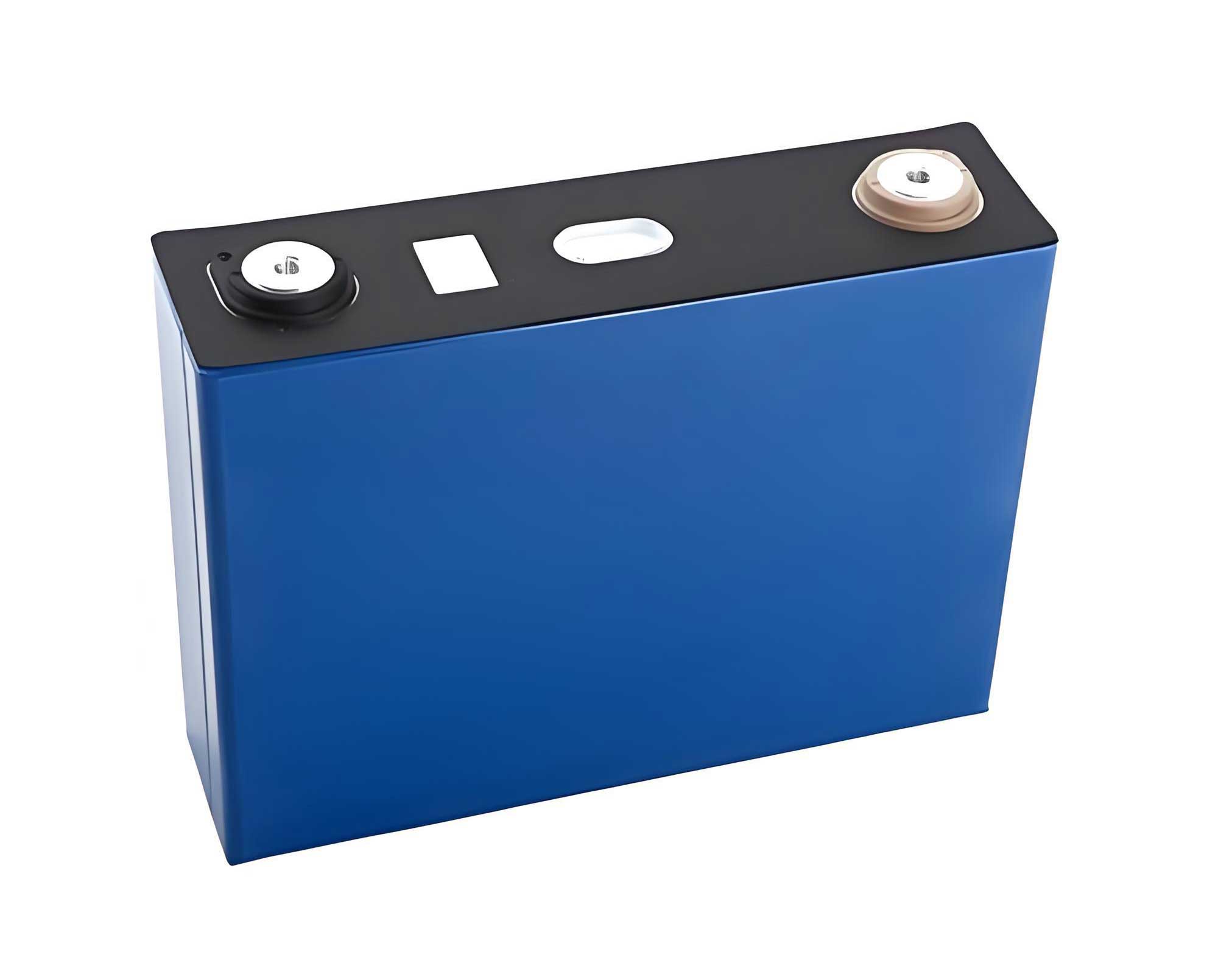
The anode material selection is pivotal for low-temperature performance. We employ a composite of artificial graphite and hard carbon (XC-70 from Shanxi Xinchuang Materials Co., Ltd.). Hard carbon, a non-graphitizable carbon, possesses a rigid framework structure that minimizes deformation and provides stable lithium storage sites, facilitating rapid lithium-ion insertion and extraction even at low temperatures. The half-cell testing of this hard carbon material demonstrates a sloping voltage profile, characteristic of hard carbon anodes, with a reversible capacity exceeding 300 mAh/g at 0.1C rate. The overall anode design aims to reduce interfacial resistance and enhance lithium-ion kinetics.
To further optimize the LiFePO4 battery system, we incorporate high-conductivity carbon additives. Specifically, we add 0.5 wt% Ketjen black (a type of conductive carbon black) to the cathode formulation. Ketjen black has a high surface area and superior electrical conductivity, which significantly lowers the internal resistance of the electrode. The effective conductivity of the composite electrode can be modeled using percolation theory: $$\sigma_{eff} = \sigma_0 (\phi – \phi_c)^t$$ where \(\sigma_{eff}\) is the effective conductivity, \(\sigma_0\) is the intrinsic conductivity of the conductive additive, \(\phi\) is the volume fraction of the additive, \(\phi_c\) is the percolation threshold, and \(t\) is a critical exponent. By optimizing the additive content, we achieve a percolating network that ensures efficient electron transport throughout the electrode matrix.
The electrolyte system is tailored for ultra-low temperature operation. Conventional electrolytes containing ethylene carbonate (EC, melting point 23°C) suffer from high viscosity and solidification at low temperatures. We develop a low-temperature electrolyte based on a eutectic mixture of dimethyl methylphosphonate (DMM, melting point -105°C) and propylene carbonate (PC, melting point -55°C) in a 1:1 volume ratio. This mixture exhibits a low freezing point and maintains ionic conductivity at extreme cold. We dissolve 1 M lithium hexafluorophosphate (LiPF6) as the lithium salt. The ionic conductivity \(\kappa\) of the electrolyte as a function of temperature can be described by the Vogel-Fulcher-Tamman equation: $$\kappa = A \exp\left(-\frac{B}{T – T_0}\right)$$ where \(A\), \(B\), and \(T_0\) are fitting parameters. This formulation ensures sufficient ion mobility even at -50°C, enabling efficient charge transfer.
The battery manufacturing process follows standard cylindrical cell production but with precise control over coating parameters to ensure thin and uniform electrodes, which reduce ionic diffusion distances. The detailed formulations for cathode and anode are summarized in the tables below. These formulations are designed to balance active material content, binder integrity, and conductive network formation.
| Material | Composition (wt%) | Function |
|---|---|---|
| LiFePO4 (nanosheet) | 95.5 | Active material |
| PVDF | 2.50 | Binder |
| CNT | 1.0 | Conductive additive |
| Super-p | 0.5 | Conductive additive |
| Ketjen Black | 0.5 | High-conductivity additive |
| Solid content: 51 wt% in NMP solvent | ||
| Material | Composition (wt%) | Function |
|---|---|---|
| Artificial Graphite | 93.5 | Active material |
| Hard Carbon (XC-70) | 2.5 | Low-temperature enhancer |
| CMC | 1.5 | Binder |
| SBR | 2.0 | Binder |
| LA132 | 0.5 | Adhesive |
| Solid content: 55 wt% in aqueous solvent | ||
The coating and calendaring parameters are critical for achieving optimal electrode density and thickness. We use a double-sided coating process with precise gap control to ensure consistency. The following table outlines the key process parameters for the 26650 battery assembly.
| Parameter | Cathode | Anode |
|---|---|---|
| Coating Gap (mm) | 8 ± 1 | 6 ± 1 |
| Coating Length (mm) | 1530 ± 1 | 1600 ± 1 |
| Coating Width (mm) | 56 ± 1 | 58 ± 1 |
| Single-Side Areal Density (g/m²) | 154 ± 3 | 74 ± 3 |
| Double-Side Areal Density (g/m²) | 308 ± 6 | 148 ± 3 |
| Compaction Density (g/cm³) | 2.25 | 1.45 |
After slurry mixing, the electrodes are coated, dried, calendared, slit, and assembled into cylindrical cells via winding. The cells are housed in 26650 stainless steel cans, filled with the low-temperature electrolyte, sealed, and formed under controlled conditions. The formation process involves initial charge-discharge cycles to stabilize the solid electrolyte interphase (SEI) on the anode, which is crucial for long-term cycle life, especially at low temperatures.
We then evaluate the electrochemical performance of the developed LiFePO4 battery. At room temperature (25°C), the battery exhibits excellent rate capability. The discharge curves at 0.5C and 1C rates show minimal voltage polarization, indicating low internal resistance. The capacity retention between these rates is high, thanks to the optimized conductive network and nano-structured materials. The discharge capacity \(C\) at a given rate can be calculated from the discharge current \(I\) and time \(t\): $$C = I \times t$$ For our 26650 LiFePO4 battery, the nominal capacity is designed to be 3400 mAh (3.4 Ah).
The low-temperature performance is the key focus. We test the LiFePO4 battery at -40°C under various discharge rates (1C, 2C, 3C, 5C). The results are summarized in the table below, demonstrating outstanding capacity retention even at high rates. The capacity retention percentage \(R\) is given by: $$R = \frac{C_{low}}{C_{room}} \times 100\%$$ where \(C_{low}\) is the capacity at low temperature and \(C_{room}\) is the capacity at room temperature.
| Sample | Discharge Rate (C) | Room Temperature Capacity (Ah) | -40°C Capacity (Ah) | Capacity Retention (%) |
|---|---|---|---|---|
| 26650 Low-Temp Battery | 1 | 3.40 | 2.828 | 83.2 |
| 26650 Low-Temp Battery | 2 | 3.40 | 3.138 | 92.3 |
| 26650 Low-Temp Battery | 3 | 3.40 | 3.257 | 95.8 |
| 26650 Low-Temp Battery | 5 | 3.40 | 3.271 | 96.2 |
Remarkably, at -50°C, the LiFePO4 battery achieves a capacity retention of 96% relative to room temperature, which is a significant breakthrough for ultra-low temperature applications. This performance is attributed to the synergistic effects of the nano-sheet LiFePO4 cathode, hard carbon-enhanced anode, low-temperature electrolyte, and high-conductivity additives. The lithium-ion diffusion kinetics in the electrode materials can be described by the Arrhenius equation: $$D_{Li} = D_0 \exp\left(-\frac{E_a}{RT}\right)$$ where \(D_{Li}\) is the lithium-ion diffusion coefficient, \(D_0\) is the pre-exponential factor, \(E_a\) is the activation energy, \(R\) is the gas constant, and \(T\) is the absolute temperature. By reducing \(E_a\) through material nanostructuring and interface engineering, we enhance \(D_{Li}\) at low temperatures.
Cycle life testing at -30°C under 1C charge and discharge rates reveals excellent durability. The LiFePO4 battery maintains approximately 89% of its initial room temperature capacity after 100 cycles, indicating stable SEI formation and minimal degradation. The capacity fade over cycles can be modeled using a linear or exponential decay function: $$C_n = C_0 (1 – \alpha n)$$ or $$C_n = C_0 \exp(-\beta n)$$ where \(C_n\) is the capacity at cycle \(n\), \(C_0\) is the initial capacity, and \(\alpha\) or \(\beta\) are fade coefficients. Our optimized system shows a low fade coefficient, ensuring long-term reliability in cold environments.
Further analysis involves electrochemical impedance spectroscopy (EIS) to understand the interfacial resistances. The Nyquist plots typically show a semicircle at high frequencies representing the charge transfer resistance \(R_{ct}\), and a Warburg tail at low frequencies representing diffusion. The total internal resistance \(R_{total}\) of the LiFePO4 battery is a sum of ohmic resistance \(R_{\Omega}\), charge transfer resistance \(R_{ct}\), and diffusion resistance \(R_{diff}\): $$R_{total} = R_{\Omega} + R_{ct} + R_{diff}$$ At low temperatures, \(R_{ct}\) and \(R_{diff}\) increase significantly, but our design mitigates this through the materials and electrolyte choices.
We also explore the thermal behavior of the LiFePO4 battery. Differential scanning calorimetry (DSC) tests confirm that the low-temperature electrolyte remains stable without freezing or phase separation down to -60°C. The heat flow \(q\) as a function of temperature \(T\) shows no exothermic peaks associated with electrolyte solidification, ensuring operational safety. The thermal conductivity \(\lambda\) of the electrode stack is enhanced by the conductive additives, facilitating heat dissipation during high-rate discharges.
In terms of safety, the LiFePO4 battery inherently possesses high thermal stability due to the strong P-O bonds in the phosphate structure. The onset temperature for thermal runaway is above 200°C, much higher than that of other cathode materials like NMC or LCO. This makes the LiFePO4 battery ideal for critical applications where safety is paramount. The heat generation rate \(\dot{Q}\) during operation can be estimated using the equation: $$\dot{Q} = I(E – V) – I T \frac{\partial E}{\partial T}$$ where \(I\) is the current, \(E\) is the open-circuit voltage, \(V\) is the terminal voltage, and \(\frac{\partial E}{\partial T}\) is the temperature coefficient of the open-circuit voltage. Our battery design minimizes heat generation through low polarization.
To contextualize our findings, we compare our LiFePO4 battery with commercial low-temperature lithium-ion batteries. While some offerings exist, they often sacrifice high-temperature stability or require specialized manufacturing. Our approach uses conventional processes with tailored materials, making it scalable and cost-effective. The energy density of our 26650 LiFePO4 battery is calculated as: $$E_d = \frac{C \times V}{m}$$ where \(V\) is the average discharge voltage (about 3.2 V for LiFePO4) and \(m\) is the mass of the cell. We achieve an energy density competitive with standard LiFePO4 batteries while excelling in low-temperature performance.
Future work will focus on further optimizing the electrolyte composition to extend the cycle life at even lower temperatures (e.g., -60°C) and improving the fast-charging capability at sub-zero conditions. Additionally, we plan to integrate these LiFePO4 batteries into battery management systems (BMS) with adaptive thermal control to maximize efficiency in fluctuating environments.
In conclusion, our systematic research demonstrates that through the integration of nano-sheet structured LiFePO4 cathode, hard carbon-based anode, low-temperature electrolyte, and high-conductivity additives, we successfully developed a 26650 cylindrical LiFePO4 battery with exceptional ultra-low temperature performance. The LiFePO4 battery achieves 96% capacity retention at -50°C and sustains over 100 cycles at -30°C with 1C rate, meeting the demands of extreme environment applications. This advancement expands the potential of LiFePO4 batteries into new frontiers, reinforcing their position as a safe, reliable, and versatile energy storage solution. The continuous innovation in LiFePO4 battery technology will drive further adoption in automotive, aerospace, and stationary storage sectors, particularly in regions with harsh climates.