
Backup power systems are the silent guardians of urban rail transit networks, ensuring the continuous and safe operation of critical subsystems like signaling, communications, and emergency lighting during main power failures. For decades, Valve-Regulated Lead-Acid (VRLA) batteries have been the dominant technology in this role, prized for their mature technology and wide availability. In my extensive experience managing power supply operations, I have overseen the maintenance and replacement cycles of thousands of these VRLA units. The recurring pattern is all too familiar: a typical service life of 5-6 years, followed by a labor-intensive and costly process of decommissioning, disposal, and installation of new banks. The sheer physical footprint and weight of these systems often constrain facility design and complicate future expansions. This operational reality has driven a relentless search for more advanced, efficient, and sustainable alternatives. The evolution of the energy storage sector, particularly the rapid advancement of lithium-ion battery technologies, now presents a compelling solution. Among the various lithium-ion chemistries, the LiFePO4 battery has emerged as a frontrunner for safety-critical, long-duration backup applications. This analysis will explore the transformative potential of high-safety, float-capable LiFePO4 battery systems, drawing from direct operational comparisons and implementation experiences to outline a new paradigm for urban rail transit backup power.
The landscape of lithium-ion batteries is diverse, each chemistry offering a distinct balance of energy density, safety, lifespan, and cost. Selecting the appropriate technology for the unique demands of rail transit—where safety is paramount, lifecycle cost is crucial, and operational environments can be challenging—requires careful evaluation. The table below summarizes the key characteristics of prominent lithium-ion chemistries:
| Cathode Material | Anode Material | Nominal Voltage (V) | Specific Capacity (mAh/g) | Cycle Life | Safety | Cost |
|---|---|---|---|---|---|---|
| Cobalt Oxide (LCO) | Graphite | 3.60 | 150-200 | 500-1000 | Poor | Very High |
| Manganese Oxide (LMO) | Graphite | 3.70 | 90-120 | 300-700 | Fair | Low |
| Nickel Cobalt Manganese (NCM) | Graphite | 3.60 | 130-220 | 1000-2000 | Fair | High |
| Nickel Cobalt Aluminium (NCA) | Graphite | 3.60 | 200-260 | 1000-2000 | Poor | High |
| Lithium Iron Phosphate (LiFePO4) | Graphite | 3.20 | 130-150 | >3000 | Excellent | Low |
| LMO or NCM | Lithium Titanate (LTO) | 2.40 | 50-80 | 3000-7000 | Excellent | High |
As evident, while chemistries like NCA and NCM offer higher energy density, their safety profiles and costs are significant drawbacks for large-scale, stationary backup systems. Lithium Titanate (LTO) batteries offer exceptional safety and lifespan but at a premium cost and lower energy density. The LiFePO4 battery, however, strikes the optimal balance: its olivine crystal structure provides outstanding thermal and chemical stability, making it highly resistant to thermal runaway. This inherent safety, combined with a long cycle life, moderate cost, and good environmental credentials, positions the LiFePO4 battery as the most suitable lithium-ion chemistry for the demanding environment of urban rail transit backup power.
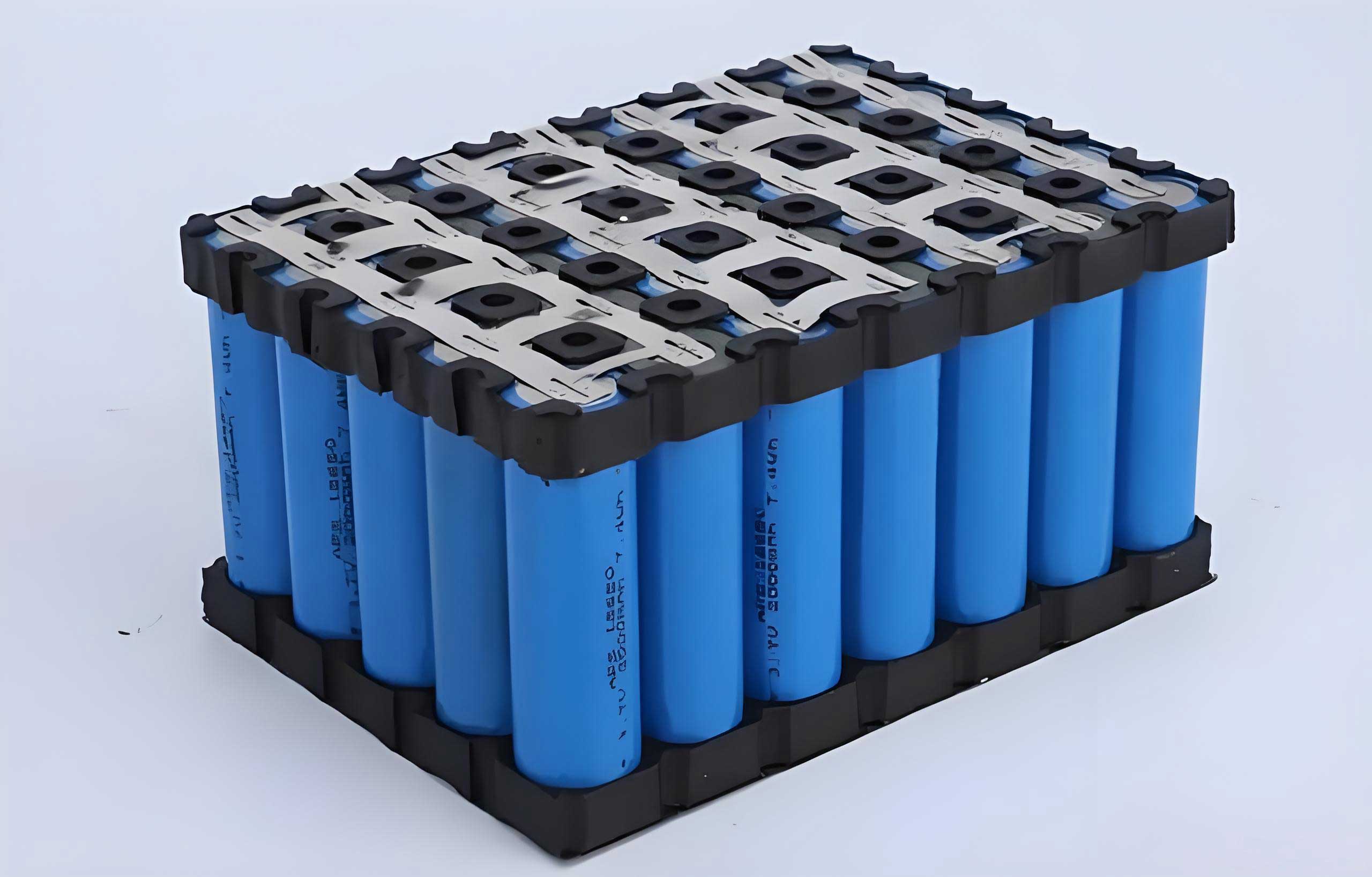
The advantages of the LiFePO4 battery become starkly clear when directly compared to the incumbent VRLA technology. The benefits span physical, performance, and operational domains. A fundamental performance comparison highlights the technological leap:
| Performance Metric | LiFePO4 Battery | VRLA Battery |
|---|---|---|
| Single Cell Voltage (V) | 3.2 | 2.0 |
| Gravimetric Energy Density (Wh/kg) | 110-130 | 30-50 |
| Volumetric Energy Density (Wh/L) | 210-240 | 80-120 |
| Cycle Life (to 80% Capacity) | >3000 cycles | 300-500 cycles |
| Charge/Discharge Efficiency | >95% | ~80% |
| High-Rate Discharge Capability | Up to 4C continuous | Typically up to 1C |
| Operating Temperature Range | -20°C to 60°C | 0°C to 40°C (optimal) |
The superior energy density of the LiFePO4 battery translates into dramatic space and weight savings. In a real-world consolidation project for an Uninterruptible Power Supply (UPS) system, replacing two banks of 192x 2V/500Ah VRLA batteries (requiring expansive, reinforced double-layer racks) with two integrated LiFePO4 battery cabinets yielded remarkable results. The footprint was reduced by approximately 33%, and the total weight was slashed by nearly 66%. This transformation not only frees up valuable equipment room space but also simplifies installation and eliminates concerns about floor loading capacity for future upgrades.
Operational and maintenance paradigms shift fundamentally with the adoption of a LiFePO4 battery system. Traditional VRLA maintenance is manual, periodic, and often reactive. It involves regular visits to measure float voltage, inter-cell connections, and electrolyte levels (where possible), and annual capacity verification tests, which are both time-consuming and potentially disruptive. In contrast, a LiFePO4 battery system is inherently intelligent, equipped with a comprehensive Battery Management System (BMS). The BMS provides real-time, granular monitoring of every cell’s voltage, temperature, and current. It enables predictive health assessment, early fault detection, and remote diagnostics. The contrast in maintenance regimes is clear:
| Maintenance Task | LiFePO4 Battery (with BMS) | VRLA Battery |
|---|---|---|
| Voltage/Temperature Monitoring | Continuous, remote, per-cell | Manual, periodic (monthly/quarterly) |
| Internal Resistance Check | Calculated/estimated by BMS | Manual annual test |
| Capacity Verification | BMS-guided test every 2-3 years | Full discharge test annually |
| Connection Integrity | Thermal monitoring via BMS | Manual torque check annually |
| Environmental Recording | Integrated sensors | Separate log |
The shift from scheduled, hands-on maintenance to condition-based, remote monitoring represents a significant step towards predictive maintenance and operational excellence. The intelligence embedded within the LiFePO4 battery system allows for precise state-of-charge (SOC) and state-of-health (SOH) estimation, governed by formulas integral to the BMS algorithm. For instance, the capacity fade over cycles can be modeled, informing long-term asset management decisions.
While the inherent stability of the lithium iron phosphate chemistry is a key safety feature, the application of any energy-dense system in a public transport environment demands a holistic and rigorous safety-by-design approach. The primary safety risks for any battery system stem from thermal runaway, often triggered by electrical abuse (overcharge, short circuit), thermal abuse, or mechanical damage. For a LiFePO4 battery system in permanent float charge, the dominant risk is overcharge due to cell voltage imbalance. Standard LiFePO4 cells are not ideally suited for long-term float service without additional protection mechanisms.
To address this, modern, rail-grade LiFePO4 battery systems incorporate multi-layered safety designs at the cell, module, and system level. At the cell level, key innovations include:
1. Electrolyte Additives: Introduction of redox shuttle additives. These chemicals become active only above a specific cell voltage (e.g., 3.8V). During an overcharge event, they engage in a reversible reaction that shuttles excess current internally, clamping the cell voltage and preventing destructive oxidation of the cathode. The reaction can be conceptually simplified as:
$$ \text{Additive}_{(Red)} \xrightarrow[\text{at Cathode}]{Oxidation} \text{Additive}_{(Ox)} + e^- $$
$$ \text{Additive}_{(Ox)} + e^- \xrightarrow[\text{at Anode}]{Reduction} \text{Additive}_{(Red)} $$
This creates a passive, self-regulating voltage limit.
2. Ceramic-Coated Separators: Use of separators with ceramic coatings to enhance mechanical integrity and prevent internal short circuits from dendrite penetration or mechanical deformation.
3. Flame-Retardant Electrolytes: Formulation of electrolytes with high flash points to reduce combustibility.
At the system level, the BMS is the active safety guardian. For a LiFePO4 battery, its critical functions include:
– High-Precision Passive Balancing: Continuously bleeds minute amounts of current from the highest-voltage cells during the float charge stage to maintain pack homogeneity. This minimizes the stress on the redox shuttle mechanism.
– Multi-Tier Protection: Hardwire disconnects for over-voltage, under-voltage, over-temperature, and over-current conditions.
– Insulation Monitoring: Continuous checking of the high-voltage bus isolation to prevent ground faults.
The integration of these features ensures that a LiFePO4 battery system operates within its absolutely safe window (ASW) at all times. The system’s reliability can be expressed as a function of the individual failure rates of its protected components:
$$ \lambda_{\text{system}} \approx \sum \lambda_{\text{cell}} + \lambda_{\text{BMS}} + \lambda_{\text{interconnect}} $$
where the robust design of the LiFePO4 cell and the protective layers make $\lambda_{\text{cell}}$ exceptionally low.
The practical deployment of a high-safety float-type LiFePO4 battery system involves replacing legacy VRLA banks with integrated, cabinet-style solutions. These cabinets house standard-sized battery modules, a centralized BMS controller, DC protection devices, and thermal management systems in a compact, service-friendly layout. The BMS provides a wealth of operational data, allowing for trend analysis of cell impedance and capacity fade over time. The capacity fade of a LiFePO4 battery under float conditions often follows a square-root-of-time kinetics model initially, later transitioning to a more linear fade:
$$ Q(t) = Q_0 – k \sqrt{t} \quad \text{(for early life)} $$
where $Q(t)$ is the remaining capacity, $Q_0$ is the initial capacity, $k$ is a fade rate constant, and $t$ is time. This predictable aging, monitored closely by the BMS, allows for highly accurate end-of-life forecasting, moving from time-based to condition-based replacement.
From a total cost of ownership (TCO) perspective, the LiFePO4 battery presents a compelling case. While the initial capital expenditure (CapEx) may be higher than for a VRLA system, the operational expenditure (OpEx) is drastically lower. The extended service life (often 10+ years versus 5-6 years for VRLA), the drastic reduction in maintenance labor and downtime, the energy efficiency savings, and the reduced disposal costs/hazards all contribute to a favorable TCO over a 15-20 year horizon. A simplified TCO model can be illustrative:
$$ \text{TCO} = C_{\text{CapEx}} + \sum_{n=1}^{N} \frac{C_{\text{OpEx, n}} + C_{\text{Energy Loss, n}}}{(1+r)^n} + \frac{C_{\text{Replacement}}}{(1+r)^L} – \frac{C_{\text{Residual}}}{(1+r)^T} $$
Where $L$ is the VRLA replacement cycle, $T$ is the project horizon, and $r$ is the discount rate. For the LiFePO4 battery, $L$ tends toward $T$, eliminating or significantly reducing the replacement cost term, while $C_{\text{OpEx, n}}$ and $C_{\text{Energy Loss, n}}$ are substantially lower.
In conclusion, the transition from Valve-Regulated Lead-Acid batteries to advanced high-safety, float-optimized LiFePO4 battery systems represents a significant technological upgrade for urban rail transit backup power. The benefits are multifaceted: a drastic reduction in footprint and weight, superior performance across a wider temperature range, an order-of-magnitude increase in cycle life, and a transformative shift towards smart, predictive maintenance enabled by integrated Battery Management Systems. Crucially, through cell chemistry innovations like redox shuttle additives and a multi-layered safety architecture encompassing the BMS and robust pack design, the LiFePO4 battery system meets the exceptionally high safety standards required for underground and high-occupancy public transport environments. The operational experience from deployment projects validates the theoretical advantages, showcasing improved reliability, reduced lifecycle costs, and enhanced operational insight. As the industry continues to prioritize sustainability, resilience, and operational efficiency, the LiFePO4 battery is poised to become the new standard for ensuring that the heartbeat of the city—its rail transit network—never skips a beat, even when the primary power does.