
The construction of a new power system dominated by renewable energy, aligned with the national “Dual Carbon” strategy, is advancing rapidly. The integration of wind and photovoltaic power introduces significant stress on the grid. Electrochemical energy storage has emerged as a critical measure to alleviate the contradiction between power and energy balance. Among various technologies, the lithium ion battery, particularly the lithium iron phosphate (LiFePO4) battery, is favored for grid-scale energy storage power stations due to its high specific energy/density and long cycle life. The industry is experiencing rapid growth; however, as a complex electrochemical system, the lithium ion battery still faces notable safety challenges. Incidents of fire caused by battery failures occur frequently, with a primary contributing factor being the lack of adequate cooling facilities. Peak shaving represents a crucial and frequent operating condition for battery energy storage power stations. In this mode, batteries undergo repeated charge and discharge cycles, leading to substantial heat generation. Effective thermal management is therefore paramount for ensuring the safe and reliable operation of energy storage systems. This study investigates the liquid cooling technology for lithium iron phosphate battery packs under actual grid peak shaving operating conditions.
Optimal thermal performance is foundational for the study of cooling technologies. During grid peak operation, lithium iron phosphate batteries engage in multiple charge-discharge cycles. Internal redox reactions generate heat, primarily consisting of reversible reaction heat, irreversible Joule heat, polarization heat, and side reaction heat. The total heat generation (S) can be expressed as:
$$S = S_r + S_{\Omega} + S_j + S_s$$
where \(S_r\), \(S_{\Omega}\), \(S_j\), and \(S_s\) represent the reaction heat, Joule heat, polarization heat, and side reaction heat, respectively. Typically, Joule heat constitutes over 90% of the total, with the other components being relatively minor. The three-dimensional unsteady heat conduction differential equation governing the battery’s thermal behavior is:
$$\rho c \frac{\partial T}{\partial t} = \lambda_x \frac{\partial^2 T}{\partial x^2} + \lambda_y \frac{\partial^2 T}{\partial y^2} + \lambda_z \frac{\partial^2 T}{\partial z^2} + q$$
Here, \(\rho\) is the battery density, \(c\) is the specific heat capacity, \(t\) is time, \(T\) is temperature, \(\lambda_x\), \(\lambda_y\), \(\lambda_z\) are the thermal conductivities in the x, y, z directions, and \(q\) is the volumetric heat generation rate.
In the liquid cooling unit, heat generated by the lithium iron phosphate battery is transferred via thermal conduction through materials to the coolant, which carries it away through forced convection. The fluid flow and heat transfer process obey the fundamental conservation laws. The energy conservation equation for the liquid cooling plate’s heat transfer process is given by:
$$\frac{\partial \rho T}{\partial t} + \text{div} (\rho U T) = \text{div} \left( \frac{k}{C} \text{grad} T \right) + S_T$$
At the fluid-solid interface, the following control equation applies:
$$\lambda_b (\nabla T_w) = h (T_W – T_f)$$
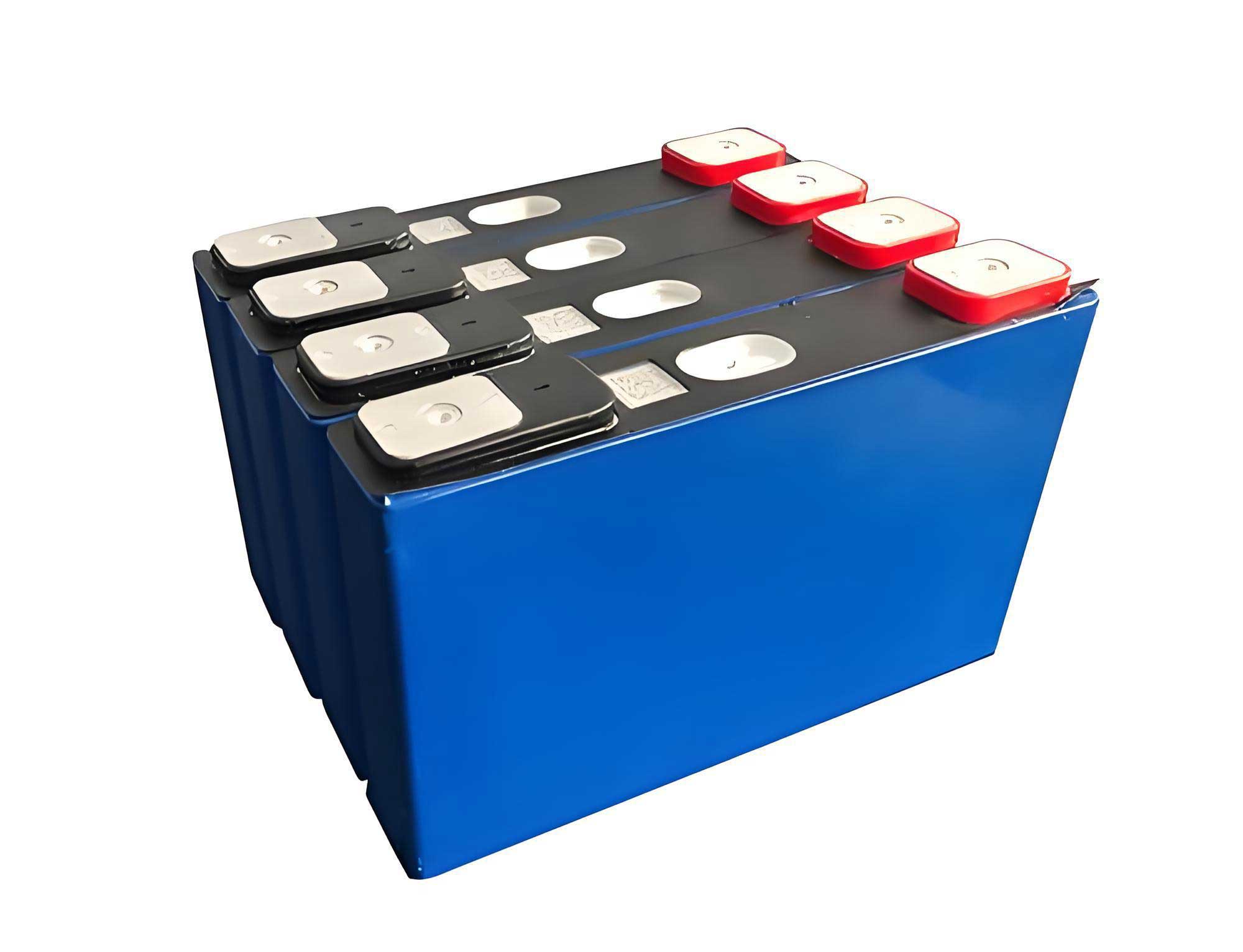
This research employs a commercial lithium iron phosphate battery as the object of study. Its positive electrode material is LiFePO4, and the negative electrode is graphite. Compared to ternary lithium batteries, the superior safety of the lithium iron phosphate battery makes it particularly suitable for energy storage applications. A finite element simulation model was established based on the actual peak shaving duty cycle of the energy storage station to analyze heat generation and cooling. The simulation assumed the following: no relative slip at solid-fluid interfaces; negligible fluid inertial forces and boundary pressure differences; negligible structural deformation of the cooling system; and focus solely on Joule heat as the dominant heat source. A turbulence model was used for transient calculations, with the surrounding coolant channels defined as fluid domains and the battery as a solid domain. The contact surface was set as a fluid-solid conjugate heat transfer boundary, with an ambient temperature of 25°C. The parameters for the battery pack used in simulation and measurement are summarized in Table 1.
| Parameter | Value |
|---|---|
| Nominal Voltage | 25.6 V |
| Nominal Capacity | 220 Ah |
| Dimensions (L×W×H) | ~555 mm × ~430 mm × ~154 mm |
| Mass | Approx. 60.0 kg |
| Connection | Series |
| Operating Voltage Range | 2.7 V ~ 3.8 V per cell |
The applied current profile, representing a constant current charge/discharge at 110A (approx. 0.5C) under peak shaving conditions, was used as the input for the simulation model. The heat generation simulation results indicated that the maximum temperature of the lithium iron phosphate battery pack could reach 36.8°C. Prolonged operation at this temperature significantly impacts battery lifespan and safety, necessitating an effective cooling strategy. Two mainstream liquid cooling configurations for lithium iron phosphate battery packs were investigated: bottom cooling and side cooling.
Under the simulated peak shaving conditions with a base coolant flow rate of 10 L/min (inlet velocity ~0.1 m/s), the temperature distributions for the two initial cooling schemes were obtained. For the bottom cooling scheme (Scheme 1), the coolant flows in and out from the bottom. The maximum temperature was controlled below 27.2°C, representing a temperature reduction of 9.6°C. However, the temperature distribution showed a gradient from the cooler bottom to the hotter top and from the inlet to the outlet, resulting in suboptimal temperature uniformity. For the side cooling scheme (Scheme 2), with coolant flowing in and out from the sides, the performance was superior. The maximum temperature was controlled below 26.5°C, and the overall temperature spread was reduced to about 1.5°C.
To quantitatively assess temperature uniformity—a critical factor for longevity and performance consistency—we define \(\Delta T\) as the difference between the maximum temperature and the average temperature of the battery pack. A smaller \(\Delta T\) indicates better temperature uniformity. For Scheme 1, \(\Delta T\) was 1.4°C, while for Scheme 2, it was 0.9°C. While both schemes controlled the maximum temperature, Scheme 2 offered better uniformity.
To further optimize the cooling performance, two strategies were explored: adjusting the coolant flow direction to improve uniformity, and regulating the flow rate to enhance overall cooling capacity.
Optimization via Coolant Flow Direction: For bottom cooling, an alternative configuration with cross-flow directions (coolant inlets and outlets arranged on opposite sides in an alternating pattern) was simulated (Scheme 3). This arrangement significantly improved temperature uniformity, reducing \(\Delta T\) to 0.7°C, although the maximum temperature slightly increased to 27.7°C. For side cooling, three representative flow direction patterns were analyzed, as summarized in Table 2. The most effective pattern involved alternating the flow direction in every adjacent cooling channel (cross-flow, Scheme 6). This configuration achieved the best temperature uniformity, with a \(\Delta T\) of only 0.4°C, demonstrating that a well-designed flow direction can effectively homogenize the temperature field across the lithium iron phosphate battery pack.
| Scheme | Flow Direction Pattern | Max Temp. (°C) | \(\Delta T\) (°C) | Note |
|---|---|---|---|---|
| 2 | Unidirectional, same side | 26.5 | 0.9 | Baseline side cooling |
| 4 | Opposite directions on left/right sides | 26.7 | 0.7 | Improved uniformity |
| 5 | Opposite directions per side & per group | 26.6 | 0.5 | Good balance |
| 6 | Alternating flow in every adjacent channel | 27.4 | 0.4 | Best uniformity |
Optimization via Flow Rate Regulation: Increasing the coolant flow rate enhances the heat removal capacity. Simulations were conducted by multiplying the base flow rate by factors (cooling rate multiplier). The relationship between the flow rate multiplier and the final maximum battery temperature is shown in Figure 10 (referenced conceptually). The results indicate that for bottom cooling, increasing the flow rate multiplier to around 2.0 leads to a significant temperature drop. Beyond this point, further increases yield diminishing returns in cooling performance. For side cooling, the optimal range is around a multiplier of 1.5. While higher flow rates improve cooling, they also increase pump power consumption and system cost. Therefore, a rational flow rate strategy balancing performance and economy is essential. The recommended optimal flow rate range is between 1.5 to 2.0 times the base flow rate.
The final optimized cooling方案 integrates both strategies. For side cooling, employing the flow pattern from Scheme 5 with a flow rate multiplier of 1.5 is recommended. For bottom cooling, employing the cross-flow pattern from Scheme 3 with a flow rate multiplier of 2.0 is recommended. These configurations achieve effective temperature control while maintaining good uniformity and reasonable energy consumption.
An experimental platform was established to validate the simulation models. The platform consisted of a battery test system, a thermal chamber, temperature sensors, and a liquid cooling system. The lithium iron phosphate battery pack was subjected to a simulated grid peak shaving current profile. The temperature rise during operation without cooling and the temperature evolution with bottom liquid cooling (Scheme 1) were measured and compared against simulation results.
The experimental temperature curves showed close agreement with the simulation predictions, with discrepancies within 1°C. This validates the accuracy of the established heat generation and liquid cooling models for the lithium iron phosphate battery under peak shaving conditions. The slight deviation is attributed to the sensor placement at the battery tab (hottest spot), which may read slightly higher than the volume-averaged simulation temperature.
In conclusion, this study investigated the thermal behavior and liquid cooling optimization of a lithium iron phosphate battery pack under realistic power grid peak shaving conditions. A validated model for heat generation was established. Liquid cooling optimization focused on two aspects: improving temperature uniformity by implementing cross-flow coolant direction patterns, and enhancing cooling capacity by rationally increasing the flow rate within an optimal range of 1.5 to 2.0 times the base rate. The optimized strategies effectively control the maximum temperature and improve temperature uniformity, which is crucial for the safety, performance, and longevity of lithium iron phosphate battery packs in energy storage stations. For practical engineering applications, the optimized bottom cooling scheme offers a cost-effective solution for most scenarios, while the side cooling scheme can be deployed for battery packs requiring stringent thermal management.